OpenClaw and Ollama Revolutionize Personal AI Agents by Bridging Local Models to Messaging Platforms

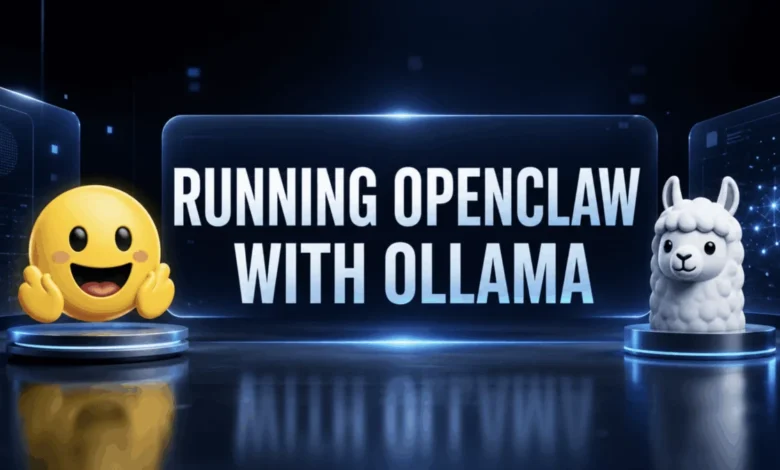
The landscape of consumer-grade artificial intelligence underwent a significant transformation in late 2025 and early 2026 with the integration of OpenClaw and Ollama, a move that effectively transitioned Large Language Models (LLMs) from isolated terminal applications to ubiquitous personal assistants. For years, the primary barrier to the adoption of local AI—models that run on a user’s own hardware rather than in the cloud—was the lack of a persistent, accessible interface. While Ollama provided the engine to run these models with high efficiency and low latency, the interaction remained tethered to the command line. OpenClaw, a sophisticated gateway daemon, has emerged as the critical bridge, allowing users to interact with their private AI models through standard messaging platforms including WhatsApp, Telegram, Slack, Discord, and iMessage.
The Genesis and Rapid Evolution of OpenClaw
The project, originally conceived by renowned macOS developer Peter Steinberger, was first introduced to the developer community under the name Clawdbot in late 2025. Steinberger, recognized for his contributions to Apple ecosystem tooling, designed the software to solve a specific problem: the transience of local AI sessions. The project’s utility was immediately recognized by the open-source community, propelling it to over 60,000 GitHub stars within weeks of its debut.
In early 2026, following a brief period as "Moltbot," the project was rebranded as OpenClaw to reflect its maturing status as an open-standard gateway for agentic AI. The development trajectory reached a milestone with the release of Ollama version 0.17, which integrated OpenClaw setup into a single, streamlined command. This integration represents a pivot in the industry toward "headless" AI, where the model functions as a background service rather than an active application window, ready to respond to triggers from a user’s mobile device at any time.
Architectural Framework: The Three-Layer Gateway System
To understand the impact of OpenClaw, one must examine its underlying architecture, which functions through a specialized background process known as the Gateway. This architecture is designed to maintain constant connectivity with messaging platform protocols while managing the heavy computational load of the AI models.
The system operates in a distinct three-layer sequence. First, the Messaging Layer handles incoming communications. For WhatsApp, the system utilizes the Baileys protocol to emulate a web client connection; for Telegram, it interfaces directly with the Telegram Bot API. Second, the Gateway Layer serves as the orchestrator, holding the messaging connections open and routing text to the appropriate AI model. Finally, the Local API Layer interacts with Ollama, which manages the hardware-level execution of the model.
This design ensures that the AI assistant remains "always-on" without requiring a persistent terminal session or a GUI. When a user sends a message from their phone, the Gateway intercepts the text, processes it through the local LLM, and delivers the response back through the same messaging channel. This seamless flow allows for a level of integration previously only available through high-cost, privacy-compromising cloud services.
Technical Requirements and the Context Length Standard
A defining characteristic of OpenClaw’s operation is its rigorous requirement for context length. Technical documentation specifies a minimum of 64,000 tokens (64k) for effective agentic performance. This requirement is driven by the "agentic loop"—a process where the AI performs multi-step tasks such as searching the web, reading multiple pages, extracting data, and synthesizing a final answer.
Industry data suggests that consumer hardware must be carefully selected to meet these demands. Ollama’s default behavior allocates context based on available Video RAM (VRAM). On typical consumer hardware with less than 24 GB of VRAM, Ollama defaults to a 4k context window, which is insufficient for complex research tasks. To achieve the 64k minimum, users must explicitly configure the OLLAMA_CONTEXT_LENGTH environment variable.
Hardware recommendations for a stable OpenClaw deployment include:
- Operating Systems: macOS 14+ or Ubuntu 22.04+ for optimal stability.
- Memory: A minimum of 16 GB RAM, with 32 GB recommended.
- GPU VRAM: At least 25 GB of VRAM is required to run sophisticated local models like Qwen3-Coder or Gemma4 with a full 64k context window.
- Cloud Alternatives: For users without high-end GPUs, the system supports cloud-based models such as Kimi-K2.5 or Qwen3.5, which provide the necessary context length without local hardware strain.
Implementation Chronology: From Installation to Telegram Integration
The deployment of a private research assistant via OpenClaw has been simplified into a reproducible workflow. With the advent of Ollama 0.17, the process begins with the ollama launch openclaw command. This single instruction triggers a sequence that includes checking for Node.js dependencies, downloading the OpenClaw Gateway, initializing the configuration files, and launching a Terminal User Interface (TUI) for real-time monitoring.

For developers, Telegram has emerged as the preferred initial channel due to its robust Bot API. The setup involves interacting with "BotFather," Telegram’s official bot management tool, to generate a unique API token. Once this token is provided to the OpenClaw configurator, the Gateway establishes a secure link.
A critical component of this setup is the enabling of web search capabilities. When configured with a tool-capable model, the OpenClaw agent can autonomously decide to use a web_search tool to retrieve current information. This transforms the bot from a static knowledge base into a dynamic research assistant capable of answering questions about real-time events, such as market shifts or recent academic publications.
Broader Implications for Privacy and the AI Market
The rise of OpenClaw and Ollama signifies a growing demand for "Sovereign AI." As concerns regarding data privacy and the monetization of user queries by major cloud providers increase, the ability to run a high-functioning assistant on personal hardware becomes a matter of digital autonomy.
Market analysts observe that OpenClaw provides a blueprint for how local AI can compete with established giants like OpenAI or Google. By utilizing the user’s own hardware, OpenClaw eliminates the subscription costs associated with "Pro" AI tiers while ensuring that sensitive data—such as personal schedules or private messages—never leaves the local network.
Furthermore, the "headless" deployment capability via Docker allows for the professionalization of local AI. Small businesses and research institutions can now deploy their own private AI gateways on internal servers, providing employees with powerful research tools that adhere to strict data governance policies.
Analysis of the Agentic Loop and Programmatic Expansion
The true utility of the OpenClaw-Ollama integration is found in the "Agentic Loop." Unlike standard chatbots that provide a single response to a single prompt, an agentic system can execute a series of actions. For instance, a query such as "Find the most-cited papers on transformer attention from 2025" triggers a multi-step process: the agent searches the web, fetches the content of the top three results, summarizes the findings, and formats a citation-heavy response.
This process is computationally expensive and requires sophisticated "reasoning" traces. The use of models like Qwen3.5 or Kimi-K2.5 allows the system to engage in "Chain-of-Thought" processing, where the model outlines its plan before executing tool calls. To prevent "context bloat," where a single long web page consumes the entire token budget, developers have implemented aggressive truncation strategies, often capping individual tool results at 8,000 characters.
The programmatic potential of this setup is vast. By utilizing the Ollama Python library in conjunction with the OpenClaw Gateway, users can automate daily research summaries, monitor specific news sectors, or even manage smart-home devices through a unified messaging interface.
Conclusion: The Future of the Open AI Ecosystem
The integration of OpenClaw into the Ollama ecosystem marks the end of the "terminal era" for local LLMs and the beginning of the "interface era." By bridging the gap between powerful local computation and the messaging apps that dominate modern communication, OpenClaw has made private AI accessible to a broader audience.
As the community continues to develop new "skills" and integrations for the Gateway architecture, the scope of what a local AI assistant can do is expected to expand. From file management and inbox processing to complex coding assistance, the combination of OpenClaw and Ollama provides a robust, private, and highly customizable alternative to the centralized AI models of the cloud. The project stands as a testament to the power of open-source collaboration in reclaiming the future of personal computing.