Lowe’s Promotes CMO Jen Wilson to Executive Vice President, Expanding Portfolio to Include Digital Commerce and Marketplace Strategy

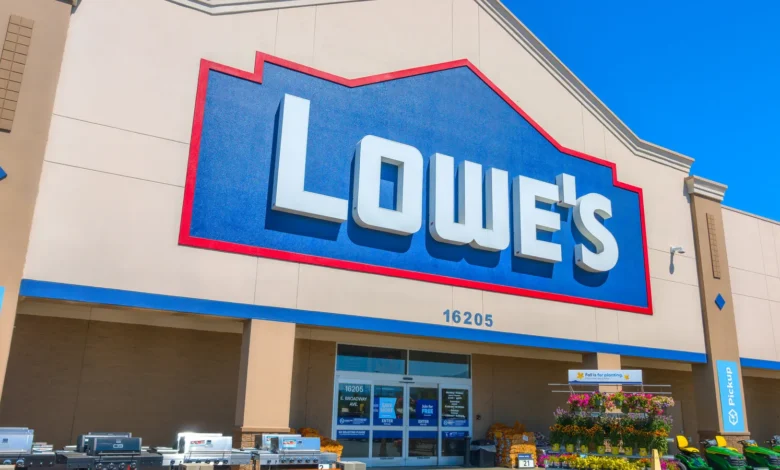
Home improvement retail giant Lowe’s Companies, Inc. has announced a significant strategic leadership shift, promoting Chief Marketing Officer Jen Wilson from senior vice president to executive vice president. In her expanded capacity, Wilson will take direct oversight of digital commerce—encompassing the company’s primary website and its rapidly growing third-party Marketplace offering—while retaining her existing portfolio, which already spans traditional marketing, retail media, customer loyalty, and personalization initiatives.
The structural reorganization places Wilson firmly on the company’s executive leadership team, underscoring a broader industry-wide evolution in the responsibilities entrusted to modern chief marketing officers. As digital disruption, artificial intelligence, and changing consumer behaviors continue to blur the lines between brand awareness and point-of-sale transactions, retail organizations are increasingly merging marketing and digital commerce functions to build unified, friction-free customer journeys.
Navigating Economic Headwinds Through Digital Growth
The consolidation of marketing and digital commerce under a single executive arrives at a critical juncture for Lowe’s and the broader home improvement sector. The retailer has recently faced a challenging macroeconomic climate, characterized by a sluggish housing market, persistent macroeconomic pressures, and constrained do-it-yourself (DIY) consumer spending driven by elevated interest rates. These pressures prompted Lowe’s leadership to adjust its full-year financial outlook downward.
Despite these hurdles, the digital channel has emerged as a vital engine of growth and resilience. While Lowe’s reported modest comparable sales growth of 0.2% during the second quarter of fiscal 2026, its online sales surged by an impressive 15.7%. By integrating digital commerce directly into Wilson’s operational portfolio, Lowe’s aims to capitalize on this digital momentum, ensuring that online platforms operate in seamless synchronization with marketing campaigns, customer relationship management (CRM) data, and paid media strategies.
According to Wilson, consumer research indicates that more than 80% of all home improvement shopping journeys begin in the digital space. This high intent underscores the absolute necessity of delivering a cohesive, unified brand experience across every touchpoint, from initial online discovery to final fulfillment, whether that occurs on a mobile device, a desktop browser, or within a physical brick-and-mortar storefront.
A Two-Decade Journey and the Evolution of the Retail CMO
Jen Wilson’s appointment to executive vice president represents the culmination of a distinguished 20-year career within Lowe’s. Having assumed the chief marketing officer role in June 2024, Wilson has steadily expanded her footprint across the organization. Her extensive tenure at the home improvement retailer includes a diverse array of leadership assignments spanning both marketing and merchandising divisions—notably leading the company’s prominent paint business.
This rich operational background, which includes direct experience managing profit and loss (P&L) statements, has equipped Wilson with the cross-functional expertise required to navigate the complexities of modern retail. In her view, the traditional marketing funnel—once characterized by a linear progression from upper-funnel awareness advertising to lower-funnel consideration and conversion—has effectively evaporated.
"The notion that the funnel is evaporating in front of us is true," Wilson stated. While she emphasizes that traditional advertising retains its vital role in harmonizing comprehensive 360-degree brand campaigns, she argues that the contemporary marketing landscape demands a holistic focus on revenue generation, customer lifetime value, and maximizing share of wallet.
This paradigm shift is further accelerated by the maturation of social media and digital ecosystems. Channels that were once viewed strictly as upper-funnel brand-building exercises now feature robust lower-funnel capabilities, linking directly to transactional commerce through affiliate partnerships, performance marketing, and specialized creator networks. Over the past year, Wilson has successfully spearheaded the launch of Lowe’s creator network—designed to forge deeper connections with millennial and Gen Z consumers—alongside the development of a lucrative customer loyalty program and an expanding retail media network.
Breaking Down Silos and Achieving End-to-End Personalization
For years, personalization has remained a primary objective for enterprise retailers, yet many organizations have struggled to implement unified strategies. Wilson notes that while Lowe’s and many of its industry peers have historically achieved sophisticated levels of personalization within individual silos—such as targeted email campaigns in CRM or specific ad sets in paid social media—coordinating these efforts across the entire customer journey has remained an elusive goal.
"Real transformation is going to happen when we’re creating omnichannel, end-to-end personalization, and to do that, we have to have it all in one place," Wilson explained.
By taking command of both digital commerce and marketing, Wilson is uniquely positioned to dismantle internal organizational silos. Discussions among Lowe’s executive leadership team have increasingly centered on aligning disparate teams and modernizing collaborative workflows. By anchoring organizational strategies around comprehensive customer data, marketers can adopt a horizontal, panoramic view of the enterprise. This data-obsessed approach allows marketing and digital teams to evaluate not only how consumers perceive the brand’s advertising initiatives, but how they experience the brand across every single operational interaction.
"If I can take ownership of that experience end to end, and help inform and work with other teams to close on those broken promises, then you become viewed as somebody who’s championing the customer, and no one’s going to keep walls up for somebody who’s championing the customer," Wilson noted.
Leveraging the Marketplace for Organic Discovery and New Audiences
Even the most sophisticated marketing and digital strategies must contend with external macroeconomic realities. As the broader home improvement and housing sectors navigate a protracted period of adjustment, retail executives are actively seeking innovative pathways to stimulate top-line growth. At Lowe’s, the third-party Marketplace platform has emerged as a cornerstone of this expansion strategy, unlocking new revenue streams and categories that extend far beyond the physical inventory constraints of traditional brick-and-mortar stores.
The Marketplace has allowed Lowe’s to rapidly scale its product assortment, introducing consumers to expansive new product categories such as above-ground swimming pools. Beyond the immediate transactional revenue generated by these additions, the expansion has delivered profound ancillary benefits for the retailer’s digital visibility and search engine optimization (SEO) performance.
"Wearing a marketer hat, when you expand your assortment, you expand your SEO value, and your visibility goes up with natural search," Wilson observed. "Then you have the efficiency of being able to reduce some of your paid search spend, because now you’re more visible."
Furthermore, the Marketplace platform has equipped Lowe’s with actionable consumer intelligence, enabling the retailer to identify and cater to previously untapped high-end customer segments. Through the third-party platform, shoppers are purchasing luxury home improvement items—such as high-end designer faucets and ornate chandeliers—that are traditionally not stocked in physical store locations. By analyzing where organic demand materializes in real time, Lowe’s can dynamically adapt its digital merchandising strategies to capture high-value consumers.
Industry Implications and Future Outlook
The expansion of Jen Wilson’s executive portfolio at Lowe’s reflects a wider structural trend reshaping the global retail landscape. As artificial intelligence, predictive analytics, and automated personalization technologies redefine consumer expectations, the traditional boundaries separating brand marketing, customer experience, and digital merchandising are dissolving. Industry analysts note that companies capable of unifying these disciplines under singular executive leadership are better positioned to weather economic cyclicality and capture shifting consumer demand.
For Lowe’s, the integration of digital commerce and marketing under Wilson’s leadership signals a strategic pivot toward an agile, data-driven operational model. By fostering closer alignment between digital storefronts, third-party marketplaces, loyalty ecosystems, and brand communications, the retailer is constructing a resilient framework designed to protect margins, deepen customer loyalty, and drive sustainable long-term growth as macroeconomic conditions eventually stabilize.
As Wilson and her leadership team prepare for the future, the combination of organic search efficiencies, targeted Marketplace expansion, and unified omnichannel personalization offers a clear blueprint for modern retail navigation. With consumer demand continually evolving, Lowe’s is betting that a holistic, customer-centric approach to digital commerce and marketing will secure its competitive edge in the years ahead.