Microsoft Recognized as a Leader in the 2026 Gartner Magic Quadrant for Container Management

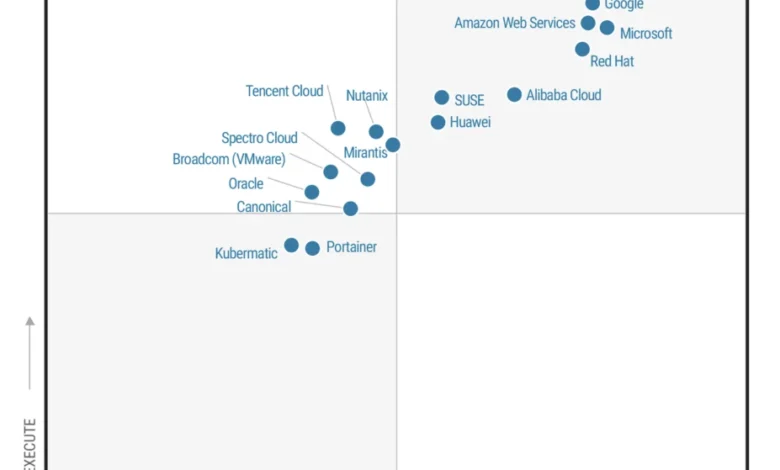
Microsoft has officially been named a Leader in the 2026 Gartner Magic Quadrant for Container Management, securing a position furthest to the right for its Completeness of Vision. This recognition underscores the company’s strategic shift toward providing a unified, AI-ready infrastructure that supports modern application development across cloud, edge, and hybrid environments. The accolade arrives as the enterprise container market faces a period of rapid transformation, driven by the need to integrate artificial intelligence workloads into legacy systems without increasing operational overhead.
The Evolution of Container Orchestration
The landscape of container management has shifted dramatically over the past decade. When Kubernetes was first introduced to the industry, the primary objective was the democratization of distributed systems to simplify the deployment of reliable services. Early adopters prioritized a system that treated workloads as abstract entities, allowing schedulers to make optimal placement decisions based on resource availability rather than strict, opinionated infrastructure requirements.
However, the emergence of generative AI and Large Language Models (LLMs) has fundamentally altered these requirements. Modern container platforms are no longer just about orchestration; they must now facilitate high-performance AI inference, satisfy strict sovereign data residency regulations, and provide consistent operating models across distributed estates. Microsoft’s response to this evolution is embodied in its integrated container portfolio, which includes Azure Kubernetes Service (AKS), Azure Container Apps, Azure Arc, and the recently optimized Azure Kubernetes Fleet Manager.
Chronology of Azure’s Cloud Native Expansion
Microsoft’s journey into the container orchestration market has been marked by a decade of steady investment and open-source contributions.
- 2014–2016: Early Adoption. Following the initial open-sourcing of Kubernetes by Google, Microsoft began integrating container support into the Azure ecosystem, recognizing early on that the future of cloud-native development would hinge on standardizing these tools.
- 2017–2019: Maturation. The launch of Azure Kubernetes Service (AKS) marked a turning point, providing a managed environment that reduced the complexity of cluster management. During this period, Microsoft increased its contributions to the Cloud Native Computing Foundation (CNCF).
- 2020–2022: Hybrid and Edge Focus. As enterprises began moving workloads to the edge, Microsoft introduced Azure Arc to extend management capabilities beyond Azure data centers, effectively treating any CNCF-conformant cluster as an Azure resource.
- 2023–2025: The AI Integration Era. With the AI boom, the focus shifted to GPU scheduling, model lifecycle management, and serverless inference. Microsoft prioritized the integration of AI toolchains into AKS to streamline the path from model development to production.
- 2026: Recognition. The designation as a Leader in the 2026 Gartner Magic Quadrant serves as the industry’s validation of Microsoft’s pivot toward agentic operations and AI-optimized infrastructure.
Strategic Models for AI Infrastructure
In the current enterprise climate, Microsoft has identified two distinct architectural models for running AI on container platforms. The first model, favored by platform teams, involves a persistent serving layer where GPU scheduling and model lifecycles are centralized and governed. By utilizing open-source tooling, such as the AI toolchain operator, organizations can automate GPU provisioning while maintaining compliance and security standards. AKS has achieved CNCF AI Conformance certification, which ensures that these complex AI environments remain compatible with the broader open-source ecosystem as they evolve.
The second model is built for agility and elasticity. In this framework, applications or AI agents invoke inference on an as-needed basis, consuming capacity only when a task is active and releasing it immediately upon completion. Azure Container Apps is the primary vehicle for this model, offering serverless GPUs and hardware-isolated sandboxes that allow for rapid scaling without the administrative burden of managing traditional Kubernetes infrastructure.
The core engineering challenge for modern enterprises, according to Microsoft’s leadership, is bridging the gap between these two models. Organizations need a unified control plane where the same security policies, identity management, and networking configurations apply regardless of whether a team is using the persistent AKS model or the serverless Container Apps approach.
Addressing the Challenge of Cluster Sprawl
As AI workloads move closer to the data—often in geographically dispersed sites or regulated environments—the risk of "cluster sprawl" increases. Traditional management methods often fail because they treat coordination issues as isolated problems rather than systemic ones. Microsoft’s strategy to combat this includes:

- AKS Everywhere: A platform designed to maintain consistency from the public cloud to the ruggedized edge.
- Azure Arc: This tool provides a common observability and policy model, allowing administrators to govern clusters regardless of whether they reside in Azure, on-premises, or in competing cloud environments.
- Azure Kubernetes Fleet Manager: This service addresses the coordination gap in large estates by automating the orchestration of upgrades, workload placement, and policy enforcement across multiple clusters simultaneously.
Microsoft remains the second-largest contributor to CNCF projects, a statistic that reflects its commitment to maintaining upstream compatibility. By avoiding proprietary forks of Kubernetes, Microsoft ensures that the APIs developers build against remain portable, preventing vendor lock-in and keeping the ecosystem consistent across diverse deployment environments.
The Rise of Agentic Operations
Operational complexity is currently one of the primary inhibitors to scaling AI in the enterprise. Cluster counts often outpace the growth of operations teams, leading to burnout and manual error. To address this, Microsoft is increasingly relying on "agentic operations."
Technologies like the Azure SRE Agent and the AKS MCP Server are designed to assist operators in diagnosing and remediating cluster issues. The objective is not the total displacement of human oversight, but rather the reduction of routine, repetitive investigation that consumes significant technical resources. By automating the path from alert to diagnosis, organizations can maintain stability even as their infrastructure footprint expands.
Implications and Industry Analysis
The recognition of Microsoft as a Leader in container management carries significant implications for the broader IT sector. As AI becomes the default requirement for enterprise applications, the underlying infrastructure must transition from a "set and forget" model to one that is highly dynamic and context-aware.
Data from the industry suggests that organizations adopting integrated container platforms see a measurable increase in deployment frequency and a corresponding decrease in security-related incidents. For enterprises, the choice of a container provider is no longer merely a budgetary decision; it is a strategic choice about the longevity and scalability of their entire AI roadmap.
The ability to move workloads between environments—such as moving an inference task from a centralized cloud data center to an edge location for regulatory compliance—has become a competitive differentiator. Microsoft’s focus on maintaining a consistent operating model is intended to minimize the "re-platforming tax" that often plagues organizations as they grow.
Looking Ahead
The path forward for Microsoft involves continued investment in simplifying the experience for developers who wish to leverage Kubernetes without needing to become deep-level orchestration experts. The integration of AI-driven SRE agents and the expansion of serverless container capabilities are expected to be the focal points of the next phase of development.
While Microsoft’s container portfolio has matured significantly, the company faces ongoing competition from other cloud providers and independent software vendors offering specialized container orchestration tools. However, the depth of the Azure ecosystem and the company’s extensive history of open-source stewardship provide it with a significant advantage in the race to define the next generation of cloud-native AI infrastructure.
For the modern enterprise, the primary takeaway is that the platform must be capable of adapting to change. Whether it is a training cluster spanning thousands of GPUs or a lightweight analytics engine running in a remote facility, the underlying operating model must be flexible enough to handle the evolution of the business without forcing a complete architectural overhaul. Microsoft’s recent recognition by Gartner suggests that the industry is viewing this unified, platform-centric approach as the most viable path forward for the next decade of cloud computing.