The Unprecedented Ascent: AI’s Explosive Growth and the Dawn of a New Technological Era

The world of technology has witnessed a series of transformative shifts, each marked by its own pace of user adoption. The telephone, a cornerstone of communication, took 75 years to connect with 100 million users. The internet, a revolution in information access, achieved this milestone in a mere 7 years. Facebook, a titan of social networking, reached the same benchmark in 4.5 years. But in a stark display of accelerating innovation, ChatGPT achieved this colossal feat in just 61 days. This staggering acceleration underscores the profound and rapid ascent of Artificial Intelligence, a force poised to reshape industries and redefine human capabilities. To truly grasp the magnitude of AI’s current trajectory, it is essential to contextualize its growth by looking back at the technological evolutions that paved the way.

The Genesis of Digital Transformation: From Mainframes to Personal Computers
The seeds of the AI revolution were sown decades ago, long before the advent of sophisticated language models. The mid-1980s marked a pivotal era with the widespread adoption of the personal computer (PC). For an industry veteran, witnessing this shift firsthand as corporate and government clients eagerly acquired PCs felt like stepping into a nascent, intoxicating future. At just 27, this former teacher turned computer salesman was captivated by the potential of this burgeoning industry, a fascination that continues to fuel a career trajectory that, while not immediately foreseen, ultimately led to the AI landscape of today.
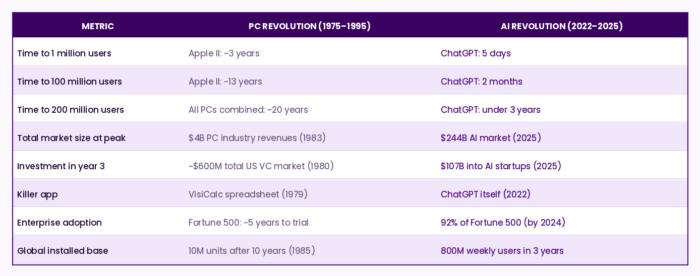
The personal computer revolution, a period characterized by significant innovation and market expansion, began its climb in earnest in the early 1970s. By 1984, the year Apple launched its iconic Macintosh with the legendary "1984" Super Bowl advertisement, approximately 10 million personal computers were installed worldwide. This number represented a monumental leap from virtually zero in 1975, demonstrating a decade of rapid growth from a niche product to a significant technological force. However, compared to the speed of AI adoption, this period, which took twenty years to reach a mere 10 million users, appears almost glacial.
The PC revolution was not merely about individual machines; it was the precursor to a compounding acceleration of digital technology. Initially, computers were isolated entities. The subsequent phase saw these isolated systems connect, first within companies, then between organizations, culminating in the global interconnectedness of the 1990s with the rise of the internet. This communication revolution, facilitated by the development of browsers like Netscape, transformed local interactions into global exchanges, laying the groundwork for the information age.
The Social Media Surge: Connecting Billions and Accelerating Change
Following the internet revolution, the early 2000s witnessed the emergence of social media. Platforms like Twitter (now X) and Facebook experienced exponential growth, reaching hundreds of millions and billions of users respectively in remarkably short periods. The author recalls witnessing this phenomenon, perceiving the pace of change as fast and overwhelming at the time. Yet, in retrospect, the transformative speed of social media now seems comparatively slow when viewed through the lens of the current AI era.

The Data Engine: How Preceding Tech Revolutions Fueled AI
The question arises: where did AI acquire the immense data and computational power necessary to achieve its world-altering capabilities? The answer lies in the cumulative advancements of the preceding technological eras. While the theoretical underpinnings of AI can be traced back to pioneers like Alan Turing, its practical enablement in recent years is directly tied to the infrastructure and data generated by the PC revolution, the internet, and social media. Without these foundational technologies, AI would lack the vast digital "diet" required to train and power its sophisticated large language models.
The genesis of the personal computer, often overlooked in the grand narrative of technological progress, began subtly. In 1975, a small technology magazine, Popular Electronics, featured a cover story that would prove prophetic: "World’s First Minicomputer Kit to Rival Commercial Models." This article introduced the Altair 8800, a kit computer priced at $439, sold as a box of components that required assembly. It lacked a keyboard, screen, and software, its operation indicated only by blinking lights. This humble beginning marked the dawn of the personal computer revolution, a concept that was radical at a time when computers were colossal, multi-million dollar machines operated by specialists in white coats.
The dominant technology company of that era, IBM, had famously dismissed the potential of personal computers, with one executive reportedly stating, "There is no reason for any individual to have a computer in their home." This sentiment, widely held within the industry, captured a profound misunderstanding of the future. Ken Olsen, founder of Digital Equipment Corporation, is often attributed with a similar dismissal around 1977, a statement that proved spectacularly incorrect.

Apple’s Garage Origins: The Spark of a Trillion-Dollar Enterprise
The story of Apple Computer is emblematic of the disruptive potential of early PC innovation. Founded in a garage by Steve Jobs and Steve Wozniak on April 1, 1976, Apple began as a hobbyist project. Wozniak, the engineering mastermind, designed the Apple I as a personal endeavor for the Homebrew Computer Club. Jobs, however, recognized its business potential. The initial Apple I, hand-built and sold to enthusiasts, found limited traction.
The Apple II, launched in 1977, was a more polished and approachable product, featuring a keyboard, color graphics, and a sleek case. However, for its first two years, it remained a niche machine, with combined sales of the Apple II and II Plus reaching only 43,000 units between 1977 and 1979. The market for personal computers existed, but it had yet to find its definitive purpose.
Everything changed in 1979 with the release of VisiCalc, the world’s first electronic spreadsheet, exclusively for the Apple II. This was the original "killer app"—software so indispensable that it drove hardware sales. Accountants, bookkeepers, and financial analysts, previously uninterested in computers, now had a compelling reason to acquire one. Compute! magazine noted that "Every VisiCalc user knows of someone who purchased an Apple just to be able to use VisiCalc." Apple’s sales in 1980 surged to 78,000 units, with a quarter of buyers citing VisiCalc as their primary motivation. By the end of 1980, Apple had sold over 100,000 Apple IIs, achieving nearly $200 million in annual revenue and propelling Steve Jobs onto the cover of Time magazine. The garage startup had transformed into a significant corporation, but the PC revolution was about to become unstoppable.

IBM’s Entry and the Standardization of Personal Computing
The pivotal moment that solidified the personal computer’s inevitability was IBM’s decision to enter the market. The world’s most powerful technology company’s endorsement lent immense credibility to the nascent industry. The IBM PC was developed with unprecedented speed, taking just 12 months. This rapid development was enabled by IBM’s decision to utilize off-the-shelf components and license an operating system from Microsoft.
Launched on August 12, 1981, the IBM PC, priced at $1,565, ran PC-DOS, the precursor to Windows. While not technically superior to existing offerings, the IBM name commanded respect. Corporations that had been observing the PC market with caution now had the "permission" to invest. IBM sold 1.3 million PCs in 1983 alone. The IBM PC and its compatible clones, manufactured by companies like Compaq, Dell, and HP, came to define personal computing for a generation.
The release of Lotus 1-2-3 in January 1983, a more advanced spreadsheet program designed for the IBM PC, further cemented its dominance in the business world, mirroring VisiCalc’s impact on small businesses. The spreadsheet, in essence, became the AI chatbot of the PC revolution—the application that made the hardware indispensable.

The AI Tsunami: ChatGPT and Unprecedented Adoption Rates
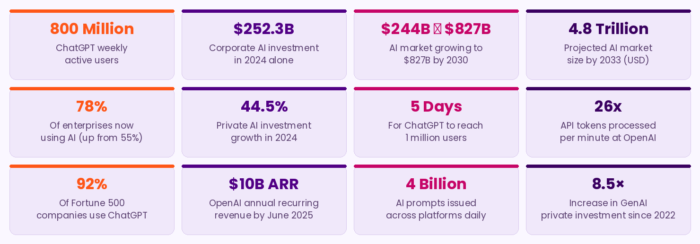
Fast forward to November 30, 2022. OpenAI quietly released ChatGPT as a research preview. Without fanfare, keynote speeches, or major advertising campaigns, the team anticipated a modest number of curious users. Within five days, one million users had signed up. Within two months, ChatGPT had surpassed 100 million users, a milestone the entire personal computer industry had taken a decade to achieve. This marked the fastest user adoption of any consumer product in recorded history, outpacing TikTok, Instagram, and even the internet itself.
The parallel to VisiCalc is striking. Just as the spreadsheet provided a compelling reason for businesses to adopt PCs, ChatGPT offered millions of professionals their first indispensable reason to engage with AI. This wasn’t just another piece of software; it was the platform itself, a paradigm shift in how users interacted with technology. By October 2025, OpenAI announced that ChatGPT had surpassed 800 million weekly active users, representing approximately one in ten people globally, with its API processing over 6 billion tokens per minute.
The sheer velocity of AI adoption is staggering. The Apple II took three years to sell 100,000 units. ChatGPT reached 100 million users in two months. The PC industry required twenty years to reach 200 million users; ChatGPT achieved this in under three years. This indicates not merely a faster iteration of past technological revolutions, but a fundamentally different kind of transformation.

The Investment Deluge: Capital Flows into AI at Unprecedented Speed
The financial landscape surrounding AI mirrors its user adoption in its breakneck pace. In 1980, the entire U.S. venture capital market stood at approximately $600 million. By 2025, AI startups alone attracted an astonishing $107 billion. The Stanford HAI 2025 AI Index reported that corporate AI investment reached $252.3 billion in 2024, a 44.5% increase in a single year and a thirteenfold surge since 2014. Private investment in generative AI specifically saw an 8.5-fold increase in the two years following ChatGPT’s launch.
The market projections are equally dramatic. The UN Trade and Development report forecasts the global AI market to grow from $189 billion in 2023 to $4.8 trillion by 2033, a 25-fold increase in a decade. In comparison, the PC industry took fifteen years to grow from its nascent stages to $4 billion in annual revenues. AI’s trajectory is charting a course far exceeding the pace of its predecessors.
Navigating the AI Landscape: Platform Specialization and Strategic Stacking
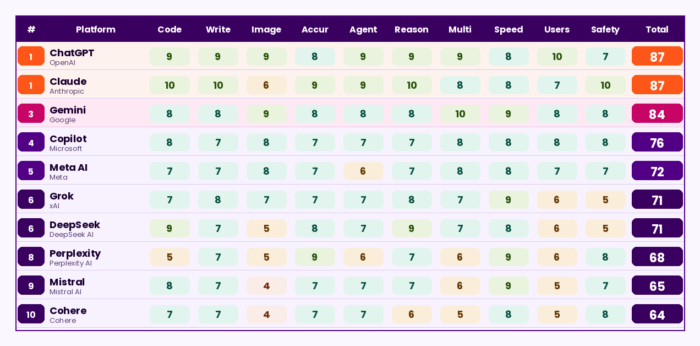
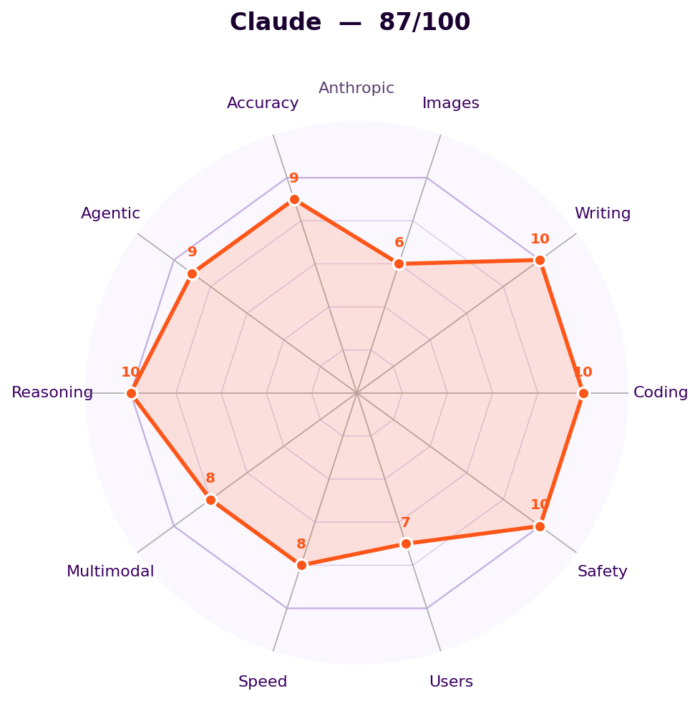
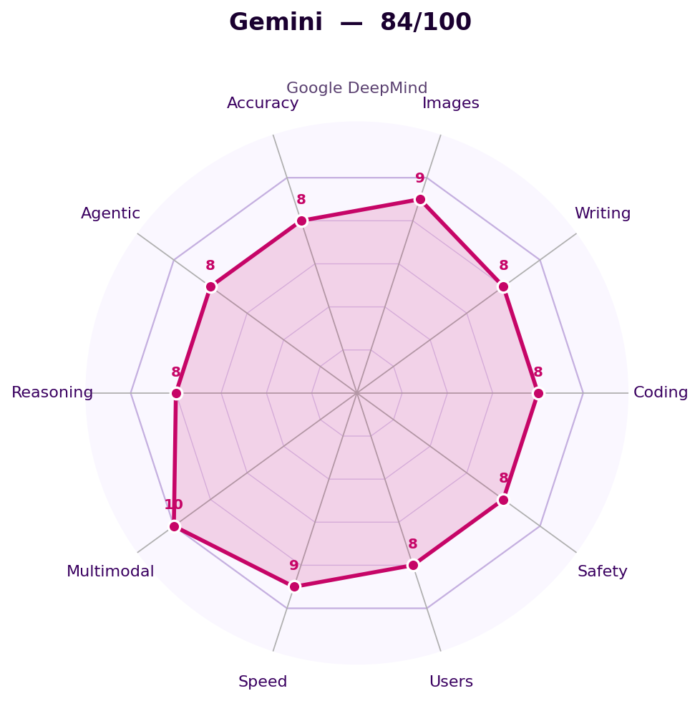
As the AI revolution matures, a critical question emerges: which platforms are leading the charge, and what does their success portend for the future? The landscape is characterized by intense competition and rapid innovation, with several key players vying for dominance.

ChatGPT (OpenAI): The All-Rounder Pioneer
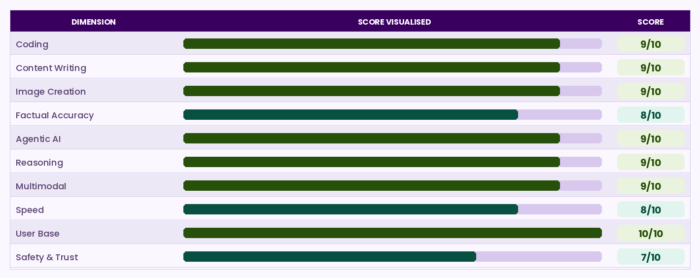
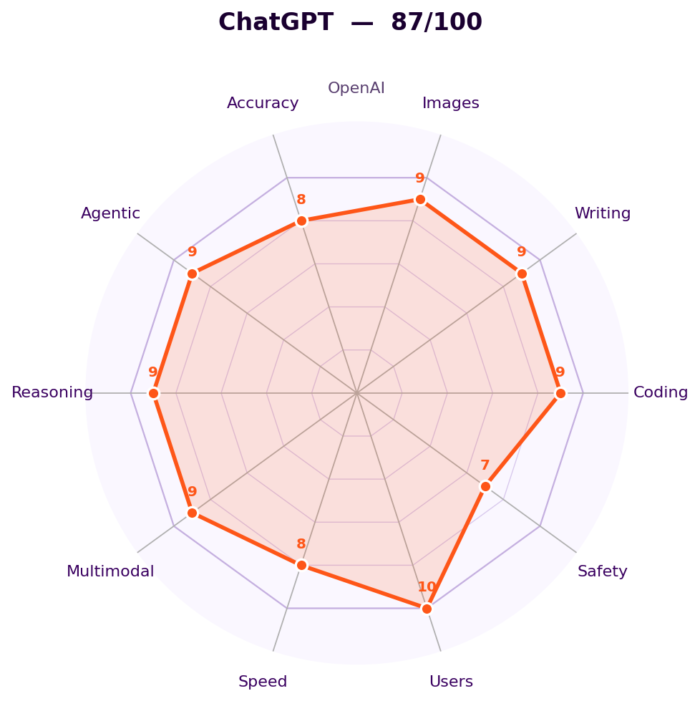
Originating from a non-profit research laboratory founded in 2015, OpenAI’s journey from GPT-1 to GPT-3 laid the groundwork for ChatGPT’s explosive launch in 2022. Its rapid user acquisition and subsequent $13 billion investment from Microsoft have cemented its position. Today, ChatGPT is more than a chatbot; it’s an evolving ecosystem encompassing Custom GPTs, DALL-E 3 image generation, and the advanced GPT-4o model. Its strength lies in its broad capability across numerous dimensions, making it the primary choice for mainstream users. However, the article notes potential safety trade-offs as a consideration.
Claude (Anthropic): The Professional’s AI
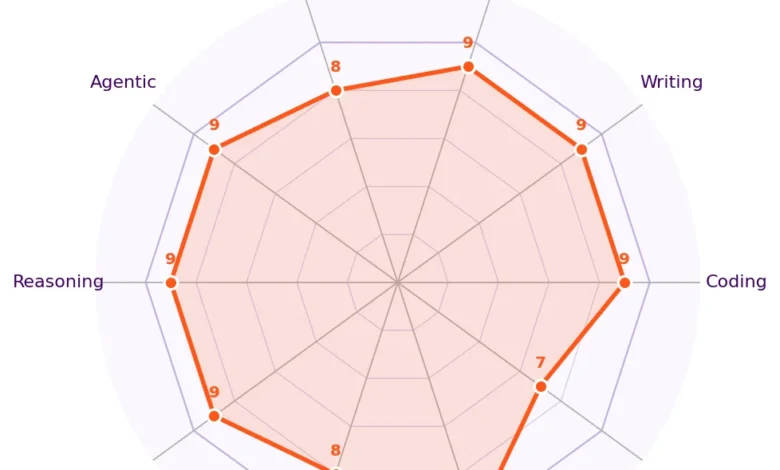
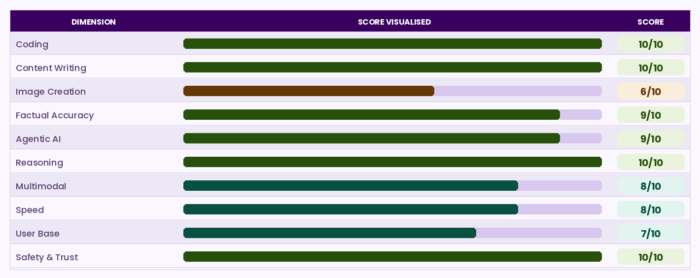
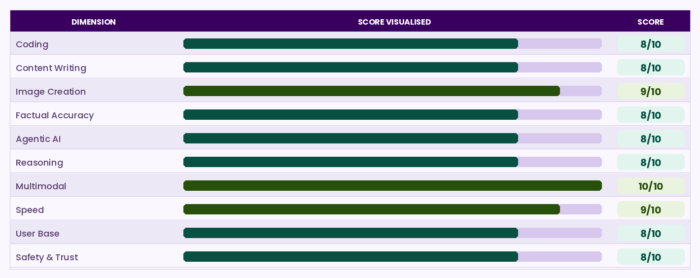
Founded in 2021 by former OpenAI researchers who prioritized safety, Anthropic’s Claude has emerged as a formidable competitor. Its "Constitutional AI" approach and impressive capabilities in coding, writing, and reasoning, coupled with a 200,000-token context window, position it as the AI of choice for professionals. While its image generation capabilities are less developed, Claude excels in tasks requiring deep analytical and creative output.
Gemini (Google DeepMind): The Multimodal Powerhouse
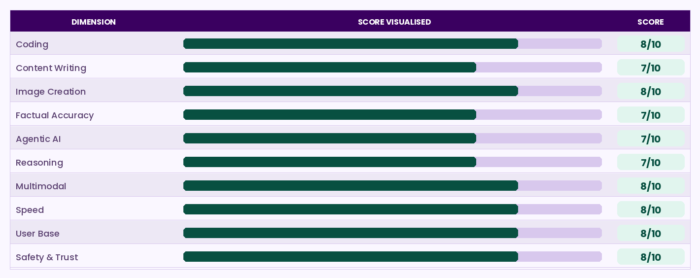
Despite its late entry into the generative AI race, Google’s Gemini, launched in December 2023, leverages its foundational research in transformer technology. Its standout feature is its native understanding of video, audio, and images, achieving a perfect score in multimodal capabilities. With a 1-million-token context window and deep integration into Google Workspace, Gemini is poised to be a transformative force, particularly for enterprise users.

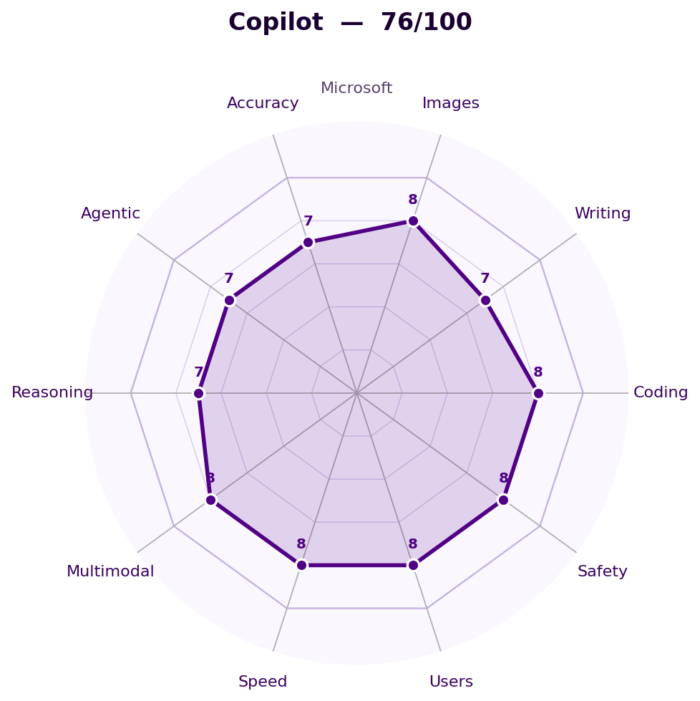
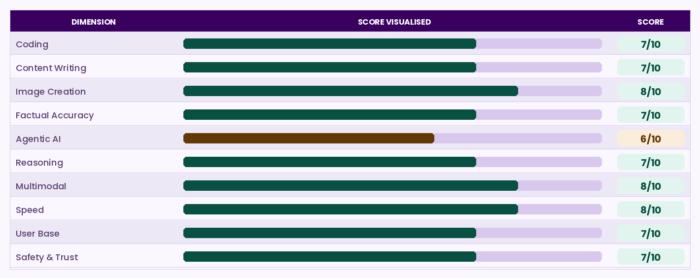
Microsoft Copilot: The Enterprise Integration Specialist
Building on its significant investment in OpenAI, Microsoft Copilot has become an ambient AI layer within its enterprise software suite. GitHub Copilot has set the standard for developer tools, while Microsoft 365 Copilot seamlessly integrates AI into Word, Excel, PowerPoint, and Teams. Its strength lies in its deep workflow integration rather than peak raw capability, making it indispensable for users within the Microsoft ecosystem.
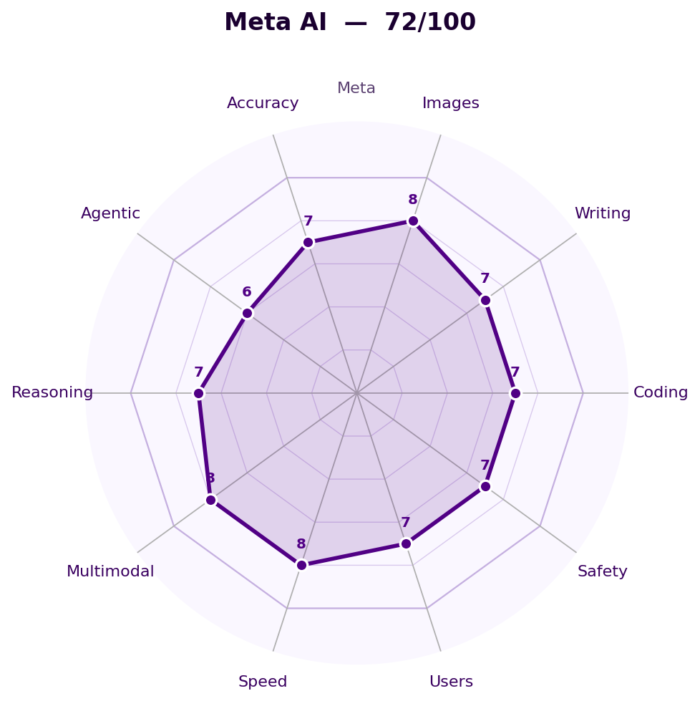
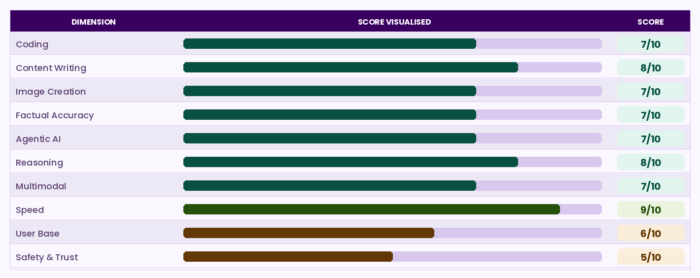
Meta AI (Meta): The Social Distribution Giant
Leveraging its vast user base across WhatsApp, Instagram, and Facebook, Meta AI’s strategy centers on distributing AI capabilities to billions. The open-source release of its Llama models has fostered a global ecosystem for private enterprise AI. While its consumer-facing AI may not always match the peak capabilities of others, its reach and the developer community around Llama position it as a significant long-term player.
Grok (xAI): The Real-Time Intelligence Provider
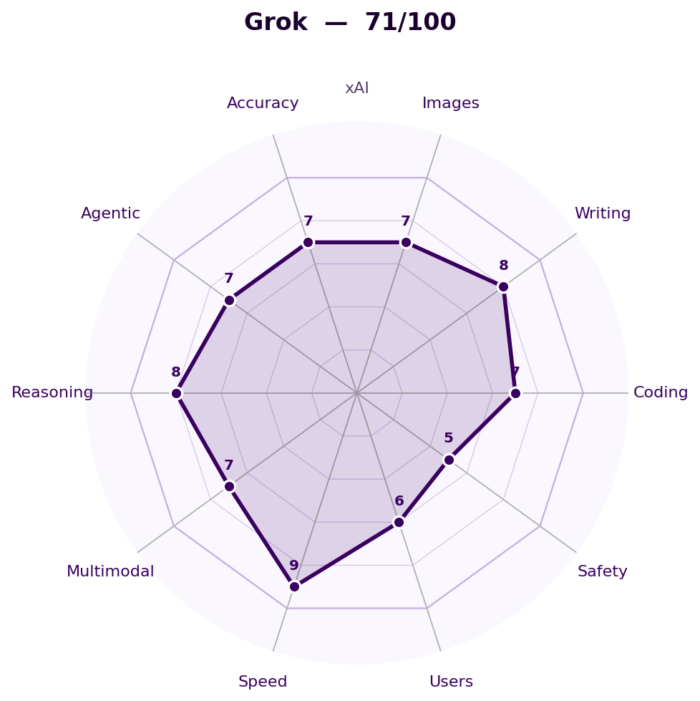
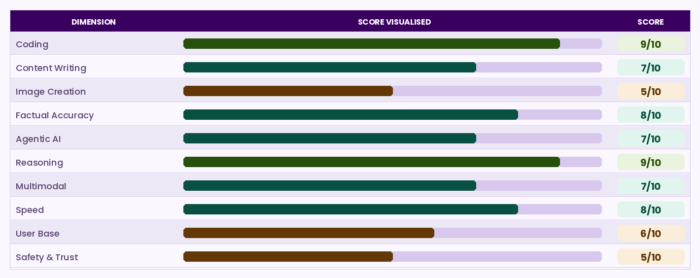
Founded by Elon Musk, xAI’s Grok distinguishes itself with its direct integration into the X (formerly Twitter) platform, providing real-time insights into trending narratives and market sentiment. This unique access to a live social data stream offers a competitive advantage in speed and currency of information. While its safety scores are lower, reflecting a philosophy of "maximum freedom," its technical capabilities in reasoning are notable.

DeepSeek: The Cost-Effective Frontier Model
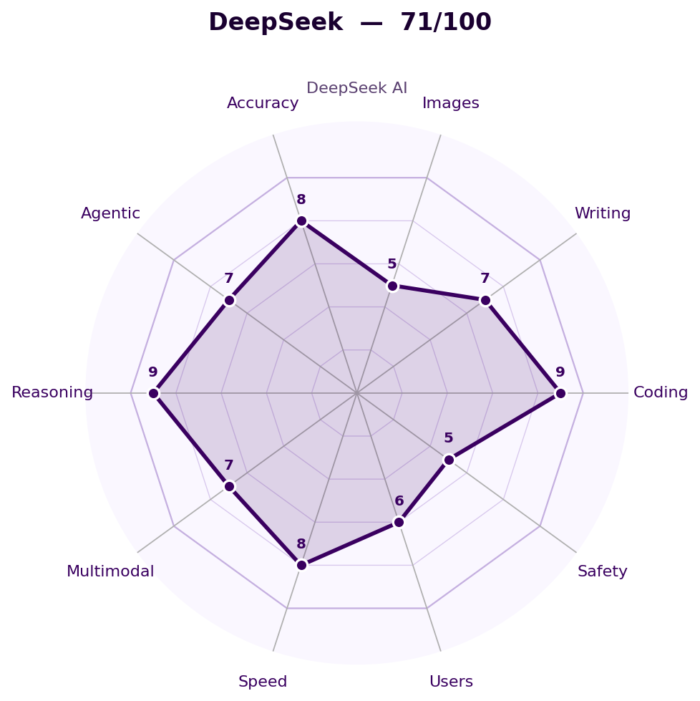
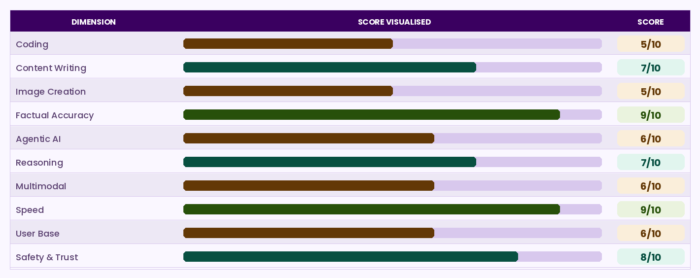
Emerging from China, DeepSeek has challenged the assumption that cutting-edge AI requires exorbitant development costs. Its open-weight models, like DeepSeek R1, offer performance comparable to leading proprietary models at a fraction of the training cost. This has significant implications for on-premise enterprise AI deployment, though concerns regarding data privacy and jurisdiction remain for some international users.
Perplexity: The Dedicated Answer Engine
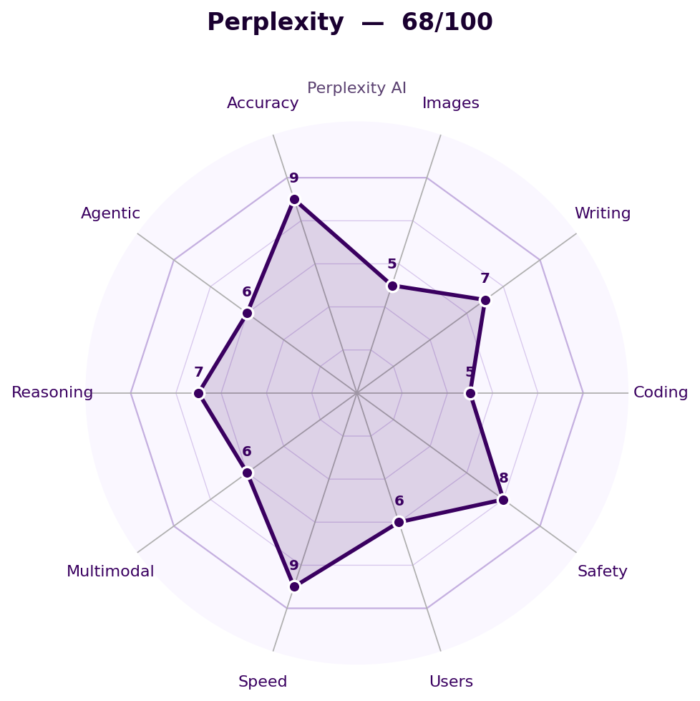
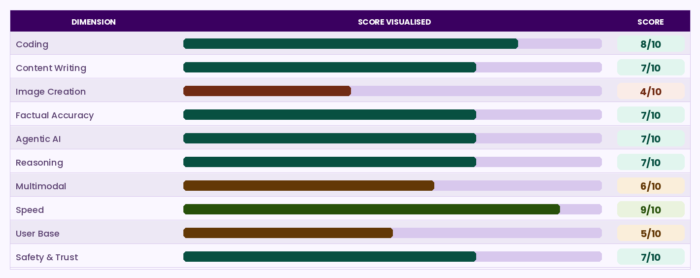
Perplexity AI has carved out a distinct niche by focusing on becoming the ultimate research and answer engine. Unlike general-purpose chatbots, it prioritizes accuracy and citation, providing users with verifiable information and multi-source synthesis. Its specialized design makes it an invaluable tool for fact-checking and in-depth research, despite not aiming for broad generative capabilities.
Mistral AI: Europe’s Efficiency Champion
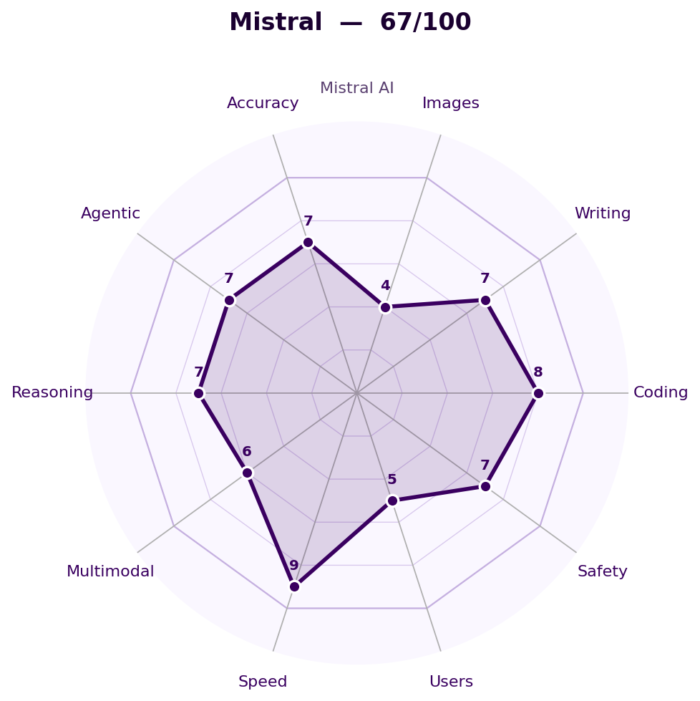
Founded in Paris by researchers from DeepMind and Meta AI, Mistral AI has rapidly established itself as a leading European AI contender. Its focus on efficiency and performance-per-parameter has yielded impressive open-source models. Mistral Large and Codestral offer compelling options for enterprises prioritizing GDPR compliance and European data residency, positioning it as a crucial platform for the European market.

Cohere: The Enterprise Infrastructure Specialist
Cohere, founded by co-authors of the seminal "Attention Is All You Need" paper, focuses on providing the infrastructure layer for private enterprise AI. Its Command R+ model is optimized for Retrieval-Augmented Generation (RAG) workflows, and its North platform offers no-code AI solutions for businesses. Cohere’s strength lies in its deployment flexibility across multi-cloud and on-premise environments, coupled with a strong emphasis on safety and compliance.
The Future of AI: Intentionality Over Default Usage
The sheer speed and scale of AI adoption present both immense opportunities and significant challenges. The analogy of a professional kitchen, where a multitude of high-quality knives exist but a chef’s mastery lies in knowing which to use and when, is apt. The AI revolution is not about simply accessing powerful tools; it’s about developing the clarity and intentionality to wield them effectively.
The research indicates a widening gap between different levels of AI mastery. "Tourists" use a single platform for all tasks, akin to using a search engine. "Craftspersons" deeply understand one or two platforms, employing them as collaborators. "Architects," however, build deliberate "stacks"—a curated selection of AI tools, each chosen for specific tasks and integrated into workflows. This intentional approach, characterized by curiosity and a willingness to experiment, is the hallmark of those who will derive the most significant value from AI.

The implications of this technological shift are profound. Companies embracing AI early are reporting substantial returns on investment, and individuals with verifiable AI skills command significant wage premiums. The window for early adoption advantage, as seen in the PC and internet revolutions, is not limitless. The current era demands clarity and deliberate action. The question is no longer "which AI is best?" but rather, "which AI is best for this specific task, workflow, or goal, right now?" Answering this question for writing, research, coding, and enterprise processes will define the architects of the AI-powered future. The AI revolution has already arrived, and its acceleration demands intentional engagement to harness its transformative power.