The Trillion Dollar Bet: Assessing the Economic Risks of the AI Infrastructure Gold Rush

When Jessica Wachter, a professor of finance at the University of Pennsylvania’s Wharton School, began evaluating the long-term impact of artificial intelligence on the global economy, she bypassed the speculative debate over model capabilities and focused on a verifiable financial reality: the unprecedented capital expenditure (CapEx) currently being funneled into AI data centers by a handful of "hyperscalers." This cohort—Alphabet, Microsoft, Amazon, Meta, and Oracle—is currently engaged in a capital-intensive buildout that is fundamentally altering corporate balance sheets and, by extension, the broader financial architecture of the United States.
Wachter’s analytical framework, developed alongside her research collaborators, poses a singular, high-stakes question: How much must the earnings of these tech giants grow to justify the nearly $1.1 trillion in cumulative infrastructure expenditures projected through 2027? By treating this not as a technological forecasting exercise but as a strict accounting problem, researchers have uncovered a precarious reality. To achieve a break-even point by 2030, while accounting for the cost of capital, depreciation of specialized assets, and a baseline 15% return, these firms must increase their productivity by a factor of 2.7.
The Arithmetic of the Buildout
The scale of the current investment cycle is historic. In 2025 alone, hyperscalers are expected to commit approximately $750 billion to infrastructure. Projections from Goldman Sachs and other financial analysts suggest that total AI-related capital investment could exceed $5 trillion over the next four years. To put this in perspective, these investments are rapidly approaching 3% of the U.S. gross domestic product (GDP).
However, the revenue generated by AI services remains disproportionately small compared to the gargantuan costs of the hardware required to power them. Gary Gensler, former Chair of the Securities and Exchange Commission (SEC) and current professor at MIT’s Sloan School of Management, notes that while infrastructure spending is reaching stratospheric levels, total industry AI revenues for the current fiscal period are estimated between $150 billion and $200 billion. The fundamental tension, according to Gensler, is the time-lag between massive capital deployment and the realization of commensurate revenue. Without a rapid transition to profitable, high-utility deployment, the industry faces the risk of what some economists term the largest misallocation of capital in modern history.
Chronology of a Capital Spree
The trajectory of this investment began in earnest around 2023, following the breakthrough of generative large language models. By 2024, firms shifted from research-phase investment to "industrial-scale" infrastructure development.
- 2023: Initial surge in demand for high-performance GPUs (specifically Nvidia’s H100 series) triggers the first wave of data center expansion.
- 2024: Hyperscalers begin moving beyond existing data centers, announcing massive, multi-gigawatt facilities in regions like rural Louisiana and the Midwest to secure cheap, reliable power.
- 2025: Financing models evolve. Companies move away from internal cash reserves, turning to complex debt structures and joint ventures, such as Meta’s partnership with Blue Owl Capital.
- 2026: Financial strain becomes visible. Companies report record revenue but face significant free cash flow deficits due to the compounding costs of infrastructure maintenance and energy procurement.
The Financial Engineering of Risk
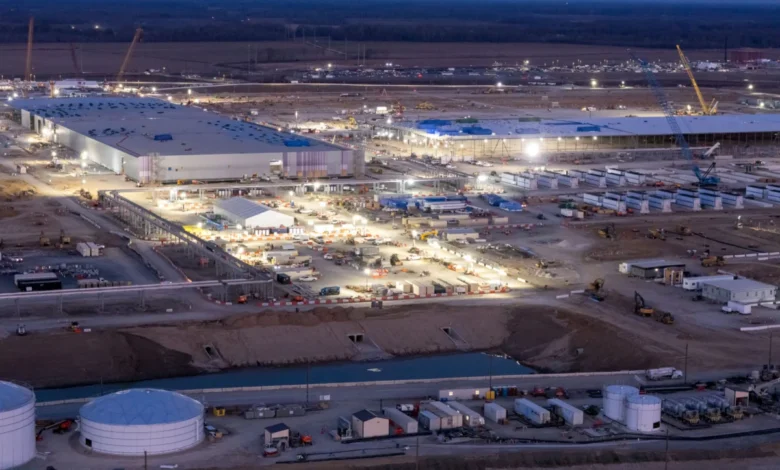
As the buildout progresses, the methods of financing have shifted from straightforward capital reinvestment to complex, byzantine structures. The case of Meta’s "Hyperion" data center in Richland, Louisiana, serves as a prime example of this evolution. Originally announced as a $10 billion project, the facility’s budget has ballooned to $50 billion as the firm expanded its scope.
To manage this, Meta entered into a joint venture with Blue Owl Capital, creating a series of special purpose vehicles (SPVs) that act as landlords for the facility. Meta utilizes a system of four-year leases with residual value guarantees. While the company claims this provides "strategic flexibility," financial analysts like Stijn Van Nieuwerburgh of the Columbia Business School warn that this structure masks the underlying risk. If the demand for AI computation power wanes—or if the rapid pace of hardware innovation renders current GPUs obsolete—these companies will be left with billions of dollars in stranded assets and massive debt obligations.
The Productivity Paradox
The ultimate success of the AI "parlay bet"—winning simultaneously on revenue growth, widespread economic productivity, and model superiority—hinges on the realization of tangible economic gains. Currently, data suggests a disconnect. A survey of 6,000 senior business executives across the U.S., U.K., and Germany revealed that 90% have seen no measurable increase in productivity from AI over the past three years.

For the hyperscalers to justify their multi-trillion-dollar investments, AI must transcend its current role as a novelty or a niche productivity tool and catalyze broad-based efficiency gains across the global economy. Nobel laureate and MIT economist Daron Acemoglu emphasizes that if these productivity gains fail to materialize, investor sentiment will inevitably sour, leading to a sharp contraction in investment.
Furthermore, there is the social dimension. Executives surveyed by the Atlanta Fed have indicated that their primary method for achieving AI-driven productivity is not necessarily through market expansion, but through the reduction of headcounts. This creates a secondary risk: if AI adoption becomes synonymous with significant job losses, the public and regulatory backlash could jeopardize the political capital necessary to build and power these facilities.
Implications for the Broader Economy
The risks are no longer contained within the balance sheets of Silicon Valley. Because these investments are financed through external capital, credit funds, and institutional lenders, the potential fallout is systemic. Pension funds, life insurance policies, and mutual funds are increasingly exposed to the debt instruments supporting these data centers.
"People don’t even know they’re holding this stuff," notes Van Nieuwerburgh. "It’s somewhere deep inside their pension fund. And that risk is getting distributed everywhere in places that are invisible."
This interconnectedness mirrors the conditions leading up to the 2008 financial crisis, where complex financial instruments obscured the underlying quality of assets. While the tech industry is fundamentally different, the reliance on debt to fund speculative infrastructure creates a vulnerability that regulators and policymakers are currently struggling to map.
Looking Toward Retrenchment
History suggests that all rapid technological buildouts are followed by a period of retrenchment. The dot-com bubble of the late 1990s saw massive investment in fiber-optic infrastructure that, while initially leading to bankruptcies, eventually laid the groundwork for the modern internet. The current AI boom may follow a similar path: a painful market correction, followed by a more rational, sustainable phase of integration.
However, the sheer scale of the current investment—coupled with the environmental, energy, and physical infrastructure requirements—differentiates this cycle from previous bubbles. The hyperscalers are betting that "scaling" (the belief that larger models equal higher intelligence) will provide an infinite runway for growth. If that assumption proves incorrect, the result will not be a minor market correction, but a structural reassessment of how the digital economy is built.
As the industry moves toward 2030, the primary challenge remains the reconciliation of massive, debt-fueled capital expenditures with the slower, more unpredictable pace of actual economic value creation. Until AI demonstrates a clear, undeniable impact on productivity that outweighs the cost of its own infrastructure, the industry will continue to operate on a foundation of "irrational exuberance," leaving investors and the public to weigh the potential for a transformative future against the tangible risks of a historic financial correction.