John Ternus Places the iPhone at the Heart of Apple’s Artificial Intelligence Strategy in His Debut Keynote

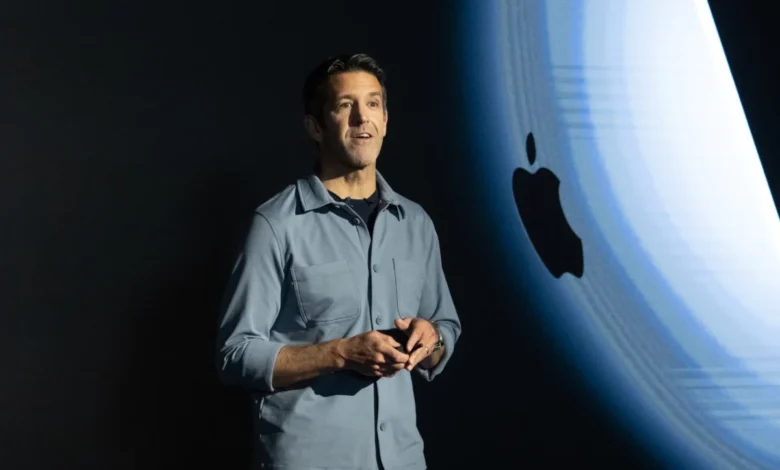
The enduring dominance of the smartphone in modern consumer technology faced its latest validation this week as Apple Inc. charted its future course in the artificial intelligence era. During his debut keynote address as Chief Executive Officer on Wednesday, John Ternus delivered a definitive declaration regarding the company’s product hierarchy. Addressing industry skeptics and Wall Street analysts, Ternus positioned the venerable iPhone not as a technology on the verge of obsolescence, but rather as the absolute epicenter of personal computing and artificial intelligence integration for the foreseeable future.
The pronouncement represents a calculated pivot from the overarching narrative cultivated by his predecessor, Tim Cook. Throughout his tenure, Cook frequently sought to diversify Wall Street’s perception of Apple, emphasizing services, wearables, and ambient computing to assure investors that the tech giant was steadily expanding beyond its heavy reliance on a single hardware product. Ternus, however, has chosen to double down on the device that transformed Apple into one of the most valuable corporations in global history, framing the iPhone as the ultimate vessel for ambient intelligence.
The Smartphone Under Scrutiny
Ternus’s remarks served as a direct rebuttal to a growing chorus of technology pundits and analysts who have recently questioned the longevity of the traditional smartphone format. Over the past year, market commentary has increasingly leaned toward the hypothesis that the smartphone’s era of dominance is drawing to a close. Critics have argued that ambient computing, specialized AI wearables, and augmented reality glasses are poised to displace the rectangular pocket device as humanity’s primary computing interface.
Headlines across major technology publications have openly questioned whether Apple was facing an existential hurdle in determining what technological paradigm would eventually supersede the iPhone. Yet, rather than chasing speculative hardware trends or retreating from the smartphone market, Ternus forcefully reasserted the device’s unparalleled utility.
“There’s no product in the world better designed to be your intelligent personal hub than iPhone,” Ternus told the audience, outlining a vision where on-device artificial intelligence relies fundamentally on the computing power, camera arrays, and persistent connectivity already embedded in hundreds of millions of pockets worldwide.
Echoes of 2001: The Parallels to Steve Jobs and the Digital Hub
The strategic framing deployed by Ternus bears a striking resemblance to a pivotal moment in Apple’s corporate history orchestrated by co-founder Steve Jobs more than two decades ago. In July 2001, at a Macworld keynote event in New York City, Apple faced a strikingly similar wave of skepticism concerning the traditional personal computer.
At the turn of the millennium, industry analysts and competitors frequently argued that the PC was a mature, plateauing technology, destined to be marginalized by a burgeoning ecosystem of standalone digital gadgets such as camcorders, personal digital assistants, and early MP3 players. During the 2001 presentation, Jobs famously displayed a graphic of a tombstone bearing the inscription "Beloved PC" to highlight the bearish sentiment prevailing across the tech sector.
Jobs forcefully rejected that narrative, arguing instead that the personal computer was entering its third great age. He introduced the "digital hub" strategy, positioning the Mac as the central organizing unit capable of integrating and adding value to an expanding universe of peripheral electronics. Less than ten months after articulating that vision, Apple introduced the iPod.
The digital music player not only revolutionized the consumer electronics industry but also laid the foundational hardware and software architecture that ultimately enabled the development and launch of the iPhone in 2007. By invoking the spirit of the digital hub strategy, Ternus is attempting a parallel maneuver: positioning the iPhone as the irreducible coordinator of the emerging artificial intelligence ecosystem.
Hardware Strengths in the Compute-Hungry AI Era
The rationale behind Ternus’s unwavering commitment to the iPhone rests heavily on hardware realities. Artificial intelligence applications, particularly those utilizing complex on-device large language models and real-time multimodal processing, demand substantial computational throughput, energy efficiency, and thermal management.
Modern iPhones are equipped with advanced proprietary silicon—such as the A18 Pro and its successors—which rank among the most powerful consumer-grade processors available on the market. Furthermore, the smartphone ecosystem benefits from ubiquitous global infrastructure, including high-speed cellular networks, Wi-Fi 7 integration, and advanced sensor suites encompassing LiDAR, high-resolution optics, and secure enclave processors for biometric data.
Ternus articulated this advantage succinctly by posing a fundamental design question to the audience and industry observers: “If you were designing the ideal version of this hub from scratch, how would you do it?”
The resulting checklist—incorporating a powerful processor, high-resolution cameras, persistent networking, and localized artificial intelligence processing—already exists in a mature, globally distributed supply chain. Ternus noted that while various technology startups and established competitors have attempted to introduce standalone AI pins, smart pendants, and dedicated wearable gadgets over the past several years, none have achieved mainstream consumer adoption or displaced the smartphone from its central role in daily life.
Sociological and Behavioral Realities of Mobile Computing
Beyond raw silicon benchmarks and hardware specifications, the iPhone retains an unmatched sociological advantage: behavioral dependency. Market research consistently demonstrates that consumer attachment to mobile phones vastly outpaces attachment to auxiliary computing devices.
While laptop computers, tablets, and desktop workstations remain essential tools for professional productivity, creation, and deep work, they are frequently left behind during brief excursions, social outings, or domestic routines. Conversely, the smartphone has achieved the status of an indispensable personal appendage. For billions of users worldwide, leaving the residence without a mobile phone is a rarity, cementing the device as the single most reliable point of contact between the individual and the digital infrastructure.
This behavioral reality grants Apple a formidable distribution moat. Rather than attempting to convince consumers to adopt an entirely new form factor for everyday AI interactions, Ternus’s strategy leverages an interface with which users are already deeply familiar, highly proficient, and emotionally reliant upon.
Industry Implications and Market Analysis
Financial analysts and technology strategists have noted that Ternus’s debut keynote marks a period of pragmatic consolidation for Apple. By anchoring the company’s ambitious artificial intelligence roadmap directly to the existing hardware installed base, Apple mitigates the financial and adoption risks associated with unproven form factors.
The approach also signals confidence in Apple’s vertical integration strategy. As regulatory scrutiny intensifies around app store ecosystems, data privacy, and software monetization, maintaining absolute control over the primary hardware nexus allows Apple to dictate the terms under which artificial intelligence services are delivered to the consumer. Whether running local neural network models or securely interfacing with cloud-based server infrastructure, the iPhone serves as the gatekeeper of user intent and digital interaction.
As the iPhone approaches the twentieth anniversary of its initial release, the device faces the ultimate test of its adaptability. While critics continue to debate whether the smartphone industry has reached saturation, Apple’s leadership is betting that the transition to ambient intelligence will elevate the device rather than render it obsolete.
Whether Ternus is quietly incubating a revolutionary hardware accessory akin to the 2001 iPod launch remains an open question for future product cycles. However, his initial address leaves no ambiguity regarding the immediate future: the iPhone will remain the undisputed anchor of Apple’s ecosystem, continuing to serve as the primary conduit through which the company navigates the next major technological frontier.
Related posts: