Blue Origin Achieves Landmark Reusability with New Glenn Rocket, Escalating Competition in Commercial Spaceflight.

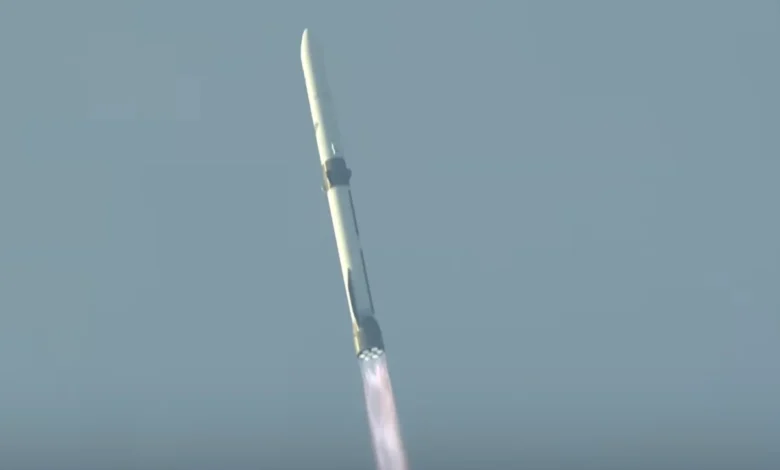
In a pivotal moment for the burgeoning commercial space industry, Jeff Bezos’ Blue Origin successfully executed the first-ever reuse of its New Glenn rocket’s first stage on Sunday, April 19, 2026. This monumental achievement, accomplished on only the third flight of the heavy-lift launch system, marks a critical milestone in Blue Origin’s decade-long development efforts and signals an intensified rivalry with Elon Musk’s SpaceX, which has long dominated the orbital launch market through its reusable Falcon 9 boosters. The mission not only validated the complex reusability architecture of New Glenn but also successfully deployed a communications satellite for customer AST SpaceMobile, further demonstrating the rocket’s operational capabilities.
The Reusability Imperative: A Game Changer in Space Economics
The successful reuse of the New Glenn first stage is more than just a technical triumph; it represents a fundamental shift in the economics of space access. Historically, rockets were single-use vehicles, with each launch requiring a completely new, expensive booster. This model inherently limited launch frequency and kept the cost of placing payloads into orbit astronomically high. The advent of reusability, pioneered and perfected by SpaceX with its Falcon 9 and Falcon Heavy rockets, has shattered this paradigm. By allowing the most expensive component of a launch system – the first stage booster – to be recovered and reflown, costs per launch are dramatically reduced, making space more accessible and fostering innovation across various sectors, from satellite internet to lunar exploration.
Blue Origin, founded by Amazon CEO Jeff Bezos in 2000 with the motto "Gradatim Ferociter" (Step by Step, Ferociously), has long espoused a vision for "millions of people living and working in space." Realizing this grand ambition hinges on significantly lowering the cost of space travel, and New Glenn’s reusability is central to that strategy. Bezos has consistently articulated that a reusable heavy-lift rocket is indispensable for establishing a sustainable space economy, much like how reusable commercial aircraft transformed air travel. The successful recovery of the New Glenn booster on Sunday demonstrates that Blue Origin is now poised to deliver on this promise, challenging the established order and opening new avenues for growth in the global space market, which analysts project to exceed a trillion dollars in value in the coming decades.
A Chronology of New Glenn’s Ascent
The journey to New Glenn’s reusability milestone has been an extensive one, spanning over a decade of design, development, and rigorous testing. The rocket, named after American astronaut John Glenn, was first unveiled in 2016, with initial projections for a maiden flight by 2020. However, the complexities inherent in developing a large, reusable orbital launch vehicle led to several delays, underscoring the formidable engineering challenges involved. Blue Origin invested billions of dollars into infrastructure, including a massive rocket factory in Florida and a dedicated launch complex at Cape Canaveral Space Force Station.
-
Initial Development & Delays: From its conceptualization, New Glenn was designed with reusability as a core principle, distinguishing it from many of its contemporaries. The sheer scale of the rocket, combined with the innovative BE-4 engines developed in-house by Blue Origin, required extensive ground testing and validation. The development timeline stretched, reflecting the meticulous "step by step" approach Blue Origin often emphasizes, prioritizing safety and reliability over speed.
-
First Flight: A Decades-Long Vision Takes Off: On January 16, 2025, after years of anticipation, the New Glenn rocket successfully completed its maiden flight. This inaugural mission marked the culmination of immense engineering effort, with the rocket performing its ascent as designed, demonstrating its fundamental capabilities. While the first stage was not recovered on this initial test flight, the successful orbital insertion of a boilerplate payload proved the vehicle’s readiness for commercial operations. The event was hailed as a monumental step for Blue Origin, signifying its entry into the heavy-lift orbital launch market.
-
Second Mission: First Landing and NASA Payloads: Building on the success of its debut, New Glenn embarked on its second mission in November 2025. This flight was particularly significant as it achieved Blue Origin’s first successful landing of a New Glenn first-stage booster. The booster, after separating from the upper stage, executed a controlled descent and touched down flawlessly on a specially designed autonomous drone ship stationed in the Atlantic Ocean. This mission also carried two robotic NASA spacecraft, intended for a mission to Mars, showcasing New Glenn’s utility for scientific and governmental payloads. The recovery of this specific booster was crucial, as it would later become the first reusable New Glenn booster on its subsequent flight.
-
Third Mission: The Reusability Breakthrough: The April 19, 2026 mission, just five months after the second flight, cemented Blue Origin’s position in the reusable launch sector. The same booster that flew in November 2025 was meticulously inspected, refurbished, and prepared for its second journey to space. Approximately 10 minutes after liftoff, the booster once again successfully separated, re-entered the Earth’s atmosphere, and executed a precision landing on its drone ship recovery platform. This achievement not only validated the robustness of the booster’s design but also the efficiency of Blue Origin’s ground operations in preparing the vehicle for reflight. The primary objective of the mission was to deploy a communications satellite for AST SpaceMobile, a key commercial client. While the upper stage continued its trajectory to place the satellite into its precise orbit, the successful booster recovery stole the headlines, marking a new era for Blue Origin.
New Glenn’s Capabilities and Market Position
New Glenn is a formidable addition to the world’s fleet of heavy-lift launch vehicles. Standing an imposing 98 meters (322 feet) tall with a diameter of 7 meters (23 feet), it is designed to be a workhorse for a wide array of missions. Its payload capacity is substantial, capable of lifting up to 45 metric tons (nearly 100,000 pounds) to Low Earth Orbit (LEO) in its expendable configuration, and approximately 13 metric tons to Geostationary Transfer Orbit (GTO) with booster recovery. These specifications place it squarely in competition with SpaceX’s Falcon 9 (which can carry ~22.8 metric tons to LEO in expendable mode, ~15.6 metric tons with recovery) and even Falcon Heavy (which boasts ~63.8 metric tons to LEO in expendable mode, ~26.7 metric tons with side booster recovery).
The heavy-lift launch market is experiencing unprecedented demand, driven by the proliferation of mega-constellations of satellites, ambitious governmental space programs, and the increasing need for large payloads to be sent to diverse orbital destinations, including the Moon and Mars. With ULA’s Vulcan Centaur and ArianeGroup’s Ariane 6 also entering service, the competition for launch contracts is intense. New Glenn’s validated reusability, combined with its impressive payload capacity, positions Blue Origin as a highly attractive option for both commercial and government customers seeking reliable, cost-effective access to space.
Strategic Implications for Blue Origin and the Industry
The successful reuse of the New Glenn booster carries profound strategic implications for Blue Origin and the broader space industry.
-
Competing with SpaceX: This milestone directly addresses SpaceX’s long-standing cost advantage derived from its reusable Falcon 9. While SpaceX has conducted hundreds of reflights, New Glenn’s first reusability success indicates Blue Origin’s capability to offer competitive pricing in the future. The pressure will now be on Blue Origin to rapidly increase its launch cadence and demonstrate consistent, rapid turnaround times for its boosters, a key factor in achieving true economic efficiency. This will likely spark a more direct and vigorous competition for launch contracts, potentially driving down prices further across the industry.
-
NASA Contracts and Lunar Ambitions: Blue Origin is a major contractor for NASA, particularly within the Artemis program, which aims to return humans to the Moon. New Glenn is a crucial component of Blue Origin’s larger lunar architecture, including its Blue Moon lunar lander program. The proven reliability and reusability of New Glenn enhance Blue Origin’s credibility as a partner for critical NASA missions, potentially securing more lucrative contracts for lunar logistics, scientific payloads, and human-rated missions. The ability to launch larger, more complex lunar infrastructure components efficiently will be vital for establishing a sustainable human presence on the Moon.
-
Amazon’s Project Kuiper: New Glenn is slated to be a primary launch vehicle for Amazon’s ambitious Project Kuiper, a planned constellation of over 3,200 satellites designed to provide global broadband internet. Amazon has already committed to purchasing up to 12 New Glenn launches for Kuiper. The vertical integration of a launch provider (Blue Origin) with a satellite operator (Amazon) offers significant strategic advantages, ensuring dedicated launch capacity and potentially lower costs for deploying the massive constellation. This internal demand will provide a stable base of operations for New Glenn, allowing Blue Origin to refine its launch processes and achieve economies of scale.
-
Market Share and Future Outlook: The global space launch services market is projected to grow substantially, driven by satellite internet, Earth observation, and space tourism. Blue Origin, with New Glenn now demonstrating full reusability, is well-positioned to capture a significant portion of this expanding market. The capability to launch heavy payloads repeatedly and economically makes New Glenn an attractive option for large government projects, defense missions, and the continued deployment of mega-constellations. This positions Blue Origin as a long-term, formidable player in a market previously dominated by a select few.
Industry Reactions and Expert Commentary
While formal statements from Blue Origin’s top leadership were not immediately available at the time of publication, the implicit message from the successful mission is clear: Blue Origin is now a serious contender in the heavy-lift reusable launch market. One can infer celebratory remarks from CEO Bob Smith and founder Jeff Bezos, emphasizing the dedication of their team and the realization of a long-held vision for lower-cost access to space. Their public communications typically focus on the long-term goal of space industrialization and the foundational role of New Glenn in achieving it.
Industry analysts are likely to view this development as a critical turning point. "This is the moment Blue Origin has been building towards for over two decades," commented Dr. Laura Johnson, a space economy analyst at Stellar Insights Group. "Reusability is not just a feature; it’s an economic imperative in today’s space industry. While they still have a long way to go to match SpaceX’s flight heritage and cadence, this successful reflight validates their engineering prowess and makes them a much more formidable competitor for major contracts." Another analyst, Mark Thompson of Orbital Ventures, noted, "The market has been waiting for this. New Glenn’s capabilities are impressive, and now with proven reusability, it opens up a new front in the space launch wars. Customers will now have more options, which is always a good thing for innovation and cost efficiency."
Challenges Ahead
Despite this monumental success, Blue Origin faces significant challenges in the path forward.
-
Scaling Production and Operations: The transition from successful test flights to a high-cadence operational schedule requires robust manufacturing capabilities, efficient ground processing, and streamlined logistics. Blue Origin will need to demonstrate its ability to produce New Glenn boosters and upper stages rapidly and prepare them for launch and reflight with minimal turnaround times, a feat that SpaceX has perfected over years.
-
Sustained Performance: Building customer confidence in a new launch vehicle requires a flawless track record. While three successful flights are a strong start, Blue Origin will need to maintain this level of reliability across dozens, and eventually hundreds, of missions to secure long-term, high-value contracts and compete effectively against established players.
-
Competitive Pressures: The space launch market is not static. Other players, including Rocket Lab with its Neutron rocket and various international agencies, are also investing heavily in next-generation launch systems. Blue Origin must continue to innovate and adapt to stay ahead in this dynamic environment.
In conclusion, Blue Origin’s successful reuse of the New Glenn first stage is a watershed moment, affirming the company’s commitment to transforming space access. It positions New Glenn as a direct competitor in the heavy-lift market, particularly for ambitious projects like NASA’s lunar missions and Amazon’s Project Kuiper. While significant operational hurdles remain, Sunday’s achievement undoubtedly marks a new, more competitive chapter in the race to make space travel routine and affordable, promising an exciting future for exploration and commerce beyond Earth.
Related posts: