OpenAI Introduces "Micro" Keypad Amidst Expanding Hardware Ambitions and Mounting Legal Challenges

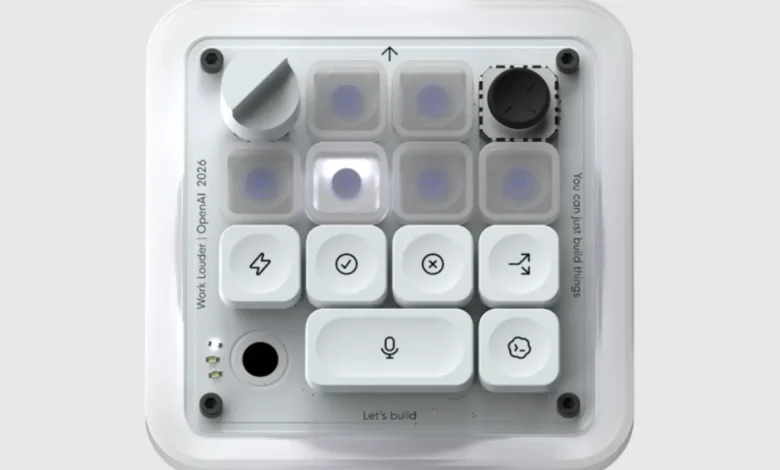
OpenAI, the vanguard of artificial intelligence research and development, marked a significant pivot in its corporate strategy last week with the launch of its inaugural hardware product, "Micro" – an elegantly designed, specialized keypad crafted to seamlessly integrate with its flagship conversational AI, ChatGPT, and its advanced coding tool, Codex. Developed in collaboration with Work Louder, a niche designer known for its bespoke keyboard solutions, Micro represents OpenAI’s tangible foray into the burgeoning AI hardware ecosystem, aiming to cater to a specific segment of tech enthusiasts and professional developers, even as it navigates a complex landscape of market skepticism and high-stakes legal confrontations.
OpenAI’s Strategic Shift Towards Hardware
The unveiling of Micro signals a deliberate strategic expansion for OpenAI, moving beyond its foundational software and API offerings into physical products. For years, OpenAI has primarily focused on advancing large language models (LLMs) and generative AI, culminating in the widespread adoption of ChatGPT and DALL-E. This transition into hardware suggests a broader vision to embed AI more deeply into daily workflows and consumer experiences, mirroring a trend seen across the technology sector where software giants increasingly seek to control the full stack, from algorithms to end-user devices. The global market for AI hardware, encompassing everything from specialized chips to AI-enabled peripherals, is projected to grow significantly, with some estimates placing it well into the hundreds of billions of dollars within the next decade. OpenAI’s entry, while modest with Micro, positions it to capture a share of this expanding market.
Micro, described as an "artisanal workplace novelty," is a testament to the growing demand for specialized tools that enhance productivity for developers and power users of AI. The collaboration with Work Louder underscores a commitment to design and quality, leveraging the expertise of a company celebrated for its high-end, customizable mechanical keyboards and macropads. This partnership reflects a nuanced understanding of the target demographic – individuals who appreciate both cutting-edge technology and premium, tactile user experiences.
Navigating a Treacherous Landscape: Legal Battles and Market Intrigue
OpenAI’s hardware debut, however, has not been without its share of corporate drama and market intrigue. Preceding the Micro launch by several weeks, the company found itself embroiled in a high-profile legal battle with Apple, which filed a lawsuit accusing the AI lab of alleged trade secret theft. This legal action has ignited what is widely anticipated to be a protracted and intense dispute, casting a shadow over OpenAI’s ambitious expansion plans. The lawsuit underscores the fiercely competitive nature of the AI industry, where intellectual property and talent acquisition are paramount.
Further complicating the narrative, news concurrently emerged of another significant hardware project under development at OpenAI: a screenless smart home speaker. This device, also designed to integrate with ChatGPT, reportedly benefits from the expertise of former Apple engineers, a detail that has undoubtedly raised eyebrows within the industry and potentially fueled Apple’s legal offensive. The alleged recruitment of talent from a direct competitor, particularly for a hardware venture, highlights the cutthroat race to dominate the next generation of AI-powered devices. These developments collectively paint a picture of an OpenAI that is not merely dabbling in hardware but is aggressively pursuing a comprehensive ecosystem strategy, even at the risk of challenging established tech behemoths.
Micro: A Deep Dive into Design and Functionality
Until the legal complexities are untangled and OpenAI’s broader hardware ambitions, such as the smart home device, fully materialize, Micro stands as the primary tangible manifestation of the startup’s hardware vision. Positioned as a tool explicitly engineered to "delight the tech industry’s code monkeys," the keypad aims to streamline interactions with sophisticated AI models.
Initial impressions of the Micro unit provided to TechCrunch reveal a device built with considerable robustness. Its sturdy construction, noted by reviewers, suggests durability, hinting that its utility might even extend to serving as a premium paperweight if its primary function doesn’t resonate universally. This emphasis on build quality, combined with an "immaculate white box with a sleek, clean aesthetic," has drawn immediate comparisons to Apple’s iconic product packaging – an observation that has not gone unnoticed and adds another layer to the narrative of OpenAI’s evolving identity in the tech world.
The keypad’s layout is meticulously designed for AI-centric tasks. It features six "agent" keys positioned at the top, each frosted and customizable to execute specific operations within ChatGPT or its agentic coding counterpart, Codex. These keys allow users to define and trigger complex AI functions with a single press, from code generation to content drafting or data analysis. Below these are six "command" keys, providing control over the AI programs, such as initiating, pausing, or terminating tasks. Connectivity options include both Bluetooth for wireless flexibility and a USB cable for a stable, wired connection, catering to diverse user preferences and workstation setups.
Perhaps one of Micro’s most compelling features is its integrated voice dictation button. This functionality allows users to interact with ChatGPT through spoken commands, bypassing the need for typing. By simply holding down the dictation button and speaking their requests, users can efficiently delegate tasks to the AI. Once the command is articulated, a tap of the adjacent "send" button transmits the request for processing. This hands-free interaction promises a significant boost in efficiency, particularly for users accustomed to dictation software or those who prefer a more natural input method.

Customization is a cornerstone of the Micro experience. Users can personalize their keypad directly within ChatGPT through a dedicated "Micro" tab. This interface provides granular control over various settings, from adjusting the brightness of the key backlighting to precisely mapping specific commands and projects to individual keys. This level of configurability is crucial for catering to the diverse workflows of developers and AI power users, allowing them to tailor the device to their unique needs and preferences.
Initial Reception: A Mixed Bag for the "Artisanal Novelty"
Despite its innovative premise and premium design, Micro’s initial reception among its core target audience – hard-core coders and developers – has been notably lukewarm, if not outright critical. Discussions on platforms like Reddit reveal a largely negative sentiment. One Redditor famously dismissed the device as "a prank and not a real product," while others expressed skepticism that "serious coders won’t touch it." These reactions highlight a potential disconnect between OpenAI’s vision for an AI-centric peripheral and the practical demands and existing habits of professional developers. Many in the coding community are accustomed to highly optimized, often DIY, keyboard setups and may not perceive the value proposition of a specialized macropad at a premium price point.
A review from the independent outlet Aftermath was even more scathing, lambasting the $230 price tag as "hard to justify next to cheaper DIY and off-the-shelf alternatives." The review’s blunt title, "OpenAI’s expensive macropad feels engineered to piss me off specifically," encapsulates the frustration expressed by some segments of the tech community regarding what they perceive as an overpriced and potentially unnecessary accessory. The existence of numerous, more affordable programmable macropads and the robust DIY mechanical keyboard community means that Micro faces stiff competition from established, cost-effective solutions that offer similar, if not greater, levels of customization.
The Learning Curve and Target Audience Paradox
For new users, there is undeniably a learning curve associated with Micro. The device employs a color-coded feedback system for its buttons: white indicates an agent is idle, blue signifies active thinking, green confirms task completion, and red alerts to an error. Memorizing these visual cues, alongside the specific projects and commands assigned to each key, requires an investment of time and effort. This cognitive load presents a significant hurdle for adoption, raising a fundamental question: is the functional advantage of Micro substantial enough to warrant spending time learning its intricacies, especially when users are already proficient with standard computer input devices? The convenience of a mouse and keyboard, deeply ingrained in muscle memory, is a formidable competitor for any new peripheral.
The ultimate utility and satisfaction derived from Micro appear to be heavily correlated with the user’s daily engagement with ChatGPT. For individuals who infrequently interact with AI tools, the keypad’s specialized functions and learning investment may not justify its acquisition. However, for a dedicated "ChatGPT power user" – someone who consistently leverages the AI for coding, content generation, research, or other intensive tasks – the calculus shifts. For this niche, particularly those with a disposable income of $230 and an affinity for "vintage-looking hardware with clicky buttons," Micro could indeed offer a tangible boost in workflow efficiency and a more enjoyable, tactile interaction with their AI assistant. It transforms the abstract interaction with an AI into a more physical, responsive experience, potentially brightening their day, as suggested by some early adopters.
Broader Implications for AI and Hardware Integration
OpenAI’s venture into hardware with Micro, despite its mixed initial reception, carries significant implications for the future of AI and its integration into our physical world. It signals a broader trend where AI companies are not content to remain solely in the software layer but seek to create dedicated physical interfaces that streamline and enhance AI interaction. This move is reminiscent of how early personal computing evolved from purely command-line interfaces to graphical user interfaces, and then to specialized peripherals.
The challenges faced by Micro, particularly concerning price and perceived utility, offer valuable lessons. They highlight the difficulty of introducing new hardware into established user workflows and the high bar for innovation required to justify a premium cost. However, the ambition itself is noteworthy. If AI is to become truly ubiquitous, it will likely require more intuitive and efficient interaction methods than typing prompts into a web interface. Devices like Micro, or the rumored smart home speaker, are early experiments in defining what those interfaces might look and feel like.
Furthermore, the legal skirmish with Apple underscores the intense competition for talent and intellectual property in the AI space. As AI capabilities become more powerful and versatile, the lines between software, hardware, and user experience blur. Companies like OpenAI are not just competing with other AI labs but are increasingly entering the domains of traditional hardware manufacturers. The outcome of these early hardware ventures and legal battles will likely shape the competitive landscape for years to come, determining which companies will lead in the next era of AI-powered devices.
In conclusion, Micro represents a fascinating, if somewhat contentious, step in OpenAI’s evolution. It is a tangible symbol of the company’s aspirations to move beyond pure software and to embed its advanced AI capabilities into the physical tools of daily work. While its immediate market success remains to be seen, and its journey is shadowed by significant legal and competitive hurdles, Micro undeniably marks an important moment in the unfolding narrative of AI hardware, offering a glimpse into a future where our interactions with artificial intelligence are increasingly mediated by specialized, tactile devices.
Related posts: