Governing the Economics of Agent Optimization: From Financial Visibility to Proven ROI


As artificial intelligence agents transition from experimental pilots into core components of the enterprise software stack, IT leadership is facing a paradigm shift in operational management. These autonomous systems—capable of executing multi-step workflows, interacting with complex data sets, and making high-stakes decisions—do not adhere to the static cost models of traditional SaaS applications. To address this, organizations are adopting a rigorous, multi-layered approach to AI governance, transforming the chaotic "black box" of agentic spending into a transparent, managed investment system. This shift represents the culmination of a broader strategy to reconcile the rapid, unpredictable nature of AI agents with the fiscal discipline required by the modern enterprise.

The maturation of agentic systems has evolved over the past two years, moving from isolated, proof-of-concept projects to integrated, production-grade workloads. In the initial phase, organizations prioritized functionality and rapid deployment, often overlooking the long-term cost implications of recursive API calls, high-latency model interactions, and inefficient tool usage. As these systems scaled, the lack of granular visibility led to "bill shock," where aggregated invoices failed to provide the necessary context to identify which specific agent, model, or team was driving anomalous expenditure. The recent introduction of advanced governance frameworks within platforms like Microsoft Foundry marks a pivot toward treating AI as a capital-intensive asset that requires continuous oversight.
The Governance Cycle: Observability, Limits, and Outcomes
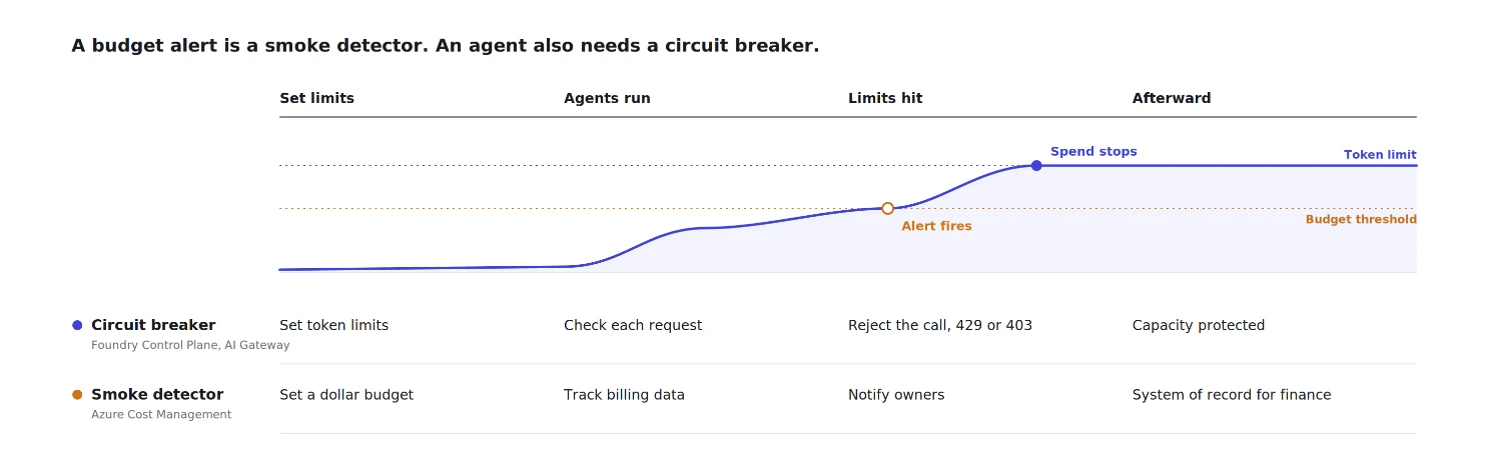
Effective AI governance operates on a three-pronged architecture: visibility, containment, and value-based assessment. Unlike traditional IT assets, where monitoring is often retrospective, AI agents require "in-path" governance. A smoke-detector-style budget alert is insufficient when an agent trapped in a faulty retry loop can consume thousands of dollars in tokens in a matter of minutes. Consequently, modern platforms have implemented circuit breakers—mechanisms that function within the request path to prevent uncontrolled expenditure before it reaches the invoice.

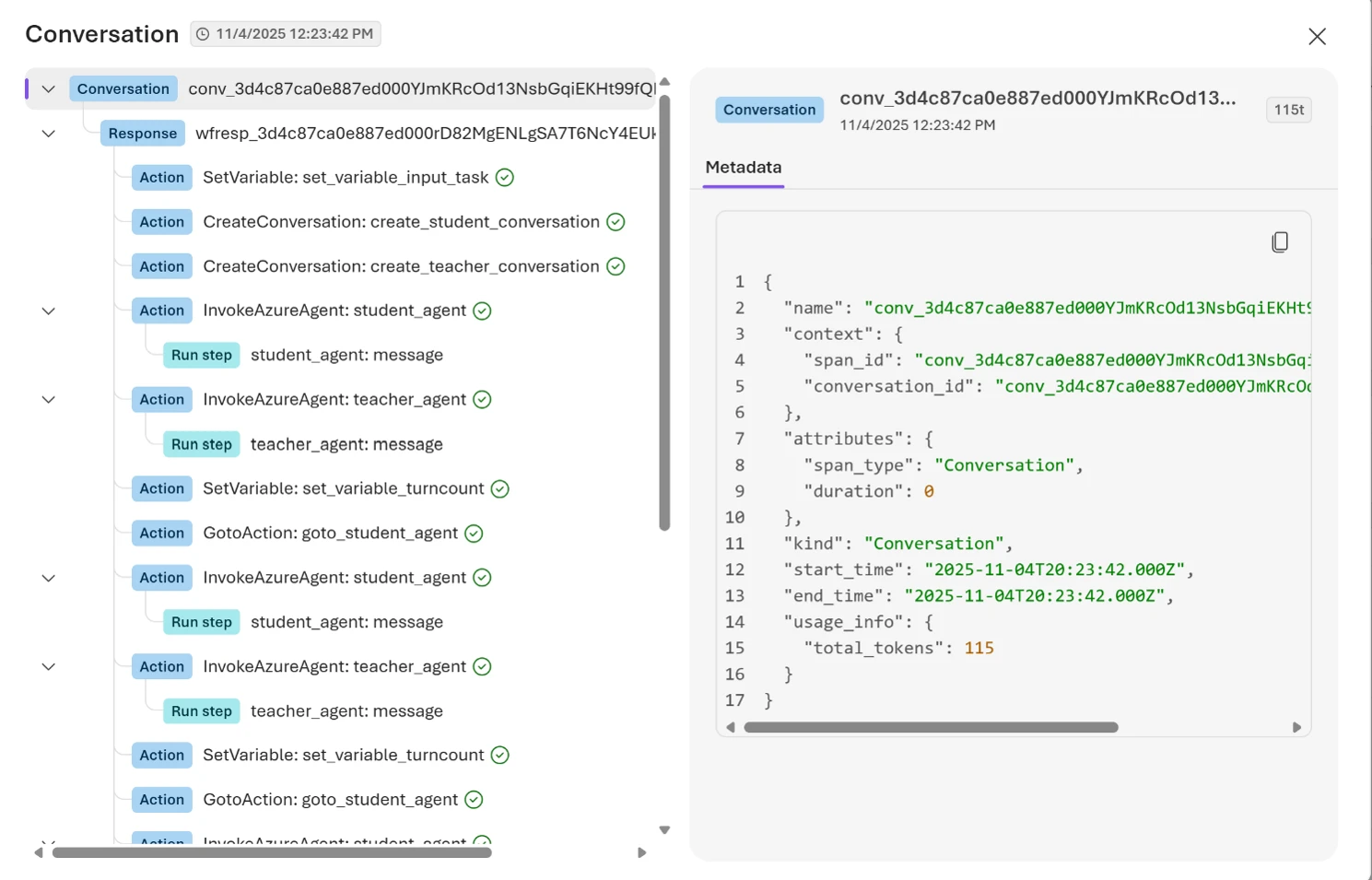
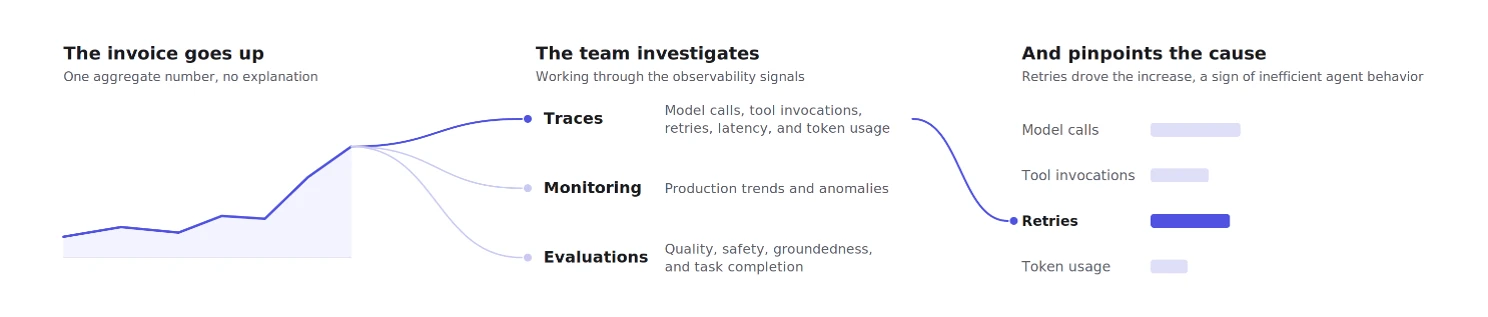
This governance cycle begins with observability. By utilizing project-level tags and API gateway metrics, organizations can now attribute token consumption to specific business units. This granularity is essential. For instance, data indicates that without per-project attribution, a single enterprise-wide deployment can mask inefficiencies in individual team workflows. By integrating tracing capabilities, engineering teams can now see not just the "how much" of an expense, but the "why"—differentiating between costs driven by high customer demand and those resulting from architectural inefficiencies, such as redundant model calls or excessive context window utilization.
Chronology of AI Financial Management
The evolution of these governance tools follows a distinct chronology:
- Phase I: The Pilot Era (Early 2024): Organizations prioritized speed. Governance was largely manual, focusing on security and basic access controls, with cost management treated as an afterthought.
- Phase II: The Visibility Gap (Late 2024 – Early 2025): As usage scaled, enterprises encountered significant difficulties in cost reconciliation. The industry responded by introducing basic cost analysis tools that relied on retrospective billing data.
- Phase III: The Control Era (Mid 2025 – Present): The focus shifted to real-time, in-path controls. The deployment of AI Gateways and token-level quotas allowed for the enforcement of consumption limits, effectively treating AI capacity as a finite, managed resource.
- Phase IV: The Value-Driven Future (Current): Current efforts are focused on the "Return on Investment" (ROI) problem—linking the dollar cost of token consumption to measurable business outcomes, such as case deflection rates, customer satisfaction scores, and successful task resolution.
The Technical Layer: Enforcing Spend Boundaries
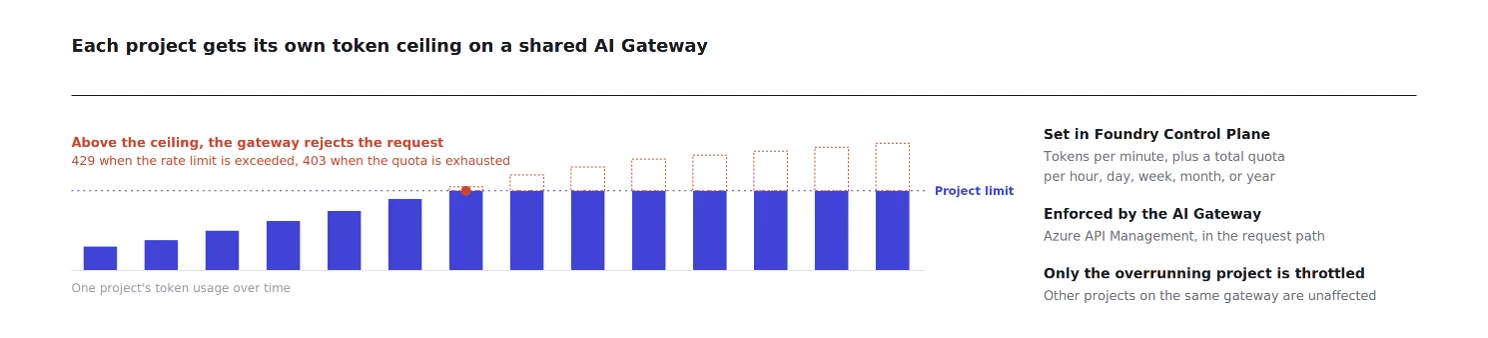
The implementation of spend limits occurs at three distinct layers, providing a defense-in-depth approach to fiscal control. At the foundation, platform-level limits—such as those found in Foundry—enforce strict token quotas and rate limits at the project scope. When a project reaches its defined threshold, the system triggers a 403 Forbidden or 429 Too Many Requests response, preventing further unauthorized consumption.
The second layer, the policy layer, utilizes tools like the llm-token-limit policy. This is particularly effective for organizations managing multi-model and multi-provider environments. By applying policies across OpenAI, Anthropic, and other backend providers, IT departments can ensure that a surge in traffic on one platform does not exhaust the capacity allocated for critical business workloads. Backend load balancing ensures that high-priority requests are routed through provisioned capacity, while secondary tasks are throttled or redirected to more cost-effective alternatives.
Finally, the third layer involves financial budgets integrated with administrative workflows. While token limits are technical, financial budgets are organizational. By connecting these budgets to automated incident management systems—such as Azure Monitor action groups—organizations can trigger automated workflows. If a budget threshold is breached, a Logic App could automatically notify the product owner, pause a specific deployment, or initiate a cost-optimization review, thereby preventing unplanned financial exposure.
Quantifying the ROI of Autonomous Agents
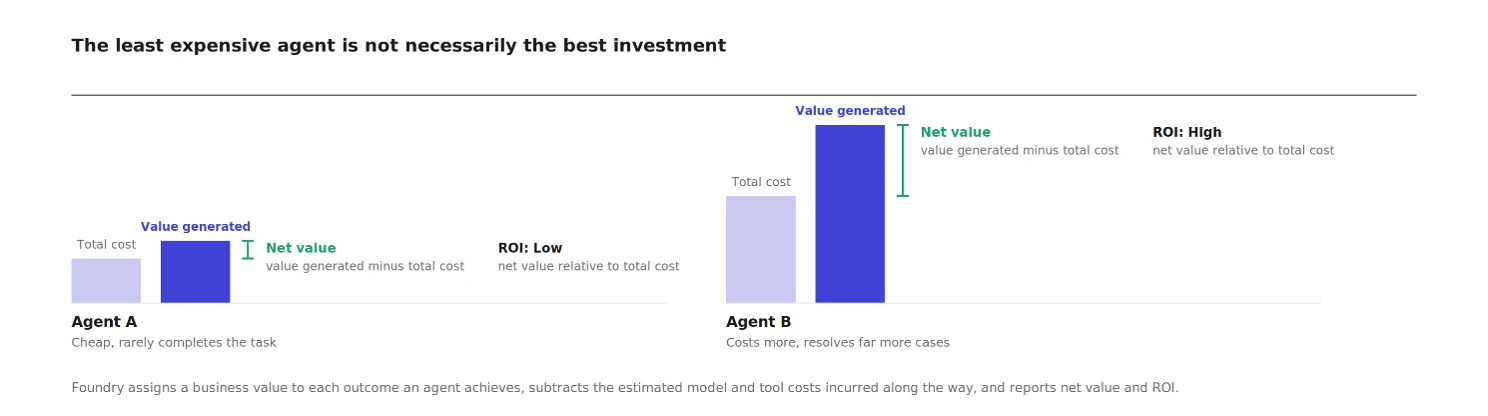
The most significant challenge currently facing enterprise AI leadership is determining whether an agent provides sufficient value to justify its operating cost. This is a departure from traditional software economics, where costs are relatively fixed. In the agentic era, a more expensive agent that achieves a 95% task completion rate may represent a superior investment compared to a "cheaper" agent that fails frequently and requires human intervention.
The introduction of ROI-focused dashboards in platforms like Microsoft Foundry is designed to bridge this gap. By assigning a dollar value to successful outcomes—such as the resolution of a customer support ticket—and subtracting the cost of the model calls and tool usage, organizations can calculate a "net value" for each agent. This data enables defensible decision-making. Instead of simply cutting costs by disabling agents, stakeholders can make informed choices about which agents to optimize, which to scale, and which to retire based on their contribution to the bottom line.
Implications for the Enterprise
The broader implication of this shift is the formalization of the "AI FinOps" discipline. Just as cloud migration necessitated a new approach to managing infrastructure spend, the rise of agentic AI requires a specialized skill set that combines software engineering, financial analysis, and data science.
Industry analysts suggest that this maturation will likely lead to a consolidation of the agent ecosystem. Organizations will move away from having hundreds of disparate, unmonitored agents toward a more curated portfolio of high-performing, well-governed systems. This consolidation does not necessarily mean less AI usage; rather, it implies higher-quality usage. By creating an environment where agents are accountable for their output, businesses can confidently increase their reliance on automation, knowing that the systems are contained by rigid technical limits and supported by clear financial performance metrics.
The transition from "experimental" to "managed" is not merely a technical update; it is a fundamental requirement for the long-term sustainability of enterprise AI. As these systems continue to evolve, the ability to manage the economics of agent optimization will define the competitive advantage of the next generation of enterprises. Those that successfully implement these governance structures will be able to harness the power of AI at scale, while those that fail to control the cost-to-value ratio risk significant financial, operational, and reputational challenges.
Ultimately, the goal is to treat agents as a high-performance investment portfolio. By ensuring that consumption is visible, attribution is accurate, and value is measurable, organizations can ensure that every token spent is an investment toward a tangible business result. As the industry moves forward, the integration of these financial and technical controls will remain the primary differentiator between successful enterprise AI adoption and unmitigated, runaway expenditure.
Related posts: