J.C. Penney Faces Steep Second-Quarter Sales Decline as Retail Rivals Edge Ahead in Competitive Department Store Landscape

The American retail landscape continues to undergo structural transformations, and traditional department stores find themselves navigating an increasingly complex consumer environment. J.C. Penney, one of the nation’s most historic retail institutions, experienced a notably challenging second quarter, trailing behind its primary sector competitors. While peer department stores such as Dillard’s and Macy’s managed to secure modest top-line gains during the period, and Kohl’s kept its sales declines to a marginal threshold of under one percent, J.C. Penney’s financial metrics highlighted deeper underlying vulnerabilities. For the first half of the fiscal year, the company’s total net sales dropped by 6.5 percent, sparking renewed discussions regarding its market positioning, inventory management strategies, and long-term turnaround execution.
Retail analysts point out that the recent downturn cannot be dismissed as a minor seasonal fluctuation. The broader retail market, and specifically the department store segment, demonstrated growth during the quarter, meaning J.C. Penney’s downward trajectory translates directly into a significant loss of market share. Despite targeted creative marketing campaigns and visible, positive enhancements made to the physical store layouts, momentum has proven difficult to sustain consistently. Company executives attributed the soft performance in apparel partly to reduced unit inventories, in-stock gaps, and a broader softening of consumer demand within seasonal categories.
A Closer Look at the Q2 Performance: Bright Spots Amidst Underperformance
To fully understand J.C. Penney’s current operational standing, one must examine the stark contrasts across its various merchandise departments. While the overall picture for the second quarter reflected top-line pressure, several key categories delivered robust growth, signaling that certain strategic initiatives are resonating with shoppers.
Active apparel emerged as a standout performer, registering a year-over-year sales increase of approximately 12 percent. This growth was propelled by strong consumer demand for Nike merchandise, team sports apparel, and select Adidas footwear lines. Retail analysts particularly highlighted effective merchandising strategies tied to major sporting events, such as the World Cup, which successfully drew sports enthusiasts into stores and onto digital platforms.
Beyond activewear, the home and lifestyle segments showed impressive resilience. Furniture sales surged by an impressive 41 percent compared to the same period in the previous year, while the jewelry department posted a solid 9 percent gain. Furthermore, the company’s salon business expanded by approximately 7 percent, driven by a balanced combination of retail product sales and core service offerings.
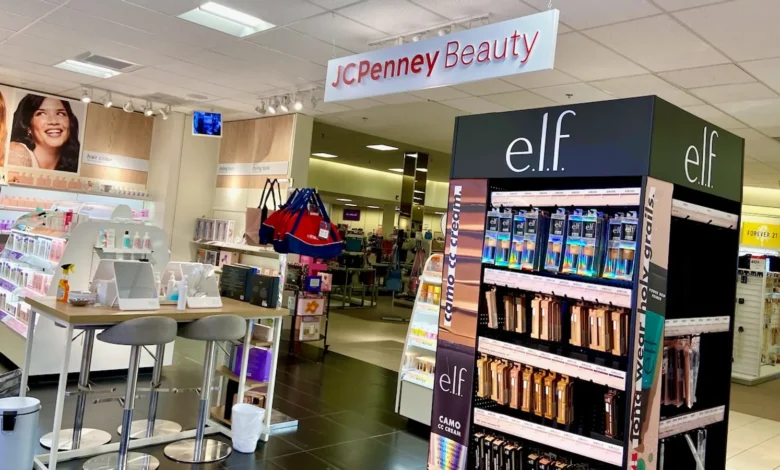
Perhaps most notably, J.C. Penney appears to have successfully navigated the post-Sephora era. Nearly four years after the high-profile termination of its partnership with the prestige beauty giant—which subsequently moved its popular shop-in-shops to rival Kohl’s—J.C. Penney has rebuilt its beauty division from the ground up. Beauty sales during the second quarter received a notable lift from skincare lines and the introduction of fresh color cosmetics collections, including popular additions like Milani and K-beauty brands. Industry observers have praised the retailer for thoughtfully engineering a modern, self-sustaining beauty proposition that effectively fills the void left by Sephora, especially as those very shop-in-shops have occasionally acted as a sales drag for Kohl’s in recent quarters.
The Structural Dilemma: When Not All Cylinders Fire
Despite these isolated pockets of strength, the overarching challenge for J.C. Penney remains rooted in the fundamental mechanics of the department store business model. As industry experts note, a traditional department store requires a cohesive ecosystem where virtually all departments operate efficiently and drive traffic simultaneously.
When core categories—particularly women’s and men’s apparel—underperform due to inventory constraints or shifts in consumer discretionary spending, the foundational revenue stream weakens. Even substantial gains in furniture or activewear cannot entirely offset systemic softness in high-volume categories. Consequently, J.C. Penney remains under persistent financial and operational pressure.
Unlike many of its historical competitors, which frequently resort to aggressive store closures or sweeping portfolio rationalizations to trim underperforming assets, J.C. Penney faces a unique corporate real estate dynamic. Because two of the retailer’s primary landlords are also its equity owners, the wholesale shuttering of unprofitable brick-and-mortar locations is statistically less likely. This ownership structure provides a distinct operational cushion, shielding the retailer from the immediate pressures that often force distressed companies into drastic liquidation measures.
Strategic Pivots and Digital Expansion: The Launch of JCPenney Marketplace
In an effort to diversify its revenue streams and capture a larger share of digital commerce, J.C. Penney introduced a new third-party e-commerce marketplace late in the second quarter. Early performance metrics for the JCPenney Marketplace have exceeded internal projections, suggesting that the platform could serve as a meaningful catalyst for incremental online growth over the long term. By expanding its digital product assortment through vetted external vendors, the retailer is attempting to replicate the marketplace models that have driven success for broader e-commerce giants.
Looking ahead toward the critical upcoming holiday shopping season, corporate leadership has outlined a focused, pragmatic playbook. J.C. Penney plans to lean heavily into value-focused pricing strategies, structuring its holiday marketing and in-store visual presentations around clear messaging regarding affordability and family-centric moments. Furthermore, executive teams have committed to maintaining real-time surveillance of the broader macroeconomic consumer environment, ensuring they retain the operational agility required to make rapid strategic adjustments as consumer behavior dictates.
Backing by Catalyst Brands and Financial Stability
A critical factor separating J.C. Penney’s current chapter from the fate of other storied department stores—most notably the protracted, mismanaged decline of Sears—is its robust structural and financial backing. J.C. Penney operates as a key component of Catalyst Brands, an operational and financial collective that also encompasses the Brooks Brothers operator, Sparc Group.
This affiliation provides J.C. Penney with vital operational synergies, supply chain efficiencies, and long-term capital support. Industry analysts emphasize that this institutional backing fundamentally alters the company’s risk profile.
The retailer is financially stable, backed by dedicated investors and the resources of Catalyst Brands, meaning it is not going anywhere. Unlike past retail casualties that were systematically hollowed out and starved of reinvestment, J.C. Penney is the beneficiary of concerted capital expenditure and deliberate physical and digital rehabilitation efforts.
Historical Context and Evolution of the Turnaround
To appreciate the trajectory of J.C. Penney, one must view its current struggles through the lens of its recent corporate history. Following its emergence from Chapter 11 bankruptcy protection in late 2020, the company was acquired by its primary landlords, Simon Property Group and Brookfield Asset Management, in partnership with other investors. This unprecedented rescue deal saved tens of thousands of jobs and preserved a foundational anchor for dozens of regional shopping malls across the United States.
Over the subsequent years, management focused on stabilizing operations, clearing legacy debt, and modernizing the supply chain. The formation of Catalyst Brands further integrated the retailer into a broader fashion and lifestyle ecosystem. However, macroeconomic headwinds, persistent inflationary pressures on middle-income consumers, and fierce competition from off-price retailers, fast-fashion giants, and digital-native brands have made top-line growth elusive.
Broader Implications for the Department Store Sector
J.C. Penney’s Q2 performance offers a broader lens through which to view the health of the mid-tier department store sector. As consumer discretionary spending tightens and shoppers increasingly prioritize experiential retail, discount alternatives, or essential goods, traditional department stores must continually justify their physical footprints and merchandise assortments.
For J.C. Penney, the path forward requires bridging the gap between its high-performing categories—such as activewear, home furnishings, and beauty—and its lagging apparel divisions. While the company’s structural safety net under Catalyst Brands and its landlord-owners ensures its continued survival, the ultimate measure of success will be management’s ability to translate digital innovations like the new marketplace and localized merchandising wins into sustainable, enterprise-wide top-line growth. As the retail industry prepares for the high-stakes holiday shopping season, all eyes will be on J.C. Penney to see if its value-focused pricing and strategic adjustments can successfully win back consumer loyalty and market share.