Exploring Google Opal: The Evolution Toward Dynamic Agent-Driven AI Automations

The landscape of no-code artificial intelligence development experienced a significant paradigm shift following a quiet, unannounced interface update to Google Opal. Originally launched in July 2025 as an experimental Google Labs offering designed to translate natural language prompts into working visual workflows via an internal framework known as Breadboard, Opal has transitioned from a rigid, model-specific pipeline constructor into an adaptive, agent-driven ecosystem. This development marks a maturation of user-facing generative AI tools, moving away from static prompt-response mechanics toward autonomous workflow execution.
Background Context and Evolution of the Framework
To understand the current trajectory of Google Opal, one must examine its technical lineage. Created by Google engineer Dimitri Glazkov, Breadboard served as the foundational architecture enabling developers and hobbyists alike to construct visual dataflow applications without deploying servers or managing complex deployment pipelines. Initial iterations relied strictly on a linear three-step process: User Input, a fixed Generate step utilizing manually selected models such as Gemini for text or Imagen for visuals, and a final Output step.

However, industry demands for higher adaptability pushed Google Labs to rethink how applications execute. In February 2026, developers opening the platform discovered a new option labeled "Agent" embedded directly above the traditional model list. Simultaneously, Google transitioned Opal from the experimental Google Labs catalog to the primary Google for Developers ecosystem under developers.google.com/opal. This migration typically signifies a long-term strategic commitment from the technology conglomerate, signaling that the platform has graduated from a speculative testbed to a formalized developer tool. By expanding its global footprint to over 160 countries, Google has positioned Opal as a primary contender in the burgeoning low-code/no-code AI automation sector.
The Mechanics of the Agent Step and Dynamic Routing

The introduction of the Agent step alters how applications process logical tasks. Under the legacy framework, a creator was required to manually select a specific model and author a rigid prompt that executed identically during every run. Conversely, the Agent step delegates decision-making authority to the underlying system at runtime.
When an agent step is initialized, the system evaluates the stated objective rather than following a strict script. It dynamically assesses whether to utilize Gemini’s advanced reasoning capabilities, execute an external web search for real-time data, or invoke multimedia generation modules. This capability is underpinned by three core architectural additions: integrated memory management, dynamic runtime routing, and interactive chat loops.
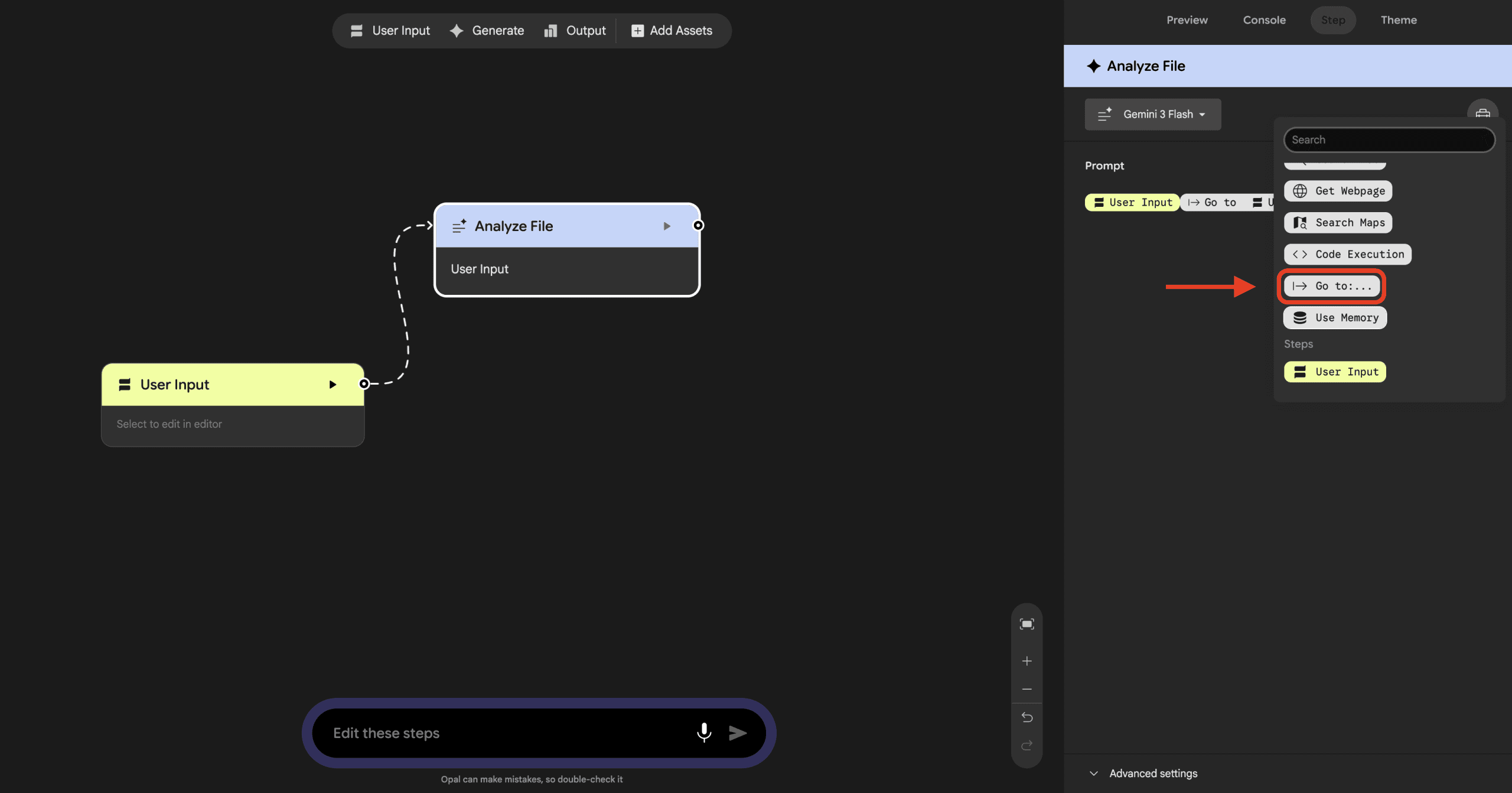
Memory integration allows applications to retain context across user sessions—such as professional history, target roles, or user preferences—eliminating the need for redundant data entry. Dynamic routing empowers the agent to construct its execution path on the fly, diverging from predictable linear workflows. For instance, if a user submits a specialized query that requires up-to-date market information, the agent autonomously invokes web-retrieval mechanisms without requiring the creator to hardcode a search node into the visual canvas. Interactive chat functions similarly allow the workflow to pause, query the user for clarifying details when inputs are ambiguous, and resume execution once the necessary parameters are provided.
Expanded Model Ecosystem and Specialized Tooling

This operational flexibility is supported by an expanded catalog of specialized models integrated into Opal’s picker interface. While early versions primarily offered basic text and image generation, the contemporary roster includes:
- Agent: Dynamically selects models and tools based on a stated goal.
- Gemini Flash: Optimized for high-speed, everyday text processing and lightweight reasoning.
- Gemini Pro: Deployed for complex multi-step reasoning and analytical operations.
- Nano Banana and Nano Banana Pro: Dedicated image generation and editing suites, with the Pro variant specialized for accurate text rendering within visuals.
- AudioLM: Specialized in text-to-speech synthesis.
- Veo: Facilitates text-to-video and image-to-video generation.
- Lyria 2: Dedicated to instrumental music generation.
This diversified model lineup provides agents with a specialized toolkit, ensuring that tasks are routed to the most computationally efficient and contextually appropriate model available.
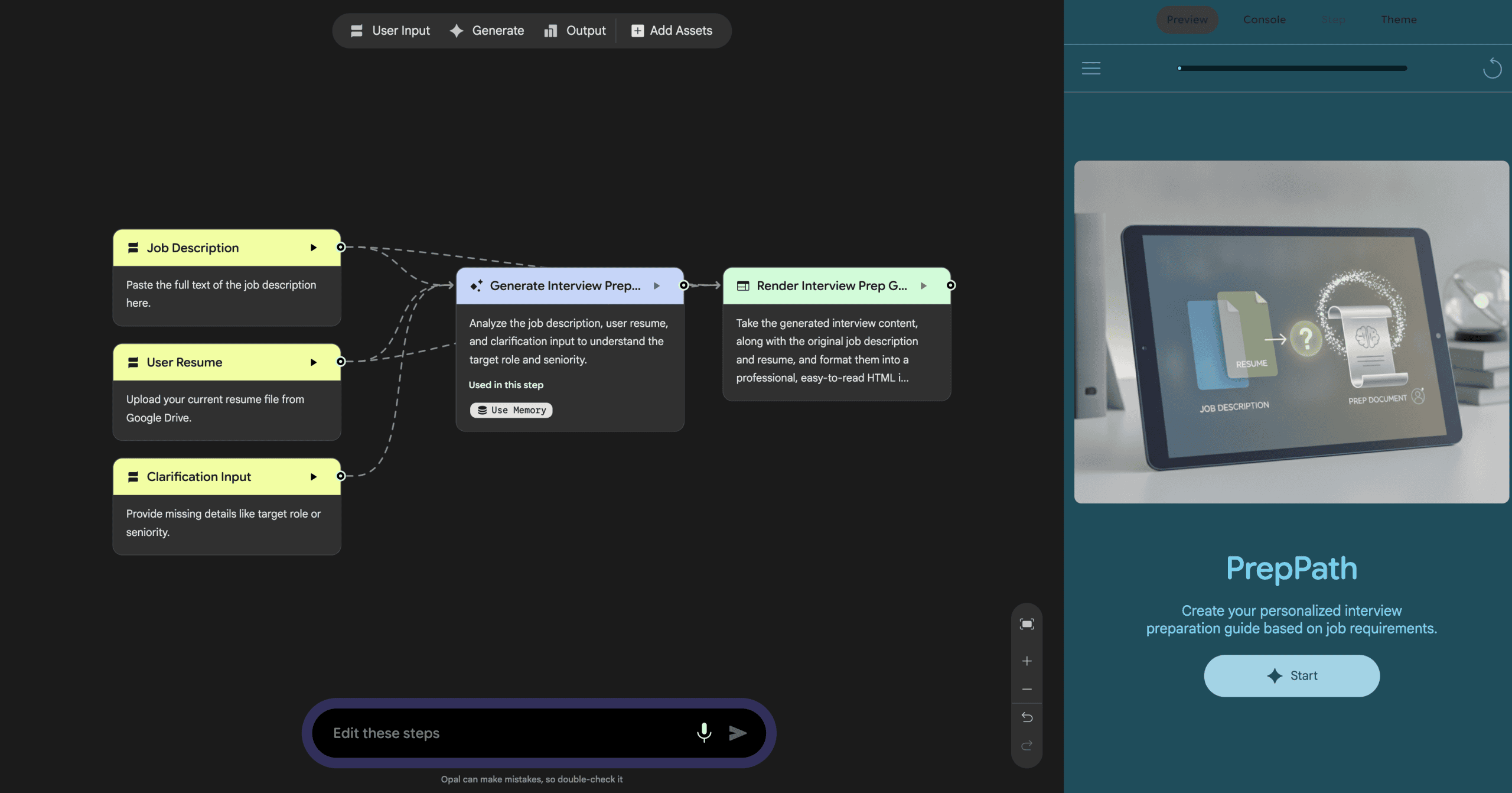
Practical Application: Constructing an AI Interview Preparation Coach
To demonstrate the capabilities of these new features, developers can construct advanced applications that surpass the limitations of legacy pipelines. A practical example is an AI Interview Prep Coach designed to ingest a candidate’s resume and a target job description, identify missing parameters, execute targeted research, and generate a customized preparation document.
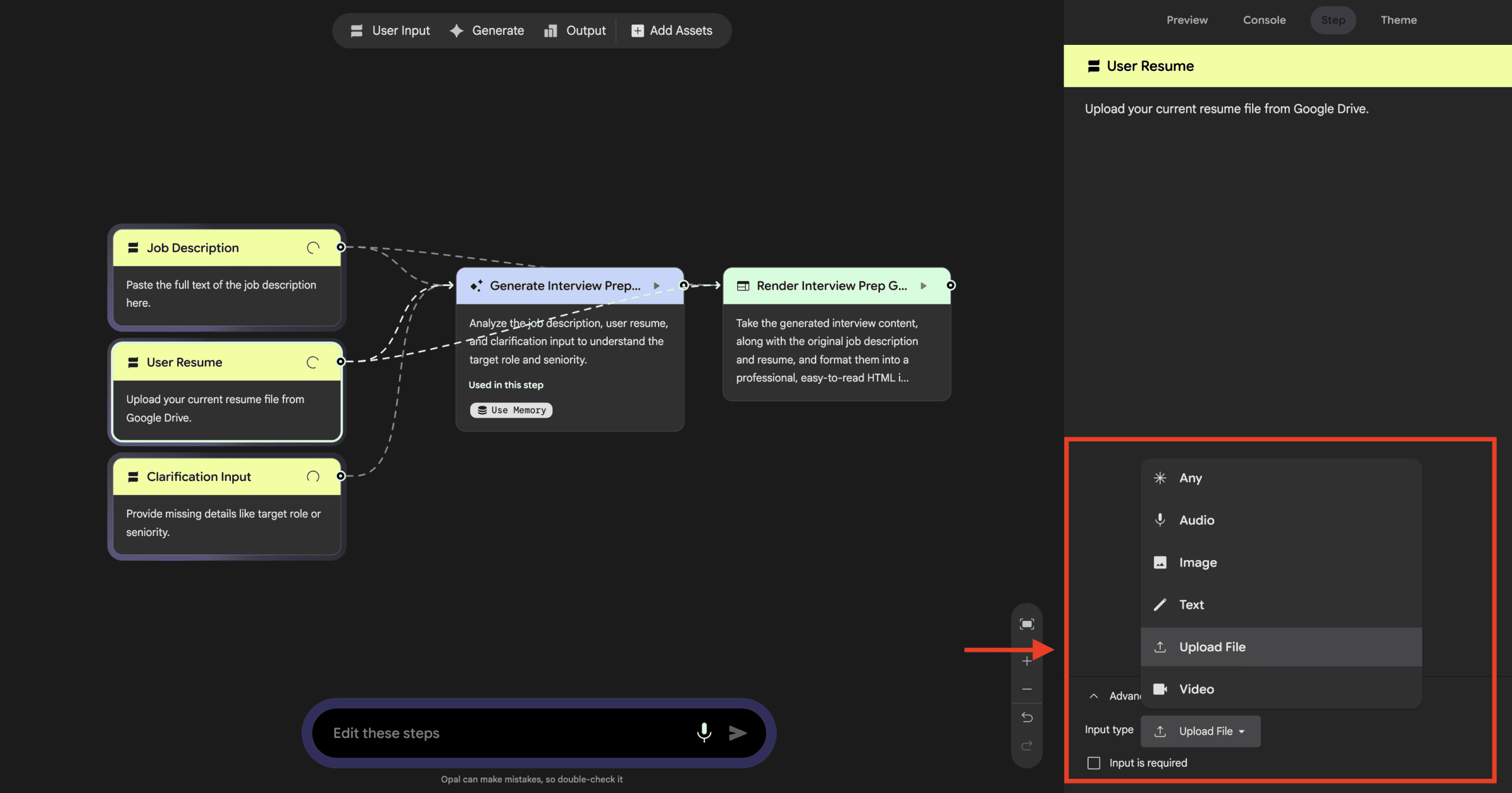
Unlike traditional linear apps that fail when presented with ambiguous data, an agent-powered interview coach evaluates the input completeness. If critical details such as seniority level or company context are absent, the interactive chat protocol pauses the workflow to prompt the user directly. Furthermore, the agent determines whether the target company requires real-time web research to compile relevant interview questions. Upon synthesizing these variables, the application leverages memory to store user preferences for future visits and outputs a structured preparation document directly into Google Docs.
Execution logs within the Opal Console reveal the adaptive nature of these workflows. Running the same application with different resumes frequently results in divergent execution paths—one run may trigger external web searches for a niche startup, while another bypasses research entirely due to the model’s pre-existing familiarity with a mainstream role.

Industry Implications and Limitations
While the integration of autonomous agents into no-code environments lowers the barrier to entry for application development, certain structural limitations remain. Industry analysts note that Opal currently lacks a direct export mechanism to production-ready code. Consequently, applications prototyped within Opal cannot be deployed as standalone enterprise software without being manually reconstructed using production APIs, such as the Gemini API.
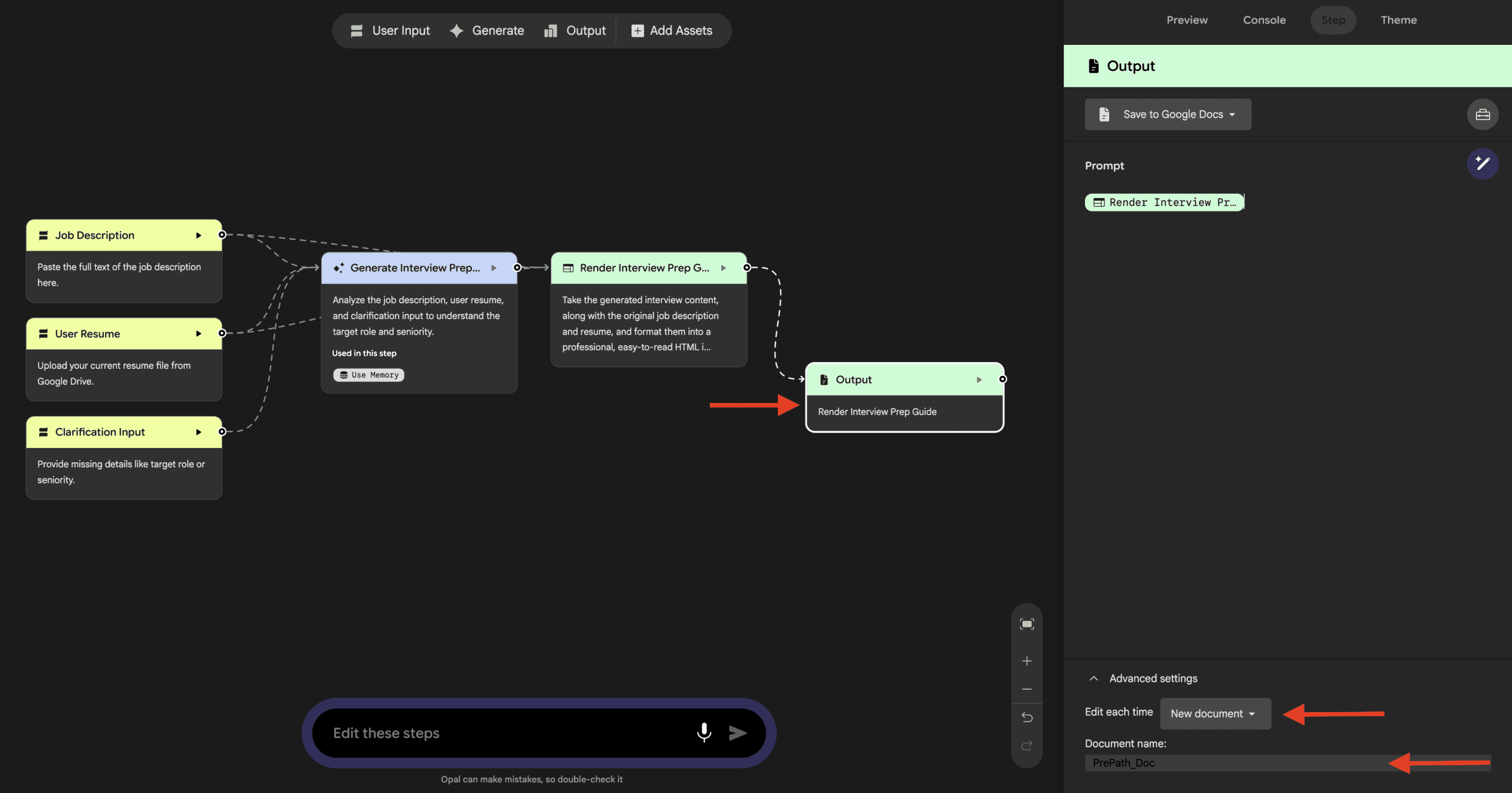
Additionally, official documentation has yet to establish comprehensive quotas, rate-limiting policies, or enterprise-grade compliance features such as single sign-on (SSO) and detailed audit logging. These factors suggest that while Opal excels as a rapid prototyping and personal automation environment, enterprise deployment requires careful architectural planning outside the native platform.
Broader Impact on the Software Development Lifecycle
The rapid evolution of tools like Google Opal reflects a broader industry trend toward intent-driven software development. By abstracting away the complexities of API integration, conditional workflow logic, and manual model selection, platforms of this nature empower domain experts without traditional software engineering backgrounds to build functional automation tools.
As Google continues to refine agent architectures within Breadboard and expand developer support, the line between traditional programming and natural language orchestration continues to blur. Whether these experimental environments will eventually incorporate native code-export capabilities or enterprise governance frameworks remains to be seen, but the current pace of feature deployment underscores a definitive industry shift toward autonomous, agentic workflows.