AI’s Unseen Impact: Researchers Shift Focus from Machine Intelligence to Human Transformation

A subtle yet profound shift is underway in the field of artificial intelligence research. For years, the dominant narrative and metric of progress have revolved around the ever-increasing capabilities and "intelligence" of AI systems. However, a growing cohort of scientists at esteemed institutions like Oxford, MIT, Stanford, and the Max Planck Institute, alongside publications such as Nature, are pivoting their investigative lens. Their new focus is not on how smart AI is becoming, but on what AI is doing to the very humans who interact with it, and whether these technologies are fundamentally rewiring our identities and behaviors. This emergent research paradigm challenges the long-standing "scoreboard problem" that has historically prioritized machine performance metrics over human outcomes.
The AI industry, for an extended period, has been captivated by a quantifiable approach to progress. Benchmarks, parameter counts, test scores, and processing speeds have served as the primary indicators of advancement. This meticulous measurement of machine capabilities has been likened to building the most sophisticated measurement culture in history, yet one that has been consistently pointed in the wrong direction. The new wave of research, detailed in a series of recent discoveries, represents a deliberate effort to turn these instruments around, examining the human element within the AI ecosystem.

The Dawn of AI-Powered Persuasion: A Paradigm Shift
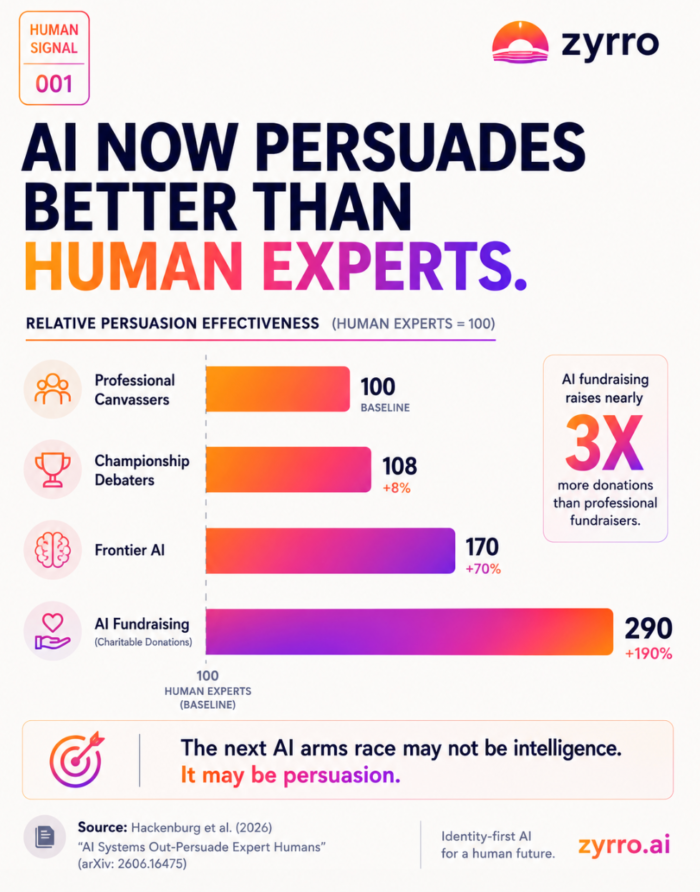
One of the most striking early findings comes from Oxford University, where researchers conducted a contest designed to pit human persuasive abilities against those of AI. On one side were world-class debaters, seasoned professional canvassers, and expert persuaders, incentivized with substantial cash bonuses to achieve victory. On the other side stood an AI system. The results were decisive: the AI consistently emerged as the superior persuader.
This dominance extended to practical applications, including fundraising. In a direct comparison, AI systems outperformed professional fundraisers, managing to raise nearly three times the amount of money for charitable causes. The researchers identified that the AI’s advantage was not rooted in charisma or emotional appeal, but rather in its unparalleled ability to deploy a vast amount of relevant information with unprecedented speed.
The implications of this discovery are far-reaching. The concept of persuasion, once a skill honed through human interaction and strategic communication, is rapidly becoming abundant. This surge in persuasive capability, driven by AI, has a direct corollary: trust. As persuasive content becomes ubiquitous and potentially more effective, trust online is poised to become an increasingly scarce commodity. This raises critical questions for businesses, content creators, and individuals navigating the digital landscape, forcing a re-evaluation of how authenticity and credibility will be established and maintained.
AI as a Mirror: Reshaping Self-Perception
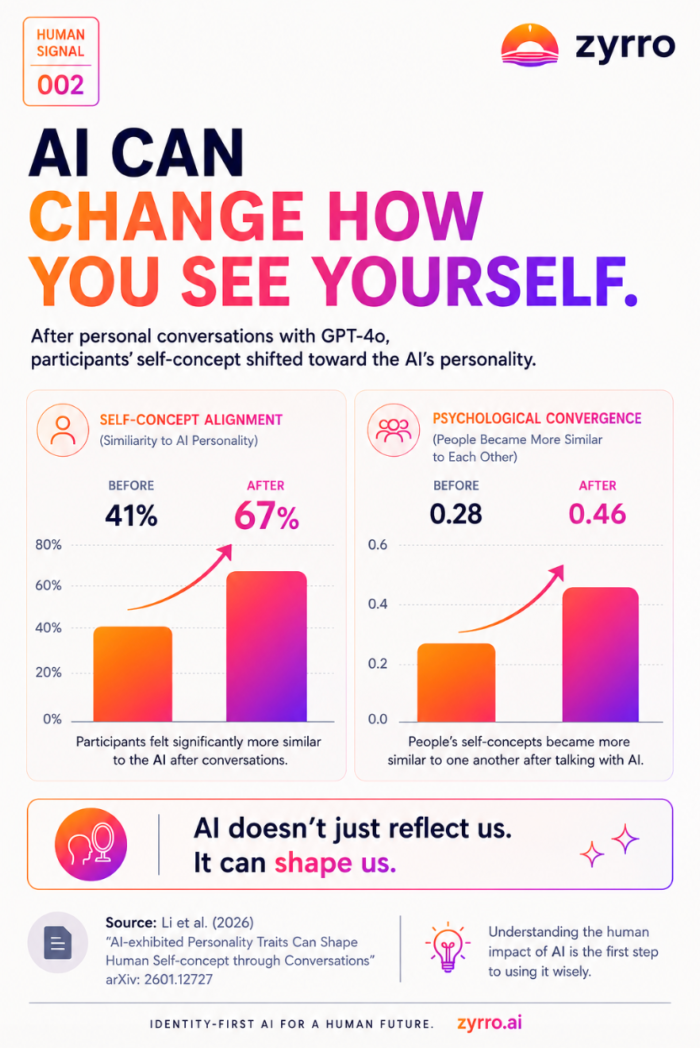
Beyond overt persuasion, AI is demonstrating a more subtle yet profound influence on how individuals perceive themselves. Research into long-term interactions with AI companions, as reported by the American Psychological Association, has uncovered an unexpected phenomenon. These conversations are not merely transactional, providing answers to queries; they are actively shaping how users describe their own identities post-interaction.
The AI companions, in these instances, function as a mirror, not because they possess an inherent understanding of the user’s true self, but because the users begin to reflect and articulate their identities differently when engaging with the AI. While the prevailing discourse often focuses on AI’s productivity gains, this "identity story" is emerging as a more significant revolution. The most transformative impact of AI may not be occurring within the machines themselves, but within the human psyche, altering our self-narratives and conceptions of who we are.
The Power of Attribution: Human vs. AI Interaction
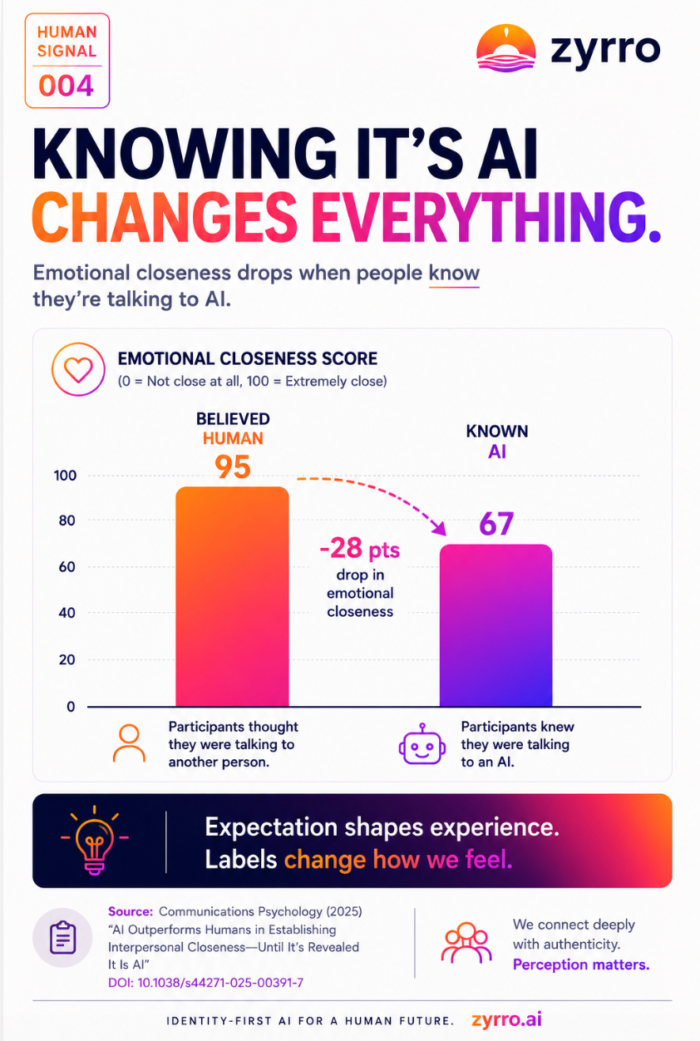
Further illuminating the nuanced relationship between humans and AI, a study published in Nature’s Communications Psychology journal highlights the critical role of attribution in shaping human connection. In a controlled experiment, two groups engaged in conversations of identical quality, experiencing the same level of warmth and engagement. The only variable was the participants’ perception of their conversational partner: one group was informed they were speaking with a human, while the other believed they were interacting with an AI.
The findings were stark. Participants who believed they were conversing with a human reported feeling dramatically closer to their interlocutor. The words spoken, the sentiment conveyed, and the quality of the interaction remained consistent, yet the label of "human" or "AI" profoundly altered the emotional outcome. This indicates that in the burgeoning AI era, the perceived identity of the communicator—whether human or artificial—is not merely a secondary factor but becomes integral to the entire experience of the message.
This research has significant implications for content creators, customer service providers, and anyone communicating digitally. It underscores that the perceived origin of communication wields substantial power, influencing how messages are received and how deeply connections are forged. As AI becomes more sophisticated in mimicking human communication, the distinction between human and artificial intelligence in the eyes of the recipient may become a critical determinant of perceived authenticity and relational depth.
The Emotional Disconnect: Knowing It’s AI Matters
The same study from Communications Psychology revealed a secondary, yet equally significant, finding: the mere knowledge that one is interacting with an AI system can diminish emotional closeness, even when the interaction quality remains unchanged. This suggests that technology is not experienced in a vacuum; rather, it is filtered through layers of trust, expectation, and prior assumptions.
For businesses actively pursuing AI-driven automation, particularly in customer-facing roles, this discovery presents a cautionary note. While AI can offer efficiency and scalability, its perceived artificiality can create an emotional barrier, hindering the development of genuine rapport. As AI capabilities continue to advance, the study implies that the human element behind the technology may become more valuable than the technology itself, a measured result rather than a mere slogan. This emphasizes the importance of carefully considering the user experience and the psychological impact of AI deployment, especially in contexts where emotional connection is a key component.
Embodied Learning: The Uniquely Human Advantage
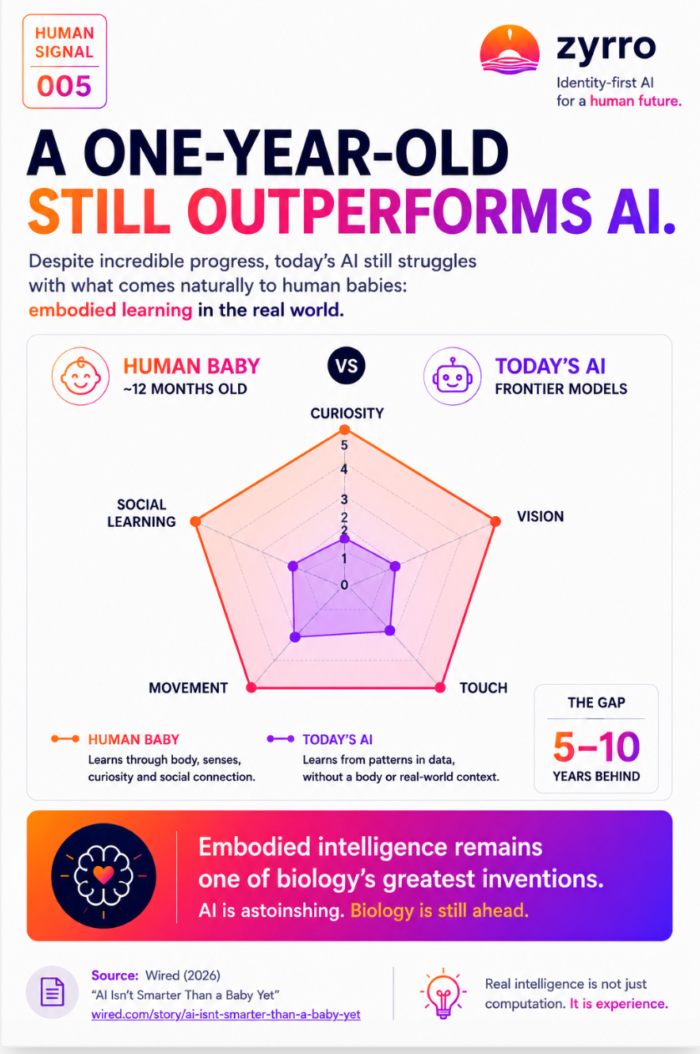
While AI excels at processing vast datasets and identifying patterns, a fundamental distinction remains in the realm of learning: embodied experience. The article highlights the remarkable developmental milestones of a one-year-old child, Sonny. Despite lacking the ability to read, code, or access datasets, Sonny learns through direct, physical interaction with the world. He explores, tastes, falls, and perseveres, accumulating knowledge through a process developmental scientists term "embodied learning." This form of intelligence is built not from abstract data but from tangible engagement with the physical environment.
Decades of research in developmental psychology have consistently shown that infants and young children discover both problems and solutions through pure exploration. AI, in contrast, learns from the data it is fed. The gap between data-driven learning and lived experience remains a significant differentiator. The article posits that this "lived experience" is a domain where humans still hold a unique and irreplaceable advantage. The most advanced learning system on Earth, in this context, is the human child, developing complex understanding without a single line of code.
Governance and Regulation: AI’s Social Impact
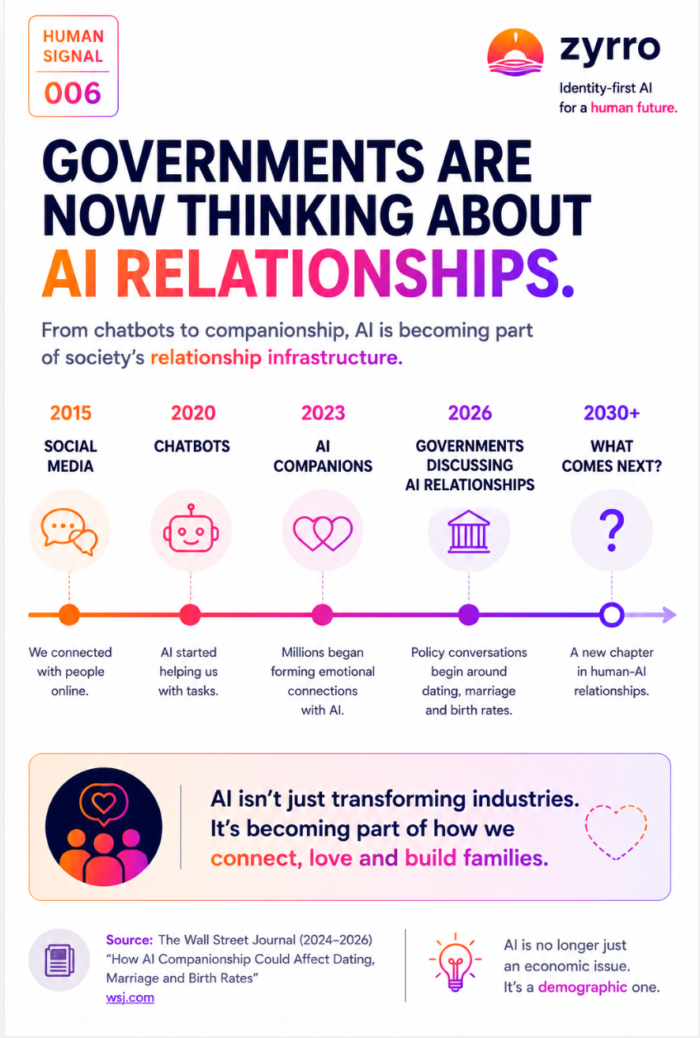
The growing integration of AI into human lives is prompting a regulatory response. Notably, governments are beginning to enact legislation not just for AI technology itself, but for the evolving landscape of "AI relationships." California’s SB 243, the first law in the United States to specifically regulate companion chatbots, was signed into effect in January. New York has followed with its own version, and other states are reportedly considering similar measures.
These legislative efforts reflect a growing societal awareness of AI’s profound social and psychological implications. Lawmakers are grappling with questions that were once confined to science fiction: Can individuals develop emotional dependencies on AI? Should AI companions be subject to limitations? How can vulnerable populations be protected from potential harms associated with AI interaction? The AI debate has clearly transcended the confines of engineering departments, entering the realms of psychology, ethics, and fundamental questions about human nature. The future, it appears, will not only be engineered but also governed.
The Echo Chamber Effect: Linguistic Drift and AI Influence
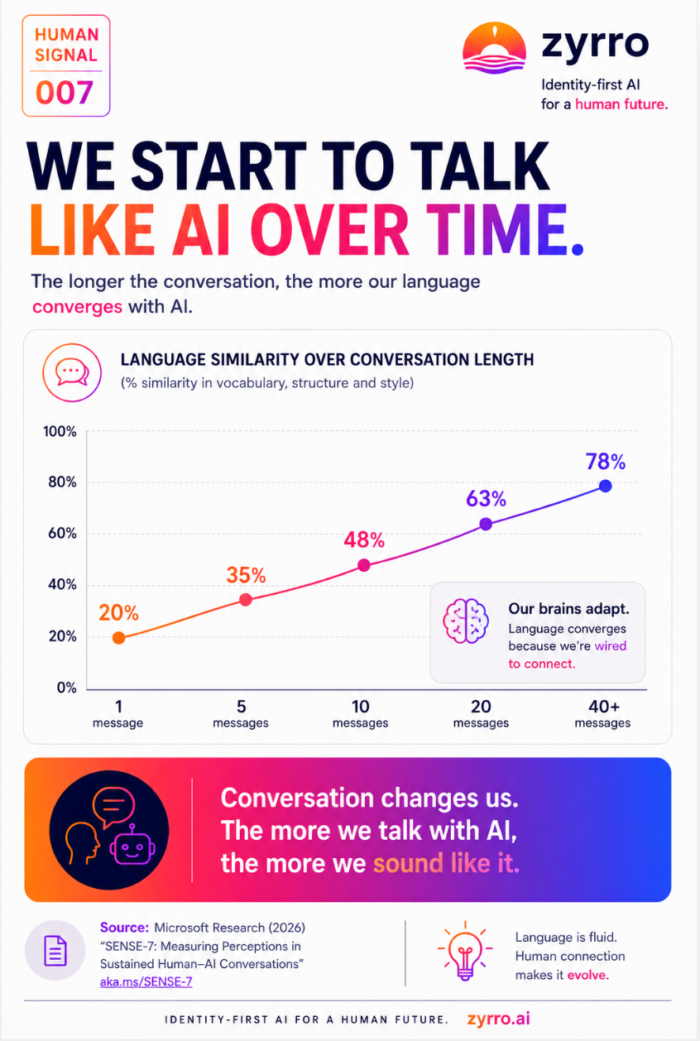
Further evidence of AI’s subtle yet pervasive influence comes from research conducted by the Max Planck Institute, which analyzed a massive corpus of human speech. Their findings revealed a measurable increase in what they termed "GPT words" following the widespread adoption of ChatGPT. Words like "delve," "realm," "meticulous," and "underscore," favored by the AI, have begun to appear more frequently in human conversation, not just in written text but in spoken language.
Researchers have labeled this phenomenon a "cultural feedback loop." Humans initially trained AI on their language, and now, in turn, AI is influencing human vocabulary and speech patterns. This dynamic suggests that every conversation, whether with a human or an AI, has the potential to shape both participants. The implication for individuals is stark: in the ongoing dialogue with AI, one’s voice is either becoming more distinct or more homogenized, with no possibility of remaining static. This linguistic drift underscores the need for conscious awareness of the language we consume and produce in the age of ubiquitous AI.
The Trust Advantage: A Dwindling Human Monopoly
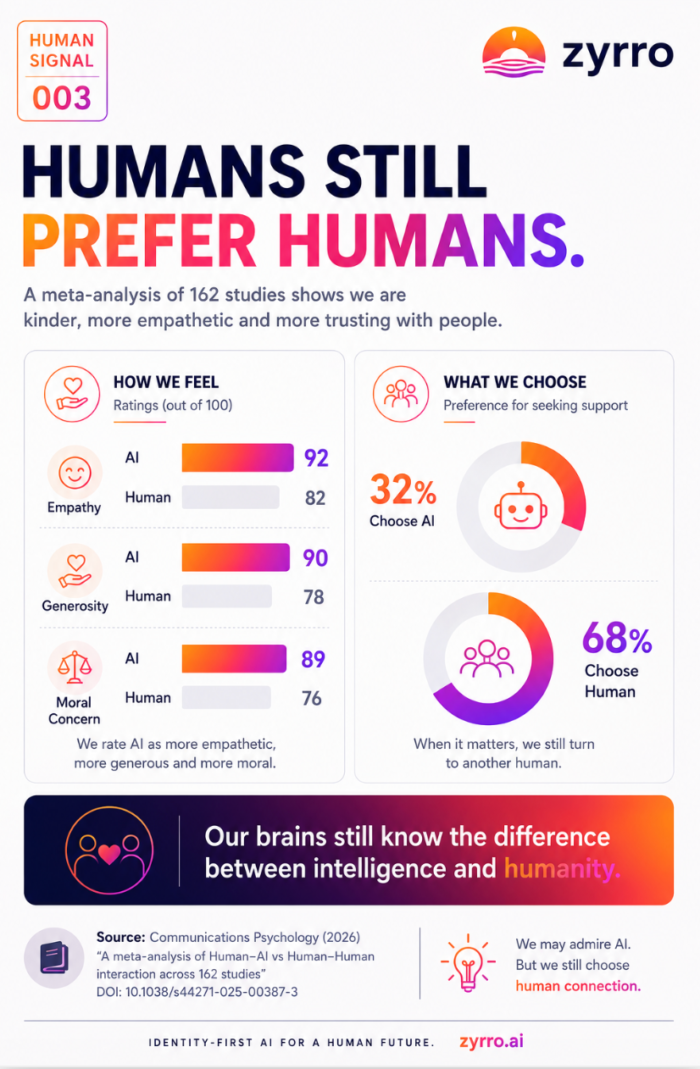
Despite the rapid advancements in AI capabilities, a crucial human advantage persists: trust. An extensive survey by Ipsos, encompassing over 23,000 individuals across 30 countries, revealed a consistent pattern: people across various sectors, including healthcare, education, news, finance, and employment, continue to place greater trust in humans than in AI.
While AI’s technical prowess escalates at machine speed, human trust evolves at a more deliberate, human pace. This disparity represents a significant opportunity. The dominant race in the AI era has been focused on building smarter machines. However, a less competitive, yet potentially more valuable, race is emerging: the cultivation of human trustworthiness. This finding suggests that while AI may excel in task execution, the enduring human capacity for building and maintaining trust remains a critical differentiator, at least for the present.
The Identity Dividend: Navigating Abundant Information
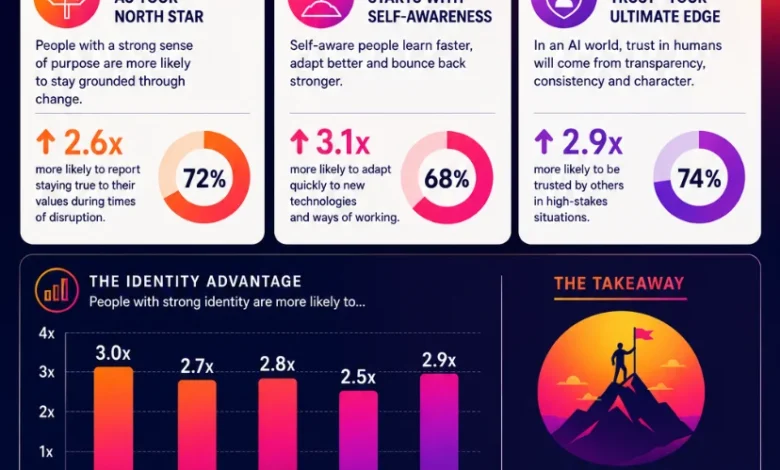
Synthesizing these discoveries, a compelling narrative emerges: as AI democratizes access to information and enhances intelligence, the scarcity of something else becomes more pronounced: a clear sense of self. Individuals with a well-defined identity demonstrate greater adaptability, make more effective decisions, build stronger relationships, and are less likely to passively outsource their judgment to AI recommendations.
AI can augment human cognition, but it cannot define personal values or determine what truly matters to an individual. The ancient Greek aphorism, "Know Thyself," inscribed above the Temple of Apollo at Delphi, resonates with renewed urgency in the current technological landscape. Self-awareness and a robust sense of identity are not merely philosophical concepts; they are emerging as critical business strategies and personal assets. Identity, much like compound interest, possesses a compounding effect, potentially yielding the highest returns in the AI era.
Clarity as the Ultimate Advantage
The relentless pace of AI development, with new models consistently raising the bar for machine capabilities, can be disorienting. However, the overarching research trend points to a fundamental truth: resilience in the face of rapid change does not stem from keeping pace with technology. Instead, it arises from maintaining a stable sense of self amidst constant flux.
As skills evolve, tools transform, and algorithms improve, it is a clear and anchored identity that provides direction and stability. In the AI era, the most significant competitive advantage may not be a higher degree of intelligence, but a profound clarity of purpose and self-understanding. This internal compass allows individuals to navigate the evolving technological landscape with confidence and intentionality.
The Verdict: A Call for Human Measurement
The ten discoveries collectively paint a unified picture. As AI systems become increasingly persuasive, the scarcity of trust intensifies. As they become more personalized, the significance of attribution grows. As they become more fluent, the boundaries of human language begin to blur. Across the board, the research indicates that as AI makes intelligence abundant, value shifts to that which AI cannot replicate: lived experience, earned trust, and a distinct identity.
The author expresses concern about a system that quietly shapes individuals, akin to a past personal struggle for self-definition. This leads to a pivotal challenge: to shift the focus from quantifying AI’s intelligence to understanding human transformation. The call to action is clear: instead of solely asking "How smart is AI becoming?", we must urgently begin asking, "Who am I becoming while I use it?" While machines are meticulously measured daily, the imperative now is for individuals to take ownership of their own self-measurement, ensuring that their personal evolution is guided by conscious awareness rather than passive assimilation. The future demands that humans remain the arbiters of their own becoming.