The digital landscape is constantly evolving, and with the rise of AI-powered search, establishing a strong online presence has become more complex than ever. Brands that excel in publishing high-quality content and maintaining a robust brand image may still find themselves lacking in a crucial area: topical authority. This concept, often overlooked, is the key to being recognized by search engines and artificial intelligence models as a definitive expert in a specific niche.

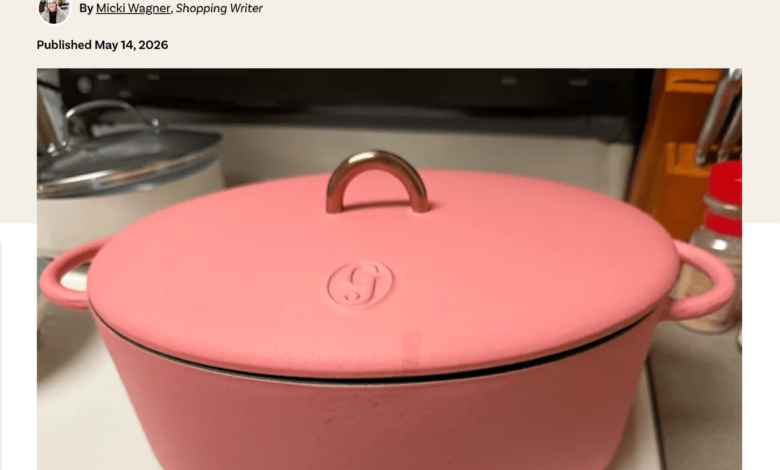
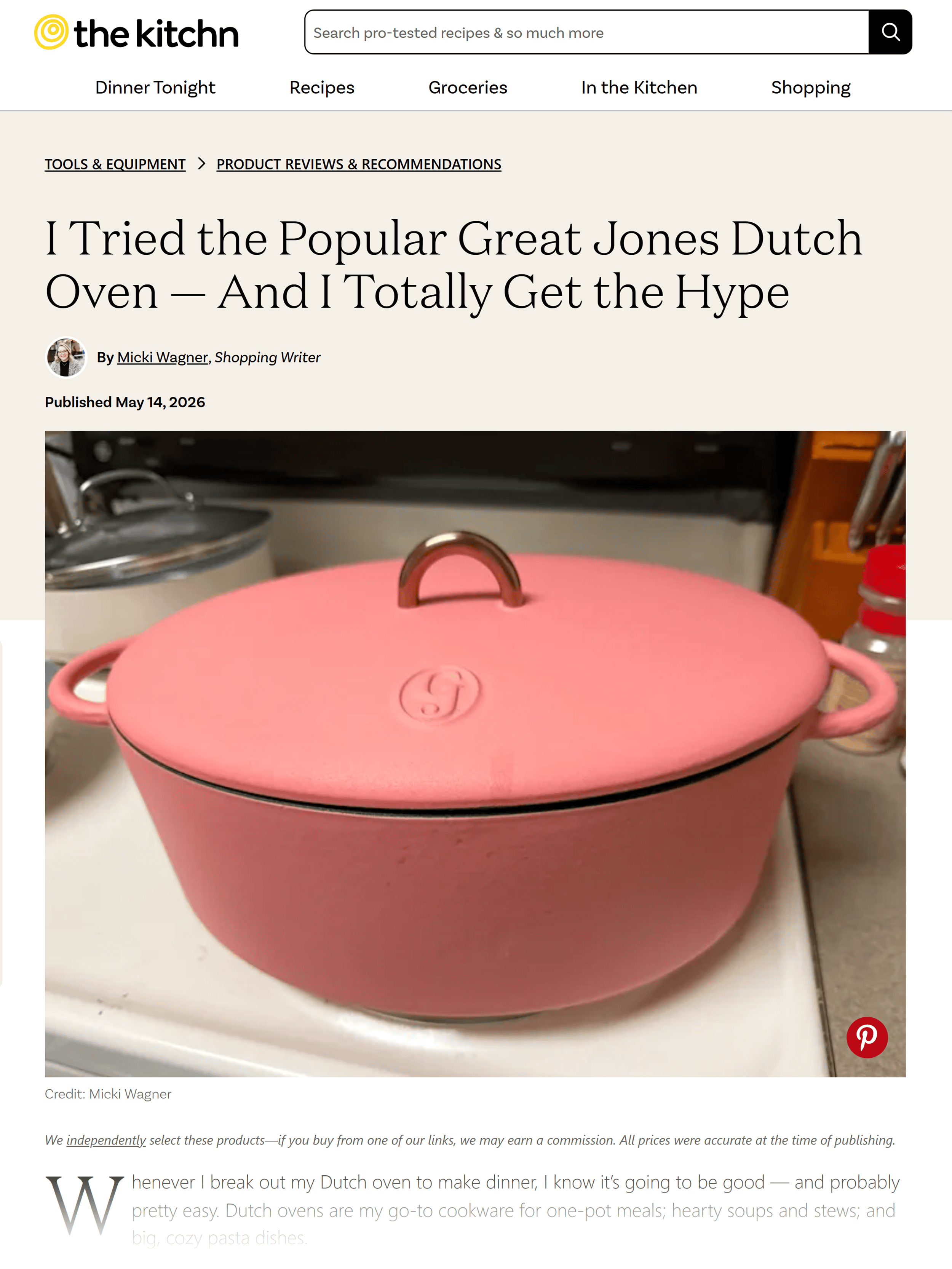
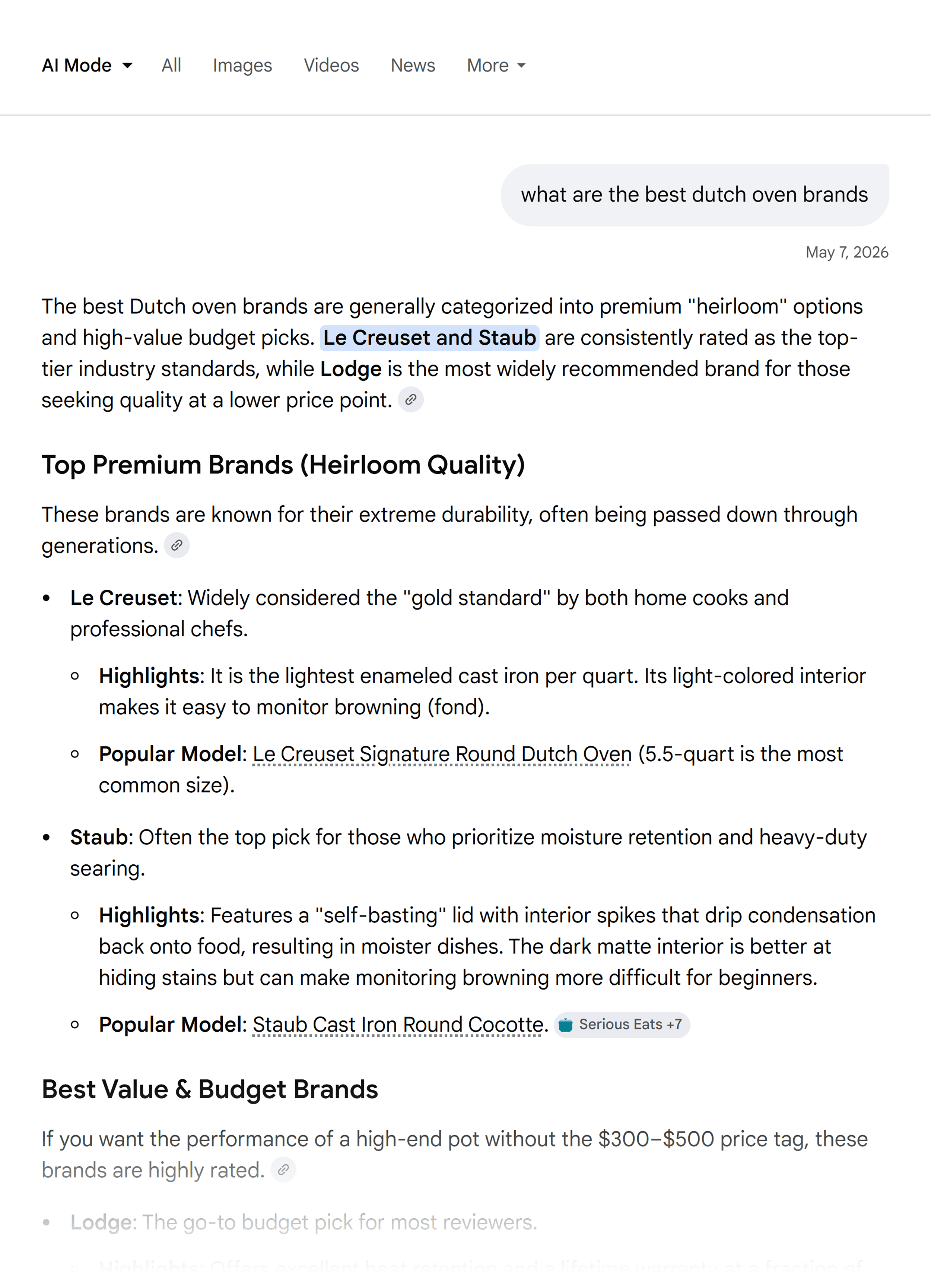
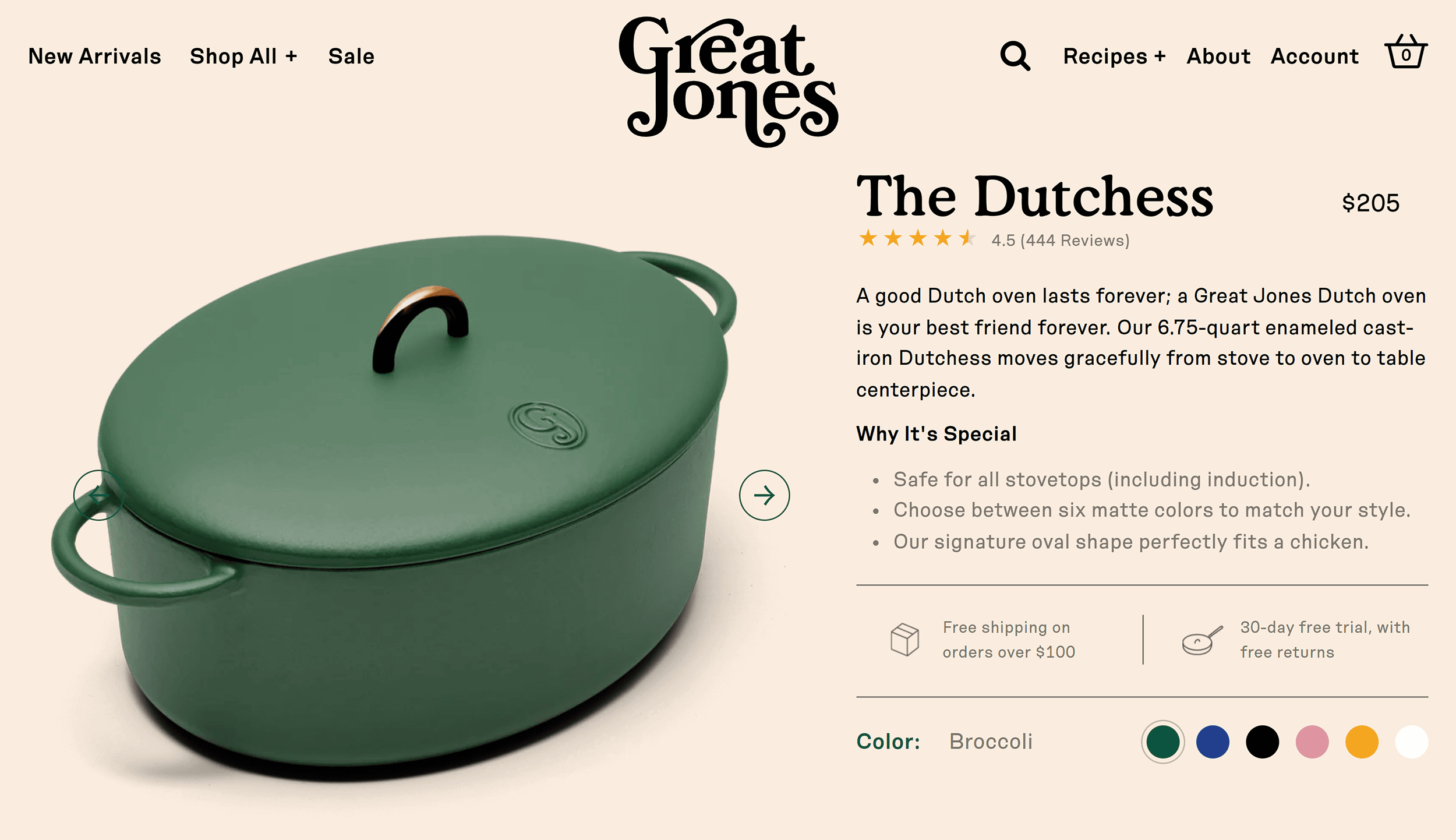
Consider Great Jones, a well-regarded kitchenware company. Their signature Dutch oven, aptly named "The Dutchess," is a product that garners significant praise. It’s aesthetically pleasing, boasts excellent customer reviews, and has been featured in prestigious publications such as Vogue, The New York Times, Bon Appétit, and The Kitchn. Despite this impressive media presence and product quality, a simple search for "best Dutch ovens" on Google or a query posed to a large language model (LLM) rarely yields Great Jones as a top recommendation.
This disconnect isn’t due to a lack of content or media coverage. Instead, it stems from a missing element: a consistent, positive pattern of association between the brand and the topic of Dutch ovens. When this pattern is absent, both search engines and LLMs struggle to confidently link a brand to a specific subject, leading them to default to competitors with more established signals. This challenge, amplified by the advent of AI-driven search, highlights a significant gap many brands face. Fortunately, this gap is not insurmountable; it can be addressed through a strategic framework.
The Topical Authority Pyramid, a framework developed to help brands become recognized leaders in their respective fields, offers a structured approach to building this essential authority. This framework is informed by insights from industry experts, including Amanda Milligan, Content and Growth Manager at Semrush, and a deep understanding of brand positioning across various sectors like e-commerce, SaaS, and finance.
Understanding Topical Authority
Topical authority refers to a website’s earned reputation for expertise on a particular subject. This authority is established when a brand’s identity and a specific topic are repeatedly and positively associated across various trusted sources, including those frequented by consumers, search engines, and AI systems.
Think of brands that are automatically linked to certain topics in your mind. These associations are often not consciously formed but develop organically because these brands consistently appear with the same message, within the same contexts, surrounding the same subject matter. This is the essence of topical authority and how search engines and LLMs learn to connect brands with specific areas of expertise.
The Topical Authority Pyramid Framework
Traditionally, topical authority was largely determined by the volume and breadth of content a brand produced on a subject. Comprehensive coverage was considered sufficient to "own" a topic. However, in today’s digital environment, this is no longer enough.
As experts like Amanda Milligan emphasize, search engines and LLMs now look beyond mere coverage. They seek a clear, consistent position on a topic and external validation to support that position. To meet this evolving demand, the Topical Authority Pyramid framework has been developed.
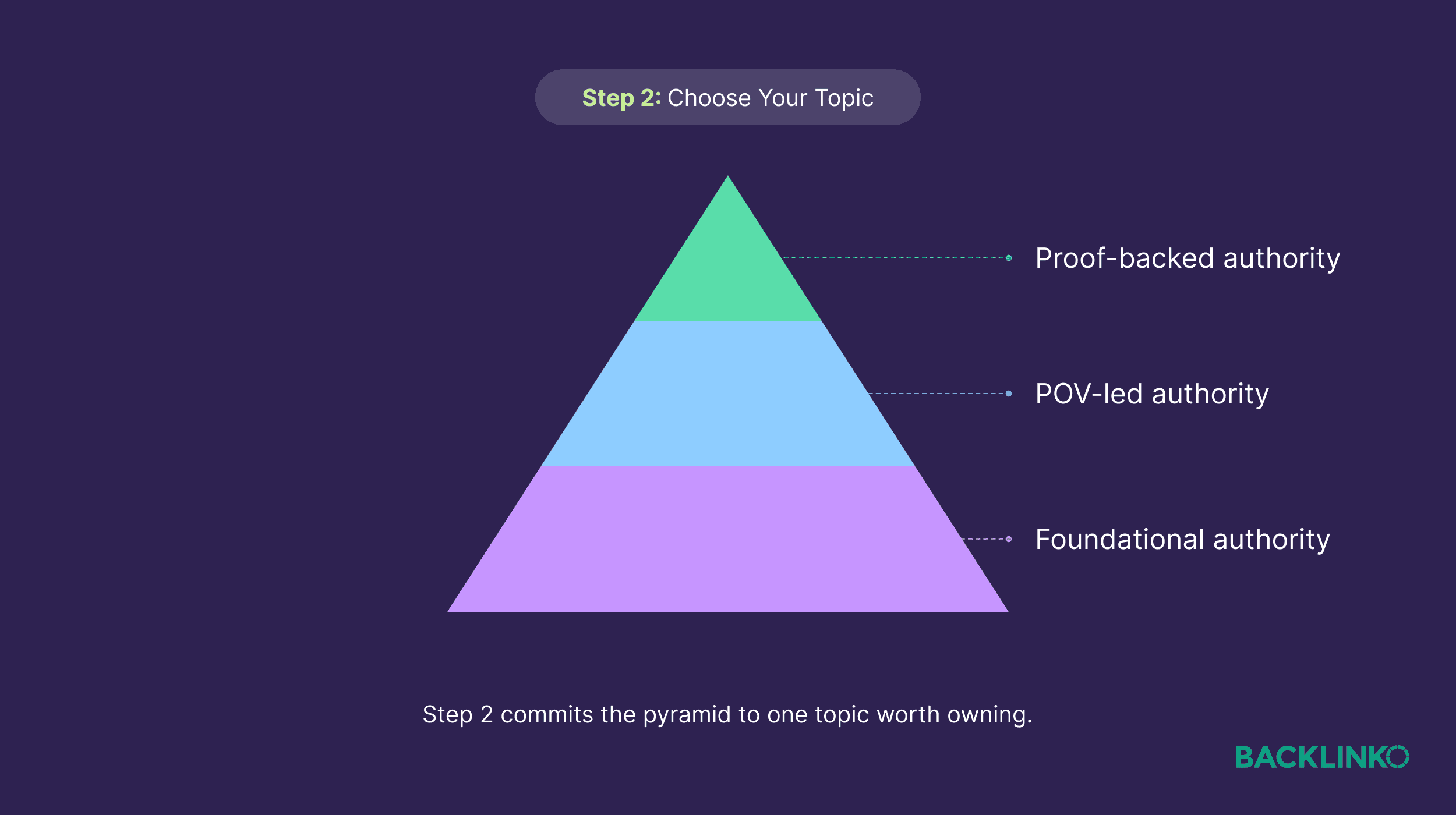
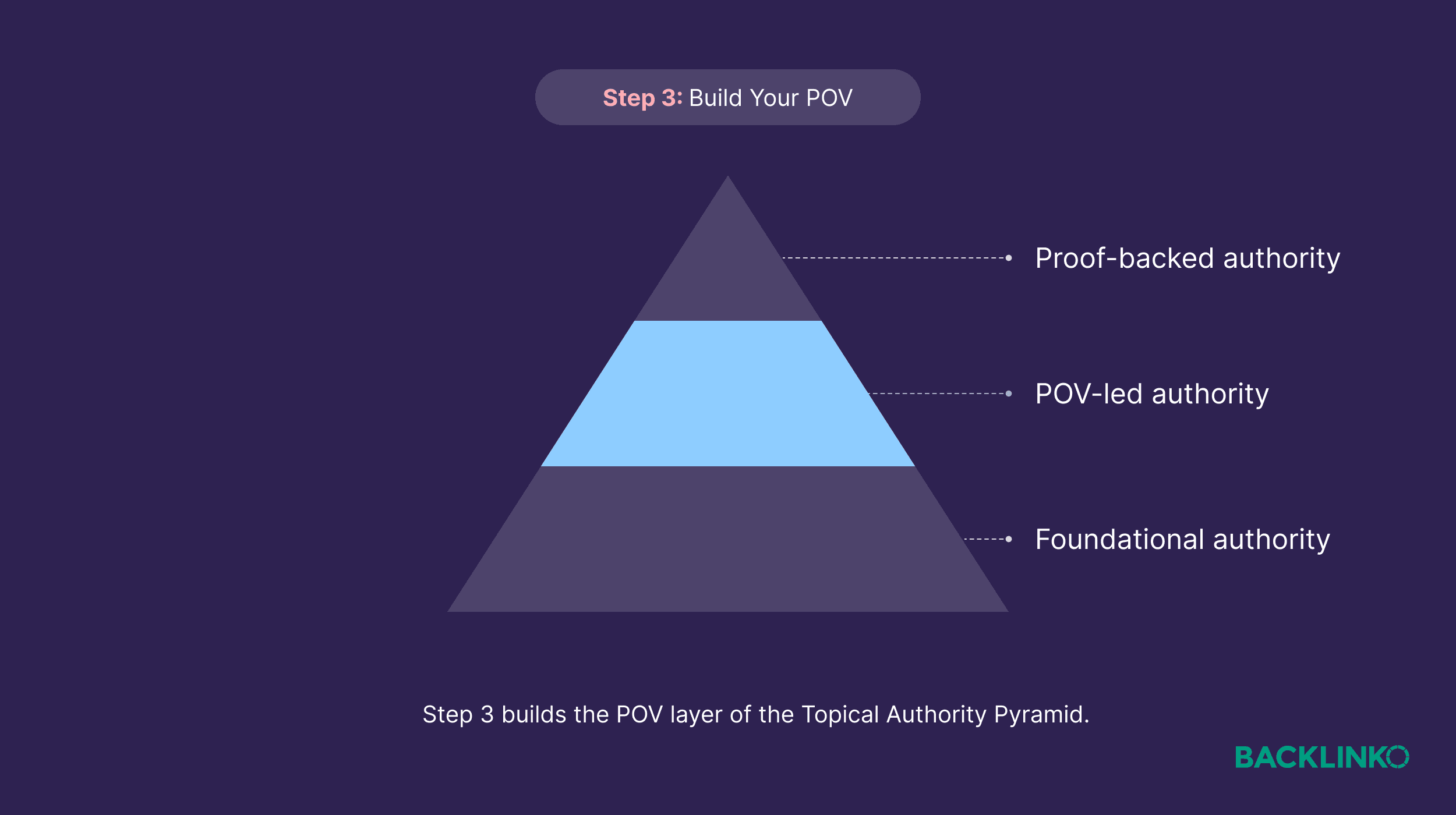
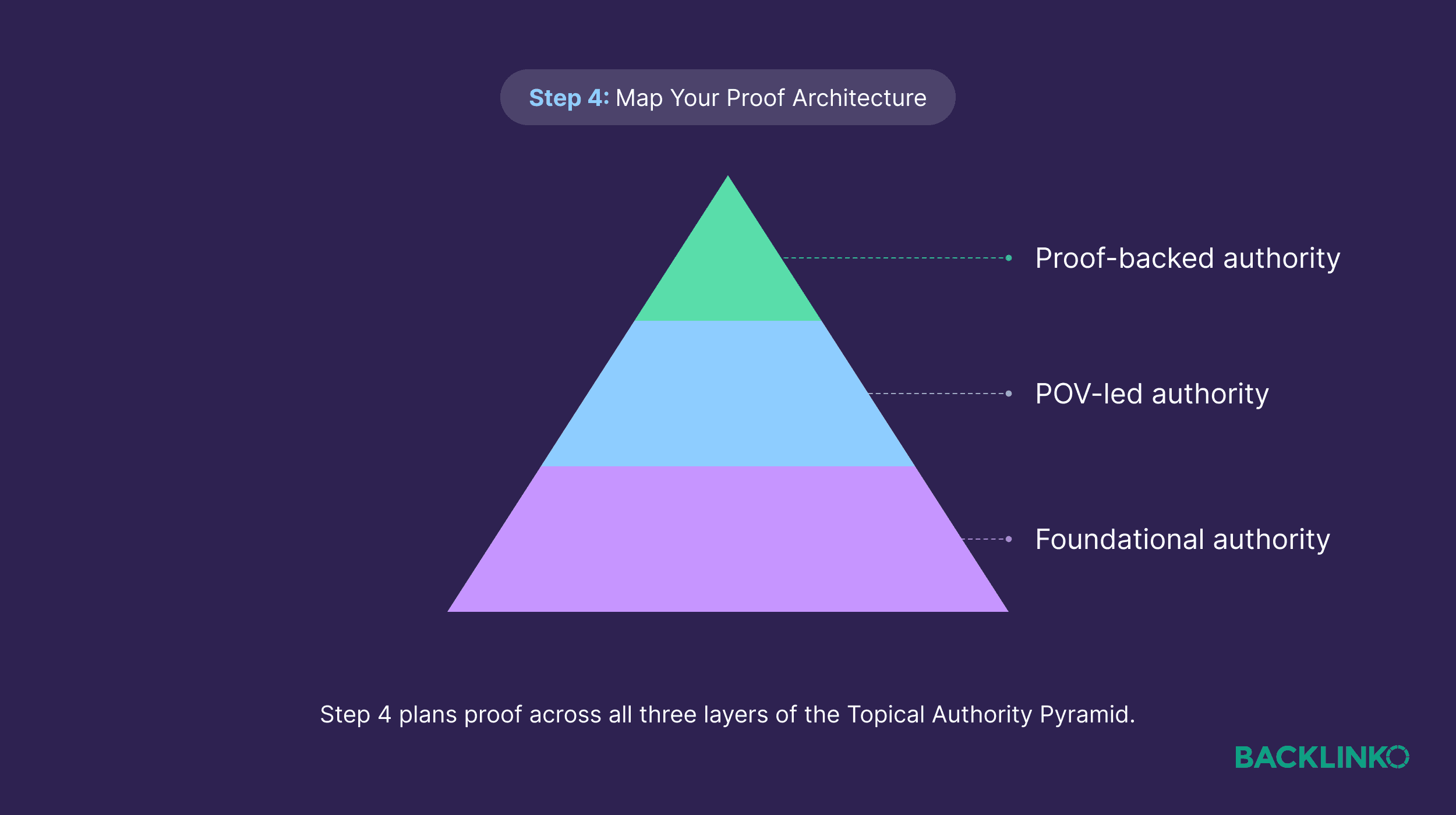
The Pyramid is structured into three distinct layers:
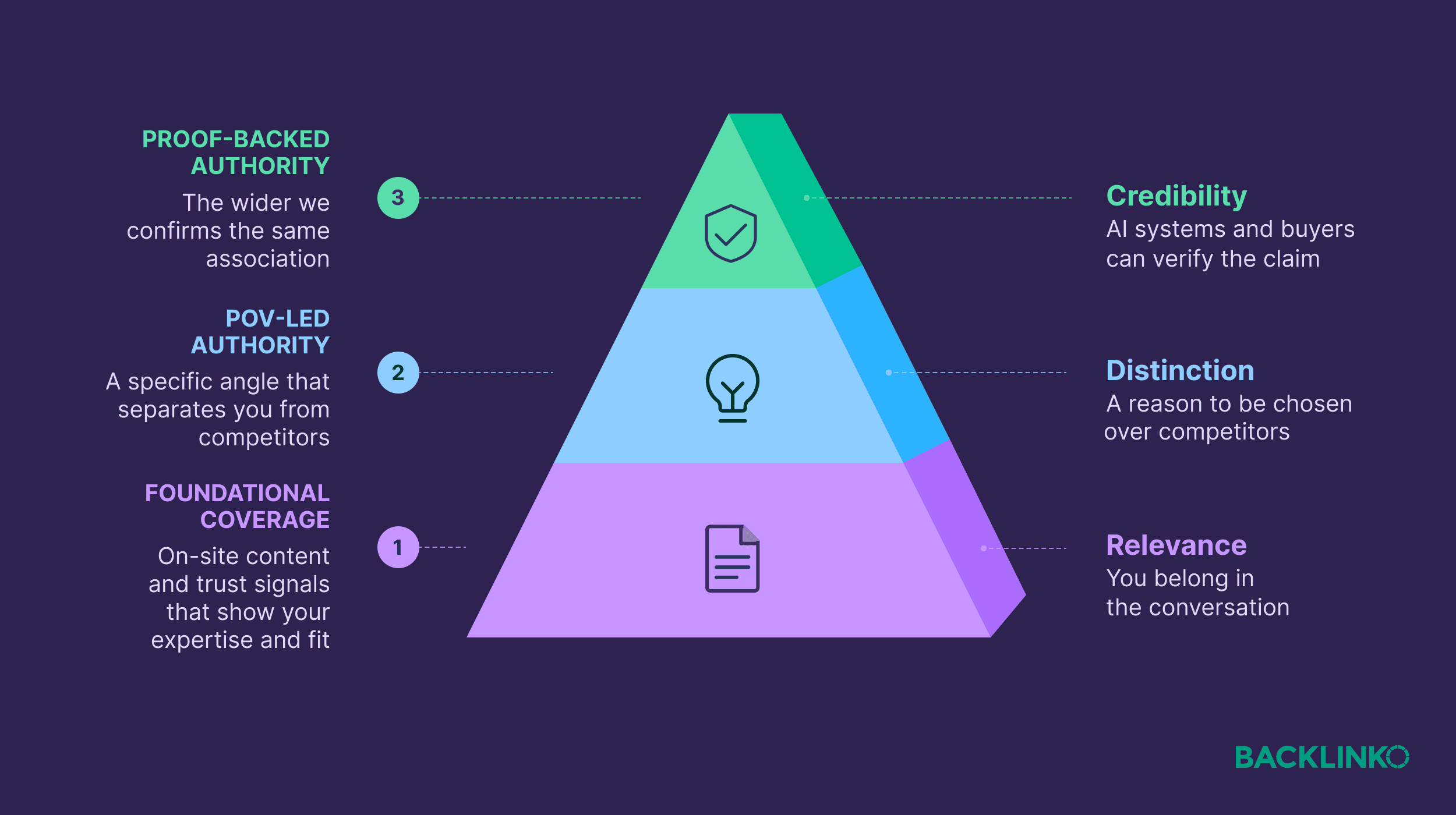
- Foundational Layer: This layer focuses on establishing a broad presence and consistent coverage of the chosen topic. It involves creating comprehensive content that signals a brand’s understanding of the subject matter.
- Point of View (POV) Layer: This layer is about defining a unique angle or perspective on the topic. It’s what makes a brand distinct and memorable within a crowded space.
- Proof Layer: This layer involves gathering and showcasing evidence that validates the brand’s POV. This can include third-party mentions, expert endorsements, customer testimonials, and data-driven insights.
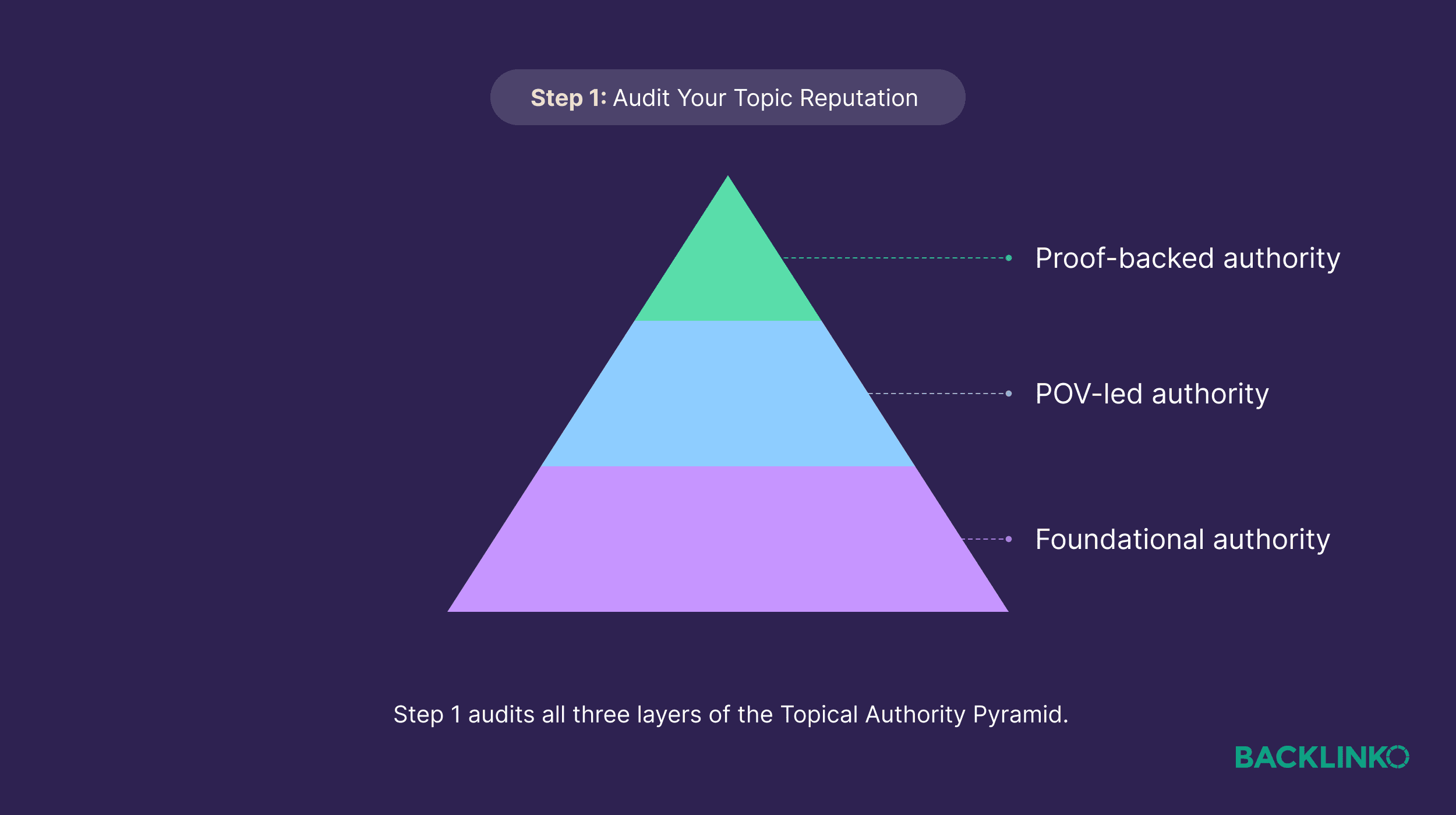
Each layer works in synergy with the others to solidify a brand’s position as an expert, ultimately leading to increased visibility in search results and AI-generated answers. Many brands, like Great Jones, possess strong foundational elements and scattered proof points but lack a cohesive narrative that ties everything together. The following steps outline how to build all three layers effectively.
Step 1: Audit Your Topic Reputation
Before embarking on any strategy to build topical authority, it’s crucial to understand your current standing. Your brand likely already has a topical reputation, whether it was intentionally cultivated or emerged organically. An audit serves to identify these existing associations and uncover any potential gaps.
Research Your Current On-Site Associations
The initial step involves assessing how your brand is currently perceived online, particularly concerning the topics you wish to own. This can reveal discrepancies between your intended brand positioning and your actual search engine presence.
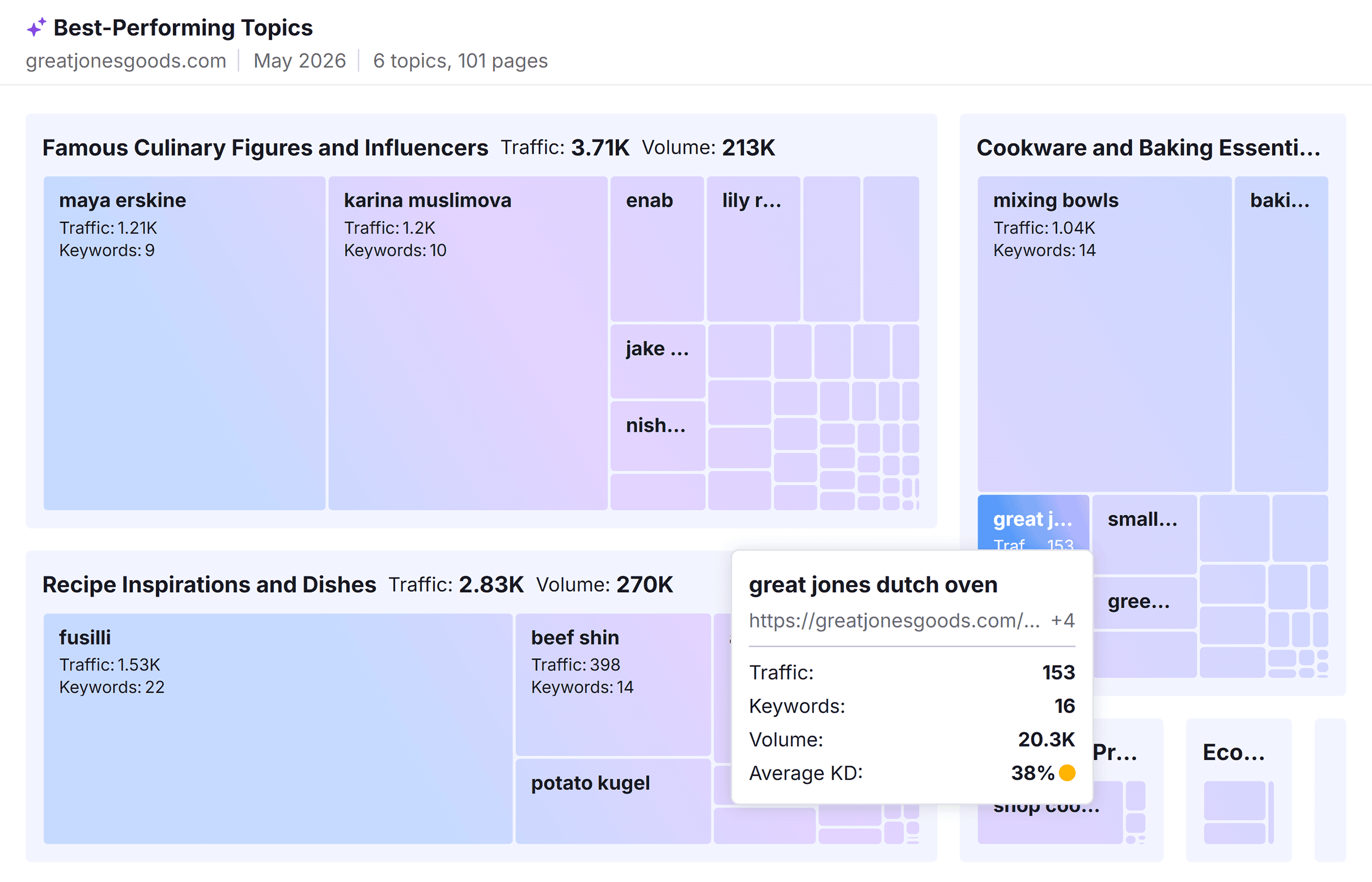
A quick and effective way to perform this assessment is by utilizing tools like Semrush’s Organic Rankings. By inputting your domain, you can automatically generate a report detailing your brand’s strongest topical associations, categorized by the topics that are gaining visibility.
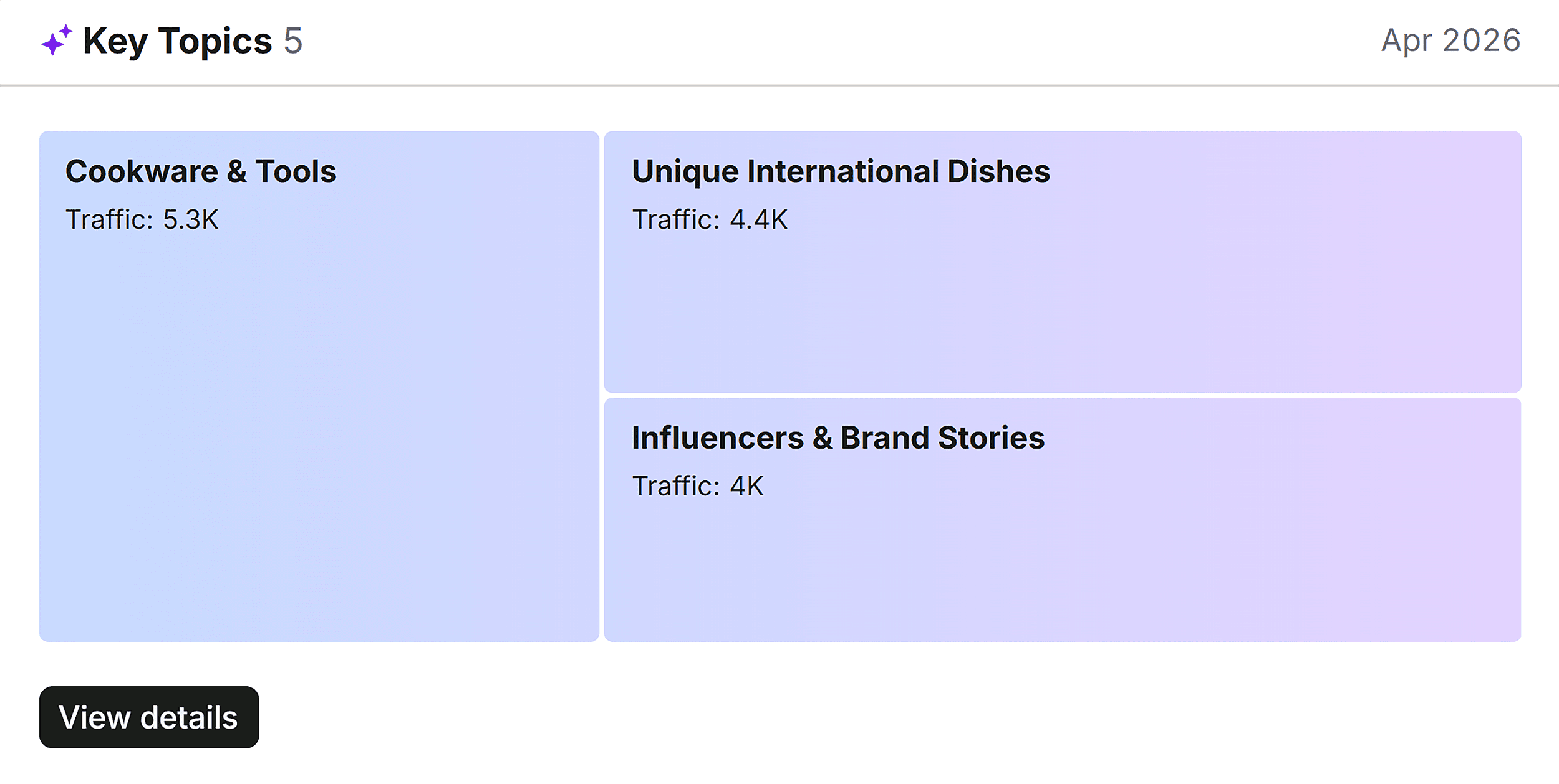
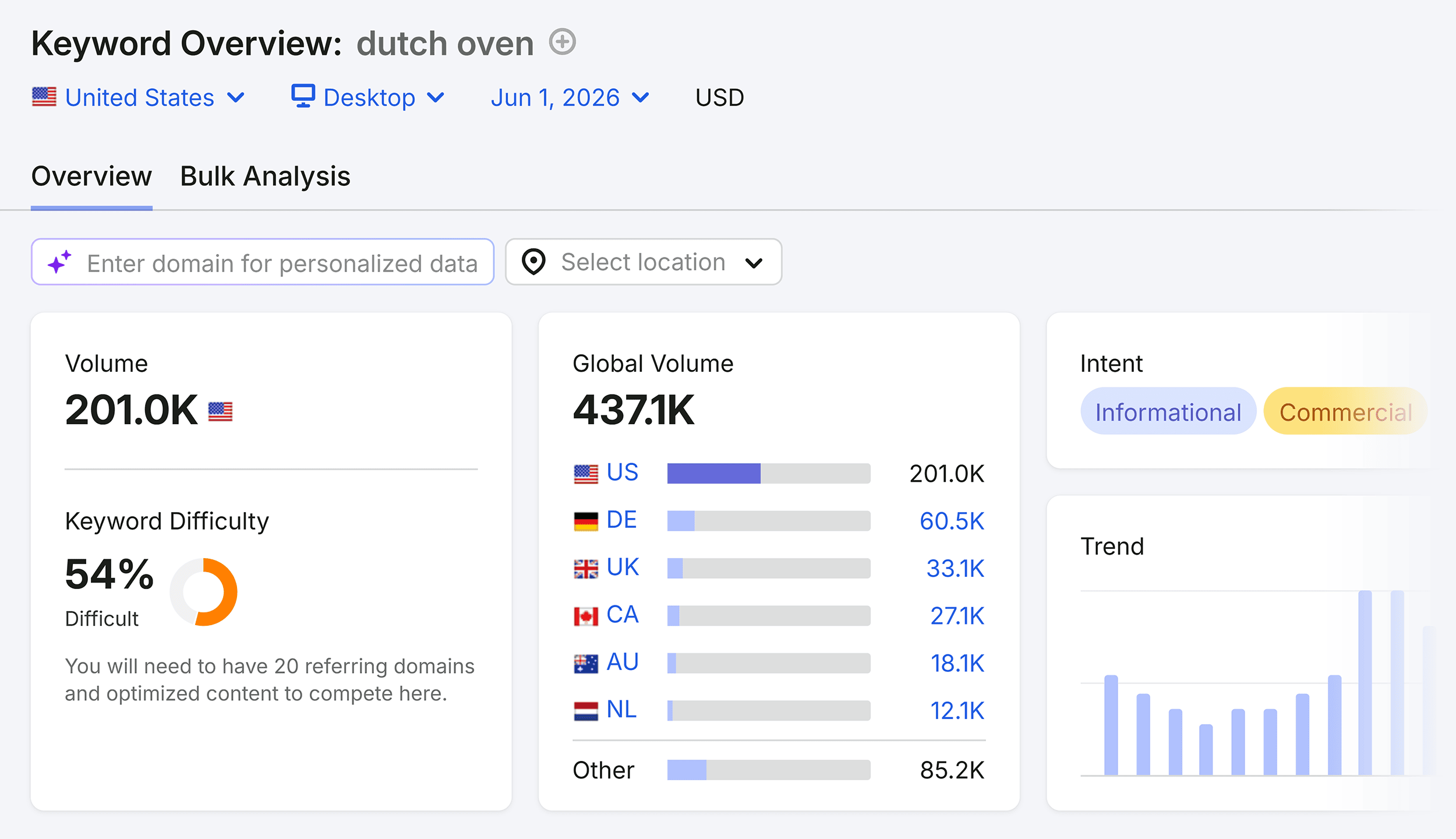
For Great Jones, this analysis revealed that their most prominent topical associations were with "recipes" and "celebrity chefs." Notably, "Dutch ovens" received minimal visibility in these rankings, despite being a core product. This observation is critical, especially considering that the search term "Dutch oven" alone generates over 200,000 monthly Google searches, presenting a significant opportunity for Great Jones to capture a share of this demand.
The gap between their product focus and their search engine visibility is a clear indicator of where strategic effort is needed. Beyond internal site audits, examining how AI models like ChatGPT describe your brand in relation to your core topics is also essential. If queries about your products don’t yield your brand as a primary association, it signals a need to strengthen those connections.
Audit Your Off-Site Presence
The next crucial step is to evaluate your brand’s presence across third-party platforms. This includes mentions in reviews, inclusion in round-up articles, media features, and influencer collaborations. This off-site presence is often weighted heavily by AI systems when determining topical authority.
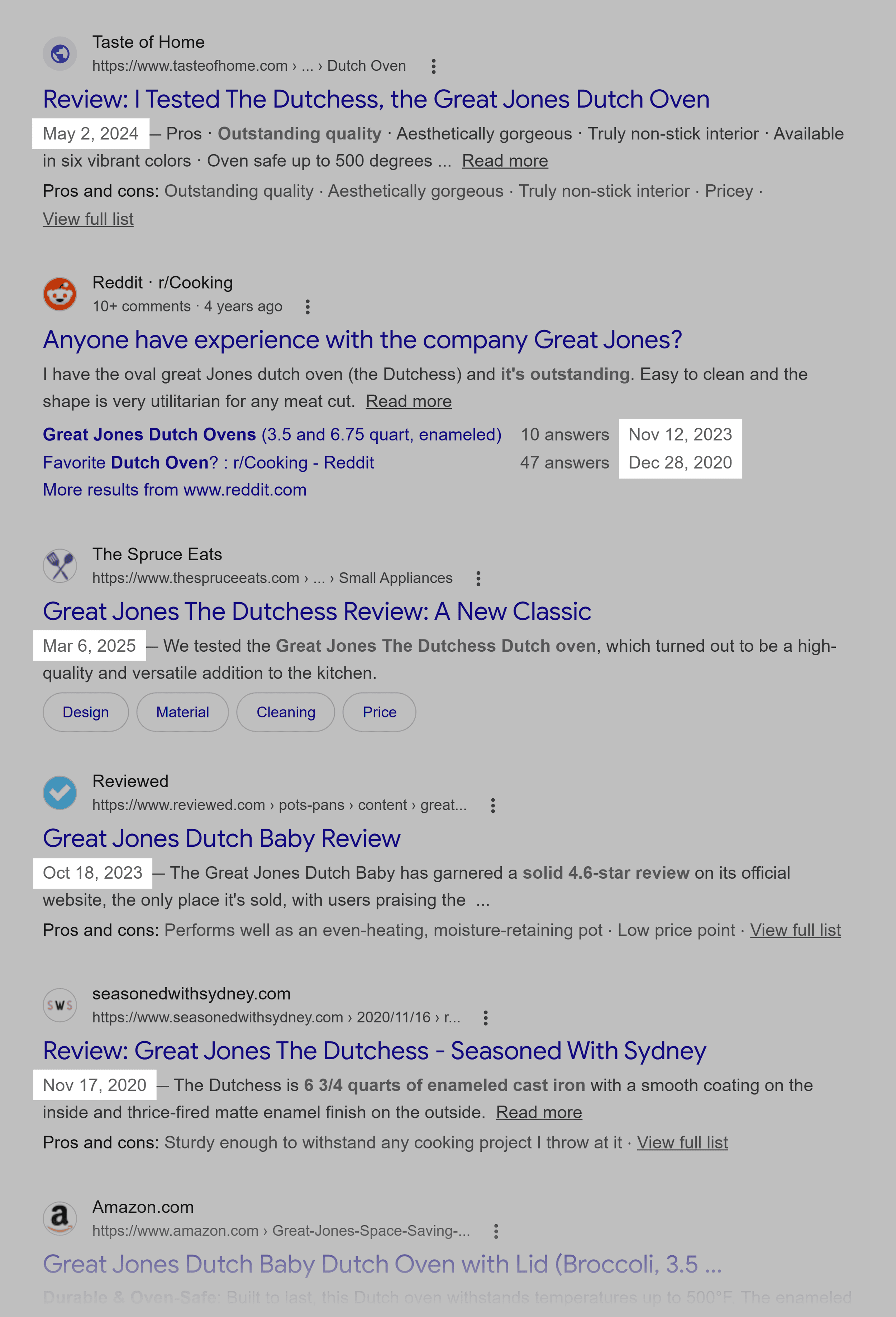
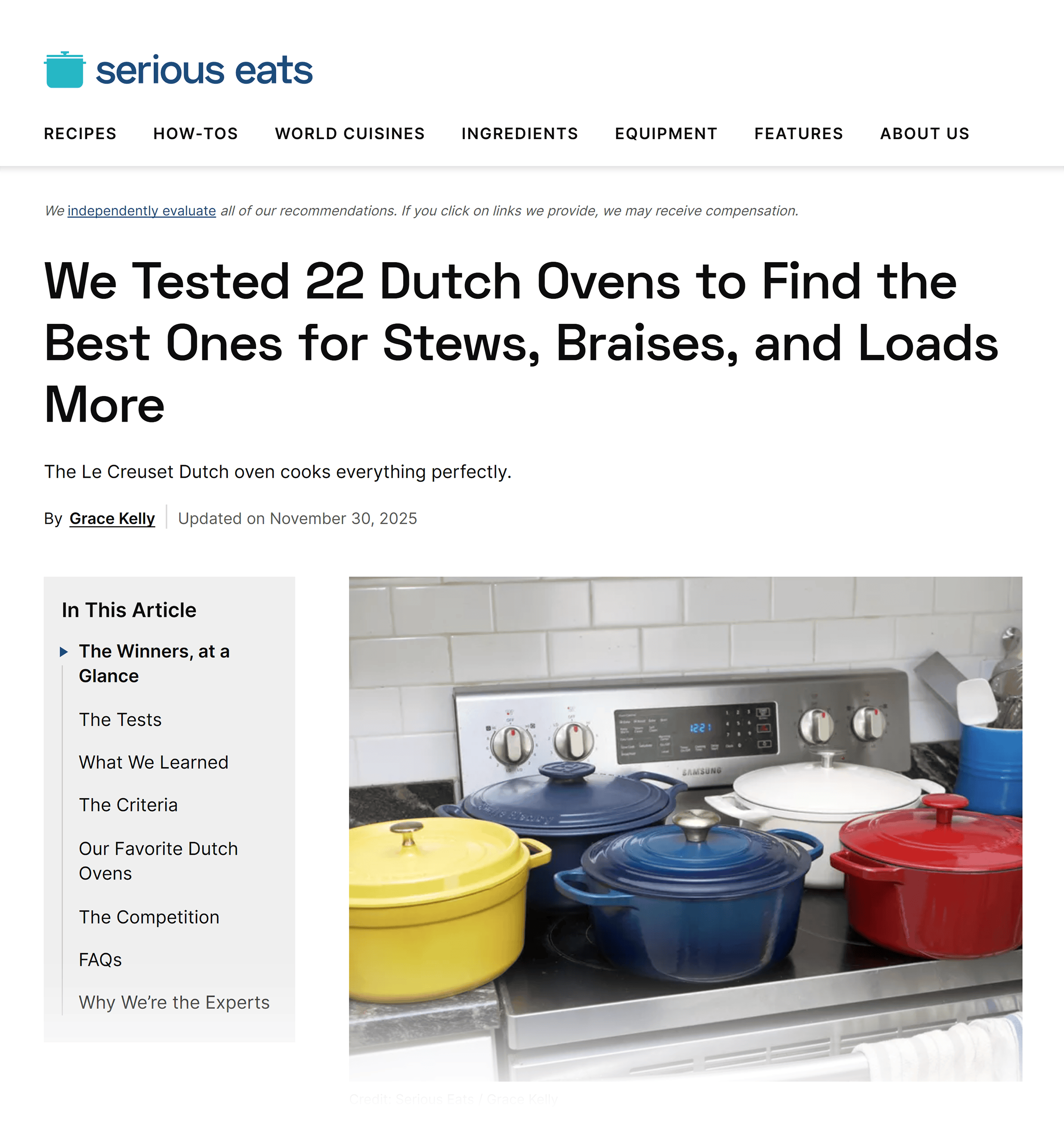
A review of Great Jones’ off-site coverage reveals an impressive portfolio of features in major lifestyle publications and partnerships with prominent chefs and influencers. However, when the focus narrows specifically to Dutch oven coverage, the disparity becomes evident. Many of the top-ranking articles discussing Dutch ovens are several years old, suggesting a lack of recent, authoritative content directly linking the brand to the product.
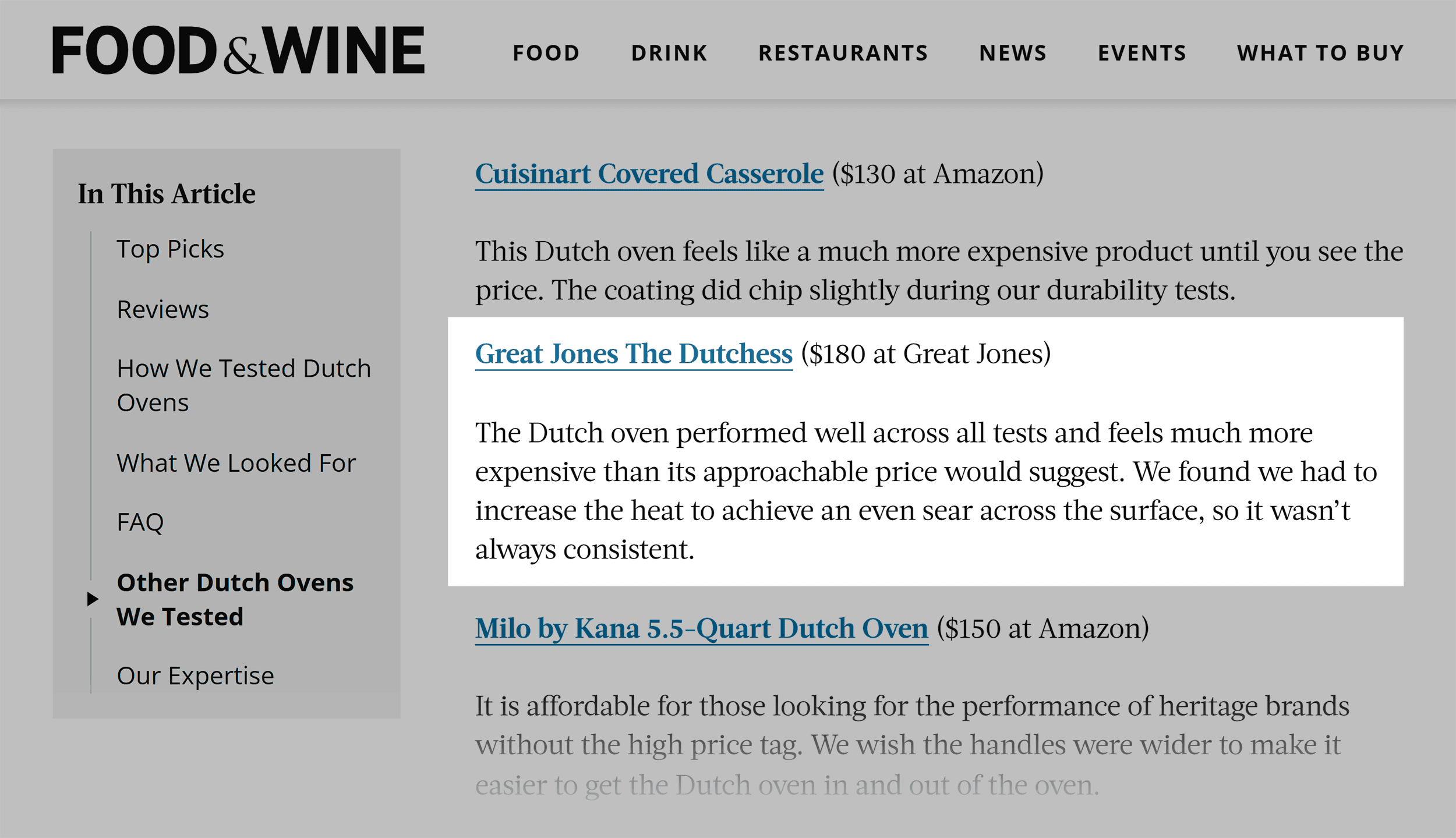
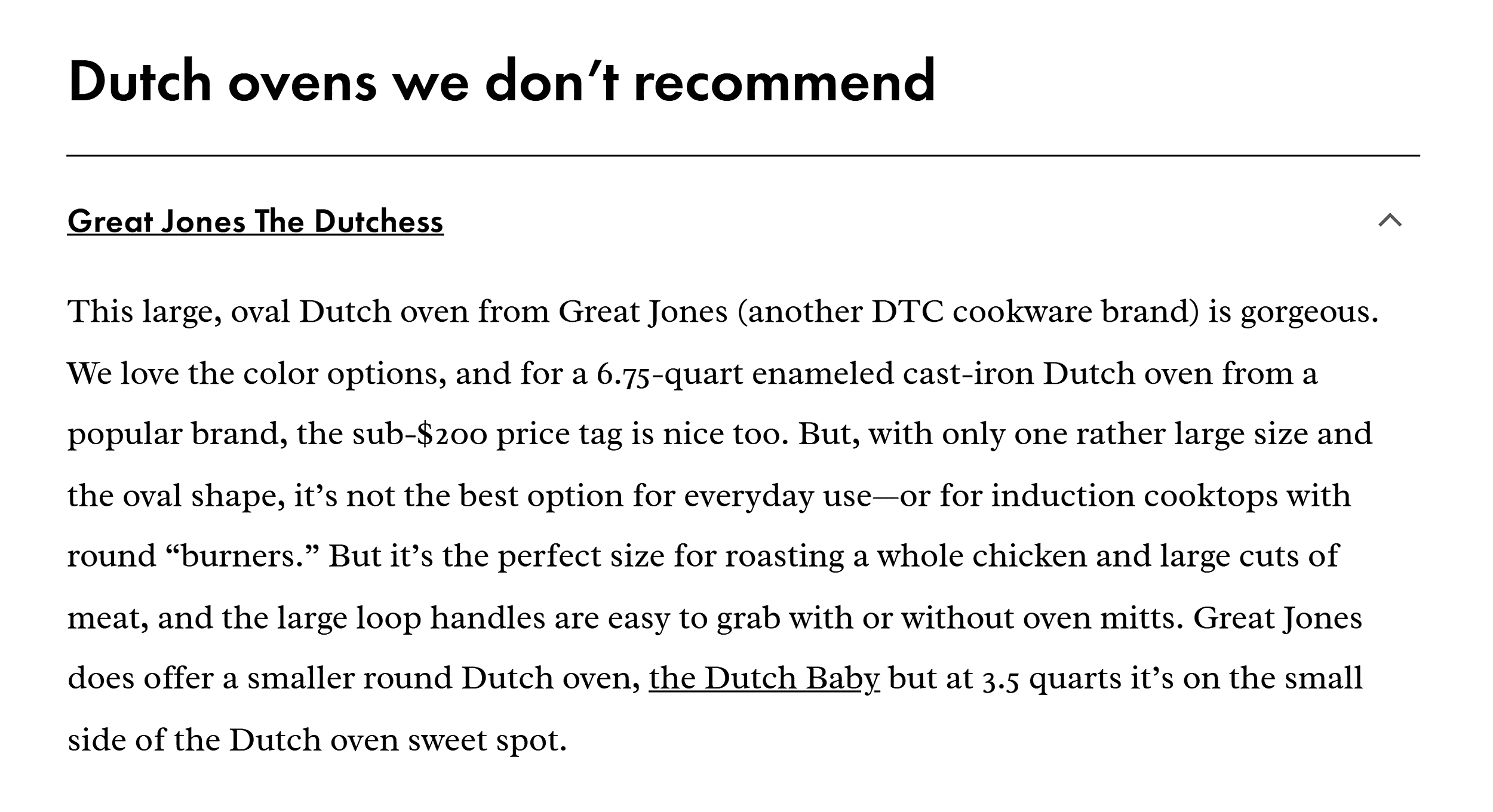
Furthermore, sentiment analysis of these mentions can be inconsistent. For instance, while Great Jones might be praised in one publication, another might place their product in a less favorable category, or mention potential drawbacks, such as heating issues. In Bon Appétit’s roundup of the best Dutch ovens, Great Jones was notably categorized under "Dutch ovens we don’t recommend," a stark contrast to the positive reception found in other contexts. This inconsistency can dilute brand authority.
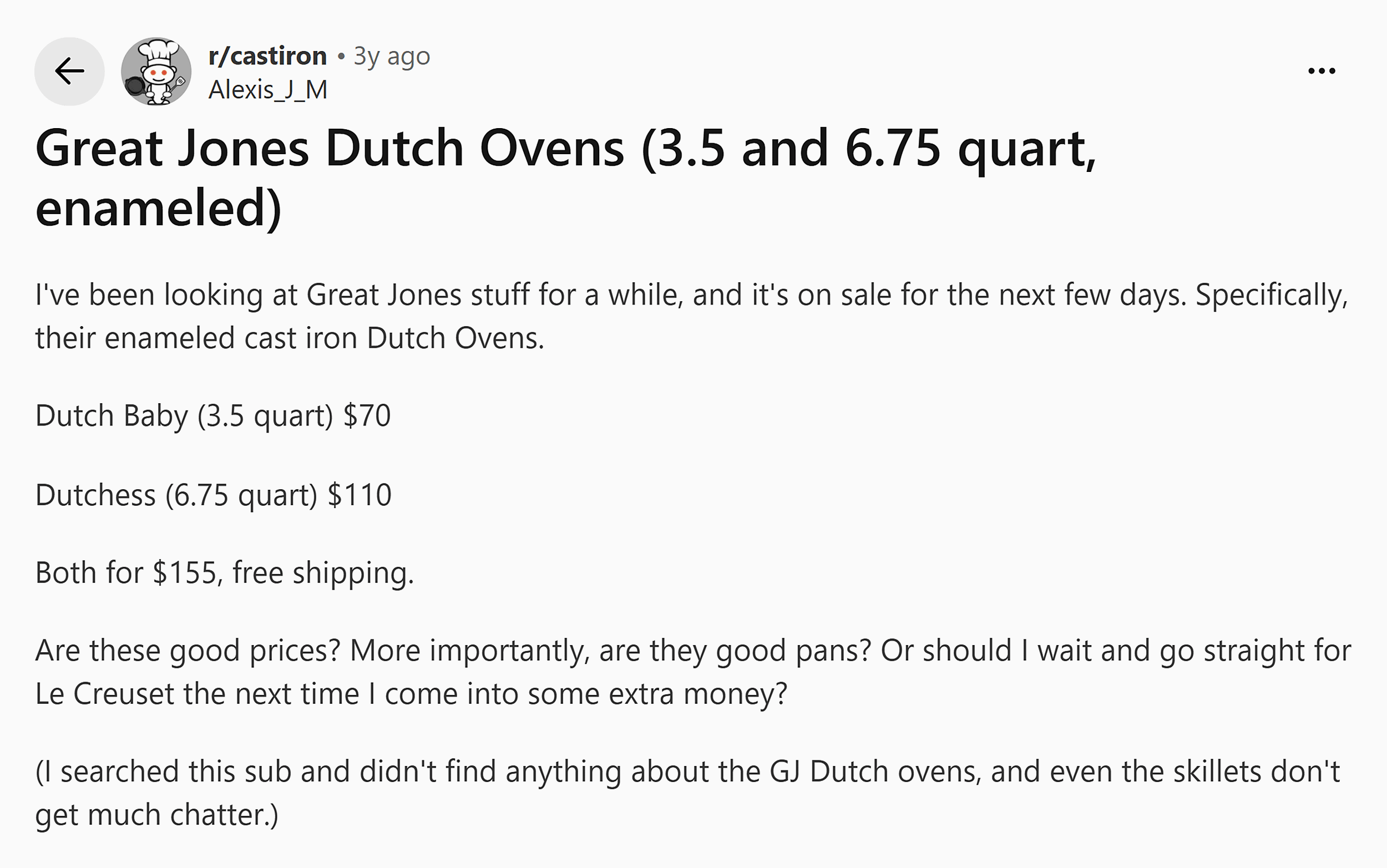
A comprehensive audit should also extend to community platforms like Reddit, where consumers actively seek product recommendations. If a brand is rarely mentioned organically in these discussions, it further highlights a gap in perceived topical authority. For Great Jones, while they have a strong brand presence, their association with Dutch ovens is not yet consistently reinforced across the digital ecosystem.
Step 2: Choose Your Core Topic
Building topical authority requires a focused approach. Attempting to establish expertise across too many subjects simultaneously can dilute efforts and yield minimal results. Therefore, it’s essential to select a primary topic around which to build your authority. This selection should be based on several critical factors:
Build and Prioritize Your Topic List
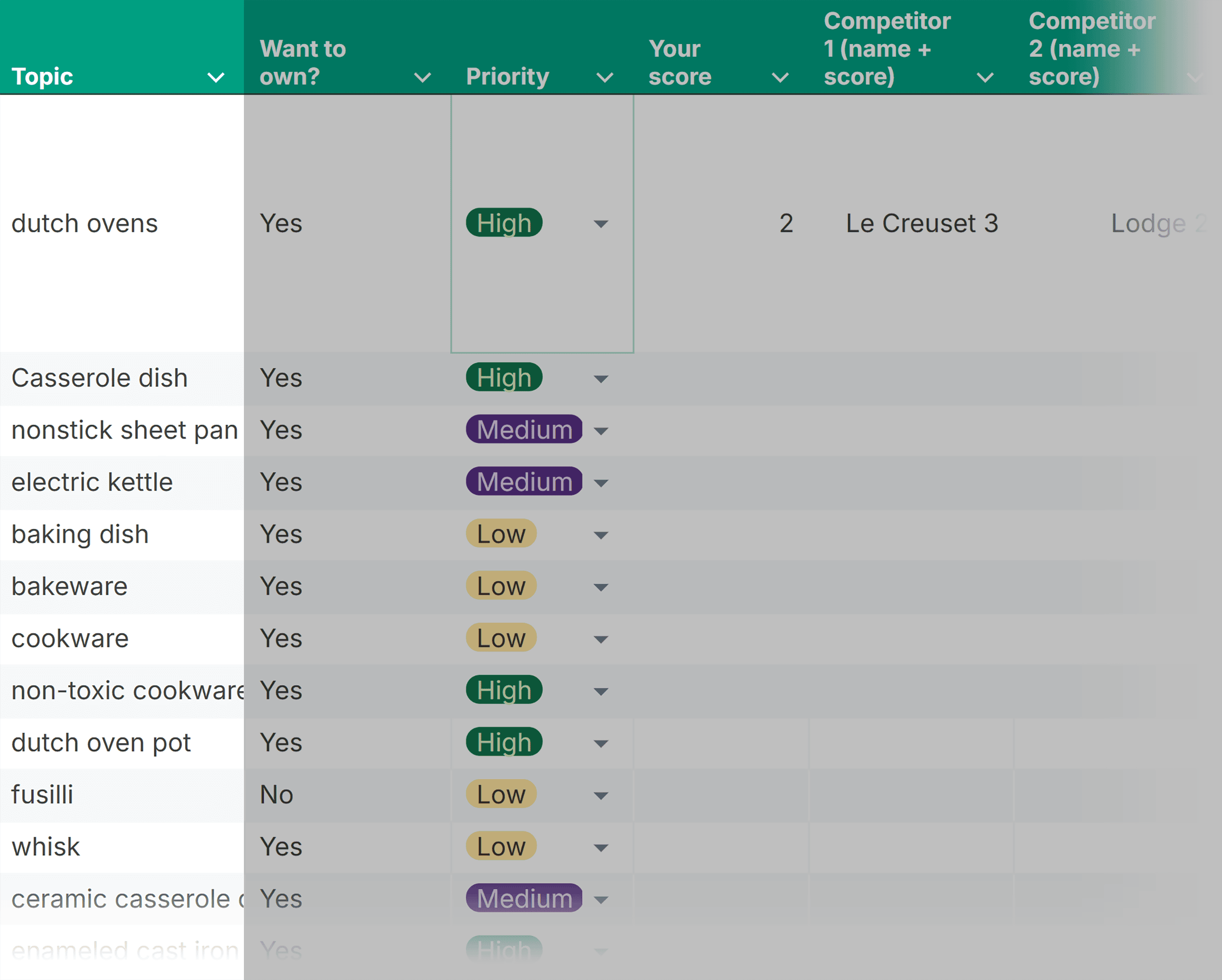
Begin by compiling a comprehensive list of topics that align with your brand, products, categories, and core values. Think about the problems you solve for your customers and the needs you fulfill. Expand this list to include adjacent topics that are relevant to your target audience’s interests and concerns. For Great Jones, potential topics might include "slow cooking," "one-pot meals," "kitchen gifting," or "cookware maintenance."
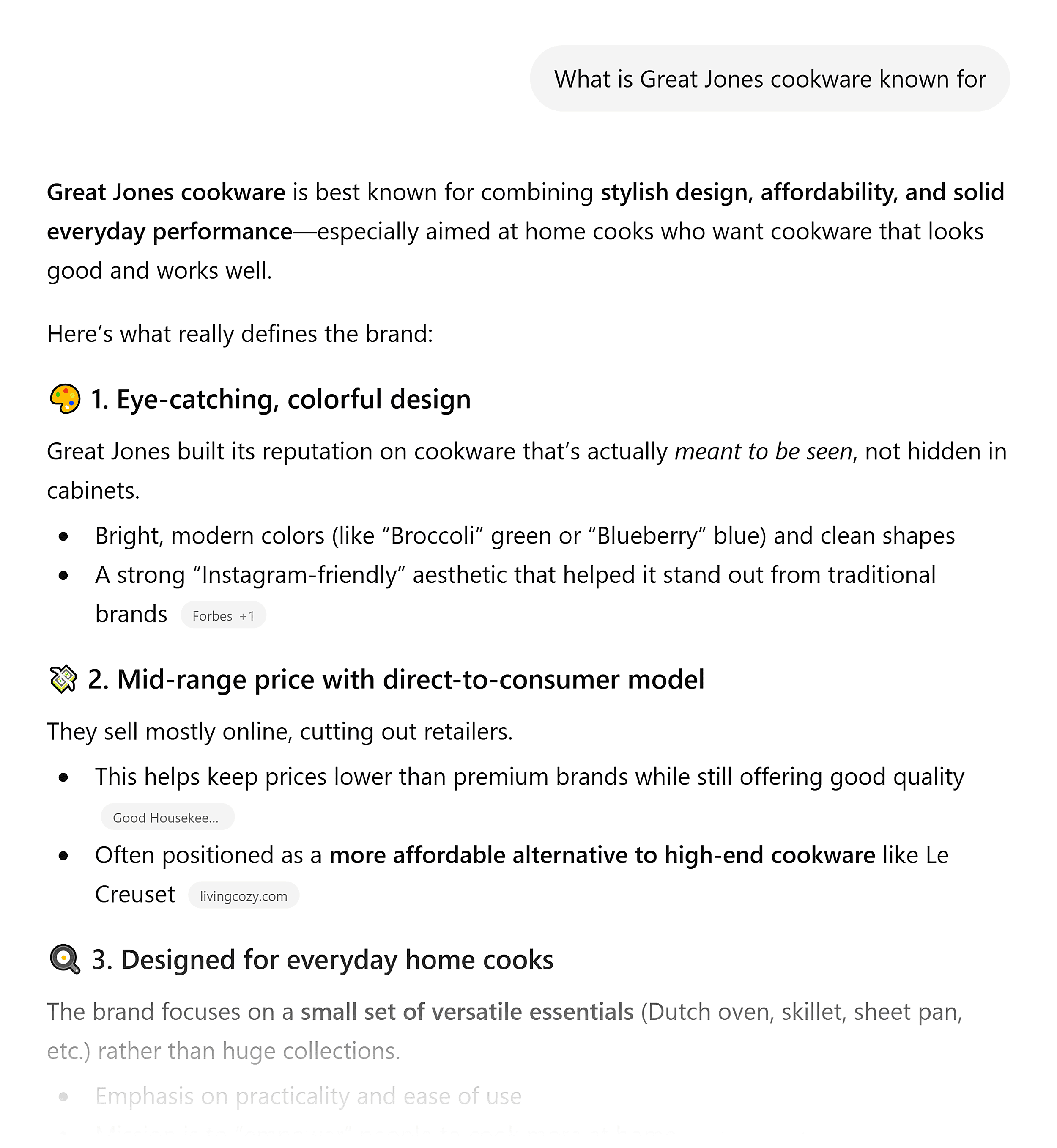
The goal is to identify topics where your brand already has some traction, where competitors are less dominant, or where your brand should have a strong association but currently doesn’t.
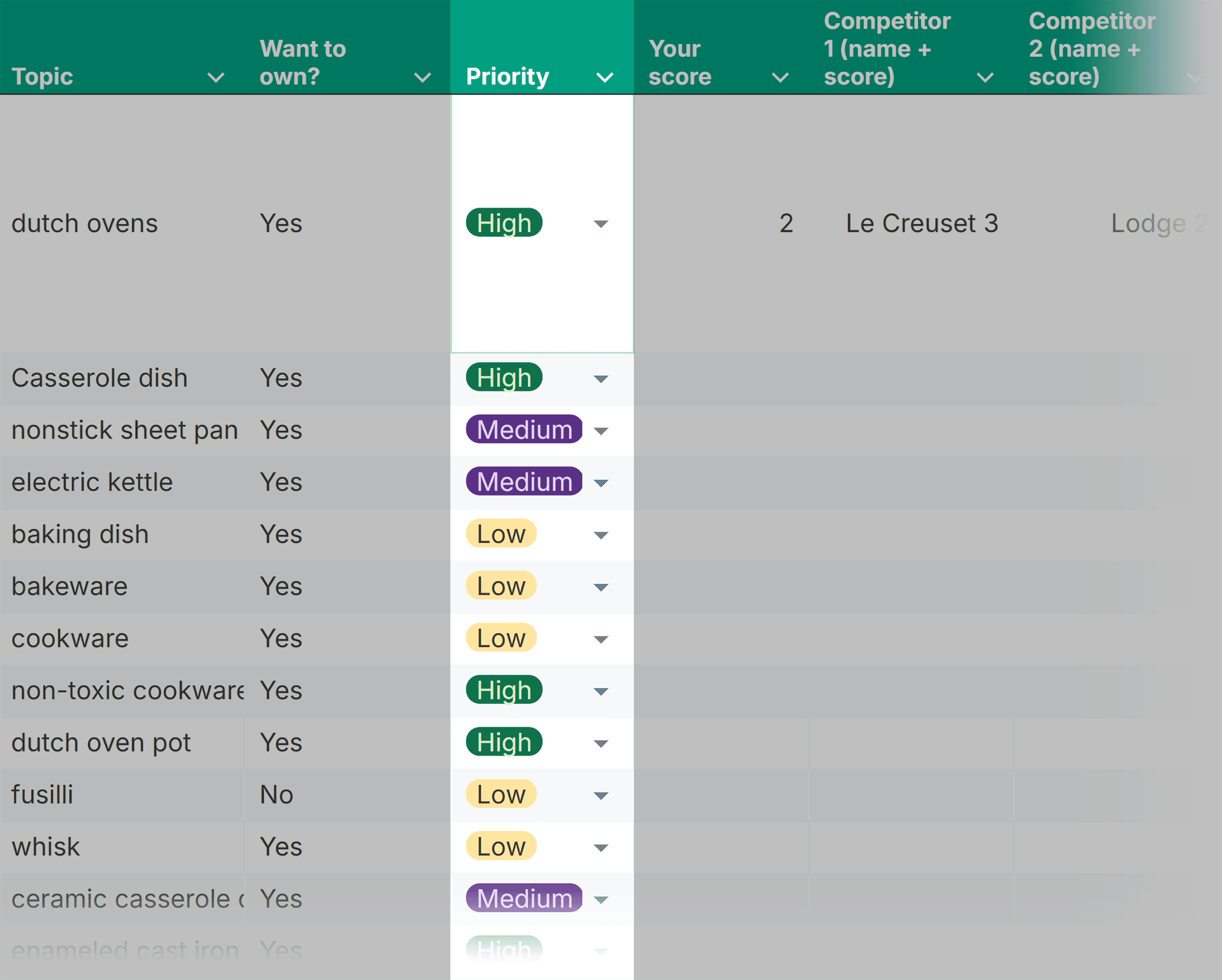
Once you have an initial list of 10-15 potential topics, it’s time to narrow it down. Not every topic is equally viable for establishing authority. Evaluate each topic based on two key questions:
- Desire for Ownership: Does this topic directly contribute to revenue, support a product or service you offer, or enhance your brand’s reputation in a way that attracts customers?
- Urgency: How critical is it to establish authority in this area? Does it address a pressing market need or a significant opportunity?
By applying these criteria, you should aim to identify three to five high-priority topics that warrant further investigation.
Run a Query Audit
With a shortlist of topics in hand, the next step is to conduct a thorough query audit. This involves examining how these topics are searched for on platforms like Google and within LLMs. The objective is to understand who currently dominates these search spaces and identify areas where your brand can carve out a unique position.
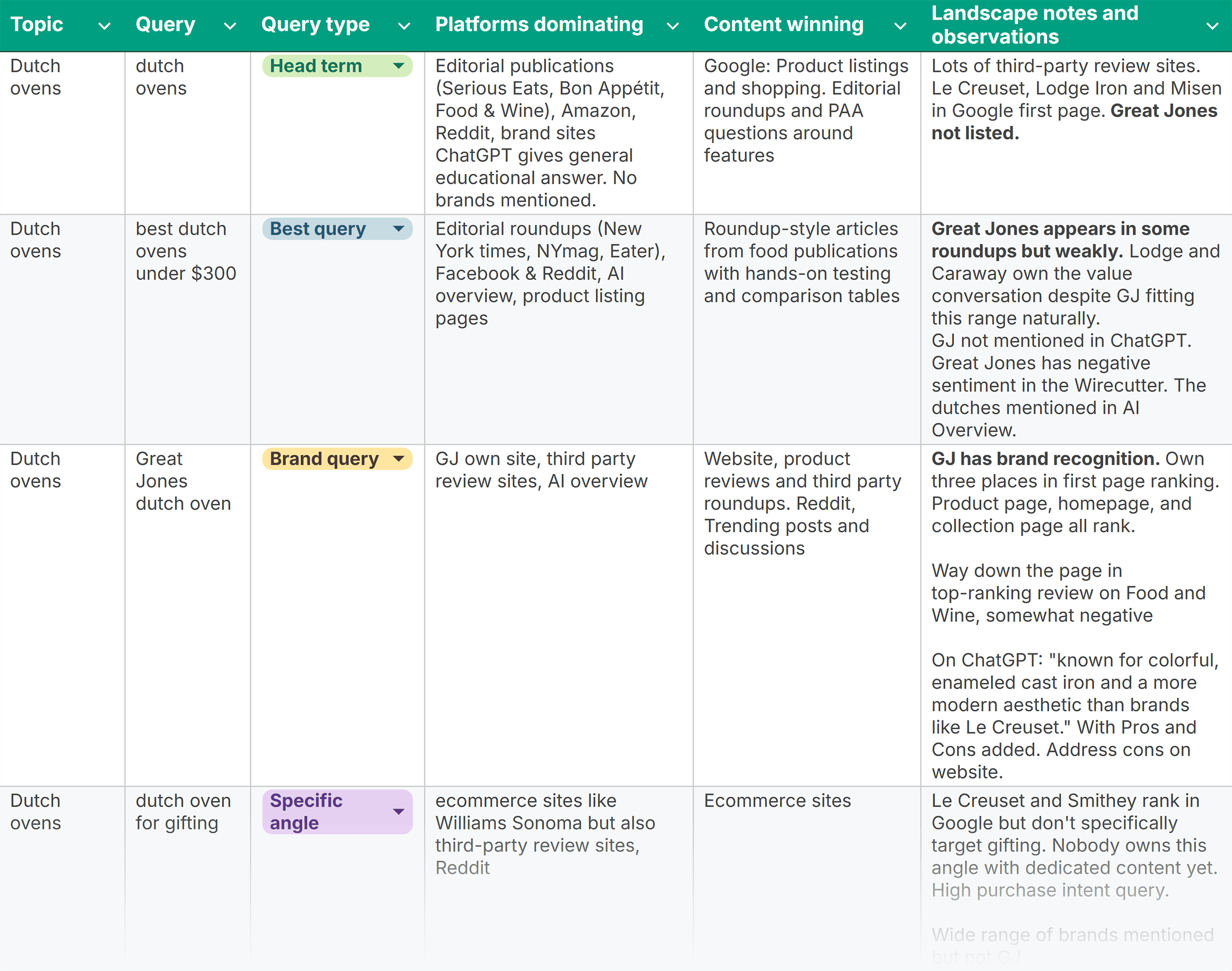
For each shortlisted topic, perform four types of queries:
- Head Term: The primary search term for the topic (e.g., "Dutch ovens"). This reveals who owns the broad topic and what AI models typically default to.
- Best Query: Adding qualifiers like "best" or specific attributes (e.g., "best Dutch ovens under $200"). This helps identify where buyer intent is concentrated and which brands AI recommends.
- Brand Query: Combining your brand name with the topic (e.g., "Great Jones Dutch oven"). This assesses your specific standing and how AI currently describes your brand in relation to the topic.
- Specific Angle: A query tied to a potential unique selling proposition or association (e.g., "Dutch oven for gifting"). This helps determine if that particular territory is already claimed or if there’s an open niche.
As you conduct these queries, meticulously record observations about brand visibility, the strength of associations, and the sentiment expressed in the results. This data should be documented in a dedicated "Query Audit" section of your research template.
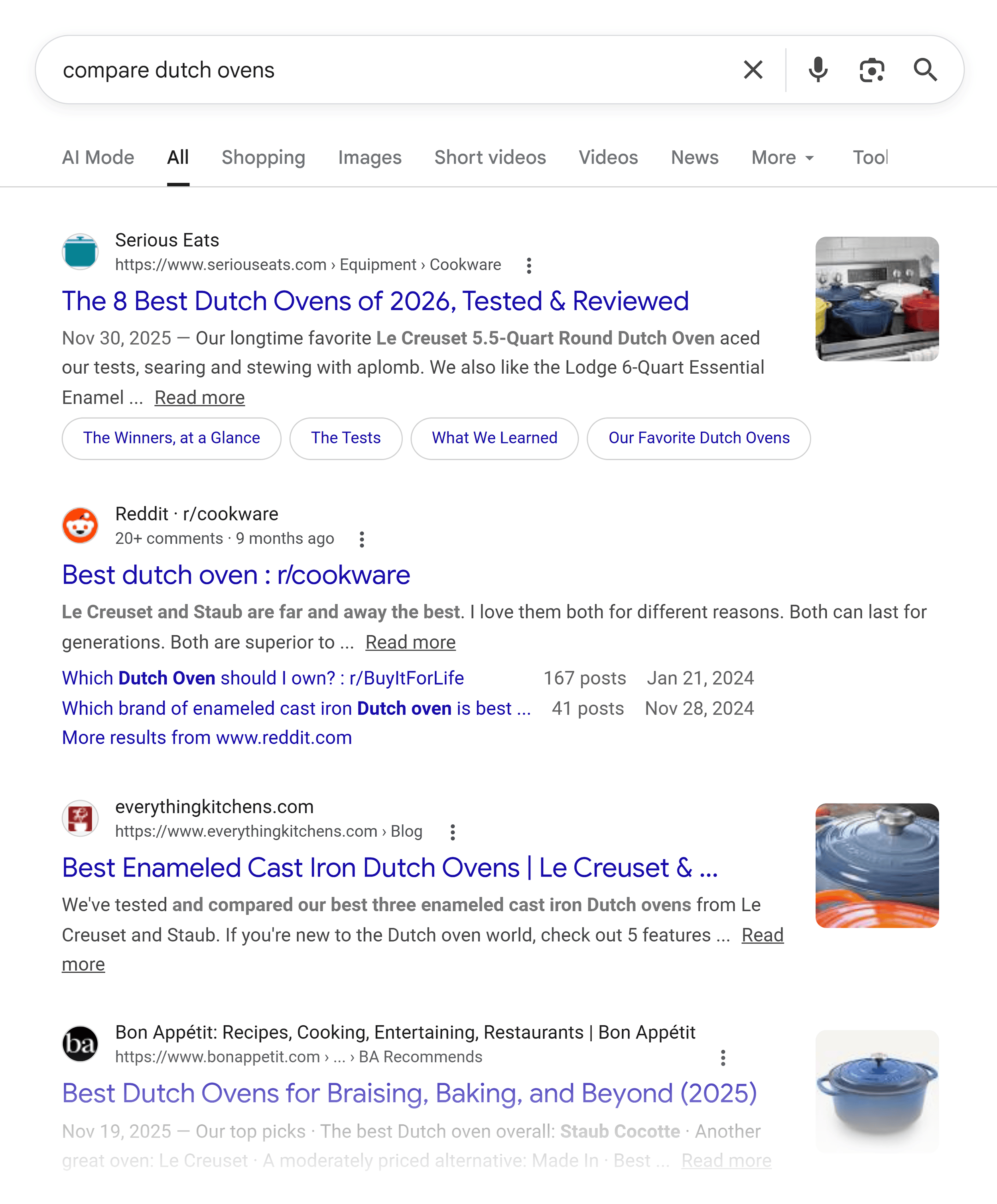
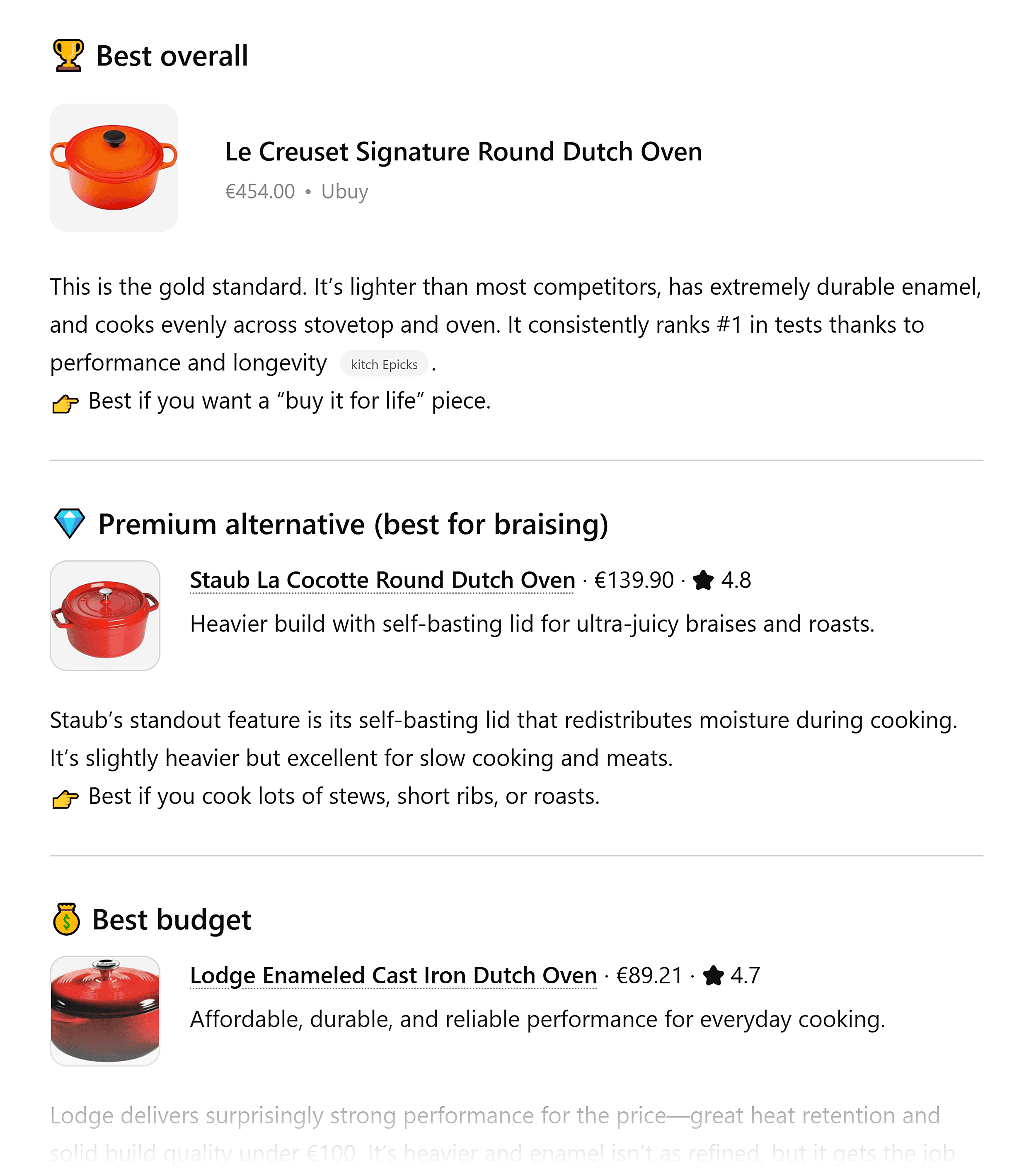
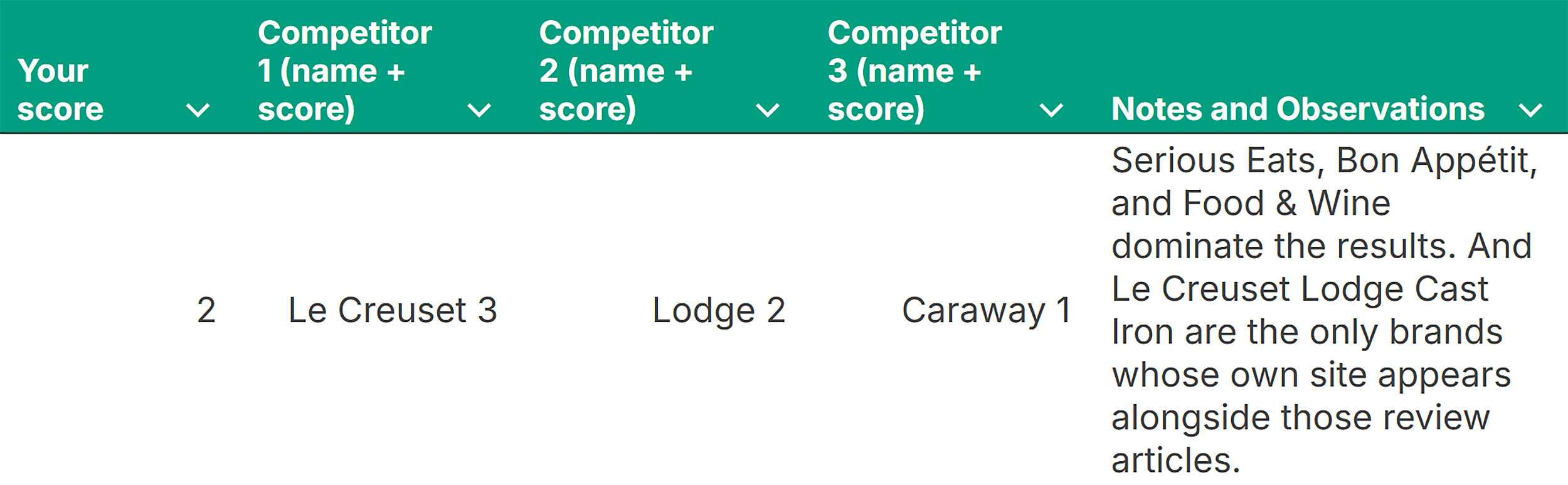
For Great Jones, searches for "Dutch ovens" and "best Dutch ovens" consistently highlight established brands like Le Creuset, Staub, and Lodge, with Great Jones appearing infrequently. Similarly, when searching for "Dutch oven for gifting," LLMs like ChatGPT did not mention Great Jones, indicating a significant opportunity to claim this specific niche. The audit also revealed that aspects like gifting, aesthetic appeal, and suitability for beginner cooks are not clearly dominated by any single brand, presenting fertile ground for developing a unique point of view.
Score by Association Strength
After completing the query audit, assign a score to your brand and its key competitors for each topic based on their overall association strength. This score, on a scale of 0 to 3, should reflect the brand’s presence across the entire Topical Authority Pyramid—encompassing foundational content, established POV, and external proof.
A score of ‘0’ indicates no presence for the topic, ‘1’ signifies a weak or negative presence, ‘2’ denotes a positive but inconsistent presence, and ‘3’ represents a consistently prominent presence across high-authority sources and AI mentions.
By analyzing these scores, identify high-priority topics where your brand has a low score (1 or 2) and at least one competitor has a very low score (0 or 1). These are the "sweet spots" – topics with genuine buyer demand, where your brand has some existing footing, and where no competitor has yet established a dominant position. For Great Jones, "Dutch ovens for gifting" emerges as such a topic, meeting the criteria of high priority, potential for claim, and lack of a clear market leader. This focused approach helps in selecting a single, winnable topic to build authority around.
Step 3: Identify Your Topic POV
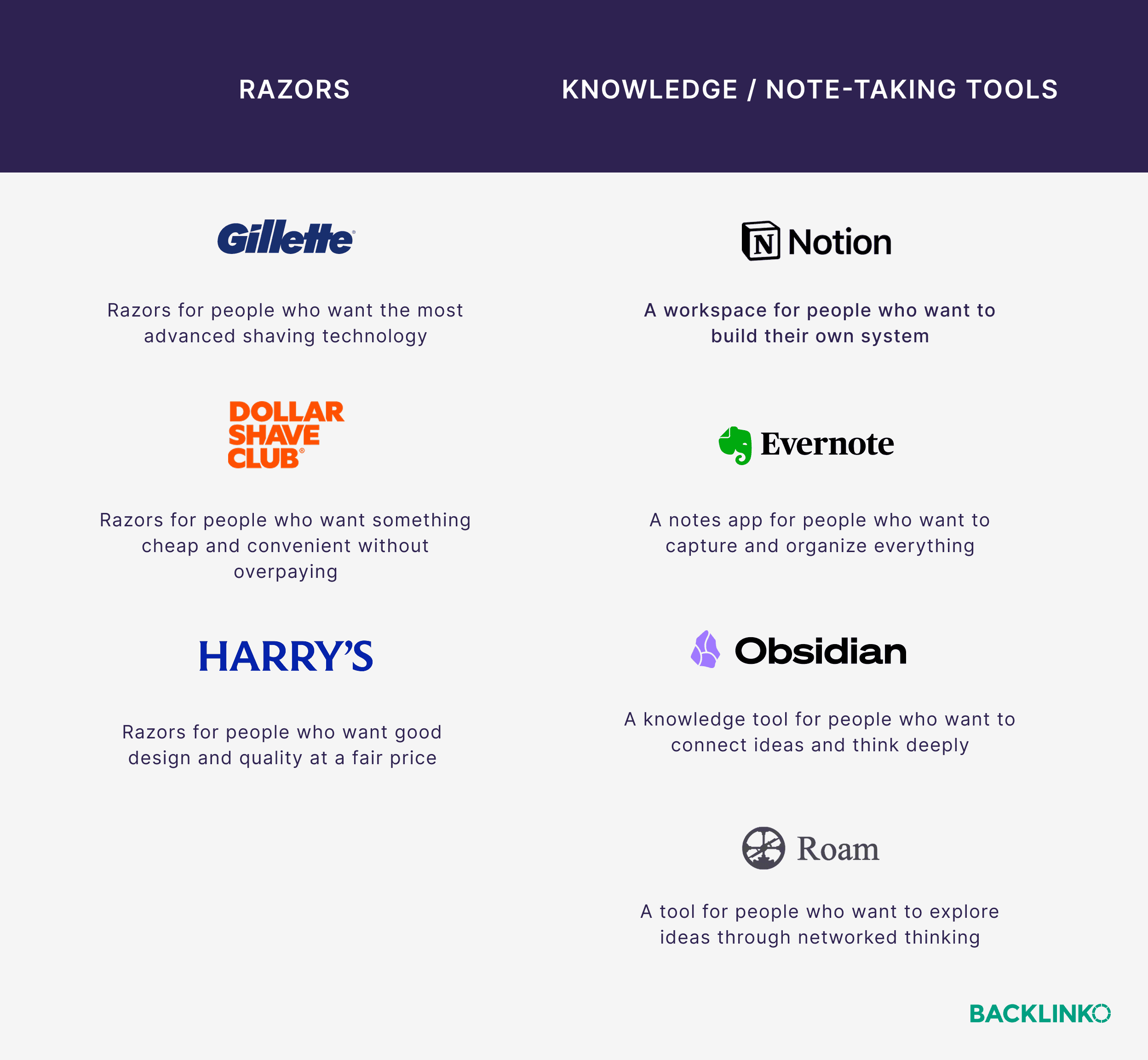
Having identified a viable core topic, the next critical step is to define your brand’s unique Point of View (POV) within that topic. Your POV is the specific angle or perspective that differentiates your brand from competitors and makes it memorable to consumers, search engines, and AI systems.
Research What’s Already Owned
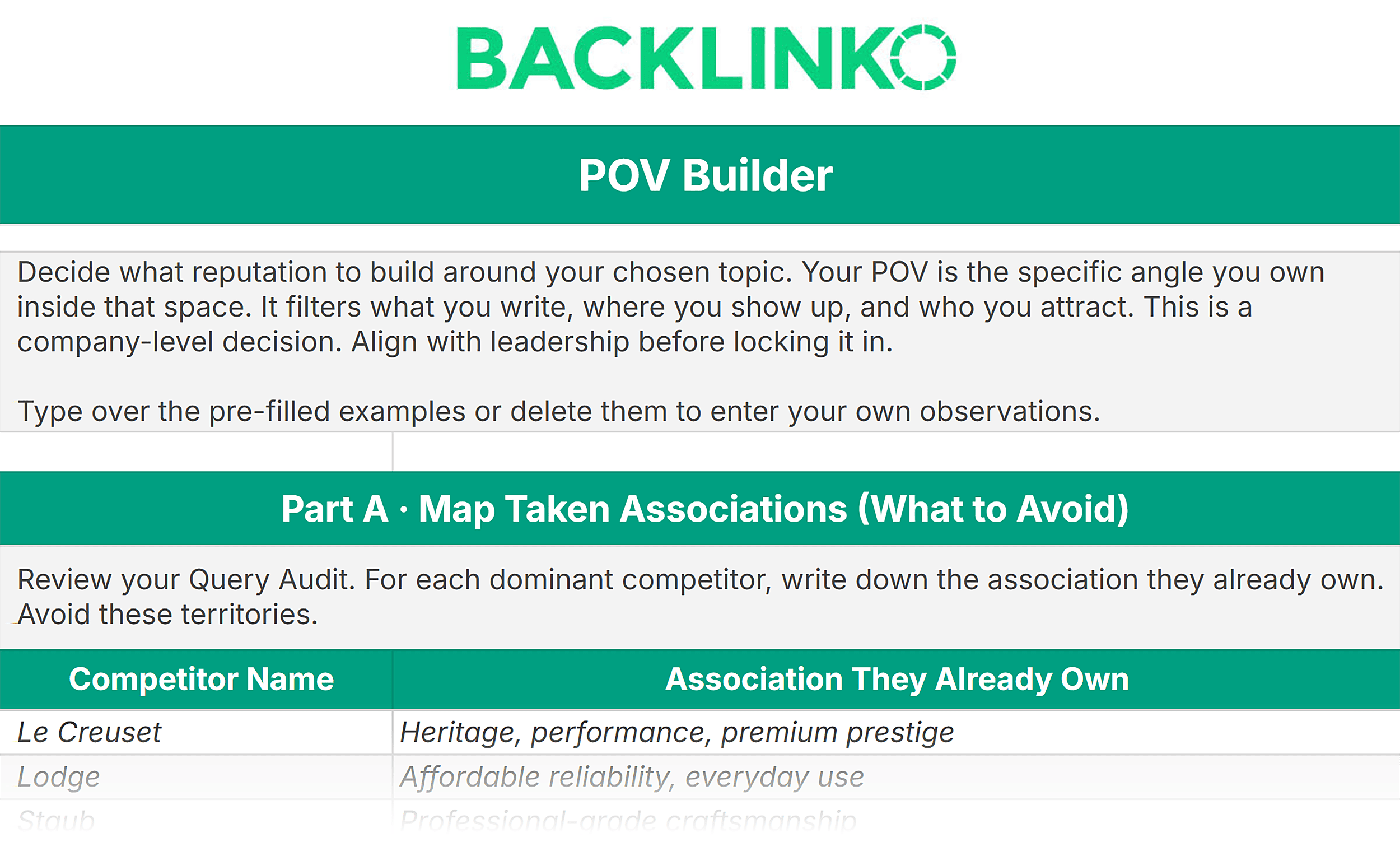
Before articulating your POV, it’s essential to map out the dominant POVs already established by leading brands in your chosen topic. Identifying these existing positions helps you avoid direct competition in areas where other brands have significant historical authority. The insights gathered during the Query Audit in Step 2 are invaluable here, as they reveal patterns in brand associations.
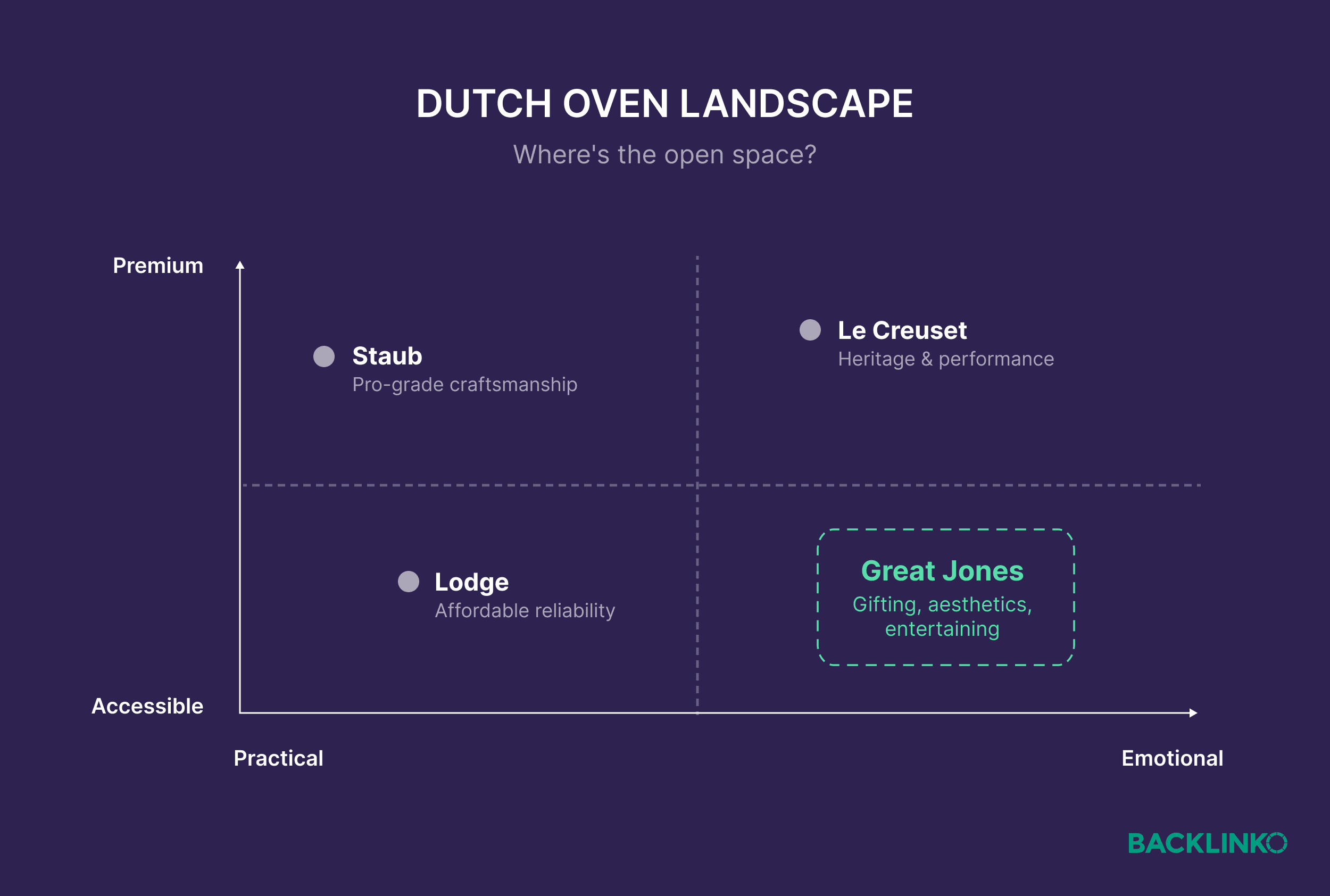
For Great Jones, the primary territories within the Dutch oven market are already well-defined:
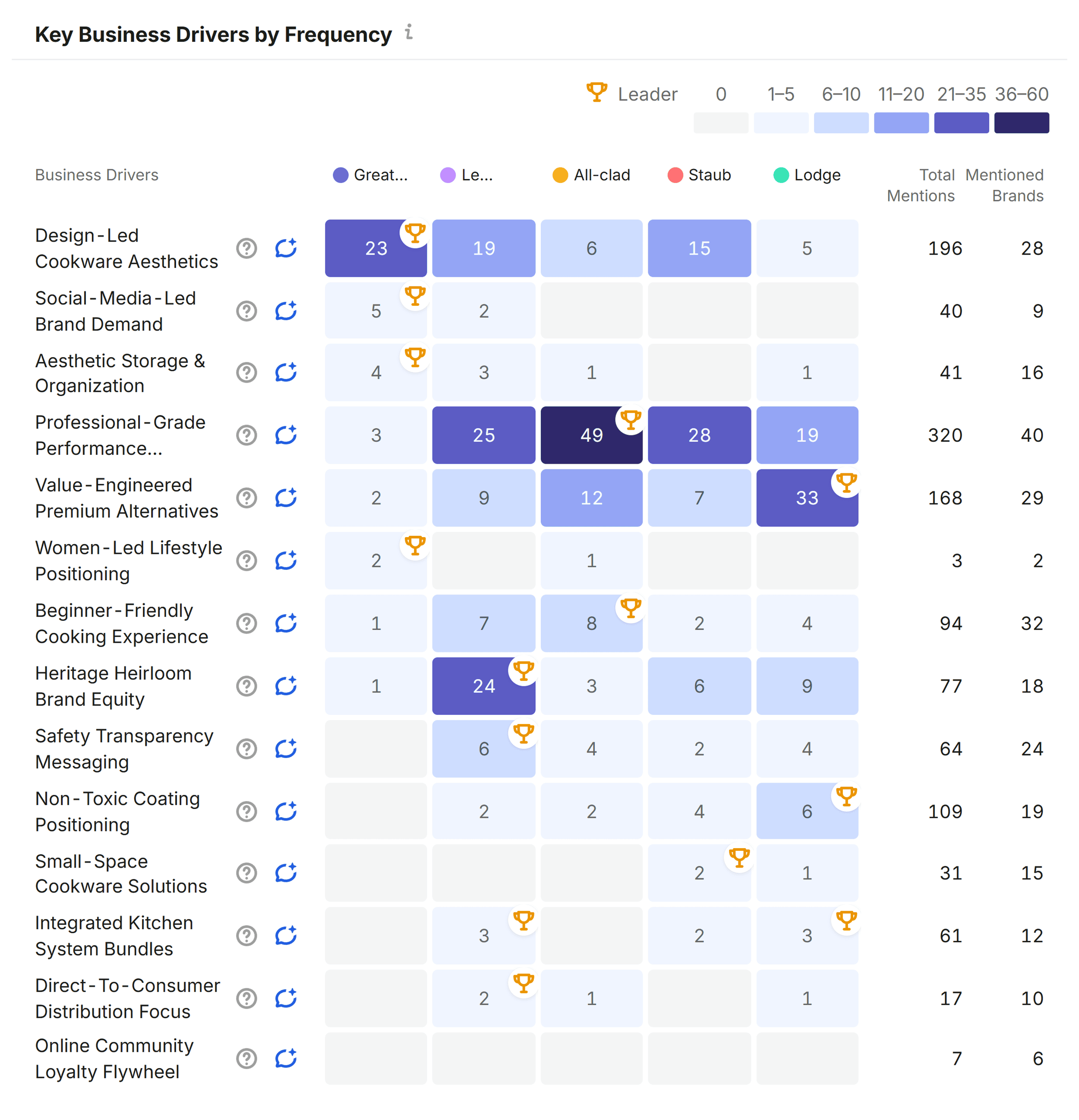
- Performance: Brands like Le Creuset and Staub are known for their durability, heat retention, and lifetime warranties.
- Value: Lodge is recognized for its affordability and long-standing reputation in cast iron cookware.
- Modernity/Design: Caraway, with its vibrant colors and non-toxic materials, appeals to a health-conscious and design-oriented audience.
However, specific niches remain less saturated. There’s less clear ownership around "gifting," "aesthetic appeal," or "beginner-friendly cooking" for Dutch ovens. Leveraging tools like the Semrush AI Visibility Toolkit can further refine this understanding by showing how competitors are being associated in AI-generated answers. For Great Jones, their existing strength in design offers a head start in claiming the "aesthetic" or "visual appeal" territory.
Choose Your POV
When selecting a POV, consider three crucial questions to ensure its viability and potential for success:
- Does it align with your brand? The POV should naturally stem from your brand’s values, products, and existing strengths.
- Is there buyer demand? The POV should address a genuine need or interest among your target audience.
- Is there room to own it? The POV should represent a territory where competitors are not overwhelmingly dominant, allowing your brand to establish a unique position.
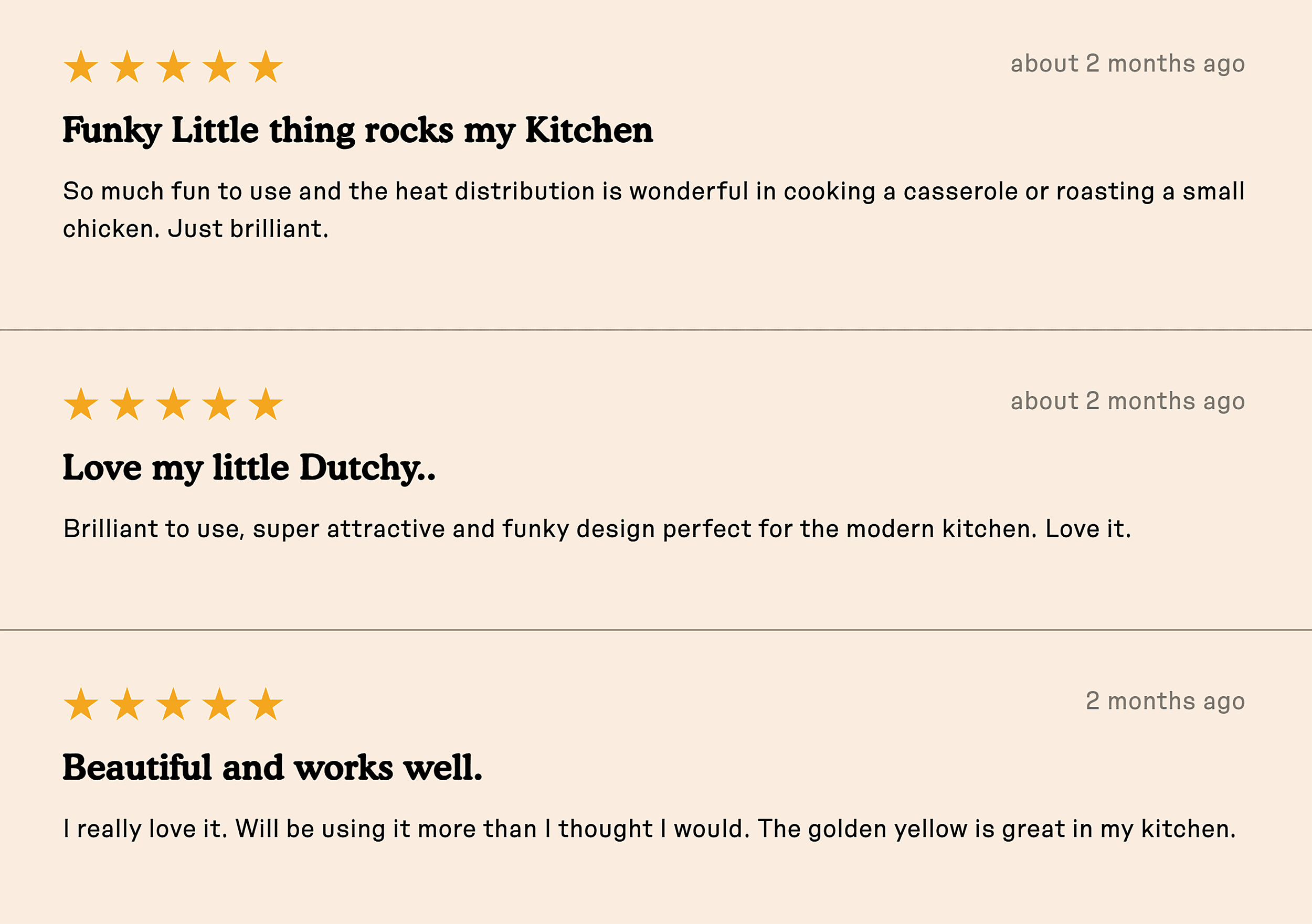
If a potential POV fails to meet any of these criteria, it’s advisable to reconsider. For Great Jones, the "gifting" POV is a strong contender. Customers frequently purchase Dutch ovens as gifts, and Great Jones’ own product reviews often highlight the product’s "super attractive," "modern," and "beautiful" design. This aligns perfectly with a gifting narrative, and importantly, no single competitor has definitively claimed this specific niche.
Write Your POV as One Sentence
To crystallize your chosen POV, distill it into a single, clear, and repeatable sentence. This exercise ensures that the POV is concise and easily understandable. For Great Jones, potential POVs could include:
- "Great Jones crafts Dutch ovens that make the perfect, stylish gift for any occasion."
- "Great Jones offers the most aesthetically pleasing Dutch ovens, ideal for gifting and elevating any kitchen."
- "Great Jones makes gifting beautiful, high-performance cookware effortless."
Each of these sentences targets a distinct buyer motivation and reason for choosing a Dutch oven, reinforcing the brand’s intended association.
Step 4: Map Your POV Proof Architecture
A strong POV is only effective if it is supported by credible evidence. This step focuses on planning the "proof" – the concrete data and endorsements that will validate your POV across both your own website and external platforms. The goal is not to create the proof yet, but to map out what is needed at each stage of the buyer journey to build a robust case for your brand’s authority.
Audit Your Proof Across the Buyer Journey
To establish credibility, your brand needs to demonstrate two key things: its relevance within the product category and its superiority as the preferred choice for your defined POV. This proof must be strategically deployed across the various stages of the buyer’s journey.
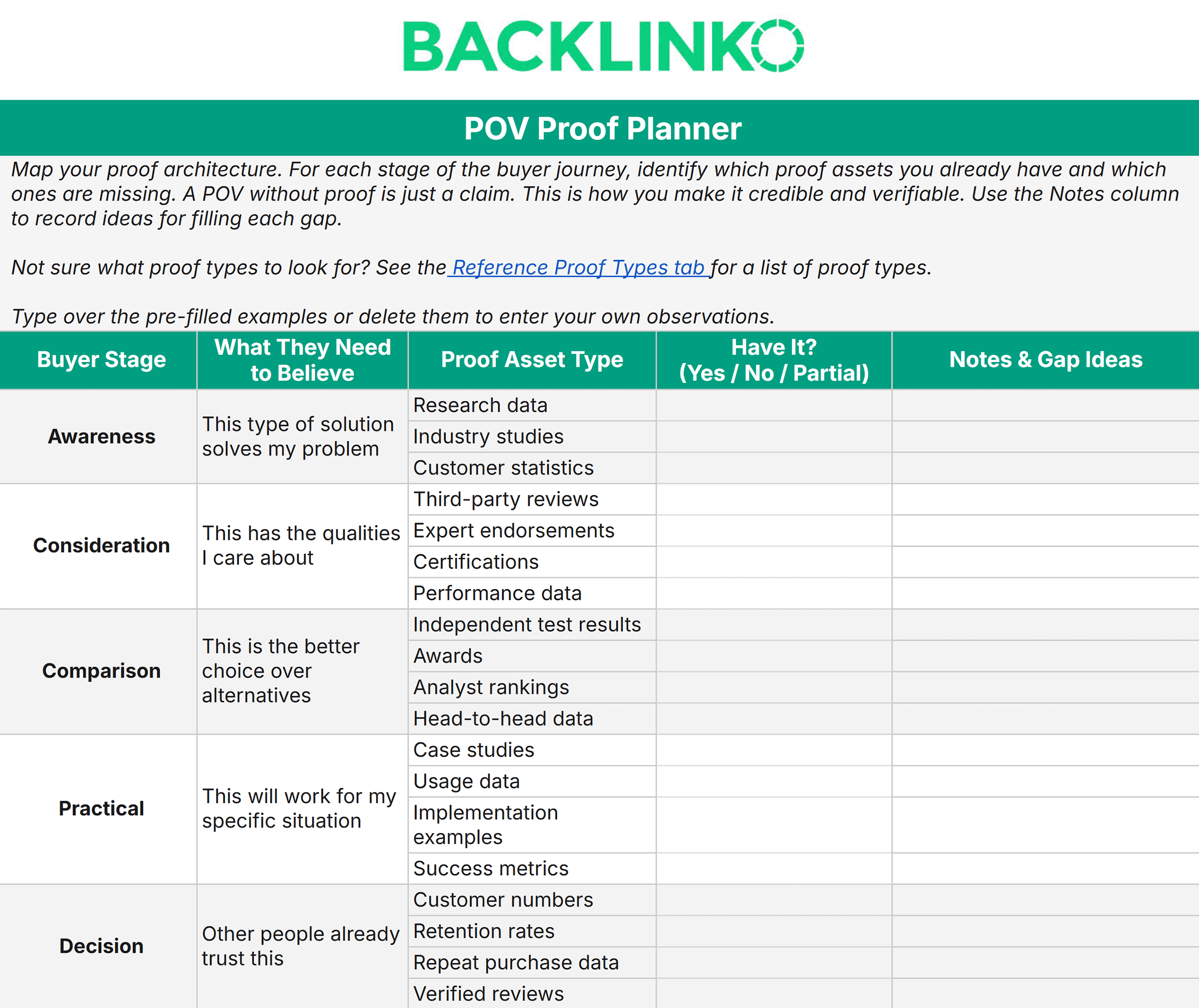
The buyer journey can be segmented into distinct stages, each requiring specific types of proof to reinforce belief in your brand:
| Buyer Stage | What They Need to Believe | Proof Assets That Help |
|---|---|---|
| Awareness | This type of solution solves my problem | Research data, industry studies, customer statistics |
| Consideration | This has the qualities I care about | Third-party reviews, expert endorsements, certifications, performance data |
| Comparison | This is the better choice over alternatives | Independent test results, awards, analyst rankings, head-to-head data |
| Active Evaluation | This will work for my specific situation | Case studies, usage data, implementation examples, success metrics |
| Decision | Other people already trust this | Customer numbers, retention rates, repeat purchase data, verified reviews |
By auditing your existing proof assets against these needs, you can identify any gaps. For Great Jones’ "gifting" POV, the proof audit might reveal:
- Existing proof: Positive customer reviews mentioning gifting suitability, features in lifestyle gift guides.
- Missing proof: Data on the percentage of Dutch oven sales that are gifts, endorsements from gifting experts, or comparisons highlighting the Dutchess as a superior gift option.
The "POV Proof Planner" within your template can help organize these findings.
Create a Hub Page for Your POV
A central hub page is essential for consolidating your POV and directing users to supporting evidence. This page should clearly define the topic, explain its significance, and link to supporting pages that delve deeper into specific aspects of your POV.
For Great Jones, a "Dutch Oven Gifting Guide" could serve as this hub page. It would articulate why Dutch ovens make excellent gifts, linking directly to the product page for "The Dutchess" and highlighting its suitability for various occasions. Supporting pages could include a "Guide to Choosing the Perfect Kitchen Gift," an FAQ on gifting cookware, or a report on the trends in kitchenware gifting.
Many brands may already have pages that can be repurposed as hubs, such as category pages, subcategory pages, or industry-specific landing pages. The key is to optimize these pages to strongly reflect your chosen POV and link them strategically to relevant supporting content.
Build Supporting Pages
Supporting pages are designed to go deeper than the hub, providing specific evidence for your POV at different stages of the buyer’s journey. These pages should directly address the proof assets identified in the previous step.
For Great Jones, addressing the "comparison" gap in the gifting context would involve creating pages that compare the Dutchess to other popular gifting items, backed by awards, expert testimonials, and perhaps even comparative data on gifting appeal. Other supporting pages might include:
- Gift Guides: Curated lists of Dutch ovens for specific occasions (weddings, housewarmings, holidays).
- "Why Gifting a Dutch Oven is Smart": Content explaining the long-term value and appeal of a Dutch oven as a gift.
- Customer Testimonials: Showcasing reviews that specifically mention the product as a gift.
Mapping these required pages in the "On-Site Foundation Planner" will provide a clear roadmap for content creation.
Structure Each Page for Readers and Machines
Every page dedicated to your POV should be structured to be easily digestible for both human readers and search engine algorithms. Adhering to the inverted pyramid principle, where the most critical information is presented first, is crucial. This ensures that key messages are immediately apparent.
Additionally, each page should incorporate:
- Clear Headings and Subheadings: To break up content and improve scannability.
- Relevant Keywords: Naturally integrated throughout the text to signal topic relevance.
- Internal Links: Connecting related pages to create a cohesive structure and distribute authority.
- Multimedia Content: Images, videos, or infographics to enhance engagement and understanding.
- Clear Calls to Action: Guiding users towards the next logical step, whether it’s exploring products or reading more content.
Link Your Pages
The interconnectedness of your content is vital for establishing topical authority. By linking your hub page and supporting pages together, you create a comprehensive "proof system" that reinforces your POV. Implement a strategic internal linking strategy, ensuring that anchor text is descriptive and relevant to the linked page’s content. This helps search engines understand the relationship between your pages and the overall authority of the topic.
Step 5: Create an Off-Site Proof System
While a strong on-site foundation is crucial, it’s insufficient on its own for gaining visibility in AI-driven search. The association between your brand and your chosen POV must also be reinforced across reputable third-party platforms. This step focuses on building that external validation.
Start with One Signature Proof Point
A signature proof point is an original insight, piece of data, or unique finding that directly supports your POV and is compelling enough for external entities to reference. This could be proprietary sales data, a unique customer survey, an industry trend analysis, or a collaboration with a recognized influencer or expert.
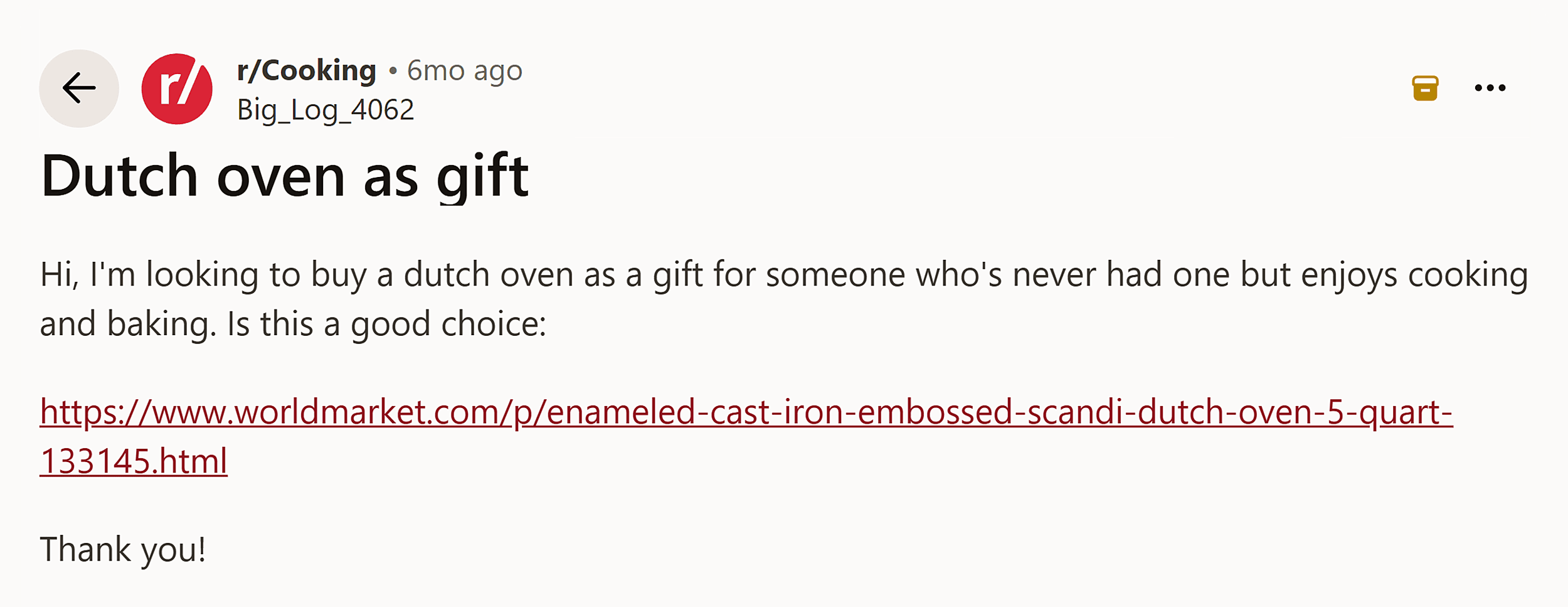
For Great Jones, focusing on the "gifting" POV, a signature proof point could involve analyzing their sales data to reveal a significant spike in Dutch oven purchases around key gifting holidays like Mother’s Day or Christmas. This data could be transformed into a report titled "The State of Gifting: Why Dutch Ovens Are the Must-Have Present," complete with shareable statistics and visual assets.
Distribute Your Proof Point
Once a compelling signature proof point is developed, its distribution across relevant platforms is key. This involves strategically placing the insight in various online spaces to maximize its reach and impact. The distribution can be categorized into four main areas:
- Owned Media: Leveraging your own website, blog, social media channels, and email lists.
- Earned Media: Securing mentions, features, or backlinks from third-party publications, news outlets, and industry blogs.
- Shared Media: Engaging with audiences on social platforms through discussions, collaborations, and community participation.
- Paid Media: Utilizing advertising channels to amplify your proof point and reach a wider audience.
For each distribution channel, identify the specific platforms, publications, or communities where your proof point would resonate most effectively. For Great Jones, this might involve pitching their gifting report to lifestyle magazines, creating a video series on their YouTube channel showcasing Dutch ovens as gifts, or engaging in relevant discussions on Reddit communities focused on home goods and gifts.
The goal is to ensure that the same core message – Great Jones equals gifting excellence for Dutch ovens – is consistently reinforced across multiple touchpoints.
Step 6: Track Topical Authority Progress
After implementing the strategies outlined in the Topical Authority Pyramid, ongoing tracking and analysis are essential to measure progress and refine the approach. This involves monitoring how search engines and LLMs are beginning to associate your brand with your chosen POV.
Foundational Layer: Are You Showing Up More?
Begin by re-evaluating your brand’s presence in the search queries identified in Step 2. Track the number of queries where your brand now appears organically. Monitor changes in impressions and rankings for terms related to your core topic. Tools like Google Search Console can provide valuable insights into your brand’s performance and visibility. For Great Jones, an increase in appearances for queries like "Dutch oven gift" or "best Dutch oven for wedding gift" would indicate progress in the foundational layer.
POV Layer: Are You Being Described Correctly?
The POV layer focuses on the language used to describe your brand in relation to your topic. Regularly run prompts that combine your brand name with your chosen POV and analyze the results. Are mentions of your brand increasingly associated with the specific angle you’ve claimed? Are reviews, articles, and AI responses using language that aligns with your POV? For Great Jones, this would involve looking for descriptions like "the perfect housewarming gift," "a stylish present," or "the go-to Dutch oven for gift-givers" when "The Dutchess" is mentioned. Tools like Google Alerts can help monitor brand mentions and sentiment.
Proof Layer: Are Others Confirming Your POV?
The proof layer tracks whether third-party sources are validating your POV. Are other websites citing or referencing your signature proof point? Are your on-site content hubs attracting backlinks from relevant sources? Monitor brand mentions in niche communities and media outlets to see if the language used aligns with your intended association. For Great Jones, seeing their Dutch oven recommended in gift guides as a top choice for weddings or housewarmings would be a strong indicator of successful proof layer development.
By consistently tracking these metrics across the three layers of the Topical Authority Pyramid, brands can gauge the effectiveness of their strategy and make data-driven adjustments to further solidify their position as a recognized expert in their chosen niche. This iterative process is key to building sustainable topical authority in the evolving digital landscape.