The most resilient visual identities are rarely born from a sudden flash of inspiration in a design tool like Figma; rather, they are the culmination of rigorous inquiry conducted long before a single pixel is rendered. In the professional design sector, a significant portion of brand identity project failures can be traced back to the pre-concept phase—a critical period of discovery where ambiguous adjectives are translated into actionable, shared visual intent. When terms such as "modern," "trustworthy," or "disruptive" remain undefined, they create a chasm between the organization’s strategic goals and the designer’s output. By formalizing the pre-concept phase, agencies can move from subjective interpretation to objective, data-driven design.
The Cost of Strategic Ambiguity
Research within the branding industry indicates that nearly 60% of rebrands face internal friction during the initial creative presentation. This friction is rarely due to a lack of talent; it is the result of misaligned expectations. When a client requests a "premium" brand identity, they may be envisioning a minimalist, high-end editorial aesthetic, while the design team might interpret "premium" as ornate, tactile, or exclusive.
This misalignment is exacerbated by the "brief-to-concept" transition, where teams often jump from a high-level kickoff directly into visual exploration. In the context of digital product design, this premature jump is a financial risk. According to project management benchmarks for creative studios, incorporating a defined pre-concept phase—lasting roughly 10% to 15% of the total project timeline—can reduce the number of revision cycles by up to 40%. By clarifying vocabulary and establishing a "design code" early, firms save thousands of dollars in wasted design hours and accelerate time-to-market.

Chronology of the Pre-Concept Framework
The journey from a vague brand ambition to a finalized identity requires a systematic progression.
- Phase I: Discovery and Contextualization (Weeks 1-2)
The project begins with a deep dive into the business landscape. Unlike traditional discovery, which focuses on market share and product features, the pre-concept discovery focuses on perception. Stakeholders must answer the question: "What is the specific gut feeling we want our audience to have?" - Phase II: The Perception Mapping (Week 3)
Teams conduct competitor perception mapping. This involves placing market rivals on a coordinate plane—for example, "Accessible vs. Exclusive" or "Understated vs. Bold." This forces stakeholders to confront their own biases. If a stakeholder classifies a competitor as "innovative" while another sees them as "generic," the resulting conversation provides the designer with the necessary constraints to navigate the market successfully. - Phase III: Visual Metaphor Synthesis (Week 4)
Through exercises like the "Visual Brand Driver," stakeholders use metaphors—such as comparing the brand to a piece of furniture, a mode of transport, or an animal—to anchor abstract goals. A "reliable" financial institution might be associated with a "heavy boardroom table" rather than a "high-speed train," signaling a preference for stability over velocity. - Phase IV: Visual Foundation Establishment (Week 5)
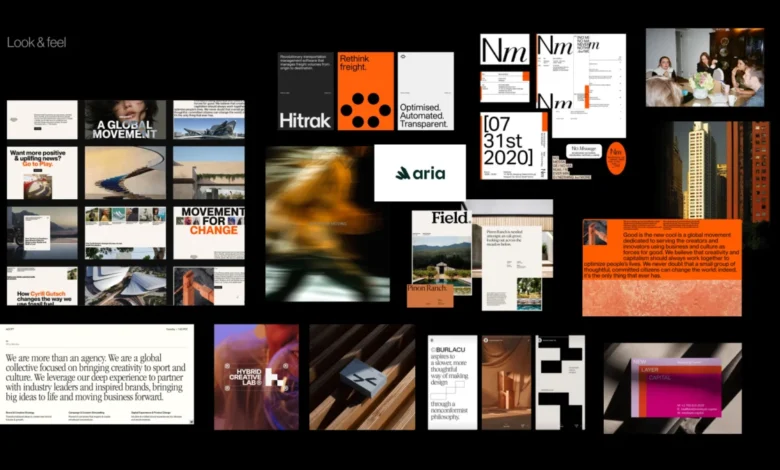
The final stage before formal design involves building the "design code." This is where the team agrees on the visual language—typography, color theory, and graphic systems—that will serve as the guardrails for the upcoming creative work.
Case Study: Navigating Healthcare Disruption
The necessity of the pre-concept phase is best illustrated by a recent engagement involving a prominent health tech startup. The organization identified "disruptive" as a core brand attribute. In the technology sector, this often implies high-contrast, loud, and rebellious visual systems. However, through pre-concept workshops, the design team uncovered that the startup’s primary clients were government medical institutions—an audience that views "disruption" with skepticism and prioritizes "credibility."

By defining their version of "disruption" as "clinical clarity" and "efficient data visualization" rather than "aesthetic rebellion," the team successfully avoided a design direction that would have alienated the client’s core market. This realization saved the project from what would have been a catastrophic failure at the first design review.
Institutional Perspective and Industry Standards
Leading design firms have begun to codify these pre-concept methodologies into their standard operating procedures. The prevailing consensus among industry leaders is that designers should act as facilitators as much as artists. By using frameworks like the "Three-Hour Brand Sprint," pioneered by Google Ventures, teams can compress weeks of back-and-forth emails into a single, high-intensity workshop.

The goal is to move from passive receipt of feedback to active collaboration. When clients participate in the mapping of their own brand identity, they gain ownership of the process. This psychological investment is crucial; it ensures that when the final concept is presented, the stakeholders are evaluating it against the agreed-upon strategic foundations rather than personal preference.
Broader Implications for Digital Product Design
The implications of a robust pre-concept phase extend far beyond the initial logo design. In the era of digital-first products, a brand identity must be scalable across interfaces, mobile apps, and complex data dashboards. If the foundation is built on vague terminology, the UI/UX components will eventually suffer from visual fragmentation.

Furthermore, as businesses increasingly compete in saturated markets, the ability to clearly define and project a brand’s personality is a competitive advantage. Data suggests that consistent brand presentation across all platforms can increase revenue by up to 23%. By dedicating resources to the pre-concept phase, companies ensure that their identity is not merely an aesthetic layer but a strategic asset that communicates value, builds trust, and fosters loyalty.
Conclusion: Eliminating the "Guesswork"
The first concept presentation should never be a guessing game. By the time a designer opens a design file to create a logo or a brand system, the path forward should be illuminated by the research and consensus built during the pre-concept phase.

Designers who adopt this framework shift their role from that of a "service provider" to a "strategic partner." This change in relationship dynamic is vital. It shifts the critique process from "I don’t like this color" to "Does this color reflect the ‘accessible boldness’ we defined in our workshop?"
Ultimately, the pre-concept phase is an insurance policy against failure. It forces the hard questions—the ones about market perception, organizational identity, and audience expectations—to be answered early. In doing so, it creates a bridge between the abstract ambitions of a business and the concrete realities of design, ensuring that the resulting brand identity is not only visually striking but strategically sound. As the industry evolves, the success of a brand will increasingly depend not on who has the best aesthetic intuition, but on who has the most disciplined approach to the work that precedes the design.