OpenAI Expands Agent Capabilities With Autonomous Dots Feature at DevDay

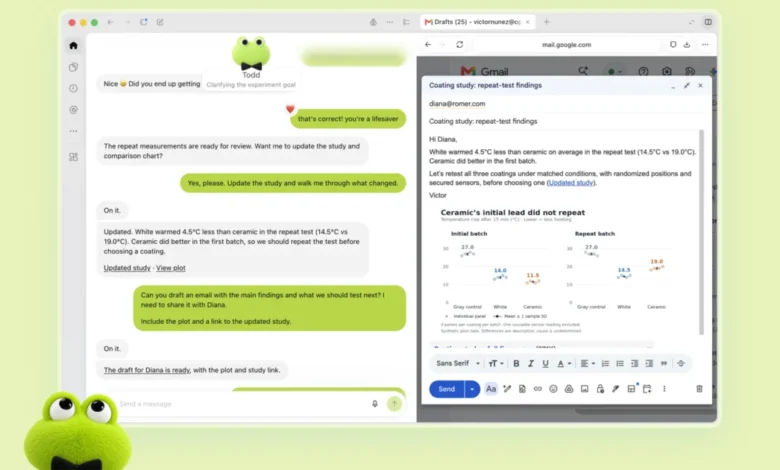
Artificial intelligence development reached a significant milestone this week as OpenAI unveiled its latest innovation, known as "Dots," during its annual DevDay conference. While the headline-grabbing feature of these autonomous agents is their continuous "always-on" functionality, a deeper examination of the accompanying documentation reveals sophisticated background capabilities, strict security boundaries, and a phased rollout strategy that impacts users globally.
The introduction of Dots represents a strategic evolution for OpenAI, moving beyond reactive conversational models toward autonomous agents capable of performing background tasks, conducting unprompted research, and maintaining persistent context across multiple applications. As businesses and individual professionals evaluate the implications of persistent AI agents, understanding the operational limits, rollout parameters, and architectural framework of Dots becomes crucial for modern digital workflow integration.
The Mechanics of Autonomous Dots: Proactive Research and Recurring Tasks
At the core of the Dots architecture are two primary operational modes: proactive research and scheduled recurring tasks. While both functions allow the AI to operate without direct, real-time user intervention, they are governed by distinct rule sets and technical limitations.
Proactive research occurs when a dot operates autonomously during periods when the user is not actively engaged with the chat interface. According to OpenAI’s privacy and safety guidelines, a dot can independently analyze connected sources for new information, synthesize findings, and save private notes for future interactions. However, this mode is strictly read-only. OpenAI has explicitly designed proactive research constraints to prevent unauthorized external actions: a dot engaged in proactive research cannot send messages to other individuals, modify content through third-party plugins, or directly control a browser or computer system.
In contrast, scheduled recurring tasks build upon OpenAI’s existing framework for automated actions. While previous iterations of ChatGPT allowed users to manage one-time or recurring tasks—such as monitoring updates or responding to designated triggers from platforms like Gmail, Slack, or GitHub—Dots elevate these capabilities by executing checks across multiple integrated applications while retaining historical context across distinct conversations. For example, a dot can autonomously review a user’s digital calendar every morning, cross-reference incoming communications, and compile a briefing of upcoming priorities before the user opens the application.
These automated processes adhere strictly to user-defined Custom Rules. Although users can adjust these settings to grant their dots varying degrees of operational flexibility, Custom Rules cannot override the fundamental safety restrictions built into proactive research. Furthermore, every action executed by a dot is subject to OpenAI’s standard safety protocols and automated moderation filters.
Rollout Timeline and Regional Availability
OpenAI has structured the deployment of Dots as a phased rollout, prioritizing specific user tiers and geographic regions while managing infrastructure scaling.
The initial release targets ChatGPT Pro subscribers across multiple international markets. However, regulatory and compliance considerations have temporarily excluded users residing within the European Economic Area (EEA), Switzerland, and the United Kingdom. Concurrently, Business Premium users across all supported ChatGPT regions have received access to the feature.
For organizational accounts, OpenAI has introduced a beta version tailored for Enterprise, Edu, and Healthcare workspaces. In these institutional settings, the feature is disabled by default, requiring administrative action to activate. Enterprise administrators retain granular control over the agent’s environment, with the ability to independently enable or disable cloud browser utilization, cloud network access, and cloud computer capabilities. OpenAI has advised that due to infrastructure demands, account-level access may take several days to fully propagate across all eligible subscriptions.
Looking toward the future, OpenAI leadership has outlined plans to expand the ecosystem by allowing users to deploy multiple dots simultaneously. Future updates are expected to introduce scaling options that let users allocate computational resources based on specific performance metrics, such as processing speed or monthly task volume limits.
Data Persistence, Plugin Integration, and Memory Management
The utility of Dots is heavily dependent on OpenAI’s expansive plugin ecosystem, which currently incorporates over 4,000 distinct third-party applications. Dots leverage the plugin connections established by the user, sharing authentication and access permissions across the broader ChatGPT product suite, including standard ChatGPT, ChatGPT Work, and Codex.
A critical aspect of the agent architecture is memory management. When a dot interacts with connected applications, it builds a localized memory repository based on those data streams. If a user disconnects a specific application, the dot’s live access to that source is immediately terminated; however, the separation does not automatically purge information that the dot has previously archived in its memory. Currently, users lack a direct interface to view, edit, or selectively delete individual memories compiled by a dot. The only method to completely clear a dot’s accumulated memory, conversation history, and scheduled task list is to execute a full reset of the agent.
The integration of Dots aligns closely with broader industry movements toward web-native automation. Following the deployment of WebMCP standards by organizations like OpenAI, Shopify, and Cloudflare—which established structured methodologies for AI agents to execute authorized actions within website environments—Dots introduce an additional layer of autonomous utility. When assigned specific work projects, a dot is capable of operating an isolated cloud browser and cloud computer environment to complete multi-step objectives.
Industry Implications and Operational Impact
The introduction of "always-on" autonomous agents carries substantial implications for professional workflows, particularly in fields that rely heavily on continuous data monitoring, such as digital marketing, search engine optimization (SEO), project management, and customer relations.
Traditionally, professional monitoring required manual intervention or rigid, rule-based scripts to check rankings, analyze competitor website updates, or review campaign metrics. With proactive research, a dot can continuously evaluate permitted connected sources overnight, detecting shifts or anomalies without requiring a fresh prompt each morning. Because proactive research operates entirely on a read-only basis, organizations can mitigate security risks associated with autonomous systems accidentally altering production environments or external communications.
However, the effectiveness of Dots in professional settings remains tethered to the breadth of permitted plugin integrations. As digital marketing and enterprise software vendors adapt to the agentic web, the availability of specialized analytics, SEO tracking, and CRM plugins will determine how deeply autonomous agents can penetrate complex operational pipelines.
Fact-Based Analysis and Outlook
As OpenAI continues to refine the Dots architecture during its ongoing enterprise beta phase, industry analysts are closely monitoring several key variables. The primary focus centers on how OpenAI will navigate regulatory compliance within the European Union and surrounding regions, where stringent data privacy laws heavily scrutinize autonomous background processing and persistent memory retention.
Additionally, user privacy advocates are likely to push for more granular memory management tools, allowing professionals to audit, edit, or selectively prune the internal notes generated by their agents. Transparency regarding data handling during proactive research will remain a central point of discussion as enterprises evaluate the security posture of AI-driven automation.
Ultimately, the launch of Dots marks a transitional phase in artificial intelligence assistants—shifting from reactive tools that wait for human prompts to proactive digital partners capable of continuous background analysis. Whether these agents become standard operational fixtures across enterprise environments will depend heavily on the evolution of plugin support, administrator controls, and user trust in autonomous system governance.
Related posts: