Critical GitLab Remote Code Execution Vulnerability Exposed Through Unclassified Security Patch and Public Exploit Release

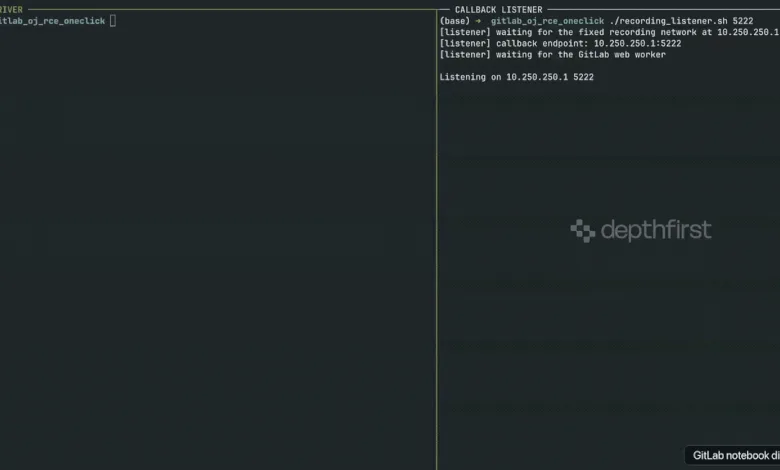
The cybersecurity community is currently navigating the fallout of a significant security disclosure involving GitLab, the widely used DevOps platform. On July 24, 2026, security researchers at the firm depthfirst published a functional exploit for a critical remote code execution (RCE) vulnerability that had been quietly addressed by GitLab in a patch released six weeks earlier. The disclosure has sparked a debate regarding transparency in security patching, as the fix was originally categorized by GitLab as a standard bug fix rather than a critical security update. This lack of classification meant that many system administrators, who prioritize updates based on security advisories and Common Vulnerabilities and Exposures (CVE) identifiers, may have inadvertently left their systems exposed to a potent attack vector.
The vulnerability stems from memory corruption issues within the Oj gem, a high-performance JSON parser for Ruby, which GitLab utilizes for various internal functions. Specifically, the flaw allows an authenticated user with permission to push code to a project to execute arbitrary commands as the "git" user on self-managed GitLab servers. While the vulnerability was patched on June 10, 2026, the subsequent release of exploit code has transformed a dormant risk into an active threat for organizations that have not yet moved to the latest supported versions.
The Technical Architecture of the Exploit
At the heart of this security crisis is the interaction between GitLab’s web service and the Oj JSON parser. GitLab employs an in-tree gem known as ipynbdiff to render Jupyter notebooks within the browser. When a user views a diff of a .ipynb file, the system passes repository-controlled JSON data to the Oj::Parser.usual.parse function. Because this process occurs within a long-lived Puma worker—the web server used by GitLab—an attacker can manipulate the memory space of the active application process.
The exploit chain involves two distinct memory corruption bugs discovered in the Oj gem. The first is a stack buffer overflow that occurs when the parser handles deeply nested JSON structures. By writing past a fixed 1,024-byte nesting stack, an attacker can eventually gain control over the parser’s start callback. The second bug is an integer truncation issue. When processing a large object key—specifically one approximately 65,565 bytes in length—the parser truncates the length to 29 bytes within a signed 16-bit field. This error causes the system to return a live heap pointer, which is then rendered into the user’s browser as part of the commit diff.
By repeatedly triggering these leaks, an automated probe can map the server’s memory, locating critical libraries such as libc. Once the memory layout is known, the attacker uses the stack overflow to point the callback function at system(), allowing for the execution of arbitrary shell commands. This sophisticated chain requires no administrative privileges, no access to Continuous Integration (CI) runners, and no interaction from other users, making it a "zero-click" exploit once the malicious notebook is pushed to a project.

Chronology of Discovery and Remediation
The timeline of this vulnerability highlights the rapid pace of modern vulnerability research, particularly when augmented by automated tools. The researchers at depthfirst utilized an autonomous AI system to flag the initial memory corruption bugs in the Oj gem, which were subsequently chained into a functional RCE by human analysts.
- May 21, 2026: depthfirst reports the initial memory corruption bugs to the maintainer of the Oj gem.
- May 27, 2026: The Oj maintainer merges fixes for the reported issues into the project’s codebase.
- June 4, 2026: Oj version 3.17.3 is officially released, containing the necessary security fixes.
- June 5, 2026: depthfirst provides GitLab with the full RCE chain, demonstrating how the Oj bugs could be used to compromise a GitLab instance.
- June 8, 2026: GitLab engineers confirm the vulnerability and reproduce the RCE independently.
- June 10, 2026: GitLab releases patch 19.0.2, which includes the update to Oj 3.17.3. However, the update is listed under "bug fixes" rather than the "security fixes" section of the release notes.
- July 24, 2026: depthfirst publishes a detailed writeup and a working exploit demo on GitHub, targeting GitLab version 18.11.3.
The delay between the patch and the public exploit release is standard in responsible disclosure, but the classification of the fix has drawn scrutiny. Without a CVE or a CVSS score at the time of the patch, many operators did not treat the June 10 release as an urgent priority.
Impacted Versions and Component Analysis
The vulnerability affects a broad range of GitLab Community Edition (CE) and Enterprise Edition (EE) installations across all tiers, from Free to Ultimate. The following table outlines the affected versions and the corresponding versions where the fix was first introduced:
| Component | Affected Versions | First Fixed Version |
|---|---|---|
| GitLab CE/EE | 15.2.0 to 18.10.7 | 18.10.8 |
| GitLab CE/EE | 18.11.0 to 18.11.4 | 18.11.5 |
| GitLab CE/EE | 19.0.0 to 19.0.1 | 19.0.2 |
| Oj Gem | 3.13.0 to 3.17.1 | 3.17.3 |
It is important to note that while the Oj gem itself was patched in version 3.17.3, an intermediate version (3.17.2) was released that contained other fixes but did not address the specific memory corruption bugs used in this RCE chain. Furthermore, GitLab versions prior to 15.2.0 are not listed in the current advisory, but they may still be at risk if they utilize the affected versions of the Oj gem and the ipynbdiff renderer.
Risks of "Silent" Security Patching
The decision by GitLab to include the Oj update as a routine bug fix rather than a security advisory is a focal point of the current discussion. In the software industry, "silent patching"—the practice of fixing security vulnerabilities without explicitly labeling them as such—is often criticized. Proponents of clear disclosure argue that it allows administrators to make informed decisions about risk management.
When a patch is not labeled as a security fix, it may be deferred by organizations with strict change-control processes. In this instance, because there was no CVE assigned and no mention of the notebook-diff chain in the release notes, triaging the update would not have triggered the "emergency" protocols typically reserved for RCE vulnerabilities. This creates a window of opportunity for attackers to reverse-engineer the bug fixes in the Oj gem and develop exploits before the majority of the user base has updated.

Assessing the Threat Level and Portability
While the exploit code is public, it is not a "plug-and-play" tool for all environments. The current public exploit is specifically tailored for GitLab version 18.11.3 running on x86-64 architecture. Successful execution depends on precise memory offsets, register states, and the behavior of the jemalloc memory allocator used in that specific container image.
However, depthfirst has noted that while porting the exploit to other versions or architectures requires effort, it is well within the capabilities of a sophisticated actor. The underlying memory corruption bugs in the Oj gem are general, meaning the logic of the attack remains sound across different environments. The firm estimated that a memory search on a fresh installation could take as little as five to ten minutes, while longer-running instances might require up to two hours of automated probing to achieve a successful compromise.
The "git" user account, under which the Puma process runs, typically has significant access within the GitLab environment. A successful attacker could potentially access:
- Source Code: All repositories hosted on the instance.
- Rails Secrets: Database passwords, encryption keys, and session tokens.
- Service Credentials: API keys and integration tokens for external services.
- CI/CD Data: Sensitive environment variables and build artifacts.
- Internal Networks: Other services accessible from the GitLab application server.
Remediation and Recommendations for Operators
The primary recommendation for all GitLab administrators is to upgrade to the latest available patch release immediately. Specifically, systems should be moved to versions 18.10.8, 18.11.5, or 19.0.2 and above.
For those utilizing Kubernetes-based deployments via Helm charts or the GitLab Operator, the version check must be performed carefully. Administrators should verify the GitLab version running inside the webservice image (which hosts the Puma worker) rather than relying on the version number of the chart or the operator itself.
Organizations running older, unsupported versions (specifically those between 15.2 and 18.9 that are outside the current security-maintained patch trains) face a more difficult path. GitLab generally does not provide backports for these versions, meaning a full upgrade to a supported release is the only viable path to remediation. Currently, no workarounds or configuration changes have been identified that can mitigate the risk without a full software update.

Broader Implications for the Software Supply Chain
This incident underscores the inherent risks in the software supply chain, particularly regarding the use of native extensions in high-level languages like Ruby. The Oj gem is used because of its extreme speed, which it achieves by implementing its parsing logic in C. However, this performance comes at the cost of memory safety. Memory corruption bugs in C-based libraries are a perennial threat to the security of the web applications that depend on them.
The role of AI in this event also provides a glimpse into the future of cybersecurity. The fact that an autonomous system was able to identify zero-day vulnerabilities in a mature library like Oj suggests that the barrier to entry for finding complex bugs is lowering. As AI-driven vulnerability research becomes more prevalent, the window between bug discovery and exploit development is likely to shrink, placing even more pressure on software vendors to provide transparent, timely, and well-categorized security updates.
GitLab has been contacted for comment regarding the classification of this patch and whether a CVE will be retroactively assigned. As of this publication, a formal response is pending. The cybersecurity community remains on high alert as organizations race to secure their DevOps infrastructure against this newly public threat.
Related posts: