Google Unlocks Billions in New Ad Inventory Through AI Max, Signaling a Major Shift in Search Monetization

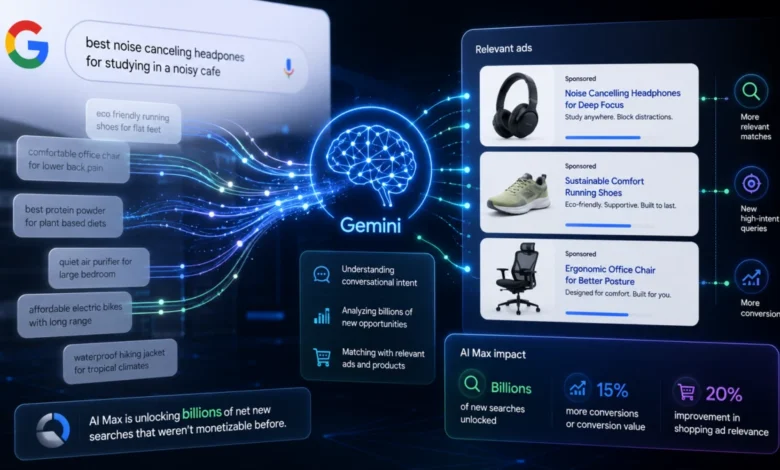
Google announced a significant advancement in its advertising strategy with the full rollout of AI Max, a sophisticated artificial intelligence system designed to unlock billions of previously unmonetized search queries for advertising. This development, revealed during Alphabet’s second-quarter 2026 earnings call, marks a pivotal moment for the company, providing a clearer pathway to expand Search revenue as user queries become increasingly longer and more conversational. Philipp Schindler, Google’s SVP and Chief Business Officer, highlighted AI Max’s capability to bridge the gap between complex, ambiguous searches and relevant advertisements, a feat that traditional keyword-based targeting struggled to achieve.
The transition of AI Max out of its beta phase signifies Google’s confidence in its ability to revolutionize how advertisers connect with consumers. With over 500,000 advertisers already embracing the technology, early results point to substantial improvements in campaign performance. According to Google’s internal data, advertisers utilizing AI Max or its predecessor, Performance Max, are experiencing an average 15% increase in conversions or conversion value, while maintaining a comparable return on ad spend. This suggests that AI Max is not merely optimizing existing campaigns but is actively creating new opportunities for advertisers to reach audiences with higher commercial intent.
The Gemini Effect: Enhancing Ad Relevance in a Conversational Search Landscape
Complementing AI Max, Google’s advanced AI model, Gemini, plays a crucial role in refining ad matching, particularly for complex queries. Google reported that Gemini has improved the relevance of Shopping ads for such searches by approximately 20%. This enhancement stems from Gemini’s superior ability to comprehend longer, more natural language queries, discern underlying commercial intent, and subsequently pair these searches with the most pertinent advertisements. This advancement liberates Google from its historical reliance on exact keyword matches, allowing for a more nuanced and effective approach to ad placement.
The implications of this shift are profound for both advertisers and Google. For Google, it represents a substantial expansion of its advertising inventory within the Search ecosystem. By intelligently interpreting the intent behind a broader spectrum of queries, Google can now monetize searches that were previously too vague or complex to serve ads effectively. This is particularly important in an era where users are increasingly adopting voice search and conversational interfaces, leading to longer, more descriptive search queries. For advertisers, this opens up new avenues for reaching potential customers. However, it also necessitates a strategic adjustment, as the visibility into how their ads are matched to specific queries may become less transparent compared to the granular control offered by traditional keyword targeting.
AI Max: More Than a Feature, a New Paradigm for Search Monetization
Google’s messaging during the earnings call underscored a key strategic point: AI Max is not just another campaign management feature. It is evolving into a fundamental mechanism for Google to generate more ad inventory directly within its Search product. This indicates a long-term vision where AI is deeply integrated into the core monetization engine of Google Search.
This strategic pivot reflects a broader trend in digital advertising: the move from keyword-centric strategies to intent-based advertising. As AI models like Gemini become more adept at understanding the nuances of human language and user intent, the success of advertising campaigns will likely depend less on precise keyword selection and more on the advertiser’s ability to provide Google with rich signals. These signals include comprehensive product feeds, compelling creative assets, and well-optimized landing pages that clearly articulate value and satisfy user needs. The goal is to equip Google’s AI with the necessary information to make the most accurate and beneficial ad-to-query matches.
The Broader Impact: Navigating the Future of Search Advertising
The introduction of AI Max and the enhanced capabilities of Gemini signal a significant evolution in how search advertising will operate. The ability to monetize billions of new searches has the potential to reshape the digital advertising landscape, offering new growth opportunities for Google and its advertisers. However, this shift also brings challenges, particularly concerning transparency and control for advertisers.
The move towards intent-based advertising, while promising for efficiency and relevance, requires a recalibration of advertiser strategies. As AI takes a more prominent role in matching ads to search queries, advertisers will need to focus on creating holistic, high-quality digital experiences. This means investing in compelling content, robust product information, and user-friendly website design to ensure that Google’s AI can accurately interpret their offerings and connect them with the right audiences.
Furthermore, the increased reliance on AI for ad matching could lead to a reduction in the granular control advertisers have historically enjoyed. While AI Max aims to improve overall campaign performance, the specific mechanisms by which ads are served might become less predictable for individual advertisers. This necessitates a greater trust in Google’s AI algorithms and a focus on broader campaign objectives and performance metrics.
The integration of AI into Search advertising is not merely an incremental update; it represents a fundamental shift in how Google plans to grow its core revenue stream. By unlocking a vast reservoir of previously unmonetized search queries, Google is positioning itself to capitalize on the growing complexity and conversational nature of online search. This evolution promises to be a defining characteristic of the digital advertising industry in the years to come, demanding adaptability and strategic foresight from all stakeholders involved.

Context of the Announcement: Alphabet’s Q2 2026 Earnings Call
The revelation of AI Max’s full rollout and its strategic importance occurred during Alphabet’s Q2 2026 earnings call. These calls are critical junctures where the company’s leadership provides insights into financial performance, strategic initiatives, and future outlooks. For investors and industry analysts, these events offer a window into the company’s direction and its ability to navigate evolving market trends.
Alphabet, the parent company of Google, has consistently demonstrated a strong reliance on advertising revenue, particularly from its Search division. In recent years, the company has faced increasing scrutiny regarding its growth trajectory and its ability to innovate in the face of emerging technologies and competitive pressures. The emphasis on AI within Search is therefore a crucial strategy to maintain and accelerate revenue growth.
The Q2 2026 call likely provided a platform for Google executives to address concerns about the maturity of the Search advertising market and to articulate how AI is poised to unlock new monetization opportunities. The specific mention of "billions" of previously unmonetized searches underscores the sheer scale of the potential impact. This suggests that Google has identified a significant untapped market within its own Search engine, driven by the changing ways users interact with its platform.
The timing of the AI Max announcement, emerging from beta and adopted by hundreds of thousands of advertisers, indicates a well-planned and tested deployment. The positive performance metrics, such as the 15% lift in conversions, are intended to reassure advertisers of the technology’s efficacy and encourage wider adoption.
Broader Implications for the Digital Advertising Ecosystem
The strategic direction signaled by Google’s AI Max initiative has far-reaching implications for the entire digital advertising ecosystem.
For Advertisers:
- Shifting Strategy: Advertisers will need to move beyond traditional keyword research and embrace a more holistic, intent-driven approach. This involves optimizing not only ad copy but also landing pages, product feeds, and overall user experience.
- Increased Reliance on Google’s AI: While offering new opportunities, this shift also implies a greater dependence on Google’s algorithms to interpret user intent and serve ads effectively. Transparency and control may become more limited.
- Potential for New Audiences: The ability to monetize more complex searches could expose advertisers to entirely new segments of users with specific, nuanced needs.
For Competitors:
- Pressure to Innovate: Competitors in the search engine and advertising technology space will be under pressure to develop comparable AI-driven solutions to remain competitive.
- Focus on Differentiation: Companies that can offer greater transparency, more granular control, or unique targeting capabilities might find a niche.
For Users:
- Potentially More Relevant Ads: In theory, AI Max could lead to more relevant ad experiences for users, as ads are better matched to their specific queries and intentions.
- Evolving Search Experience: The integration of AI into Search may lead to a more conversational and intuitive search experience, with ads seamlessly woven into the results.
For the Advertising Market:
- Market Expansion: The unlocking of billions of new ad opportunities could lead to significant market expansion within search advertising.
- Data and Privacy Concerns: As AI models become more sophisticated in understanding user intent, questions around data privacy and the ethical use of AI in advertising will likely intensify.
In conclusion, Google’s AI Max represents a significant technological and strategic leap forward, promising to redefine the monetization of search. As the company moves from keyword-centric targeting to an intent-driven advertising paradigm, the digital advertising landscape is set for a period of dynamic transformation. Advertisers and industry stakeholders will need to adapt to this evolving environment, focusing on robust data signals, compelling user experiences, and a strategic understanding of AI’s growing influence in connecting businesses with consumers.