The Indispensable Role of Social Media Analytics Tools in Modern Digital Strategy

The landscape of digital marketing has undergone a profound transformation, moving decisively from intuition-driven efforts to highly data-centric strategies. What was once a perplexing mix of successful and underperforming content, often attributed to mere luck or an elusive "viral" quality, is now systematically demystified by the power of social media analytics. This shift represents a critical evolution for businesses, creators, and marketers alike, enabling them to understand the intricate dynamics of audience engagement, content performance, and overall digital presence.
The Evolution of Data-Driven Social Media Engagement

In the early days of social media, platforms were primarily seen as spaces for personal connection. As their user bases swelled into billions, businesses quickly recognized their potential as marketing channels. However, initial strategies often involved a trial-and-error approach, with content creators and brands posting based on creative hunches rather than empirical evidence. This era of guesswork led to inconsistent results and a lack of clear return on investment (ROI). The turning point arrived with the widespread adoption of analytics. Suddenly, the "why" behind success and failure became discernible through data points: identifying optimal posting times, understanding which hooks captured the most attention, and determining the ideal length and format for content. This analytical clarity fundamentally changed how social media strategies are conceived and executed, transforming it from an art into a more precise science.
The increasing complexity of social media platforms, each with its unique algorithms and user behaviors, further amplified the need for sophisticated analytics. A post thriving on LinkedIn might flop on Instagram, or a strategy perfect for TikTok might not translate to X (formerly Twitter). Without a robust mechanism to measure and interpret these discrepancies, marketers would remain blind to critical opportunities and pitfalls. Industry experts now universally agree that effective social media engagement is inextricably linked to continuous data analysis, allowing for agile adjustments and sustained growth.
Bridging the Gap: Limitations of Native Analytics and the Rise of Third-Party Solutions

While every major social media network offers its own suite of native insights, these often fall short of providing the comprehensive, cross-platform view necessary for modern digital strategy. Native dashboards are valuable for basic performance tracking on a single platform, answering questions like "How many likes did this post get?" or "What was the reach of this story?" However, their limitations become apparent when tackling more complex objectives.
A significant challenge lies in the fragmented nature of native analytics. Businesses running multi-platform campaigns are forced to manually collate data from disparate dashboards, a time-consuming and error-prone process. Furthermore, native insights frequently suffer from "blind spots." For instance, LinkedIn’s native analytics typically lack timestamps on past posts, making it exceedingly difficult for users to precisely identify their audience’s most active engagement periods. This absence of granular data impedes the optimization of posting schedules, a cornerstone of maximizing content visibility and interaction.
This is precisely where third-party social media analytics tools become indispensable. These specialized platforms are designed to aggregate data from numerous social channels into a single, unified dashboard, offering a holistic view of performance. Beyond mere aggregation, they enrich raw data with advanced features, including competitive benchmarking, sentiment analysis, predictive insights, and customizable reporting. These tools transform raw numbers into actionable intelligence, enabling marketers to spend less time tracking data and more time refining their strategy. The market for social media analytics tools has seen consistent growth, reflecting the escalating demand for comprehensive, integrated solutions that transcend the limitations of native platform offerings.
Understanding the Spectrum: Analytics vs. Reporting and Types of Insights
While often used interchangeably, "analytics" and "reporting" represent two distinct, albeit interconnected, phases of the data-driven process. Analytics involves the collection, measurement, and interpretation of data, focusing on answering "what happened?" and "why did it happen?" It’s the detective work of uncovering trends, patterns, and causal relationships. Reporting, conversely, is the act of presenting these analytical findings in a clear, concise, and shareable format to stakeholders, clients, or internal teams. Effective social media reporting tools integrate both functions, pulling raw data and organizing it into intuitive dashboards, customizable PDFs, or branded presentations. The choice between a tool that leans more heavily into analytics or reporting often depends on the user’s role—a solo creator might prioritize an in-depth analytics dashboard, while an agency managing multiple client accounts would value automated, white-label reporting capabilities.
Social media analytics can be broadly categorized into four types, each offering a different depth of insight:
- Descriptive Analytics: This is the foundational level, focusing on "what happened?" It involves raw metrics like impressions, reach, likes, comments, shares, and clicks. Most native analytics and basic third-party tools provide this.
- Diagnostic Analytics: Moving beyond "what," this type addresses "why did it happen?" It involves analyzing content types, posting times, audience demographics, and campaign elements to understand the drivers behind observed performance.
- Predictive Analytics: This advanced form seeks to answer "what will happen?" By leveraging historical data and machine learning, these tools forecast future trends, audience behaviors, and potential content performance. This often comes at a premium cost.
- Prescriptive Analytics: The most sophisticated level, prescriptive analytics, suggests "what you should do." These tools offer AI-powered recommendations for optimizing strategies, content, and engagement based on predictive models.
The majority of social media analytics tools cater to descriptive and diagnostic needs, which are sufficient for most creators and marketers. However, premium platforms are increasingly incorporating predictive and prescriptive capabilities, offering a significant strategic advantage to those who can leverage them.
Choosing the Right Tool: Dedicated Analytics vs. Social Media Management Suites
The decision between a dedicated social media analytics tool and a broader social media management software hinges on a user’s specific needs and existing workflow.
- Social Media Management Software: These all-in-one platforms typically encompass analytics alongside other crucial functions such as content scheduling, audience engagement (community management), and content idea storage. They are ideal for individual creators, one-person marketing teams, or small businesses managing their entire social media strategy from a single hub. The convenience of having everything in one place often streamlines workflows and reduces the learning curve associated with multiple tools.
- Dedicated Social Media Analytics Tools: These tools specialize purely in performance measurement and reporting. They are best suited for users who already have other aspects of their social media strategy covered (either manually or with separate tools) but require exceptionally deep, niche-specific insights—such as advanced competitive analysis, hyper-focused sentiment analysis, or highly granular market research—that a general management tool might not provide.
For most social media professionals, a management tool with robust built-in analytics offers the best balance of functionality and convenience. However, specific scenarios, such as the need for in-depth competitive benchmarking, comprehensive social listening, or specialized reporting features, might necessitate the addition of a standalone analytics solution. A prudent approach often involves starting with an integrated management tool and, if deeper, specialized needs emerge, supplementing it with a dedicated analytics platform.
Leading Social Media Analytics Tools: A Comprehensive Overview
The market offers a diverse array of tools, each tailored to different use cases and budget considerations. Here’s a closer look at some of the prominent players and their unique strengths:
-
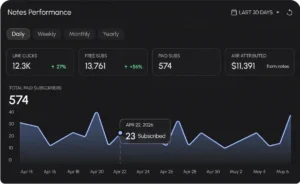
Buffer: The Go-To for Creators and Small Teams
Buffer stands out for its intuitive analytics dashboard, designed to cut through noise and highlight critical metrics. It immediately surfaces insights on the best post types, optimal posting days, and most engaging content formats without extensive menu navigation. Beyond raw data, Buffer helps users interpret information, providing actionable recommendations crucial for time-strapped creators and small teams. Its reporting features allow for the creation of professional, branded reports with minimal effort, eliminating tedious manual data compilation.- Pricing: Free plan for up to three platforms (10 posts/channel); paid plans from $6/month.
- Supported Platforms: Bluesky, Facebook, Google Business, Instagram, LinkedIn, Mastodon, Pinterest, Threads, TikTok, X, YouTube.
-
Rival IQ: Tailored for Large Agencies and Competitive Edge
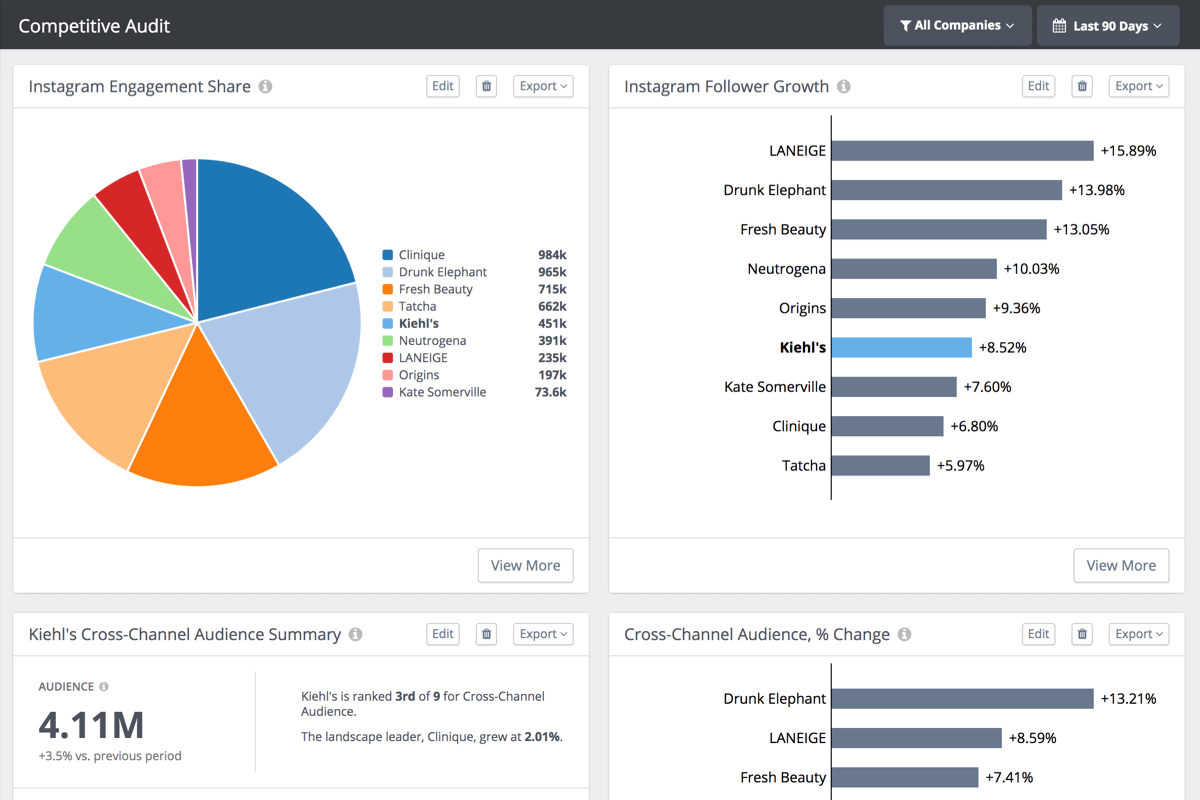
Rival IQ excels in competitive benchmarking, making it a powerful asset for large social media agencies. It integrates deep social media analytics with competitor analysis and social listening capabilities, offering a comprehensive view of the competitive landscape. Its features include identifying competitor boosted posts, comparing brand positioning across profiles, and benchmarking performance against industry niches and chosen rivals. This robust competitive intelligence is vital for informing client strategies and delivering impactful reports.- Pricing: Plans from $239/month; 14-day trial.
- Supported Platforms: Facebook, Instagram, LinkedIn, TikTok, X, YouTube.
-
Keyhole: Unlocking Market Research and Historical Insights
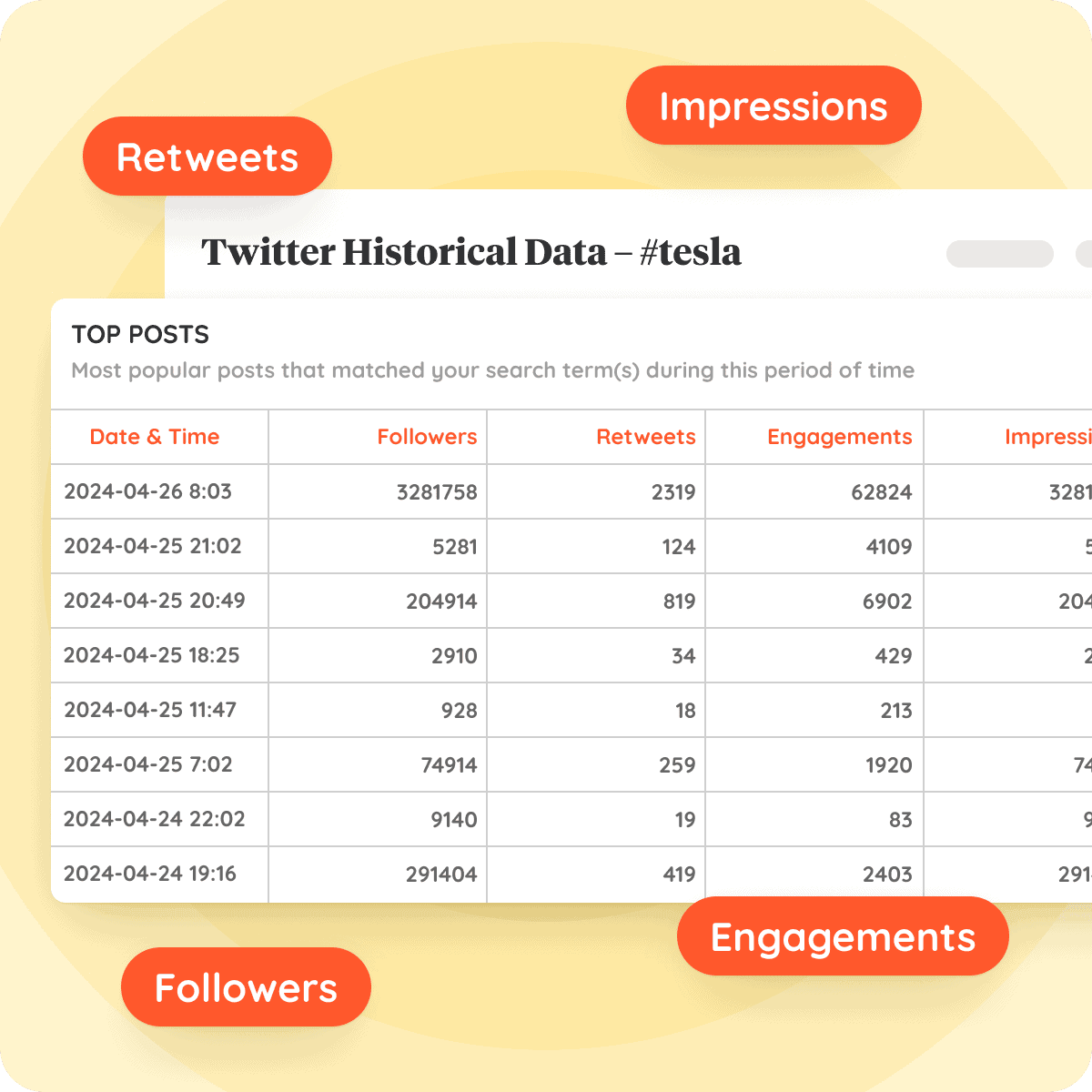
Keyhole specializes in historical data analysis and market research, particularly valuable for understanding the evolution of conversations around specific topics. It offers the unique ability to delve into data as old as a decade, providing insights into audience sentiment shifts and top-performing content over extended periods. Leveraging machine learning, Keyhole also identifies emerging trends in real-time, offering powerful intelligence for product development and content strategy. While its most in-depth historical insights are X-centric, its broader market research capabilities span multiple platforms.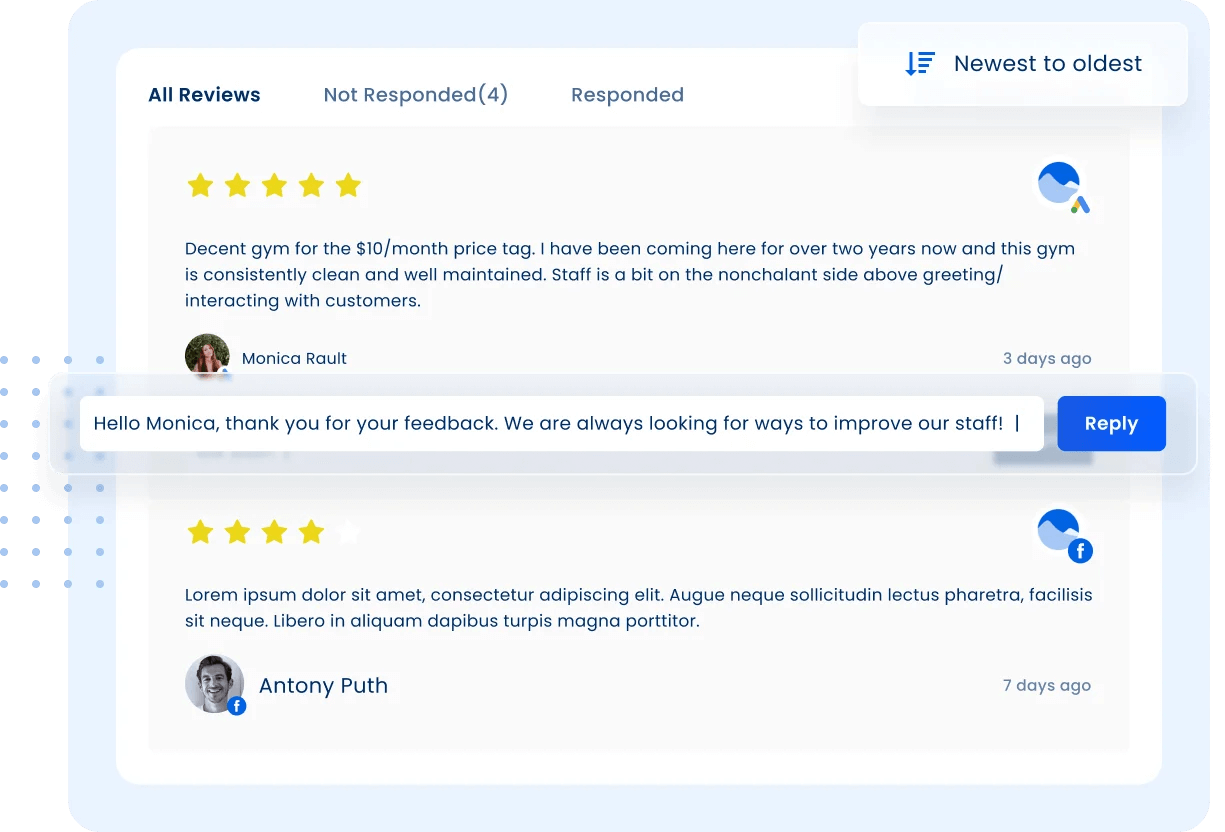
- Pricing: Not publicly available; contact sales for details.
- Supported Platforms: Facebook, Instagram, LinkedIn, TikTok, X, YouTube.
-
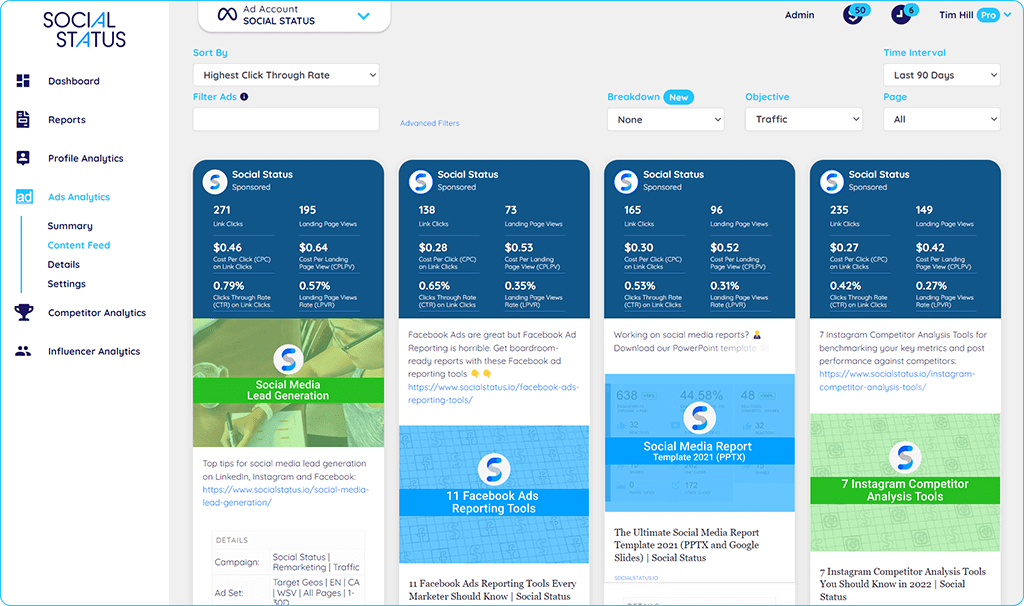
Social Status: Optimizing Ads and Influencer Partnerships for Small Businesses
For small businesses engaged in both organic and paid social media, including influencer marketing, Social Status provides a solid analytics solution. It tracks key performance indicators (KPIs) like likes, impressions, and shares, alongside detailed insights into ad campaign performance, audience demographics, and influencer content effectiveness. Its ability to collate all these insights into a single dashboard simplifies the complex task of managing diverse social strategies, making it easier to measure ROI across various marketing initiatives.- Pricing: Free plan available; paid plans from $9/month for small businesses, $99 for other users.
- Supported Platforms: Facebook, Instagram, LinkedIn, TikTok, X, YouTube.
-
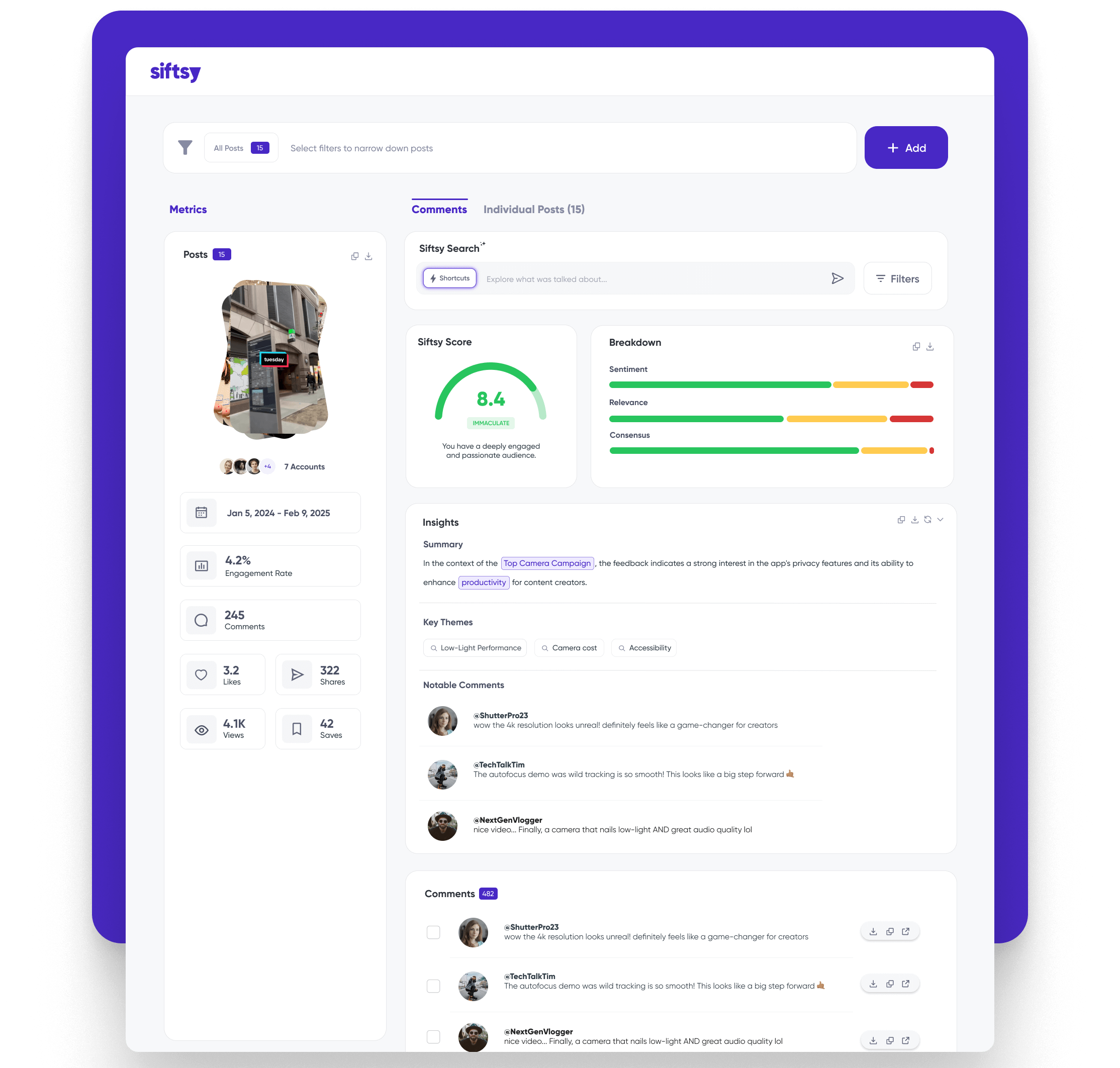
Siftsy: Deep Diving into Comment Sentiment
Siftsy addresses a critical need: understanding the "why" behind engagement through comment analysis. By processing comments across multiple channels using AI, Siftsy uncovers sentiment, identifies common themes, and extracts key takeaways from conversations. This is invaluable for gauging audience reactions to new products, understanding feedback on content, or identifying potential customer service issues. Combining quantitative metrics with qualitative sentiment analysis offers a more profound understanding of audience perception.- Pricing: Not publicly available; contact sales.
- Supported Platforms: Instagram, LinkedIn, TikTok, X, YouTube.
-
Vista Social: Comprehensive Review and Social Metric Tracking
Vista Social extends beyond traditional social media analytics by integrating robust review management capabilities. It centralizes feedback from various review sites into one dashboard, enabling businesses to monitor star ratings, track new reviews, and respond efficiently. Alongside these features, it offers standard social media analytics, scheduling, and social listening tools, making it a comprehensive platform for managing both social presence and online reputation, crucial for brands sensitive to public perception.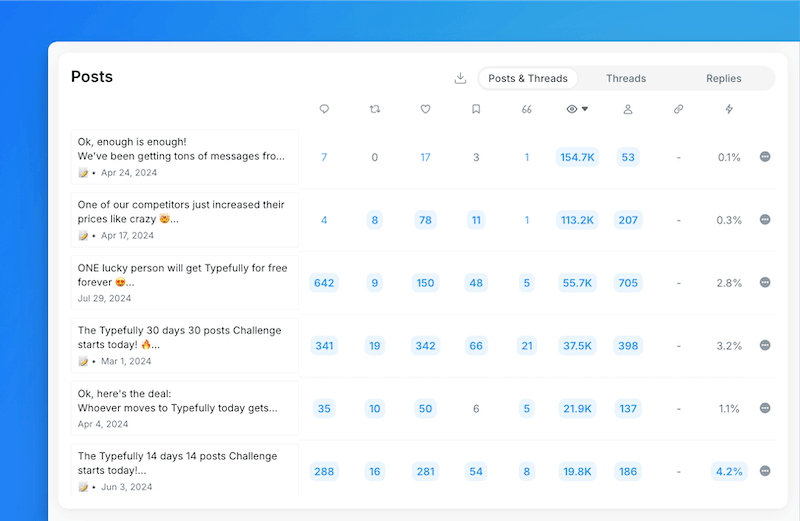
- Pricing: Plans from $79/month; 14-day trial.
- Supported Platforms: Apple Play Store, Bluesky, Facebook, Google Business, Google Play Store, Instagram, LinkedIn, OpenTable, Pinterest, Reddit, Snapchat, Threads, TikTok, TripAdvisor, Trustpilot, Tumblr, X, Yelp, YouTube, and more.
-
Typefully: The Powerhouse for X (formerly Twitter) Analysis
Typefully excels as a specialized analytics tool for X (formerly Twitter), though it supports other platforms. Its user experience for crafting X threads is particularly noteworthy, offering features like "viral thread hooks" for inspiration. Typefully provides X-specific metrics, such as "profile conversion rate," which measures how many profile visitors convert into followers. This metric offers unique insights into the effectiveness of profile optimization and overall content appeal on the platform.- Pricing: Free plan for 15 posts/month; paid from $16/month (yearly billing).
- Supported Platforms: Bluesky, LinkedIn, Mastodon, Threads, X.
-
Tailwind: Essential for Pinterest-Driven Businesses
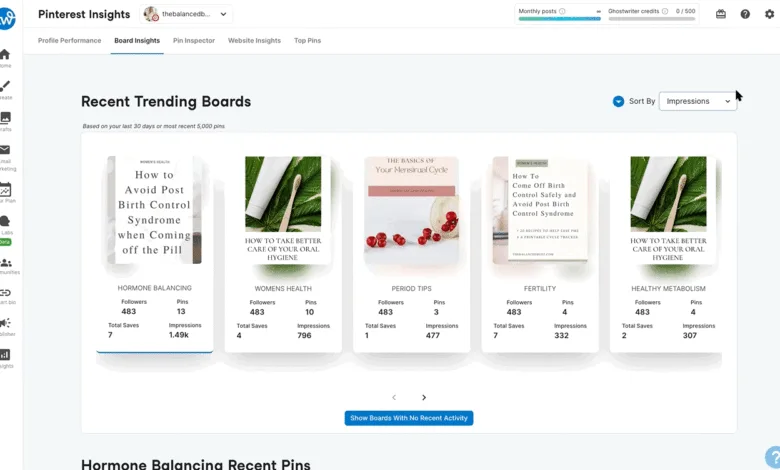
Tailwind is a specialized tool for businesses that rely heavily on Pinterest for traffic and engagement. Recognizing Pinterest’s dual nature as a social network and a search engine, Tailwind offers granular analytics, from overall account performance to individual pin and board statistics. Its integration with Google Analytics is a standout feature, enabling users to pinpoint exactly which pins drive the most website traffic, thereby informing content creation and optimization strategies for maximum impact.- Pricing: Free plan for 5 posts/month; paid from $29.99/month.
- Supported Platforms: Facebook, Instagram, Pinterest.
-
DashThis: The All-in-One Marketing Dashboard
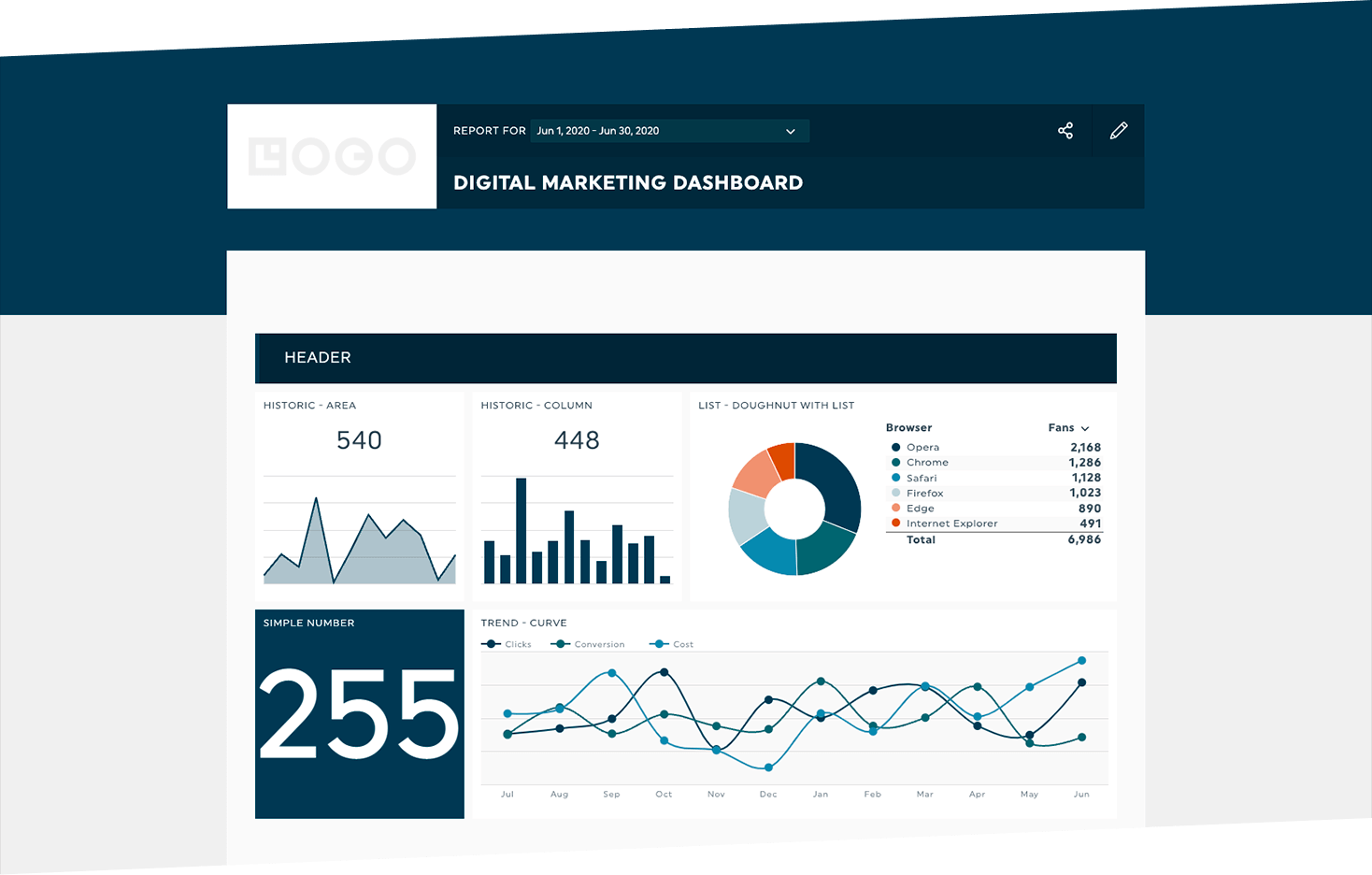
DashThis is not solely a social media tool but a versatile marketing dashboard designed to consolidate data from various sources. It’s particularly useful for marketers who need to demonstrate how social media performance contributes to the broader marketing strategy. With over 30 integrations, including Google Analytics, Ahrefs, HubSpot, and various ad platforms, DashThis allows for the creation of unified reports that combine social metrics with SEO, ad performance, and other marketing data. This holistic view simplifies reporting for stakeholders who require a comprehensive overview rather than platform-specific details.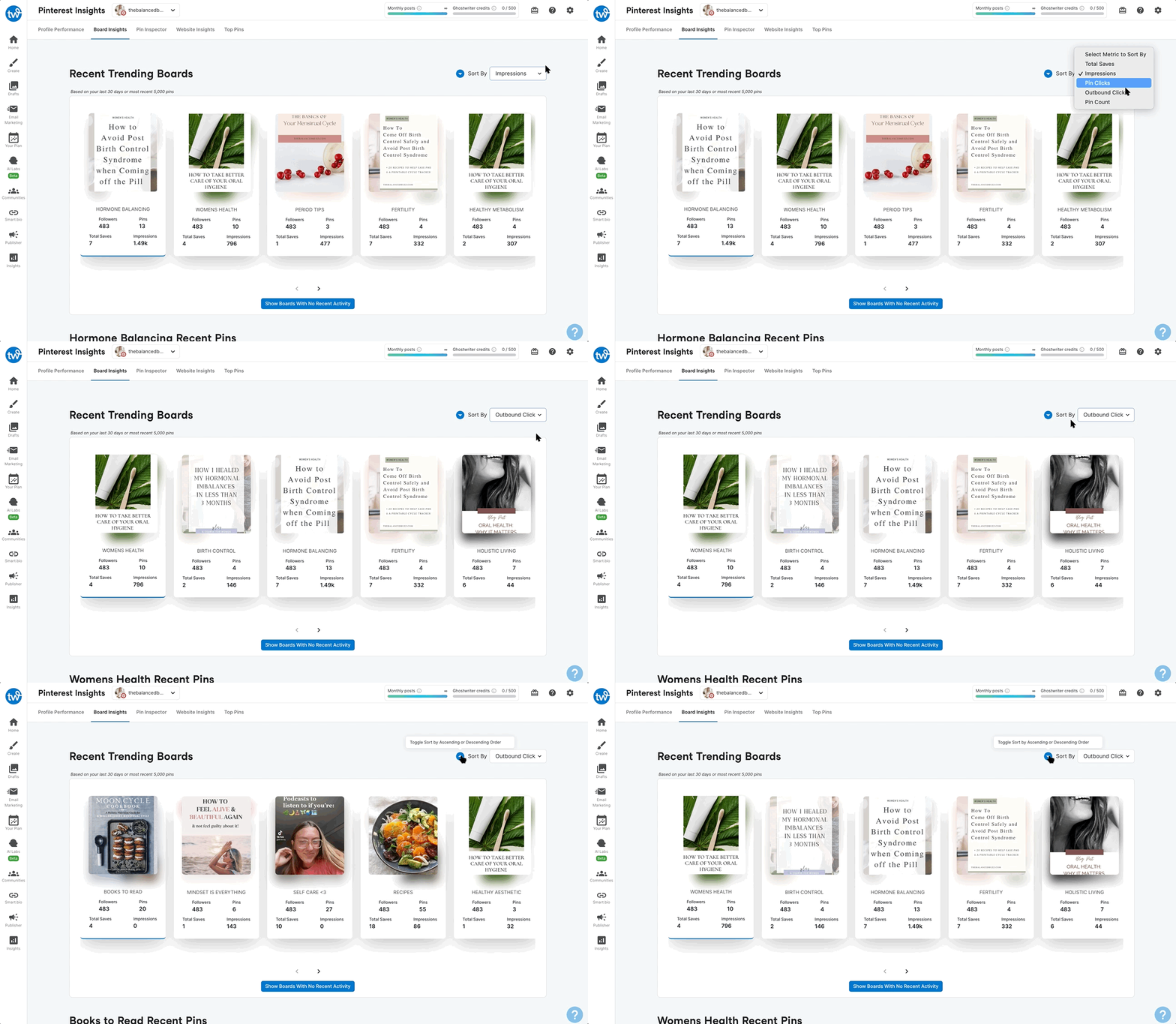
- Pricing: Plans from $54/month; 15-day trial.
- Supported Platforms: Facebook, Instagram, LinkedIn, Pinterest, TikTok, YouTube.
-
Socialinsider: AI-Driven Insights for Content Pillars
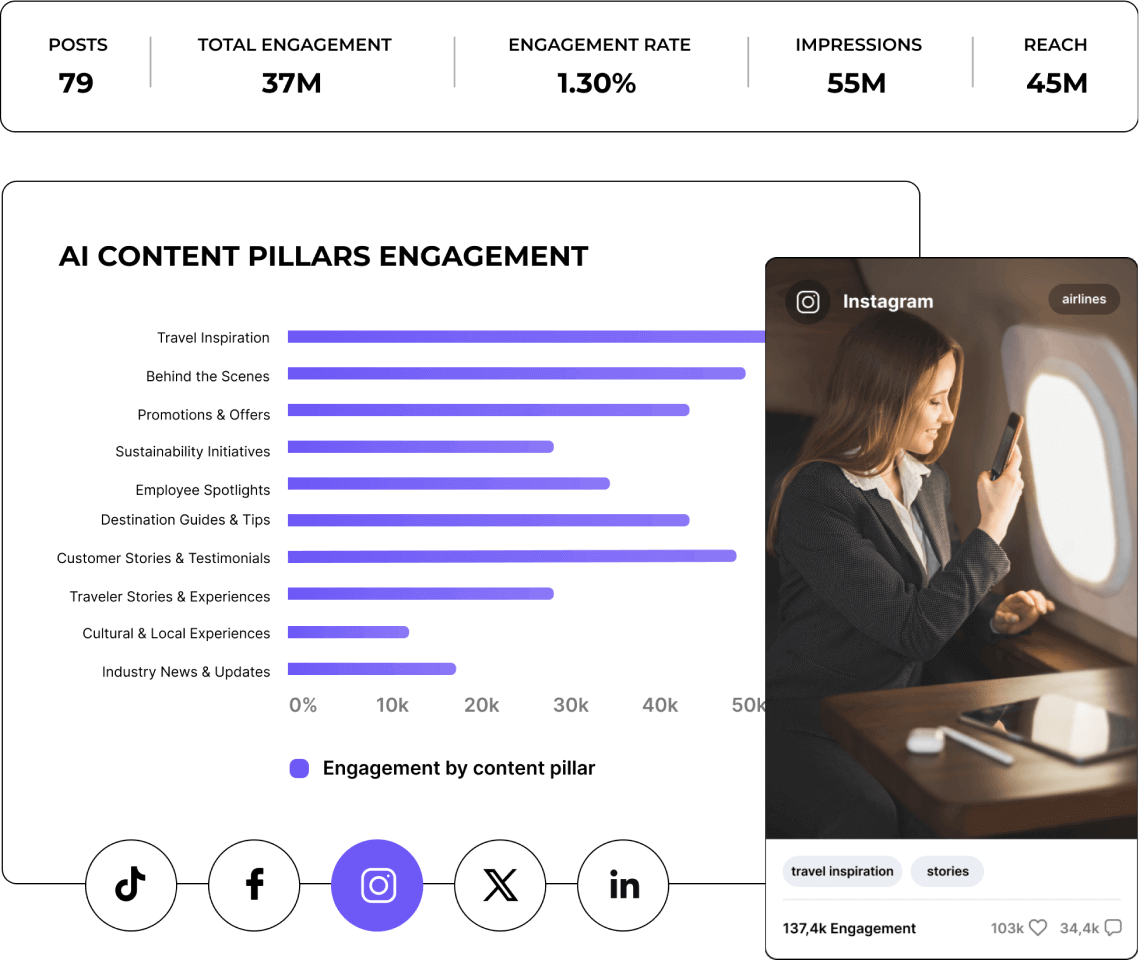
Socialinsider offers advanced, AI-driven insights specifically focused on content pillars. It helps users understand the performance of different content categories and, in higher-tier plans, conducts AI-powered competitor analysis to identify successful content pillars used by rivals. The post-tagging feature allows for grouping and monitoring the collective performance of related posts, making it an excellent tool for tracking specific campaigns or content themes. Its advanced capabilities are best suited for larger teams with dedicated budgets.- Pricing: Plans from $99/month; 14-day trial.
- Supported Platforms: Facebook, Instagram, LinkedIn, TikTok, X, YouTube.
-
Talkwalker: Deep Dive into Audience Insights
Talkwalker, now part of Hootsuite, is an advanced analytics tool renowned for its in-depth audience insights and social listening capabilities. It aggregates information from customer calls, support tickets, and online communities to uncover what audiences truly care about, providing rich content ideas. Its audience segmentation features allow for detailed demographic analysis, offering actionable insights for global brands. The integration with Hootsuite further enhances its utility by combining deep analytics with comprehensive social media management functionalities.- Pricing: Not publicly available; contact sales.
- Supported Platforms: Facebook, Instagram, YouTube, Pinterest, X, and more.
Broader Impact and Strategic Implications
The widespread adoption of social media analytics has far-reaching implications across the digital marketing ecosystem:
- Refined Content Strategy: Analytics empowers content creators to move beyond creative intuition, identifying high-performing formats, topics, and messaging. This data-driven approach leads to more engaging, resonant content that directly addresses audience interests and behaviors.
- Enhanced Audience Understanding: By providing detailed demographics, psychographics, and sentiment analysis, analytics tools offer a granular understanding of the target audience. This insight is crucial for tailoring communications, developing new products, and building stronger community connections.
- Competitive Intelligence and Market Positioning: Monitoring competitor performance and industry trends through analytics provides a significant strategic advantage. Businesses can identify gaps in the market, capitalize on emerging trends, and benchmark their own performance to maintain a competitive edge.
- Proactive Crisis Management: Social listening capabilities, often integrated with analytics, enable early detection of negative sentiment or potential brand crises. This allows companies to respond swiftly and strategically, mitigating reputational damage.
- Optimized Resource Allocation: By clearly demonstrating ROI for social media efforts, analytics helps justify budget allocations and optimize spending across various platforms and campaigns. Resources can be channeled towards strategies that yield the highest returns, moving away from speculative investments.
- Future-Proofing Strategies with AI: The integration of artificial intelligence in analytics is a rapidly evolving trend. AI-driven predictive and prescriptive analytics are beginning to offer unprecedented foresight, allowing brands to anticipate market shifts and automate strategic recommendations, further solidifying the role of data in future-proofing digital strategies.
Conclusion: The Indispensable Compass for Digital Success
In an increasingly competitive and dynamic digital landscape, social media analytics tools are no longer a luxury but an essential component of any successful marketing strategy. They serve as an indispensable compass, guiding creators, marketers, and businesses through the vast sea of social data. By transforming raw numbers into actionable intelligence, these tools enable a strategic shift from posting and hoping to data-driven optimization.
The ability to identify effective post types, replicate past successes, and refine strategies based on tangible metrics directly contributes to improved ROI and sustained audience growth. For many, a comprehensive social media management tool with integrated analytics, such as Buffer, offers an accessible and powerful starting point, providing both scheduling convenience and critical performance insights without a steep learning curve. Ultimately, investing in the right social media analytics tool is an investment in clearer strategy, more effective content, and a stronger, more resilient digital presence.