The Pentagon Pushes for AI-Driven Credibility Assessment Technology in $30 Million Modernization Effort

The United States Department of Defense (DOD) has outlined an ambitious five-year, $30.3 million budgetary roadmap aimed at revolutionizing the federal government’s approach to credibility assessment. According to recent fiscal year 2027 budget justifications, the initiative—internally dubbed Polygraph+ or Polygraph Next—seeks to integrate advanced artificial intelligence, machine learning, and non-contact "standoff sensing" to replace or augment the century-old polygraph technology currently used for security clearances and insider threat detection.
This initiative, managed by the Defense Counterintelligence and Security Agency (DCSA), represents a significant pivot for the Pentagon. Under the leadership of Defense Secretary Pete Hegseth, the agency has intensified its reliance on physiological testing, particularly in the wake of high-profile internal security breaches. The push for a "modernized" system comes at a time when the efficacy of legacy polygraph testing is increasingly under scrutiny by both the legal community and the scientific establishment.
A Chronology of Deception Detection and Federal Oversight
The history of lie detection in the United States is marked by cycles of enthusiasm and subsequent disillusionment. The conventional polygraph, which records blood pressure, pulse, respiration, and galvanic skin response, has remained largely stagnant since its widespread adoption in the 1920s.
- 1983: The Office of Technology Assessment (OTA) releases a landmark report for Congress, finding limited scientific evidence to support the use of polygraphs for employee screening.
- 2003: The National Research Council (NRC) publishes a scathing review, concluding that the scientific basis for polygraph accuracy is "weak at best" and cautioning against its use as a primary tool for security vetting.
- 2010s: The emergence of multimodal sensing projects, such as the EU-funded iBorderCtrl and the US-based AVATAR system, attempts to utilize eye tracking and voice stress analysis at border checkpoints. Most of these projects eventually cease operations due to lack of scalability and inconsistent results.
- 2023: The Defense Innovation Unit (DIU) initiates an open call for private sector prototypes, leading to the selection of Presage Technologies and Altec Research.
- 2026: In response to intelligence leaks concerning US weapons stockpiles, the Pentagon conducts mass polygraph testing on approximately 50 Joint Staff officers, signaling a renewed, high-stakes application of existing, controversial technology.
Technological Shifts: Moving Beyond Contact Sensors
The proposed Polygraph Next system diverges from traditional practice by emphasizing "standoff sensing." Traditional polygraphs require the subject to be physically tethered to sensors. The new prototypes, according to documents from the DIU, utilize standard and specialized cameras to measure subtle physiological changes that are often imperceptible to the human eye.
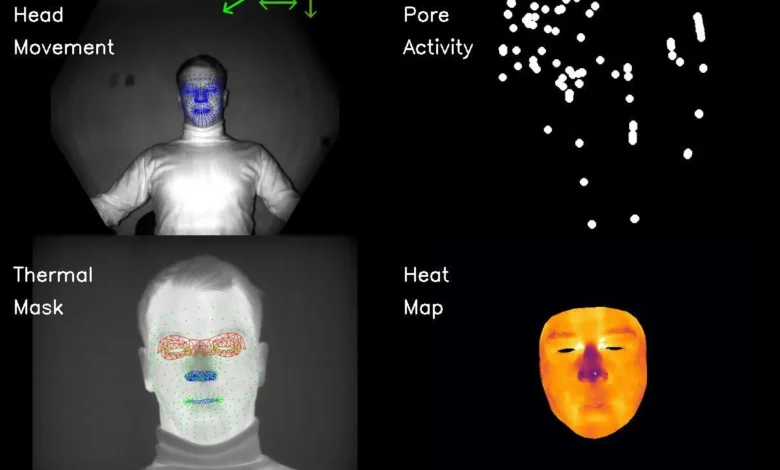
Altec Research, one of the primary contractors involved in the DIU pilot, has showcased technology capable of tracking facial skin temperature variations, pore activity, and involuntary head movements. Similarly, Presage Technologies has developed algorithms intended to monitor heart rate and respiratory patterns from a distance.
The shift toward "multi-modal" detection—the simultaneous measurement of various biological signals—is intended to provide a more comprehensive data set for AI to analyze. Proponents of this approach argue that machine learning models can identify patterns across these variables that would be invisible to a human examiner, potentially creating a "deception score" that is harder to manipulate than traditional analog readouts.
Scientific Skepticism and the "Pinocchio" Problem
Despite the influx of funding, the scientific consensus remains largely unconvinced that these technological advancements address the fundamental flaw in lie detection: the lack of a reliable, universal physiological indicator for deceit.
"There is still no Pinocchio’s nose," says Sophie van der Zee, an associate professor at Erasmus University in Rotterdam who specializes in the study of deception. Van der Zee notes that while AI could theoretically improve the processing of data, the core requirement for a "ground truth" remains elusive. Without a verifiable way to know if a subject is lying, machine learning models are essentially training on subjective human interpretations, which are prone to bias.

Legal scholars have raised even deeper concerns. Kyri Kotsoglou of Northumbria University describes the project as a "misguided effort to reduce the complex to something that is tangible." According to Kotsoglou, the integration of AI into polygraphy creates a "black box" effect where the lack of transparency in how a machine arrives at a "deception score" makes it nearly impossible to challenge in a legal or administrative setting.
Implications for the Federal Workforce
The scope of this project is vast. The DCSA, which conducts millions of background checks for the federal government annually, intends to deploy these technologies for both pre-employment vetting and ongoing insider threat mitigation.
With a workforce of approximately 2.8 million individuals under the Department of Defense alone, the implications of deploying an imperfect system are significant. The 2003 NRC report warned that even a highly accurate test—if applied at a massive scale—would inevitably produce a high volume of "false positives." For thousands of loyal employees, a failure in the algorithm could result in lost security clearances, damaged careers, and prolonged, intrusive investigations.
Furthermore, critics argue that the technology acts more as a psychological deterrent than a scientific instrument. "If you know how it works, you can beat it," van der Zee notes. By standardizing the testing process through AI, the Pentagon may simply be creating a new set of rules that can be studied and exploited by those with sufficient training, rather than creating a truly impenetrable security layer.
Official Responses and the Future of the Initiative
The DCSA has not provided specific details regarding the technical specifications of the final Polygraph Next platform, nor has the agency responded to inquiries regarding the ethical frameworks being used to govern the AI’s decision-making process. The DIU has similarly maintained a position of strategic silence, declining to comment on the ongoing pilot programs.
Marion Oswald, a legal expert who has co-authored research on the use of polygraphs in the justice system, suggests that the Pentagon’s drive is less about scientific breakthrough and more about organizational culture. "It seems very much a response to the concern of the current administration to leaks and perceived lack of loyalty," Oswald says. She argues that the technology is being leveraged as a form of intimidation, designed to elicit confessions through the fear of technology, rather than the technology itself providing objective, actionable intelligence.
As Congress prepares to review the fiscal year 2027 budget request, the debate over Polygraph Next is expected to center on the balance between national security requirements and the protection of civil liberties. If the project receives the requested $30.3 million, the Pentagon will be committing to a long-term, high-cost investment in a field that has historically promised reliability but consistently delivered controversy.
Ultimately, the challenge for the DOD will not merely be technical, but philosophical: whether a machine can ever truly quantify the complexities of human intent, or if, in the pursuit of absolute security, the government is simply refining a tool that has never actually achieved its primary goal. The success of Polygraph Next will hinge on whether it can overcome the legacy of its predecessor, or if it will simply become the latest entry in a long catalog of failed attempts to automate the detection of the truth.