The Human Antidote: Why Authentic Expertise Remains the Definitive Strategy in SEO and AI Search

In the modern digital landscape, the pursuit of algorithmic loopholes has once again proven to be a high-stakes gamble with a guaranteed expiration date. As search engines and generative artificial intelligence systems evolve, the temptation to exploit technical shortcuts—ranging from legacy tactics like private blog networks to contemporary automated listicles and inauthentic GEO (Generative Engine Optimization) mentions—remains high among C-suite marketers. However, industry data and decades of algorithmic updates consistently demonstrate that shortcuts ultimately backfire, frequently leaving penalized websites stranded in traffic deficits that require years to rectify.

To understand the current friction between automated scaling and organic visibility, it is necessary to examine the historical trajectory of search engine policies, the enduring framework of E-E-A-T (Experience, Expertise, Authoritativeness, and Trustworthiness), and the structural shift toward human-centric marketing.
Two Decades of Consistent Guidance: The Evolution of Anti-Spam Policy
A retrospective analysis of search engine documentation reveals a striking continuity in quality standards. As early as December 2003, early iterations of webmaster guidelines explicitly instructed site creators to focus on user experience rather than mechanical optimization, warning against cookie-cutter pages characterized by little or no original content.

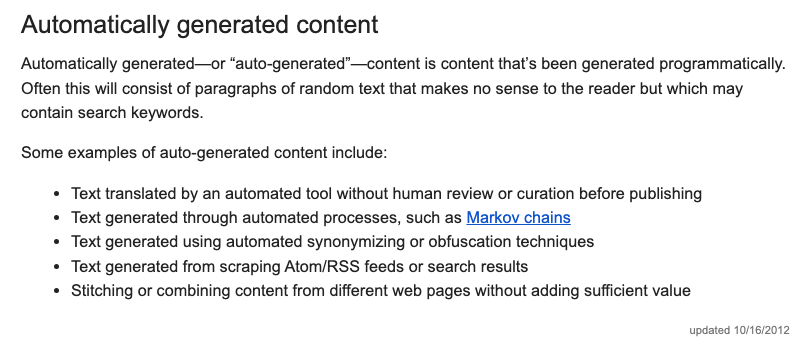
The enforcement against automation has similarly deep roots. In August 2010, search quality representatives cautioned that publishing raw machine-translated output without editorial curation constituted auto-generated content violations. By October 2012, formal help documentation codified automated infractions to encompass scraped feeds, Markov chains, automated synonymizing, and unreviewed translations.
Despite these clear historical boundaries, the advent of generative large language models (LLMs) triggered a massive resurgence in automated scaling strategies. In response, platforms updated their enforcement frameworks. In February 2023, major search engines formally addressed the integration of AI-generated content, leveraging years of precedence regarding automation abuse. By March 2024, scaled content abuse policies were implemented to penalize mass-produced text regardless of whether it was generated through fully automated, hybrid, or manual processes.
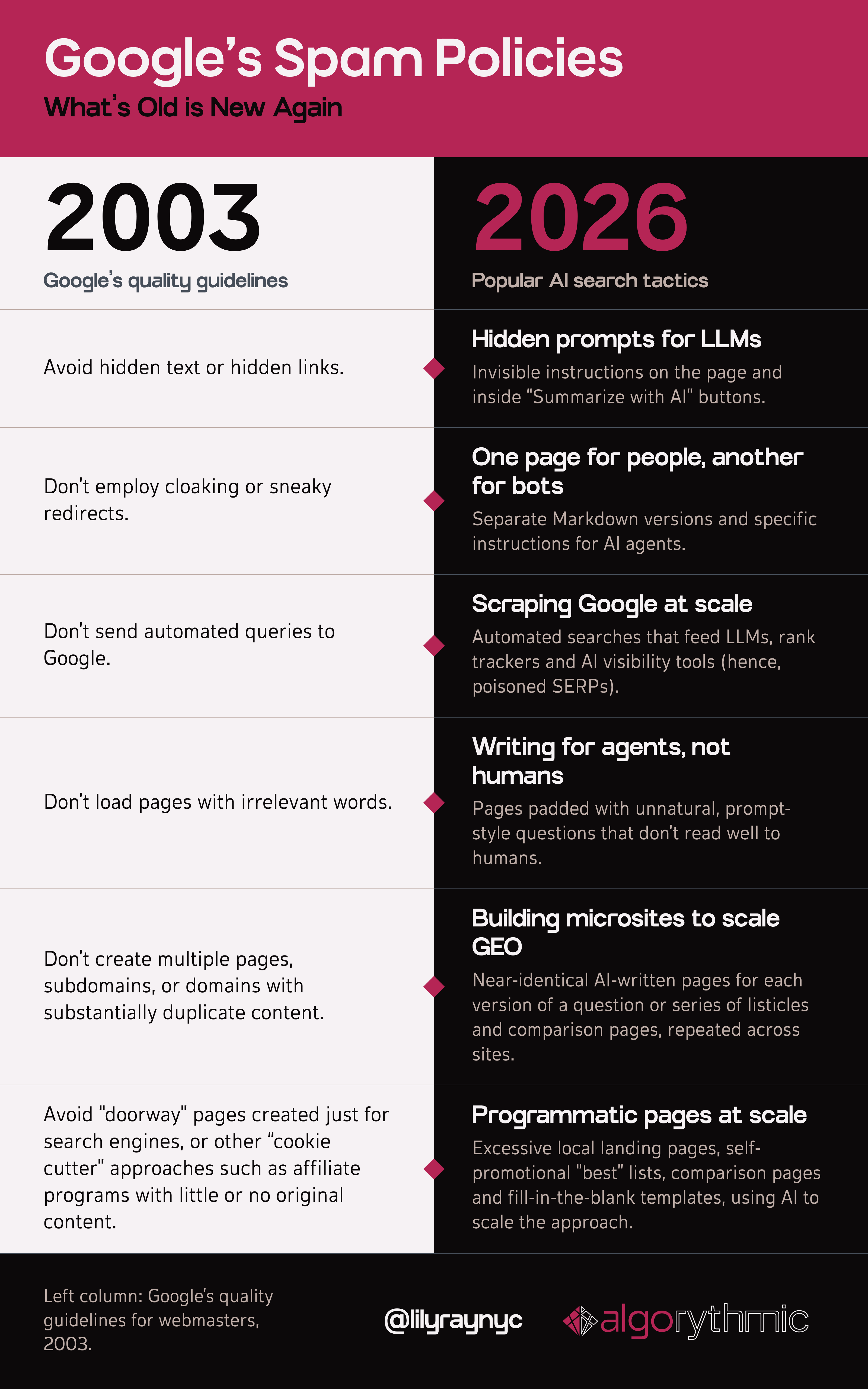
Despite these regulatory guardrails, many enterprise organizations continue to deploy automated content scaling at scale, often experiencing severe traffic contractions following core algorithmic updates. The fundamental principle governing these penalties remains unchanged: content produced strictly for search engines without human oversight, accountability, or original insight eventually becomes a liability.
The E-E-A-T Framework as a Strategic Anchor
Introduced informally through quality rater guidelines and refined over the past decade, the E-E-A-T framework has provided a resilient methodology for navigating algorithm changes without relying on transient loopholes. Although frequently mischaracterized as a static ranking factor or a superficial compliance checklist, E-E-A-T is deeply embedded in the evaluation mechanisms of modern search architecture.
The framework demands a people-first approach, prioritizing individuals with verified, lived experience in specialized domains—such as licensed practitioners, certified engineers, and seasoned industry professionals. While human-centered content strategies require significant cross-functional resources and executive buy-in compared to automated publishing, they yield sustainable dividends across multiple acquisition channels.
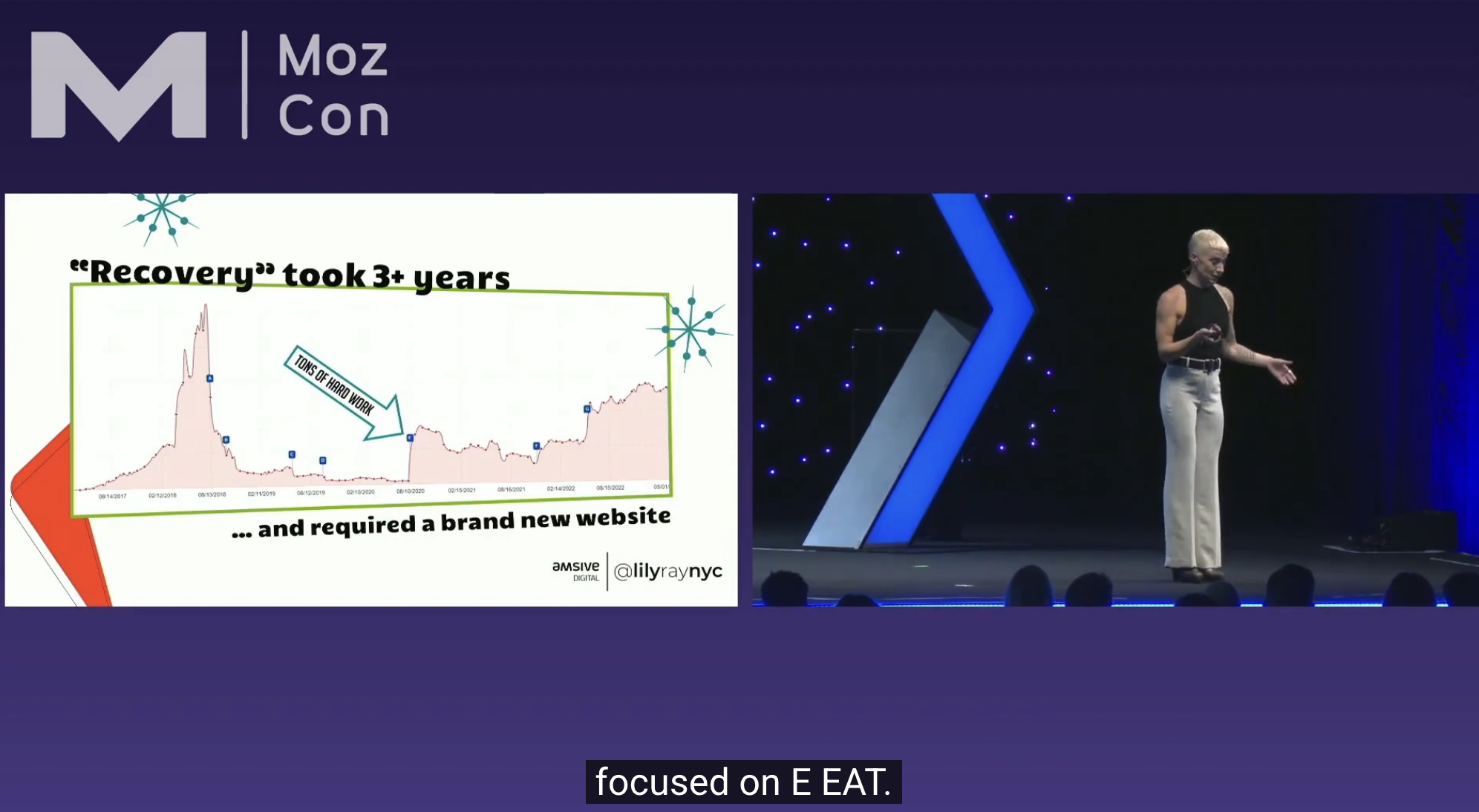
Historical case studies illustrate the severe cost of neglecting this paradigm. Following major algorithmic adjustments, such as the 2018 medical-focused core update, health and informational websites that scaled content libraries without visible expert credentials experienced catastrophic visibility drops. Organizations that underwent comprehensive structural overhauls—rebuilding their platforms around verified human authorship, expert editorial review, and original insights—documented full recoveries, though the restoration timeline frequently spanned multiple years. This protracted recovery cycle underscores the strategic imperative of prioritizing authentic authority from inception.
Empirical Evidence: The Rise of Human-Centric Trust Signals
Consumer sentiment data and platform metrics underline a growing skepticism toward synthetic media. According to market research released by Gartner, approximately 35% of U.S. consumers rely less on brand messaging due to the proliferation of artificial intelligence content. Complementary surveys from research firms indicate that only a minority of users maintain high trust in AI-generated digital material, contributing to a broader phenomenon characterized as "slop fatigue."
Simultaneously, major distribution platforms have systematically adjusted their algorithms and monetization criteria to favor verified human identities.

- YouTube: In mid-2025, policies regarding repetitious content were updated to explicitly target inauthentic media, penalizing template-based AI videos that lack original creator perspectives. Executive leadership subsequently emphasized the mitigation of low-quality synthetic output as a core platform priority.
- Reddit: Platform governance introduced stricter bot identification labels and verification prompts, with executive statements highlighting the direct correlation between identifiable human authorship and online trust.
- AI Search Citations: Independent visibility analyses of generative search features, including AI Overviews and conversational interfaces, demonstrate that domains featuring user-generated dialogue and verified expert contributions—such as specialized forums, video repositories, and professional networking profiles—capture a dominant share of platform citations.
Practical Implications for Enterprise Marketing
The transition from brand-centric broadcasting to expert-led evangelism offers distinct operational advantages. Empirical observations across digital marketing channels consistently indicate that personal professional profiles generate significantly higher organic impressions and engagement metrics compared to corporate entity pages.
To build a resilient, human-first marketing ecosystem, organizations can implement several foundational strategies:

- Identify Internal Subject Matter Experts: Elevate practitioners, engineers, and product leaders who possess genuine operational experience within the business.
- Cultivate Public Profiles: Encourage key personnel to publish original research, share case studies under their own names, and participate in industry discourse across professional networks.
- Institutionalize Editorial Oversight: Ensure that all published materials, regardless of technological assistance, undergo rigorous review, fact-checking, and contextual enrichment by qualified professionals.
- Diversify Thought Leadership: Avoid relying on a single corporate evangelist to mitigate risks associated with personnel transitions, fostering a collective of recognized internal voices.
While compliance frameworks in highly regulated sectors may present initial hurdles to personal branding, the long-term compounding value of earned media, authoritative backlinks, and verified third-party citations far outweighs the short-term efficiency of automated shortcuts. As synthetic content becomes increasingly commoditized, demonstrable human expertise remains the definitive differentiator in search marketing and digital reputation management.
Related posts: