Mastering Facebook Advertising: 15 Real-World Campaigns and Strategic Frameworks for Modern Marketers


Despite persistent industry speculation regarding shifting demographic preferences and the rise of alternative platforms, Meta’s flagship social network remains the dominant global leader in digital connectivity. With approximately 2.93 billion monthly active users worldwide, Facebook offers brands and enterprises an unparalleled audience scale. Industry research indicates that advertisements deployed across the network successfully reach roughly 42.8 percent of the entire global internet-using population. For modern media planners and performance marketers, this immense reach represents a foundational pillar of digital marketing strategy.

Beyond sheer volume, the platform’s underlying infrastructure—anchored by the Meta Ads Manager—provides campaign managers with sophisticated targeting capabilities. Advertisers can execute highly granular campaigns by constructing custom audiences, segmenting users based on specific demographic markers, and implementing rigorous multivariate A/B testing protocols. These capabilities ensure that brands of all sizes, ranging from emerging local enterprises to multinational conglomerates, retain precise financial and creative control over their advertising expenditure.
To understand how top-tier organizations translate these advanced technical capabilities into compelling consumer engagement, industry analysts frequently examine creative executions from leading global brands. Examining specific ad formats—such as standard image ads, dynamic carousel layouts, and immersive vertical stories—reveals the strategic frameworks required to break through the modern digital noise.
Evaluating Single-Image Ad Formats: Clarity and Direct Messaging
Single-image advertisements remain a staple of digital marketing due to their simplicity and immediate visual impact. When deployed effectively, a single static frame must instantly communicate a product’s core value proposition without the benefit of motion or narrative progression.
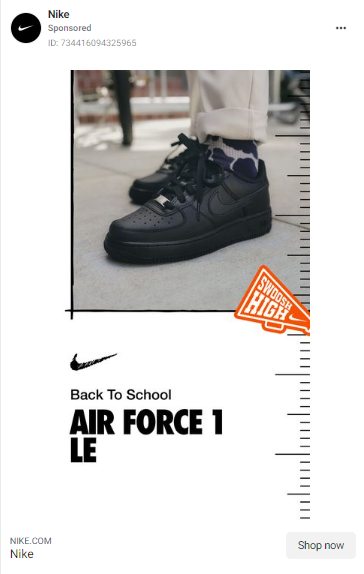
Industry giants frequently leverage static imagery during critical retail periods. For instance, athletic apparel leader Nike utilizes high-impact single-image campaigns to promote flagship footwear lines, such as the Air Force 1 Le, during key seasonal windows like the back-to-school shopping period. These campaigns demonstrate the effectiveness of minimalist product presentation paired with authoritative brand styling.

Similarly, audio streaming titan Spotify employs static placements to drive awareness for high-profile album releases, such as Drake’s Certified Lover Boy. By focusing entirely on recognizable cultural assets and clean typography, Spotify ensures instantaneous user recognition as individuals rapidly scroll through their personal feeds.
In the enterprise and software-as-a-service (SaaS) sectors, single-image campaigns serve a more educational objective. E-commerce infrastructure provider Shopify frequently deploys static ads designed to lower the barrier to entry for aspiring entrepreneurs, utilizing clear, relatable messaging to encourage platform sign-ups. Concurrently, global payment gateway PayPal leverages single-image placements to communicate platform expansions, such as the integration of novel payment methods, assuring users of transaction security and versatility.

For complex enterprise software providers like Salesforce, static image campaigns are frequently utilized to distribute high-value gated assets, including comprehensive CRM handbooks. These campaigns rely on clear intellectual hooks to capture the interest of B2B decision-makers seeking operational efficiency.
Harnessing Carousel Ads for Multi-Product Narratives
When a brand needs to showcase multiple product lines, sequential features, or step-by-step processes within a single ad unit, the Facebook carousel format serves as an indispensable tool. This interactive format allows users to swipe through a series of cards, each featuring its own image, headline, and destination link.

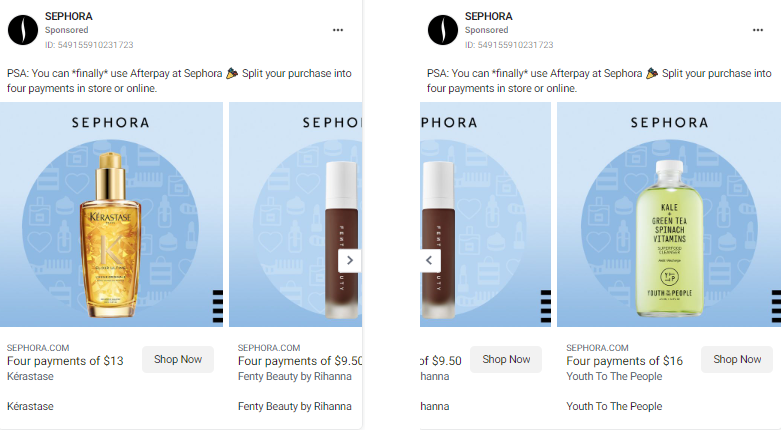
Beauty retail giant Sephora has historically utilized carousel ads to highlight flexible purchasing options, such as integrating buy-now-pay-later services like Afterpay into the customer checkout experience. By dedicating individual cards to different aspects of the payment flexibility or product bundles, Sephora guides the consumer through a frictionless consideration phase.
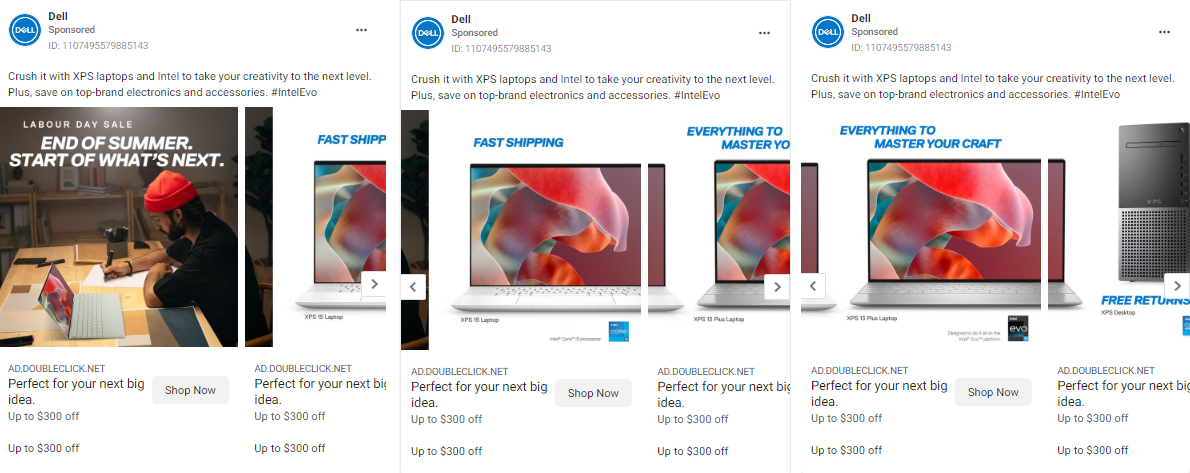
Technology hardware leader Dell employs sequential carousel layouts to maximize seasonal promotional events, such as Labor Day electronics sales. By spotlighting specific high-performance hardware lines—such as XPS laptops powered by Intel processors—alongside direct discount incentives across different swipeable cards, Dell empowers consumers to compare options directly within the ad environment.

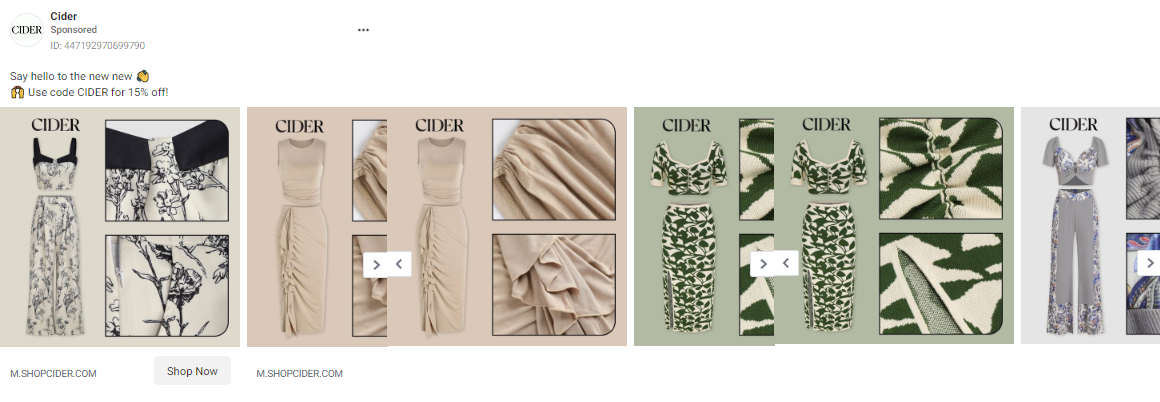
Fast-fashion disruptor Cider similarly utilizes the carousel structure to present diverse apparel collections, allowing prospective buyers to evaluate multiple stylistic options simultaneously. Meanwhile, jewelry brands like Bayrite leverage the format to showcase individual pieces up close while pairing visual variety with direct promotional incentives, such as limited-time percentage discounts for immediate purchasers.
In the digital fitness and wellness sector, platforms like Yoga International use carousel cards to illustrate diverse app features, member testimonials, and subscription tiers, successfully addressing multiple consumer objections within a single cohesive ad unit.
Leveraging Vertical Story Ads for Immersive Mobile Engagement
With nearly 99 percent of users accessing social platforms via mobile devices, vertical ad formats designed for Facebook Stories have become critical components of successful media mixes. These full-screen, vertical placements capture undivided user attention by occupying the entire mobile display.
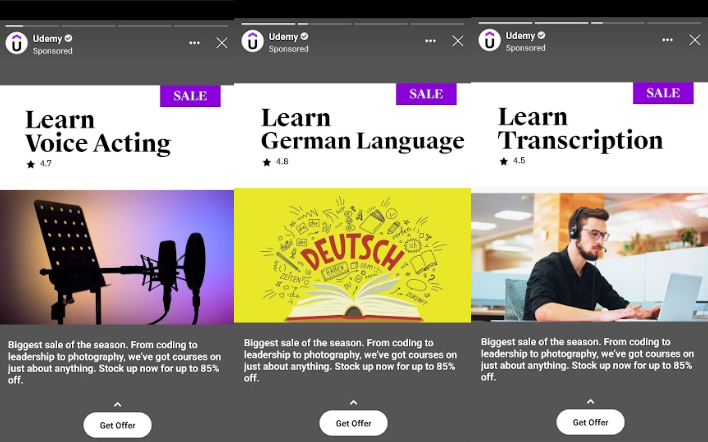
E-learning platforms have heavily capitalized on this immersive format. Organizations such as Udemy, Coursera, and Authority Hacker frequently deploy vertical story ads to promote specialized professional development courses, technical certifications—such as the Google Analytics Certificate—and comprehensive website-building masterclasses. These ads typically incorporate high-contrast text overlays, dynamic progress indicators, and prominent swipe-up actions to drive immediate conversions.
Consumer service providers also find high conversion rates within the stories ecosystem. Food delivery platforms like Bolt Food utilize bold, appetizing imagery combined with immediate promotional incentives—such as reduced delivery fees or first-time user discounts—to drive mobile application installations. Similarly, international education advisory firms like IDP Nigeria utilize vertical placements to drive registrations for specialized webinars and consulting seminars aimed at students seeking overseas academic opportunities.
Strategic Frameworks for Designing High-Converting Facebook Ads
A comprehensive analysis of top-performing digital campaigns reveals several recurring design principles and copywriting tactics that significantly enhance Return on Ad Spend (ROAS).
Prioritizing Scroll-Stopping Visuals
Because modern digital consumers exhibit exceptionally brief attention spans, ad creatives must transcend ordinary visual standards to halt the scroll. Advertisers can elevate asset quality by utilizing high-resolution imagery, maintaining consistent brand color palettes, incorporating authentic user-generated content (UGC), and leveraging subtle motion graphics or native-feeling video loops that mimic organic feed content.
Crafting Concise, Impactful Copy
Copywriting within social media environments must respect the user’s time. Analysis of leading campaigns indicates that optimal captions frequently span only one to two sentences. When longer text blocks are necessary for complex storytelling, copywriters must place the primary hook—often a compelling question, striking statistic, or undeniable value proposition—within the first two lines, directly above the feed’s visual cutoff point.
Engineering Mobile-First Experiences
Given that the vast majority of network traffic originates from smartphones and tablets, every creative asset must be rigorously optimized for vertical viewing. Media planners should ensure text overlays remain legible on compact screens, utilize high-contrast visual hierarchies, and verify that landing pages load rapidly upon user interaction to prevent immediate bounce rates.
Designing Compelling Call-to-Action (CTA) Elements
A clear and authoritative call-to-action acts as the functional bridge between engagement and conversion. Advertisers should align their button text directly with the campaign objective—utilizing precise phrasing such as "Shop Now," "Learn More," "Sign Up," or "Download Guide"—to eliminate user ambiguity and streamline the path to purchase.

Executing Rigorous Audience Research and Thoughtful Targeting
Advanced campaign performance relies heavily on precise audience segmentation. Deploying broad campaigns without demographic filtering often leads to wasted ad spend and low conversion rates. By leveraging custom audiences, lookalike modeling, and behavioral interest targeting, advertisers ensure that high-value creative assets are delivered exclusively to consumers actively seeking relevant products or services.
As digital marketing continues to evolve, integrating these foundational best practices into structured campaign workflows enables organizations to maximize their advertising efficiency, scale operations sustainably, and achieve measurable growth across the world’s largest social media ecosystem.