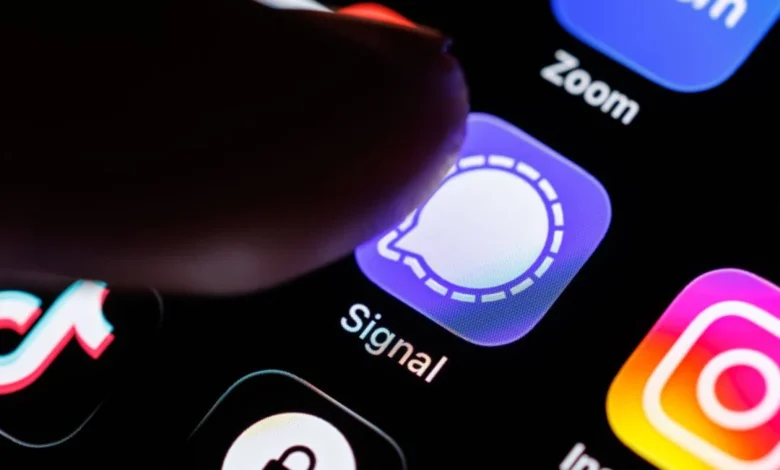
The modern landscape of digital privacy is facing an unprecedented paradigm shift, underscored by a recent strategic move from one of the world’s most trusted secure communications providers. On Friday, November 21, 2026, Signal announced a major policy and software update designed to restrict users’ ability to capture screenshots across its application ecosystem. This defensive maneuver is a direct and calculated response to what Signal President Meredith Whittaker characterizes as an existential threat: the rapid integration of agentic artificial intelligence directly into the core of mainstream operating systems.
As major technology conglomerates race to embed AI assistants deeply into Windows, Android, macOS, and iOS, these operating systems are gaining unprecedented, persistent visibility into everything displayed on user screens. For end-to-end encrypted (E2EE) messaging services like Signal, this technological convergence represents a critical vulnerability. By default, the application will now enforce strict blocks on screenshot functionality across mobile and desktop platforms, forcing users to consciously override the setting if they wish to bypass the restriction—a choice Whittaker warns fundamentally compromises the cryptographic and structural privacy guarantees the platform has spent years building.
The Threat of OS-Level AI Agents and Screen Scraping
To understand the gravity of Signal’s latest security update, one must examine how modern agentic AI functions. Unlike traditional search engines or isolated chatbots, agentic AI systems are designed to operate autonomously in the background, executing complex multi-step workflows on behalf of the user. To achieve this level of contextual awareness, these systems frequently rely on continuous screen-scraping, optical character recognition (OCR), and visual data indexing.
Operating systems such as Microsoft’s Windows (via features like Recall) and various mobile OS implementations continuously capture, analyze, and catalog screen data to feed local databases or remote cloud servers. When a user opens an encrypted chat on Signal, the plaintext messages, media, and contact details are rendered on the screen. Under traditional architectures, this visual data remained transient, visible only to the human user looking at the display. However, with OS-level AI agents constantly monitoring and recording display outputs, sensitive communications are quietly intercepted at the point of rendering.
In her public advisory, Meredith Whittaker did not mince words regarding the implications of this architectural shift. She explained that by allowing AI agents to continuously scan, ingest, and store information visible on user screens, operating system developers are actively undermining Signal’s ability to independently guarantee user confidentiality. Once an operating system captures and logs plaintext conversation data, that information enters local storage directories or external cloud repositories entirely outside of Signal’s cryptographic domain.
Consequently, the foundational premise of end-to-end encryption—which dictates that only the sender and intended recipient can read the messages—is effectively neutralized if the underlying operating system can simply photograph and index the decrypted output on the screen. This dynamic creates a dangerous blind spot for privacy-conscious journalists, activists, whistleblowers, and everyday citizens who rely on secure channels to protect their personal and professional lives.
A Chronology of Defensive Countermeasures
Signal’s decision to restrict screenshot capabilities did not happen in a vacuum; it represents the latest escalation in an ongoing tug-of-war between independent privacy advocates and platform monopolies. The timeline of this escalating digital conflict reveals a systematic effort by Signal to anticipate and mitigate the encroaching footprint of surveillance capitalism.
Historically, the platform maintained a strict stance on desktop security. Recognizing that desktop environments are inherently more susceptible to background recording tools, malware, and screen-capture utilities, Signal implemented default screenshot blocking for its Windows application years prior. This measure prevented external desktop applications from covertly taking snapshots of active chat windows without explicit user action.
However, the advent of generative AI and ambient computing dramatically accelerated the threat model. Throughout 2024 and 2025, major tech giants introduced deep OS-level integrations designed to give AI assistants total system awareness. By mid-2026, industry leaders like Meredith Whittaker began sounding public alarms, explicitly warning users that agentic AI chatbots integrated into operating systems should not be viewed as neutral tools or trusted friends, but rather as data-harvesting engines.

Recognizing that desktop-only protections were no longer sufficient in an era where mobile operating systems are equally aggressive in deploying ambient AI monitoring, Signal engineers accelerated development on cross-platform restrictions. The November 2026 announcement marks the formal expansion of these defensive blocks to Android and iOS, bringing mobile clients into alignment with the heightened security posture previously reserved for desktop environments. Despite these implementations, Signal leadership has been transparently honest about the limitations of these fixes, acknowledging that blocking screenshots is merely a speed bump against sophisticated, low-level system hooks.
The Dilemma of User Override and Incomplete Defenses
In rolling out these new restrictions, Signal has walked a delicate tightrope between enforcing strict security and maintaining user autonomy. While the application will now actively block screenshots by default across Android and iOS, the platform has deliberately retained a user-configurable toggle allowing individuals to disable the restriction if they so choose.
This design choice highlights a persistent tension within software engineering: balancing absolute security against user friction. When questioned about the inclusion of an override switch, Whittaker conceded that permitting users to disable the screenshot block effectively "breaks our privacy guarantees." Nevertheless, removing user control entirely often leads to user backlash or platform abandonment if core workflows are disrupted. By leaving the choice in the hands of the end user, Signal places the ultimate responsibility of risk management back onto the individual, while clearly signaling the severe security consequences of doing so.
Furthermore, Whittaker has openly admitted that blocking screenshots is an inherently "incomplete" technical solution. While preventing screen captures stops obvious image-saving behaviors and crude scraping tools, it does not address more sophisticated, clandestine vectors through which AI agents can harvest application data. Modern operating systems possess deep accessibility APIs, inter-process communication channels, and memory-inspection capabilities that could theoretically allow malicious or overzealous AI agents to read application states directly from system RAM before they are even rendered on the screen, or intercept them through secondary system pipelines.
Because Signal’s cryptographic envelope ends the moment data is decrypted for display on a device, the company remains structurally vulnerable to any security compromise originating within a hostile or untrusted host operating system. This realization underscores a sobering reality in modern cybersecurity: an application can only ever be as secure as the underlying operating system running it.
Broader Industry Implications and the Future of Encrypted Communications
The collision between Signal and OS-level AI integration illuminates a broader, systemic struggle defining the modern technology sector. As consumer tech companies pivot aggressively toward artificial intelligence as their primary value proposition, they have a voracious appetite for data. Training advanced models and powering responsive agentic workflows requires a continuous supply of contextual information. For companies that control both the operating system and major AI ecosystems, capturing everything a user sees, types, and reads on their device is a powerful incentive.
Conversely, dedicated privacy organizations and independent protocol developers operate on a fundamentally opposed philosophy. For Signal, privacy is not merely a feature toggle; it is a foundational architecture based on zero-knowledge principles and data minimization. When operating system vendors bake persistent surveillance mechanisms directly into the kernel and system UI, they directly threaten the economic and technical viability of independent privacy apps.
Industry analysts note that this conflict may ultimately force regulatory bodies and antitrust watchdogs to take a closer look at anti-competitive practices within operating system development. If OS manufacturers leverage their platform monopoly to systematically undermine third-party encryption and privacy applications in favor of proprietary AI tools, it could spark significant legal challenges regarding user choice and data sovereignty.
For now, Signal’s preemptive strike serves as a vital wake-up call for the cybersecurity community. It highlights the urgent need for hardware-backed security enclaves, sandboxed application environments, and stricter legal protections against ambient data collection. As artificial intelligence continues to permeate every layer of our digital infrastructure, the battle lines between convenience and confidentiality have never been starker. Users are increasingly forced to choose between the seamless, automated assistance of modern AI operating systems and the uncompromising, foundational security of independent encrypted communications.