Microsoft Sets New Record with 570 Security Patches in AI-Accelerated July Update Cycle

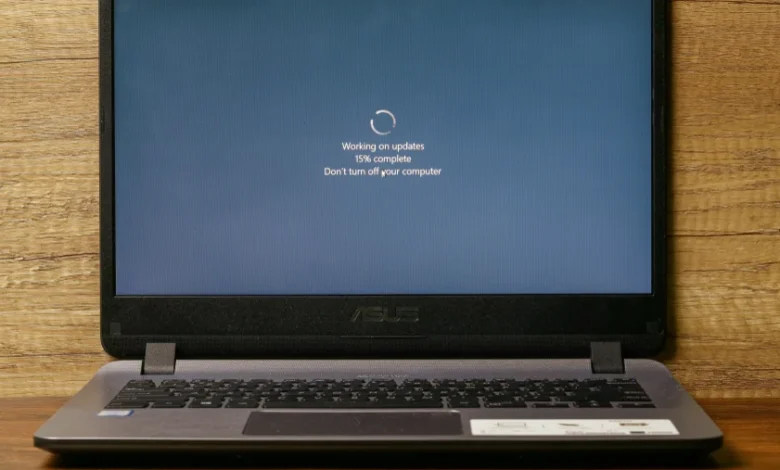
Microsoft Corporation today released a historic software update package addressing an unprecedented 570 security vulnerabilities across its Windows operating systems and broader software ecosystem. This massive release nearly triples the previous record for vulnerabilities fixed in a single month, a milestone set only recently. The company has officially attributed this surge in vulnerability discovery to the integration of artificial intelligence in its security research and testing protocols, signaling a fundamental shift in how software security is managed in the modern era.
Of the 570 vulnerabilities addressed, nearly 60 were classified with a "critical" severity rating. This designation indicates that the flaws could allow malicious actors to perform remote code execution, effectively seizing control of a device with minimal or no interaction from the user. Furthermore, the update addresses three "zero-day" vulnerabilities—flaws that were known to the public or already being exploited before a patch was available. According to Microsoft’s security advisories, two of these zero-days have already been observed in active exploitation within the wild, posing an immediate threat to unpatched systems.
The Role of Artificial Intelligence in Vulnerability Discovery
The primary driver behind this month’s staggering patch count is the adoption of advanced AI tools in the vulnerability research process. In an official statement published on July 9, Pavan Davuluri, Microsoft’s Executive Vice President of Windows and Devices, explained that the company is evolving its vulnerability management to match the speed of AI-powered discovery.
"The pace of vulnerability discovery is changing with advances in AI making it possible to find more issues, faster, across more code, with new mechanisms that can accelerate both discovery and analysis," Davuluri wrote. He warned Windows users and IT administrators to expect a "higher volume of security updates included in each security release" moving forward.
This shift marks the beginning of a new era in software maintenance. Historically, vulnerability discovery relied on manual code audits and traditional "fuzzing"—a process of injecting random data into programs to find crashes. With AI, Microsoft can now analyze billions of lines of code simultaneously, identifying complex patterns and edge cases that were previously undetectable by human researchers or legacy automated tools.
Breakdown of Key Vulnerabilities and Zero-Days
The July update includes a significant focus on elevation of privilege (EoP) flaws, which account for approximately 250 of the fixed bugs. These vulnerabilities allow an attacker who has already gained a foothold in a system to escalate their permissions, potentially gaining administrative or "system" level access.
Two notable zero-day vulnerabilities fixed this month are CVE-2026-56155 and CVE-2026-56164. The former affects Active Directory Federation Services (ADFS), a critical component for identity and access management in enterprise environments. The latter involves Microsoft SharePoint, a widely used collaboration and document management platform. Both vulnerabilities are being utilized by attackers to bypass security boundaries within corporate networks.
Another significant fix is CVE-2026-50661, a security feature bypass in Windows BitLocker. While Microsoft noted that it is not aware of active exploitation of this specific bug, the details of the flaw have been made public. An attacker with physical access to a device could potentially exploit this vulnerability to access encrypted data, undermining one of the core security pillars of the Windows operating system.
AI Security: The Copilot Vulnerability
In a notable irony, the July patch cycle also addresses a high-severity vulnerability within Microsoft’s own AI-driven assistant, Copilot. Jack Bicer, Director of Vulnerability Research at Action1, highlighted CVE-2026-48561, a remote code execution (RCE) flaw in Microsoft Copilot that carries a CVSS (Common Vulnerability Scoring System) threat score of 9.6 out of 10.
According to Microsoft’s technical documentation, an unauthorized attacker could exploit this vulnerability by hosting a malicious website. When a user visits the site using Microsoft Edge for Android, the browser can be forced to automatically send crafted prompts to Copilot. This interaction could allow the attacker to execute malicious code on the user’s device through the AI interface. This discovery highlights the emerging security frontier of "prompt injection" and the unique risks associated with integrating AI deeply into operating system components.
The Crisis of the Exploitability Index
The surge in AI-driven discoveries has sparked a debate among cybersecurity experts regarding the efficacy of traditional risk assessment models. Satnam Narang, a senior staff research engineer at Tenable, argued that Microsoft’s "exploitability index"—a rating system used to predict the likelihood of a bug being exploited—is becoming obsolete in the age of machine-speed discovery.
Narang pointed out that the SharePoint zero-day fixed this month was originally rated as "exploitation less likely" by Microsoft, despite the fact that the Cybersecurity and Infrastructure Security Agency (CISA) had already added it to its Known Exploited Vulnerabilities (KEV) catalog on July 1.
"Our way of looking at Patch Tuesday has changed because the exploitability index is centered around humans, not AI tools," Narang stated. He cited recent findings from Anthropic’s Red Team, which demonstrated that their "Mythos Preview" AI model could produce functional proof-of-concept exploits for 13 out of 14 vulnerabilities that humans had rated as "unlikely" to be exploited. This suggests that while AI helps defenders find bugs, it also provides attackers with the tools to weaponize those bugs at a scale and speed that exceeds human defensive capabilities.
A Chronology of Patch Tuesday Evolution
The concept of "Patch Tuesday" was established by Microsoft in October 2003 as a way to provide a predictable schedule for IT administrators to deploy updates. For nearly two decades, the number of patches typically ranged from 50 to 100 per month.
- 2003–2015: Patch counts remained relatively stable, focusing on Windows and Internet Explorer.
- 2016–2020: The rise of cloud services and the expansion of the Microsoft 365 suite led to an increase, with counts occasionally hitting 100-150.
- 2021–2023: Microsoft launched the Secure Future Initiative (SFI) in response to major supply chain attacks like SolarWinds. Patch counts began to fluctuate more wildly.
- June 2026: Microsoft set a then-record for vulnerabilities addressed in a single month.
- July 2026: The current record-smashing release of 570 patches, driven by AI discovery.
This timeline illustrates a clear trajectory: as codebases grow more complex and discovery tools become more powerful, the volume of identified flaws is increasing exponentially.
Industry-Wide Impact and Trends
Microsoft is not alone in this trend. Chris Goettl, Vice President of Product Management at Ivanti, observed that other major software vendors are also accelerating their patch cadences. Adobe recently announced that it is moving to a twice-monthly security bulletin schedule, specifically citing AI-accelerated development and testing as the reason for the change.
Other tech giants are following suit. In June 2026, Google released more than 900 security fixes for its various platforms, including Android and Chrome. Cisco, Mozilla, and Oracle have also increased the frequency and volume of their security updates. This collective shift suggests that the entire software industry is struggling to keep pace with the rapid identification of flaws enabled by machine learning.
Implications for Enterprise and End Users
The sheer volume of updates released this month presents a significant logistical challenge for IT departments. Testing 570 patches for compatibility with existing business applications is a monumental task. Experts warn that "patch fatigue" could lead to delayed deployments, leaving systems vulnerable to the very zero-days the updates are intended to fix.
Furthermore, there is a heightened risk of system instability. When a massive number of changes are introduced to an operating system simultaneously, the likelihood of "breaking" a critical function increases. Cybersecurity analysts recommend that while enterprise environments should prioritize critical and zero-day patches, they may want to stagger the rollout of less severe updates to monitor for stability issues.
For individual end users, the advice remains to keep "Automatic Updates" enabled, but to ensure that all data is backed up before initiating large update cycles. The complexity of the July release serves as a stark reminder that as software becomes more intelligent, the infrastructure required to keep it secure must undergo a parallel transformation.
The era of AI-driven cybersecurity has arrived, and with it comes a double-edged sword: the ability to find and fix vulnerabilities at a scale never before imagined, and the corresponding challenge of managing a never-ending flood of security repairs in an increasingly fragile digital landscape.
Related posts: