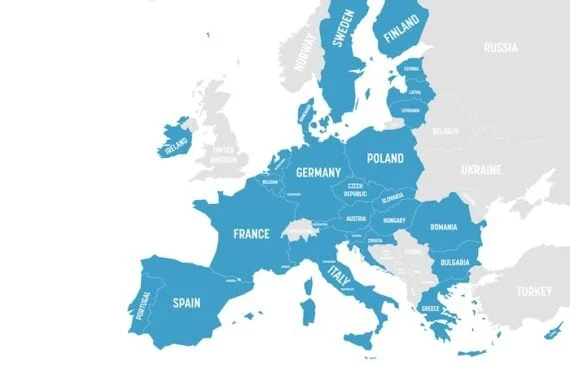
The labyrinthine world of online retail presents a stark contrast in consumer protection and business operations when comparing the European Union and the United States, particularly concerning product returns. While the EU operates under a robust, legally mandated framework designed to empower consumers, U.S. retailers largely dictate their own return policies, fostering a dynamic driven by market competition and individual business strategies. This fundamental divergence creates significant implications for e-commerce businesses operating across these major economic blocs, necessitating tailored approaches to ensure compliance and maintain profitability.
The cornerstone of the EU’s approach to online purchases is the statutory "right of withdrawal." This legal entitlement, embedded within the Consumer Rights Directive, grants consumers across all member states a 14-day window, commencing from the date of delivery, to cancel an online purchase without the need to provide any justification. This powerful consumer protection mechanism, however, is not without its exceptions. Certain categories of goods, such as personalized items specifically tailored to consumer specifications or perishable products susceptible to rapid spoilage, are typically excluded from this blanket right. This harmonized approach across the EU streamlines the e-commerce experience for consumers, establishing a predictable legal environment for digital transactions.
In stark contrast, the United States lacks a federal law governing online product returns. Instead, the responsibility falls squarely on individual retailers to establish and communicate their own return policies. This decentralized model results in a wide spectrum of practices, with policies varying considerably not only between different merchants but also across diverse product categories. The competitive landscape and evolving customer expectations play a pivotal role in shaping these policies, leading to a more fragmented and often less predictable return environment for consumers.
Returns Volume: A Tale of Two Continents
The sheer volume of returned goods represents a significant operational and financial consideration for online retailers. In the United States, the National Retail Federation projected that approximately 19.3% of online sales would be returned in 2025. This figure underscores the substantial scale of reverse logistics operations required to manage customer returns within the U.S. market.
The European Union presents a different, albeit still considerable, picture. Statista data indicates that in 2024, EU consumers returned an estimated 7% of overall e-commerce revenue. However, this aggregate figure masks considerable national variations. Germany, for instance, stands out with a particularly high return rate, with reports suggesting that as many as 55% of online buyers in the country returned at least one product. This disparity highlights the influence of national consumer habits and market maturity on return behavior within the EU.
The legally mandated withdrawal right in the EU, particularly within categories that historically experience high return rates, introduces a predictable yet substantial cost layer for businesses. This fixed operational cost, stemming from regulatory requirements, must be factored into pricing and profit margins. Conversely, U.S. merchants, by virtue of their policy autonomy, possess the theoretical ability to mitigate their exposure to return-related losses by implementing stricter or more selective return conditions.
Refund Timelines: Statutory Obligations vs. Business Discretion
The Consumer Rights Directive in the EU mandates that merchants issue refunds within a strict 14-day period, commencing from the moment a consumer formally notifies them of their intention to withdraw from a purchase. While merchants do have the latitude to postpone the refund until they have received the returned goods or obtained proof of dispatch from the consumer, this 14-day deadline creates a tangible pressure on cash flow, especially for businesses dealing with high volumes of returns. Furthermore, the directive stipulates that refunds must be processed using the original method of payment, ensuring consistency and ease for the consumer.
In the United States, the absence of a federal statutory requirement means that refund processing times are largely determined by individual retailers. While many U.S. businesses aim to process refunds within a few business days to align with customer expectations and maintain goodwill, there is no overarching legal obligation to do so. Payment networks, which play a crucial role in settling financial transactions and disputes, also do not impose a universal timeframe for refund processing. This flexibility allows U.S. merchants to align their refund schedules with their internal operational capacities and broader customer service strategies.

Shipping Costs and Deductions: A Matter of Transparency and Competition
The allocation of return shipping costs represents another key differentiator between the EU and U.S. return policies. In the European Union, consumers are generally expected to bear the cost of return shipping, provided that this responsibility is clearly and unambiguously disclosed to them before the purchase is finalized. Notwithstanding this, EU merchants are legally obligated to reimburse the original delivery cost of the order to the consumer. Additionally, EU regulations permit merchants to reduce the refund amount if the returned product has diminished in value due to the consumer’s handling or use beyond what is necessary to establish its nature, characteristics, and functioning.
The U.S. market offers retailers significantly more latitude in managing return shipping expenses and associated fees. Businesses can choose to absorb return shipping costs as a competitive differentiator, aiming to enhance customer loyalty and attract a broader customer base. Conversely, they may opt not to cover these costs, shifting the burden to the consumer. Similarly, U.S. retailers have the discretion to implement restocking fees or deductions from refunds, or to waive them entirely. The e-commerce giant Amazon, for instance, has established a strong competitive advantage by offering free return shipping on many of its products, effectively eliminating this cost for its customers and setting a benchmark for others in the industry.
Despite these fundamental differences in legal frameworks, the competitive dynamics within both regions often lead to surprisingly similar practical outcomes. The pursuit of customer satisfaction and market share compels businesses in both the EU and the U.S. to offer attractive return options, even if the underlying legal mandates differ. However, the nuances of execution remain critical. In the EU, a failure by merchants to transparently communicate return conditions, including responsibilities for shipping costs and potential deductions, can result in the merchant being legally compelled to assume these costs themselves, irrespective of their stated policy.
In the U.S., the allure of generous return policies, while potentially driving sales, can also inadvertently inflate return rates. This is particularly evident in categories where consumers may order multiple variations of a product with the explicit intention of returning a portion of the order after making their final selection. This practice, often referred to as "wardrobing" or "bracketing," can significantly increase the volume of reverse logistics operations for U.S. retailers.
It is crucial to recognize that the financial impact of returns extends far beyond the cost of shipping. Across both regions, the total cost of managing returns encompasses a complex web of activities, including meticulous inspection of returned items, professional repackaging for resale, efficient restocking into inventory, and, in some cases, the inevitable markdowns of items that can no longer be sold at full price.
Strategic Imperatives for Global Expansion
For e-commerce businesses aspiring to operate in both the European Union and the United States, the distinct regulatory environments necessitate the development of separate and tailored return strategies. Attempting to implement a single, overarching global return policy can lead to a precarious situation: either a business risks non-compliance with stringent EU regulations, incurring legal penalties and reputational damage, or it might impose unnecessarily costly and uncompetitive policies on its U.S. operations.
In the European Union, the paramount priority for online retailers is absolute transparency and meticulous disclosure. This involves clearly articulating the consumer’s statutory right of withdrawal, explicitly outlining responsibilities for return shipping costs (if any), and detailing the expected refund timelines. This information must be readily accessible and prominently displayed to consumers before they commit to a purchase, ideally on product pages and during the checkout process. Maintaining up-to-date documentation and streamlined refund workflows that adhere to the legally mandated 14-day window are essential for regulatory compliance and fostering consumer trust.
Conversely, in the United States, the strategic focus shifts towards optimization and competitive benchmarking. Retailers are advised to continuously evaluate their return policies against industry averages and competitor offerings within their specific product categories. This involves a delicate balancing act: understanding how the generosity of their return policies correlates with conversion rates and overall sales volume, and diligently modeling these return costs into their pricing structures. A data-driven approach to managing returns can provide a significant competitive advantage, allowing businesses to offer attractive terms without sacrificing profitability.
Ultimately, businesses that proactively incorporate the costs and complexities of returns into their strategic expansion planning are better positioned for long-term success. Treating returns as an afterthought rather than an integral component of the business model can lead to unforeseen financial burdens and operational inefficiencies, hindering growth in crucial international markets. By understanding and adapting to the distinct legal and competitive landscapes of the EU and the U.S., e-commerce players can navigate the complexities of global returns more effectively, building robust and sustainable businesses in an increasingly interconnected digital marketplace.
Related posts: