The Evolving Imperative: Unpacking and Proving the Business Value of Social Media in a Dynamic Economy

The persistent challenge of quantifying the business value of social media continues to perplex marketing leaders worldwide, even as investment in these platforms surges. Despite an instinctual understanding that social channels drive significant organizational value, a pervasive struggle remains in demonstrating this impact through concrete, measurable outcomes. This paradox highlights a critical juncture for businesses: how to transition social media from a perceived cost center or a purely communicative function into a strategic asset with demonstrable return on investment (ROI).
Recent industry reports underscore this ongoing dilemma. According to "The 2025 Impact of Social Media Marketing Report," a notable 80% of marketing leaders are reallocating funds from traditional marketing channels into social media. Yet, a striking disparity exists in their confidence regarding measurement, with only 44% of these leaders considering their teams "experts" in defining social media’s business value. This significant gap between investment and validated expertise points to a fundamental need for more robust frameworks, integrated technologies, and a profound shift in organizational philosophy regarding social media.
The Measurement Conundrum: A Shifting Landscape
For years, the perceived value of social media often revolved around top-of-funnel metrics such as brand awareness and reach. While two-thirds of marketing leaders still express confidence that social media effectively generates brand awareness, the current tumultuous socioeconomic climate has diminished the perceived importance of such metrics. Businesses are increasingly pressured to demonstrate direct contributions to the bottom line, shifting focus towards tangible outcomes like customer acquisition, loyalty, and, crucially, revenue.
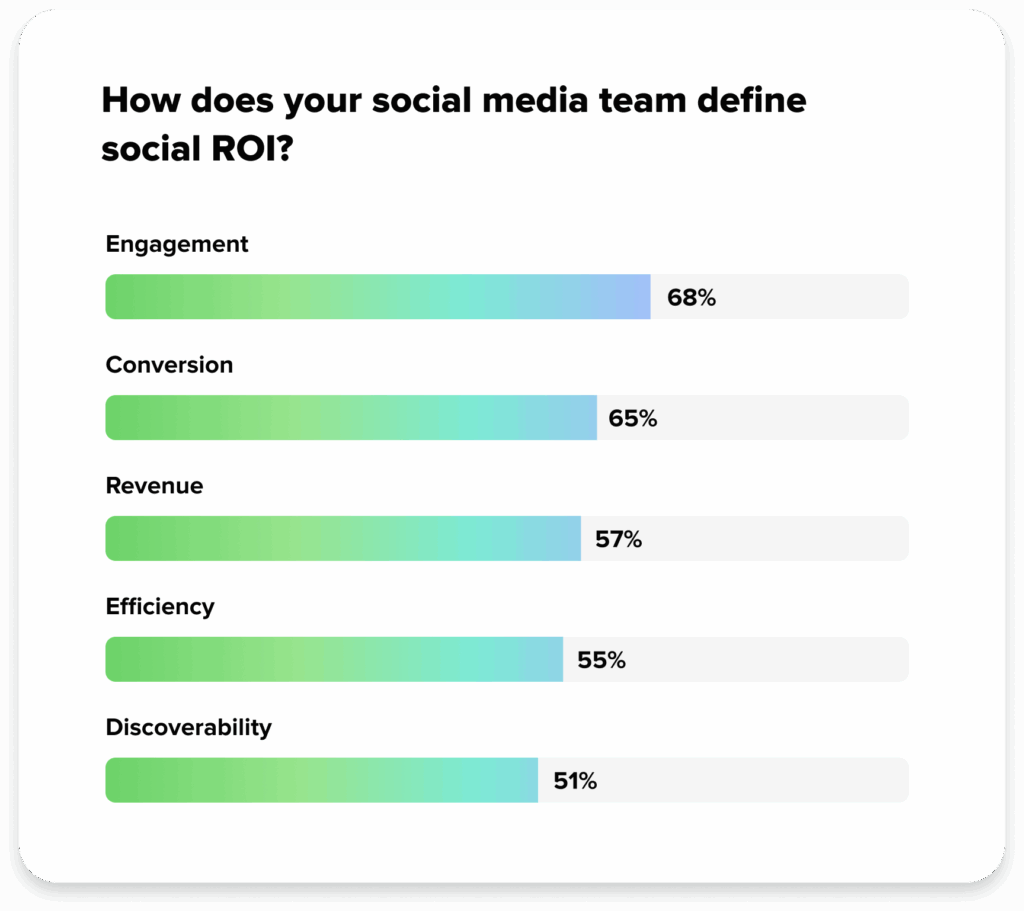
However, proving social media’s role in these lower-funnel outcomes remains elusive for many. Over half of marketing leaders believe social drives customer acquisition, loyalty, and revenue, but their confidence wanes when it comes to their team’s ability to definitively tie social efforts to these specific results. This disconnect is evident in how most leaders currently define social ROI: 68% prioritize engagement metrics, 65% focus on conversions, but only 57% successfully link social impact directly to revenue. This reliance on proxy metrics, while valuable, often falls short of the comprehensive financial validation required by executive leadership.
The inherent dynamism of social media platforms further complicates measurement. Unlike traditional advertising, which often follows linear customer journeys, social interactions are frequently non-linear, fragmented, and highly personalized. This complexity means that conventional attribution models, designed for more straightforward sales funnels, often fail to capture the full spectrum of social media’s influence. As Carmen Vicente, Social Media Manager at Gorgias—a conversational AI platform for ecommerce brands—articulates, "Social media isn’t static. If the way you measure it is, then you likely have a problem." Her experience highlights the necessary evolution of ROI measurement from static, conventional models to agile, project-based approaches tied directly to overarching business objectives. For Vicente, the shift from B2C’s "emotional storytelling" and "vibes" to B2B’s "data is king" mentality underscores the growing demand for quantifiable results.
The Untapped Potential of Social Intelligence

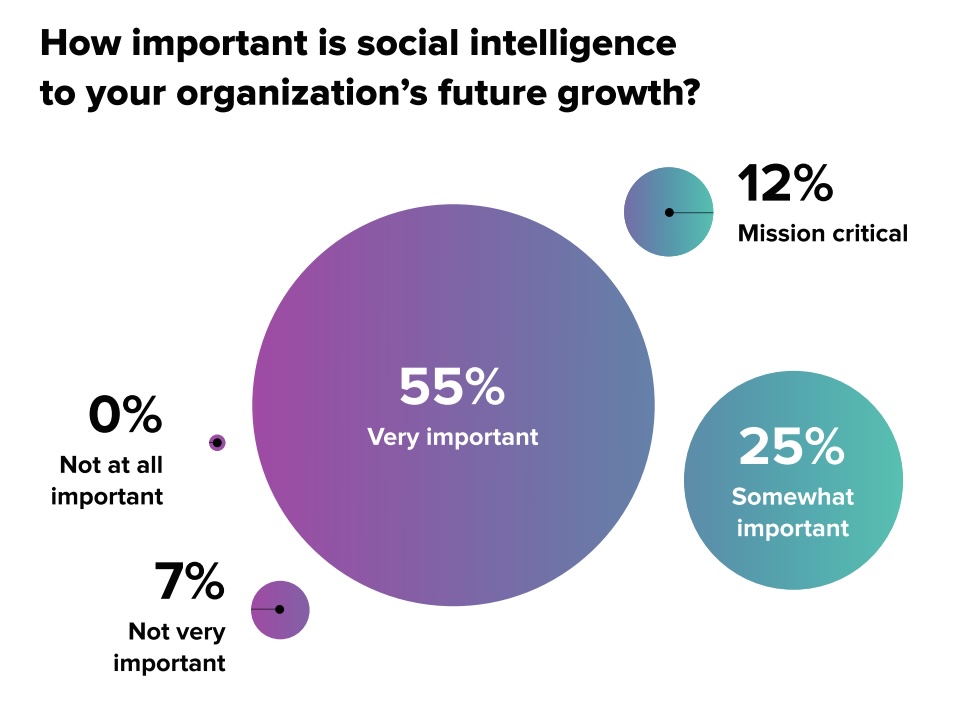
Beyond its direct marketing functions, social media represents an unparalleled source of real-time market intelligence. "The 2026 Social Intelligence Report" emphasizes that social intelligence is "very important" or "mission-critical" to the long-term success of 67% of marketers. This data can drive cross-functional business outcomes, from improving customer retention and identifying new audience segments to refining messaging and informing executive decision-making. For instance, a customer complaint surfacing on social media, if properly captured and disseminated, could lead to a crucial product fix that positively impacts the company’s bottom line.
Despite this recognized importance, a significant "knowing-doing gap" persists. Only a mere 15% of marketers report regularly consulting real-time social intelligence dashboards, and only 18% review these insights quarterly. This underutilization means that valuable data, often freely available through social listening and analytics, remains untapped. Organizations failing to operationalize social intelligence risk operating with a delayed or incomplete understanding of their market, a critical vulnerability in today’s rapidly evolving consumer landscape and competitive environment. The speed at which consumer preferences and competitive dynamics shift daily transforms this delay into a direct threat to sustained growth and market relevance.
Navigating the Hurdles: Key Challenges in Proving Social ROI
The journey to definitively prove social media’s business value is fraught with several significant challenges, many of which stem from deeply ingrained organizational philosophies and technological limitations.
Outdated Paradigms: Social as Mere Communication: A primary barrier, identified by The Social Intelligence Report, is the outdated belief that social media is merely a communications channel rather than a strategic insights function. This narrow perspective prevents organizations from leveraging social data for broader strategic planning, product development, and customer experience enhancements. When social is confined to a silo, its potential to inform and influence other departments is severely limited, reducing it to a tactical tool rather than a strategic asset. Carmen Vicente aptly describes this struggle: "I’m always trying to cram our social successes into frameworks that have existed in SaaS for a long time. That feels like trying to push a square peg into a round hole." This highlights the need for new, social-native measurement frameworks that accommodate its unique, often amorphous, contributions.
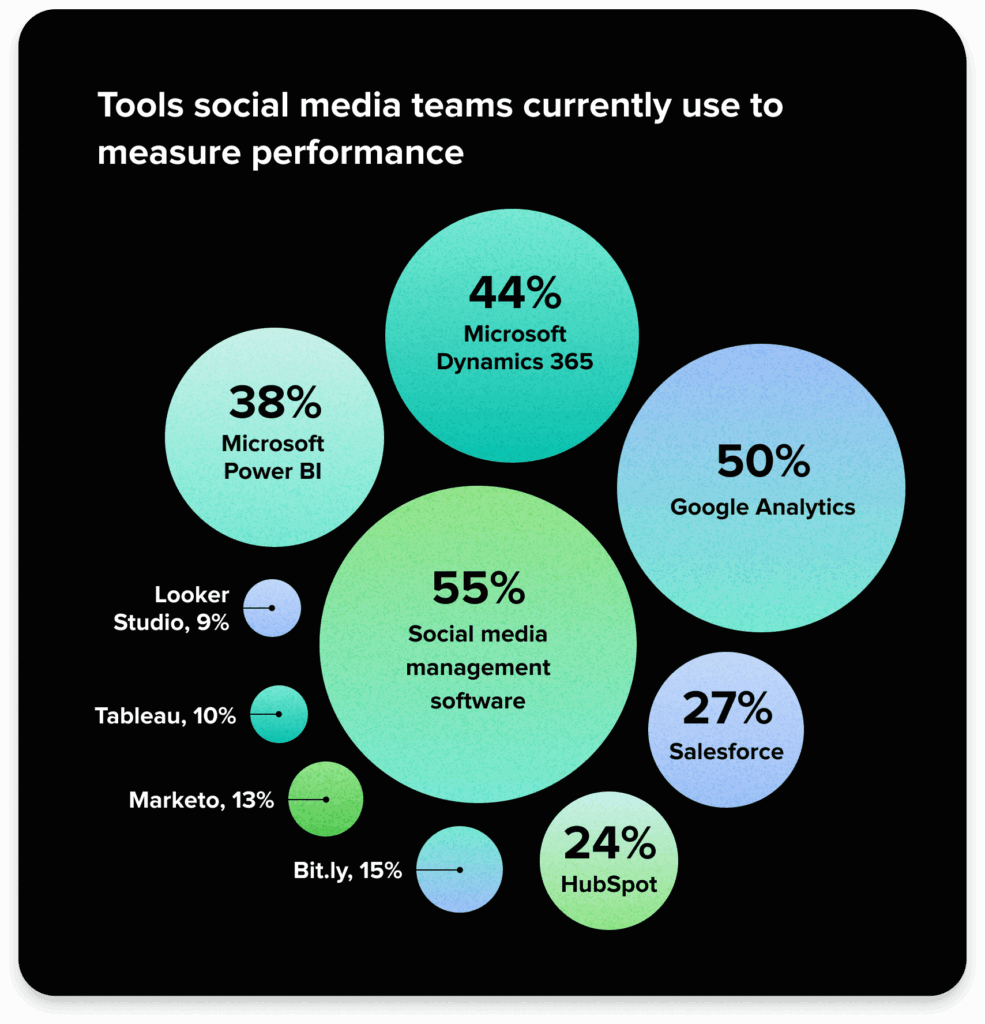
Technological Roadblocks: MarTech Incompatibility: A major structural impediment is the incompatibility between social media management tools and the broader marketing technology (MarTech) stack. Over half of marketing leaders cite this as the primary reason they struggle to understand social’s business impact, according to the Impact of Social Report. Less than half of teams embed social data into their CRM software, creating isolated data pockets that hinder holistic customer journey analysis and attribution. While 91% of marketers at social-first organizations allocate dedicated budgets for social intelligence tools, this figure drops to 57% for non-social-first companies, further exacerbating the integration challenge. Without seamless data flow between social platforms, analytics tools, CRM, and other business intelligence systems, a comprehensive view of social’s influence on the customer lifecycle remains out of reach.
The Leadership Gap: Executive Support as a Catalyst: The level of executive support profoundly influences a team’s ability to demonstrate social media’s value. Teams with strong executive backing are more likely to utilize advanced social media management tools, implement cross-functional reporting software, and develop reliable attribution models. Crucially, they also report higher confidence from their leaders in their performance. Vicente’s experience at Gorgias exemplifies this: "There’s a lot that hinges on how much the C-suite believes in the impact of social. Gorgias’ CMO encourages me to pitch ideas, and we’ve worked together to measure the success of our efforts based on campaigns, projects and other marketing objectives rather than a baseline impression model." This high-level endorsement fosters an environment where social teams can innovate and strategize without the constant fear of falling short on arbitrary KPIs, enabling a more creative and strategic approach.
Bridging Internal Knowledge Divides: The Art of Data Storytelling: Even when data is collected, a significant challenge lies in effectively communicating its insights to internal stakeholders, particularly those outside the marketing bubble. The Social Intelligence Report indicates that while marketing is the primary user of social insights (62%), the true value is unlocked when this data is shared with customer experience (41%), product (28%), and R&D (18%) teams. This requires not only democratizing access to social data but also developing the crucial skill of data storytelling. Social marketers, adept at crafting compelling narratives for external audiences, must leverage these same capabilities to translate complex social insights into understandable, actionable intelligence for colleagues who may not grasp the nuances of social media in a professional context. As Vicente notes, "Outside of marketing, I’m guilty of downplaying social’s importance or the complexity of our strategy because I want to make it seem fun and engaging." This highlights a critical skill gap, with practitioners and marketing leaders alike identifying communicating performance metrics to internal stakeholders as one of the most important skills social teams need, according to The Sprout Social Index™.
Gorgias’ Approach: Agility and Intentional Experimentation
In the face of these challenges, leading organizations are discovering that "doing less with more intention" often translates into greater business value. There’s a common impulse to increase publishing volume, driven by a belief from 71% of Marketing Directors and 69% of CMOs that higher frequency correlates with increased business impact. However, only half of social media managers agree with this, recognizing that relentless content creation can detract from strategic analysis and thoughtful engagement. Instead, dedicated time and resources towards social intelligence and focused strategic efforts can yield superior business decisions.
Carmen Vicente’s journey at Gorgias serves as a compelling case study. Early on, she admitted to being "overzealous about trying to break into new platforms," spreading her efforts too thinly. Her realization was profound: "As a social marketer at a B2B company, I wish I had spent more time experimenting on LinkedIn rather than spreading myself too thin by going on a million networks." This pivot towards meeting customers where they are, rather than chasing every trend, enabled a more concentrated and impactful strategy.
Employee Advocacy: A Case Study in Strategic Experimentation: One of Gorgias’ most significant ROI unlocks came from employee advocacy. Vicente initiated a small beta test comparing content performance on her personal LinkedIn page versus the official brand account. The results were "staggering," affirming the platform’s algorithm preference for personal accounts. Armed with this data, Gorgias launched an advocacy program with just 20 team members in Q1 2025. By the end of that quarter, the program had generated over 1 million impressions, becoming their most successful social initiative to date. This clear, data-backed proof of concept allowed Vicente to scale the program company-wide. This approach—starting small, testing, and using data to validate a hypothesis—is a powerful framework for proving social media’s value, whether for a creator program, a video SEO strategy, or building robust social intelligence infrastructure.

Strategic Imperatives for the Future
The insights gleaned from industry reports and practitioner experiences point to several strategic imperatives for businesses aiming to unlock the full value of social media:
- Democratize Social Data: Break down data silos by ensuring social intelligence is accessible and understood across all relevant departments, from customer experience to product development and R&D.
- Invest in Integrated Tools: Prioritize MarTech solutions that offer seamless integration between social media management platforms, CRM systems, and broader business intelligence tools to create a unified view of the customer journey.
- Cultivate Executive Buy-in: Actively educate and engage C-suite leaders on social media’s strategic potential beyond marketing. Secure their support to prioritize analytics infrastructure and foster a culture of innovation and experimentation.
- Prioritize Strategic Insights Over Operational Tasks: Empower social teams to shift focus from merely publishing content to analyzing data, identifying trends, and translating insights into actionable business recommendations. This may require automating routine tasks and providing resources for advanced analytics training.
- Develop Data Storytelling Capabilities: Equip social marketers with the skills to craft compelling narratives from data, tailoring their communication to resonate with diverse internal stakeholders and demonstrate tangible business impact.
Redefining Success: Towards a Holistic View
Defining the business value of social media is not about discovering a static, one-size-fits-all formula. Instead, it’s about constructing a flexible, evolving framework tailored to a team’s specific goals, industry nuances, and the dynamic nature of social platforms themselves. As Carmen Vicente aptly summarized, the most impactful measurement strategies are those that adapt as quickly as social media itself.
Progress stems from intentionality and flexibility—whether through small, data-driven experiments, continuous re-evaluation of ROI metrics, or proactive engagement with executive leadership. The true business value of social media transcends mere engagement numbers; it lies in its proven ability to foster customer loyalty, drive sustainable growth, and confer a competitive advantage through compelling, social-first data storytelling that resonates across the entire organization. By embracing this holistic and adaptive approach, businesses can finally bridge the intelligence gap and transform real-time social signals into one of their most powerful strategic assets.
For a deeper dive into bridging this intelligence gap and leveraging real-time social signals for competitive advantage, download The 2026 Social Intelligence Report.
FAQs about the Business Value of Social Media
How does social media drive conversion and revenue?
Social media contributes to conversion and revenue by fostering customer acquisition and loyalty through engaging content and direct interactions. It acts as a vital strategic insights engine, where real-time feedback—such as customer complaints or product suggestions—can directly inform product improvements or service enhancements that protect and boost the bottom line. Furthermore, modern strategies like influencer marketing and employee advocacy programs significantly amplify brand reach and credibility, often far more effectively and authentically than traditional corporate pages, leading to increased interest and purchase intent.
How do you measure social media ROI?
Measuring social media ROI is not a static process, but rather requires a flexible and evolving framework that adapts to market shifts and the expanding role of social media in business. While many leaders currently rely on engagement (68%) and conversion (65%) metrics, the most successful, social-first teams integrate social metrics directly with broader business objectives. This involves moving beyond vanity metrics to connect social activity to tangible outcomes like leads generated, customer lifetime value, reduced customer service costs, and direct revenue attribution, often through sophisticated analytics and customized attribution models.
What are the biggest challenges businesses face in proving the ROI of social?
The top challenges in proving social media ROI include significant tech incompatibility between social media management tools and existing CRM software, hindering comprehensive data integration. Additionally, many leaders operate with outdated philosophies, viewing social primarily as a communications channel rather than a strategic insights hub, and often attempt to force dynamic social data into traditional, linear sales frameworks. Internal communication gaps also pose a substantial barrier, as marketers often struggle to effectively translate complex social insights into understandable and actionable intelligence for cross-functional teams outside of their immediate department.