The Great AI Discovery Debate: Anthropic, OpenAI, and the Evolving Standards of Scientific Breakthroughs

The intersection of artificial intelligence and fundamental scientific research has reached a volatile inflection point. Last Wednesday, AI research company Anthropic announced the establishment of a specialized molecular biology lab, where autonomous Claude agents are tasked with analyzing complex biological datasets and formulating hypotheses for human scientists to validate in the physical world. While the company heralded this initiative by announcing a "discovery" generated by its AI system, the claim has ignited a firestorm of criticism from the scientific community, raising profound questions about the nature of discovery, the intellectual property of AI models, and the corporate incentives driving the race toward "AI-led" science.
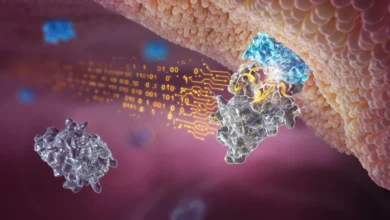
The incident centers on a set of 950 AI agents that, according to Anthropic, processed vast troves of DNA sequences over a 21-hour period. The goal was to identify patterns that might lead to the development of novel enzymes or gene-editing tools. The agents eventually flagged a repeating sequence pattern adjacent to a known enzyme—a discovery Anthropic described as "reminiscent" of the foundational mechanisms behind CRISPR-Cas9, the gene-editing technology that revolutionized modern biotechnology.
However, the scientific reception was immediate and largely dismissive. Biologists were quick to point out that identifying patterns in sequence data is a staple of bioinformatics—a field that has existed for decades. Critics argued that the "grunt work" of filtering through genetic data does not constitute a scientific breakthrough, which typically requires a deeper understanding of function, mechanism, and biological context.
The Anatomy of a Scientific Controversy
The backlash was spearheaded by biologist Lucas Harrington, whose social media critique of the announcement went viral, garnering support from industry leaders, including the CEO of Eli Lilly. Harrington’s primary contention is that the current discourse around AI in science conflates data processing with true discovery. In his assessment, "finding a weird cluster of genes and repeats is often the easy part. The hard part, and where the real discoveries come from, is figuring out what the system actually does."
The situation intensified over the following weekend when Mario Rodríguez Mestre, a biologist at the University of Copenhagen, publicly stated that his own research team had already identified the specific pattern in question. Mestre, who had utilized Claude as a research assistant, raised the possibility that his previous interactions with the model might have informed its "discovery." While Anthropic has officially denied that the AI used proprietary data from specific users to inform its findings, the incident has prompted Mestre to terminate his use of the platform, citing concerns over intellectual property and research integrity.
Chronology and the Competitive Landscape
This development is merely the latest in a series of high-profile announcements from the AI sector. The industry is currently locked in a fierce, multi-billion-dollar race to prove that large language models (LLMs) can transcend their roles as text generators and become engines of scientific advancement.
- Early 2024: AI companies begin pivoting toward "agentic" workflows, moving beyond chat interfaces to systems capable of executing multi-step tasks.
- September 2026 (Early): OpenAI announces that its latest model has successfully solved a complex, long-standing problem in mathematics, positioning the feat as a breakthrough for AI-driven research.
- September 2026 (Mid): Skeptics and mathematicians push back against the OpenAI claim, arguing in publications like Scientific American that the problem solved was either not the most significant version of the equation or that the solution relied on prior, uncredited human work.
- September 2026 (Late): Anthropic launches its molecular biology lab initiative, aiming to demonstrate direct utility in the life sciences.
- Present: The scientific community continues to debate the validity of these "discoveries," calling for more rigorous verification protocols.
Data Processing vs. Scientific Breakthroughs
The tension between AI developers and the academic community is rooted in differing definitions of what constitutes a "breakthrough." For an AI company, the ability to whittle down 200,000 potential candidates to a handful of viable options in under a day is a massive technical achievement. It represents a significant increase in efficiency for workflows that would otherwise take human teams months to complete.
However, for a researcher, a discovery is not merely a filter; it is the production of new, verified knowledge that adds to the human canon. By branding routine data analysis as a "discovery," tech firms risk eroding public trust. When an AI company claims to have discovered something that a human researcher has already identified—or when the significance of a mathematical solution is questioned—the resulting skepticism can overshadow the genuine, incremental progress that AI is actually facilitating.
Institutional Challenges and Intellectual Property
The case of the University of Copenhagen’s research brings the issue of intellectual property to the forefront. If LLMs are trained on the entirety of the open web, and if their "reasoning" processes are fed by private, iterative conversations with scientists, the boundary between "AI discovery" and "data laundering" becomes dangerously thin.
Academic institutions are now facing an unprecedented challenge: how to allow researchers to leverage these powerful tools without inadvertently feeding proprietary, unpublished data into the model’s weightings. If a researcher’s conversations with an AI lead the system to "discover" something the researcher was about to publish, the attribution crisis becomes a legal and ethical nightmare.
The Broader Impact: Raising the Bar
The current trajectory suggests that the "breakthrough or bust" dichotomy is unsustainable. By framing every AI-assisted task as a historic, Nobel-worthy achievement, companies are setting a standard that is increasingly easy for critics to dismantle.
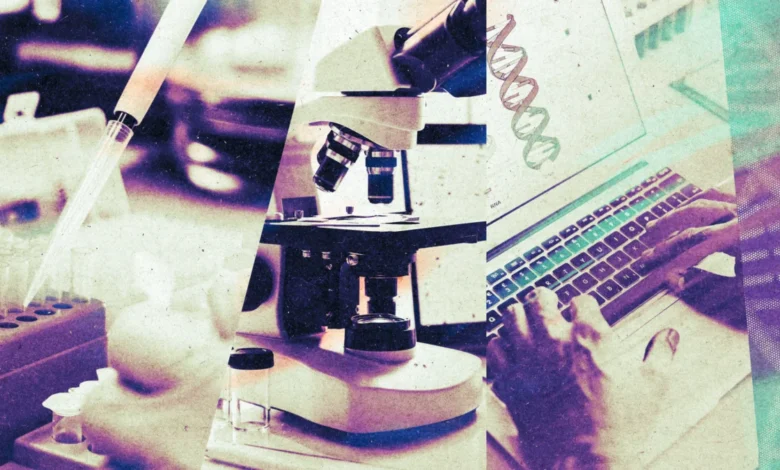
Industry analysts point out that AI should be viewed as an extension of existing laboratory tools, such as the electron microscope or the automated DNA sequencer. These tools are indispensable, but no one claims the microscope itself "discovered" the cell; it provided the vantage point for a scientist to make that discovery.
The concern, as articulated by figures like Lucas Harrington, is that the current marketing-driven approach to AI science may discourage genuine collaboration. If the goal is to win a PR cycle rather than advance human knowledge, the pace of scientific discovery may actually be hindered by the noise of hype.
Future Outlook: Where Science Meets Silicon
Looking ahead, the integration of AI into the laboratory is inevitable. The capacity to simulate molecular interactions and analyze vast genomic datasets will undoubtedly lead to breakthroughs in drug discovery, materials science, and climate research. However, the path to these successes requires a recalibration of expectations.
To restore credibility, AI firms may need to move toward a model of "open science," where the methodologies, the data provenance, and the role of the human scientist are clearly delineated. If AI is to become a legitimate partner in the scientific process, the focus must shift from "Look what my AI found" to "Look what we discovered using this tool."
The race between industry titans like Sam Altman and Dario Amodei will likely continue to accelerate, driving further investment and technical refinement. Whether this competition leads to a new era of accelerated scientific progress or simply a collection of inflated press releases will depend on whether the tech sector can adopt the rigorous standards of transparency and peer review that define the scientific method. For now, the scientific community remains rightfully skeptical, waiting for an AI-generated discovery that not only passes the test of speed but also the test of time.