The Growing Threat of Weather Data Manipulation in the Age of AI-Driven Forecasting

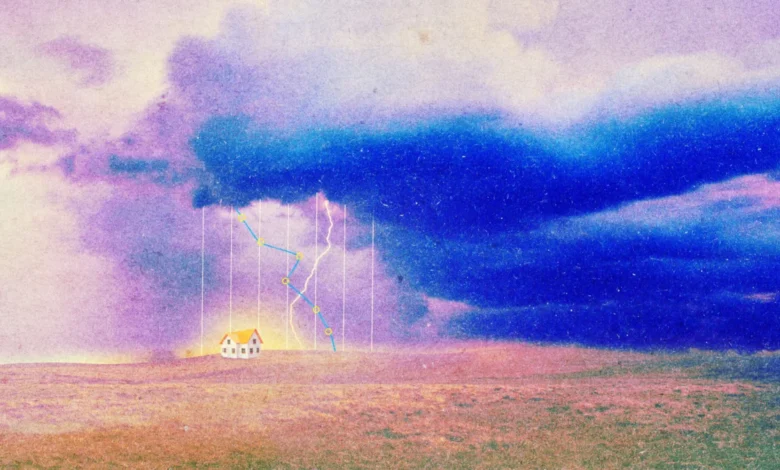
Every morning, airline dispatchers, power grid operators, and farmers around the world make critical operational decisions based on a single, shared resource: the weather forecast. While the average person may view these predictions as a mere convenience for planning a commute or a weekend outing, weather data serves as the foundational intelligence for major strategic decisions across global industries. With billions of dollars, local livelihoods, and human lives at stake, the integrity of this data is paramount. However, a new and troubling trend is emerging. The rise of weather-based prediction markets, combined with a rapid shift toward autonomous, AI-driven forecasting models, has created a fertile environment for data manipulation. What began as isolated incidents of localized fraud now threatens to evolve into a systemic risk that could compromise national security and global economic stability.
The Economic Engine of Meteorological Data
The influence of weather forecasting extends into nearly every sector of the modern economy. In the agricultural sector, farmers rely on high-resolution forecasts to determine which crop varieties to sow, when to apply fertilizers to prevent runoff, and how to manage irrigation infrastructure efficiently. A miscalculated frost warning or a missed rain forecast can result in the loss of an entire season’s yield. In the energy sector, utilities utilize meteorological data to manage the load on the grid, predicting the output of solar and wind farms and determining the wholesale price of electricity.
The financial stakes have been further heightened by the emergence of weather prediction markets. On platforms such as Polymarket or Kalshi, individuals can bet on specific outcomes, such as whether a city will reach a certain temperature or if a hurricane will make landfall in a specific region. These markets, while providing a form of "crowdsourced intelligence," also create a direct financial incentive to alter the physical reality of weather recording. When a decimal point’s difference in temperature can trigger a five-figure payout, the temptation to interfere with the primary source—the weather station—becomes a tangible threat.
The Paris CDG Incident: A Case Study in Physical Sabotage
The potential for such manipulation was starkly illustrated in April 2026 at Paris Charles de Gaulle Airport (CDG). The airport’s weather station, a critical node in the global meteorological network, recorded highly suspicious temperature spikes on two separate occasions: April 6 and April 15. Investigation into these anomalies suggested a primitive yet effective method of sabotage. Authorities believe that individuals used hand-held heat sources, such as hairdryers or lighters, in close proximity to the station’s sensors to artificially inflate the recorded temperature.
The motive was purely financial. Online prediction markets had seen a surge in bets that the temperature at CDG would hit 22°C (71.6°F) on those specific days. While the actual ambient temperature hovered around a seasonal average of 18°C (64.4°F), the manipulated sensors recorded the higher threshold, triggering payouts for the gamblers. In one documented case, a single individual walked away with $20,000.
While this incident was localized and eventually flagged by a French climate nonprofit, it exposed a critical vulnerability in the reporting chain. The detection of the CDG anomaly relied on human observation and post-event statistical analysis. As the world moves toward real-time, automated systems, the window for such human intervention is rapidly closing.
From Physics to Patterns: The Shift Toward AI Forecasting
To understand why this manipulation is so dangerous, one must look at the evolution of forecasting technology. Traditionally, weather prediction has relied on Numerical Weather Prediction (NWP) models, such as the Weather Research and Forecasting (WRF) model or the European Centre for Medium-Range Weather Forecasts (ECMWF) Integrated Forecasting System. These models are grounded in the laws of physics, using complex differential equations to simulate atmospheric fluid dynamics and thermodynamics.
A key safeguard in traditional NWP is "data assimilation." This process involves weighing every incoming measurement against what the physical model suggests is possible, as well as comparing it against readings from neighboring stations. If one station reports 30°C while three nearby stations report 15°C, the system identifies the outlier and minimizes its impact on the final forecast.
However, the industry is currently undergoing a paradigm shift toward "data-driven" AI models. Researchers at major institutions, including Google DeepMind with GraphCast and Huawei with Pangu-Weather, have demonstrated that AI can produce forecasts that are often more accurate and significantly faster than traditional models. These AI systems do not "understand" physics in the traditional sense; instead, they learn patterns from vast historical datasets.
The danger arises when AI models are designed to skip the data assimilation step to increase speed and efficiency. Some experimental models are being developed to ingest raw observational data directly. In such a system, a coordinated "nudge" of data across multiple stations—making each change small enough to appear plausible but large enough to shift the AI’s pattern recognition—could result in a fundamentally flawed forecast without ever triggering a physics-based alarm.
A Chronology of Vulnerability
The transition from manual recording to the current state of risk has occurred in several distinct phases:
- The Manual Era: Weather data was recorded by human observers. While prone to error, intentional fraud was difficult to scale and easy to trace.
- The Automated Era: Weather stations became remote and automated. This increased the volume of data but introduced physical vulnerabilities, as many stations are located in isolated areas with minimal security.
- The Market Era (Current): The rise of decentralized prediction markets creates a "bounty" for data manipulation, turning weather stations into targets for retail-level fraud.
- The AI/Agentic Era (Emerging): Forecasts are generated by AI and acted upon by "agentic" systems—AI programs that make autonomous decisions, such as automatically adjusting energy prices or triggering emergency evacuations—without a human in the loop.
The Spectrum of Strategic Risks
The implications of weather data manipulation scale far beyond individual gambling wins. Experts in meteorological security categorize these risks into three tiers of severity:
Tier 1: Individual Fraud. This is the "CDG scenario," where speculators manipulate local sensors for personal gain. While it undermines the integrity of local records, its systemic impact is relatively low.
Tier 2: Market Destabilization. A coordinated group of traders could target multiple stations in a specific energy corridor. By biasing the forecast for wind speeds or cloud cover, they could manipulate wholesale electricity prices. Because utilities use these forecasts to hedge their positions, a falsified forecast could lead to massive financial losses for energy providers and higher costs for consumers.
Tier 3: National Security and Public Safety. This is the most catastrophic scenario. A state actor or sophisticated saboteur could manipulate data to "blind" a nation to an incoming extreme weather event. Conversely, they could trigger a "false positive," causing a city to evacuate or a power grid to shut down in anticipation of a storm that never arrives. As emergency response systems become more reliant on automated AI triggers, the ability to "hack" the weather becomes a potent tool for unconventional warfare.
Strengthening the Chain: A Roadmap for Resilience
As the role of observational data grows, the global meteorological community must adapt to these evolving threats. Experts suggest a three-pronged approach to safeguarding the future of forecasting.
1. Hardening Physical and Statistical Oversight
The physical security of weather stations must be prioritized, particularly those located at critical infrastructure hubs like airports and power plants. This includes the implementation of tamper-evident hardware and 24/7 video surveillance. Furthermore, "data homogenization" methods—the statistical cleaning of records—must be accelerated. Currently, these checks can take days; they must happen in milliseconds to keep pace with AI-driven decision-making.
2. Implementing Adversarial AI Defense
Since AI models are the new engine of forecasting, they must be built with "adversarial robustness." This involves training models to recognize and ignore "poisoned" data. Techniques such as AI explainability can help meteorologists understand why a model is making a certain prediction, allowing them to trace suspicious outputs back to corrupted data sources.
3. Establishing End-to-End Accountability
The chain of weather data is long, passing from station operators to national services and finally to international forecasting centers. No single entity can guarantee integrity. There must be a standardized protocol for communicating anomalies. If a station in northern France is flagged for suspicious activity, that "red flag" must travel with the data through every model and application that consumes it, ensuring that the end-user is aware of the potential for error.
Conclusion: A Wake-Up Call for the Meteorological Community
The incident at Paris Charles de Gaulle Airport serves as a timely warning. It demonstrated that the barriers to manipulating global data systems are surprisingly low, and the incentives are higher than ever. As we move toward a future where AI and autonomous systems manage our response to the environment, the data feeding those systems must be beyond reproach.
Weather is one of the few truly global commons. Protecting the accuracy of its observation is not just a technical challenge for meteorologists; it is a fundamental requirement for the functioning of modern society. Without a concerted effort to secure our sensors and our models, we risk a future where we are not only at the mercy of the elements but also at the mercy of those who would manipulate our perception of them.