Google Warns CMOs That Commodity Content, Not AI, Is Making Brands Invisible in Search

The ongoing evolution of generative AI in search engines has prompted a fierce debate among digital marketers, search engine optimization (SEO) professionals, and corporate executives. Recently, Google shifted the narrative surrounding visibility in AI-driven search environments, directing attention away from algorithms and pointing squarely back at content creators. In a widely discussed social media post and a companion publication published through its Think with Google platform, the tech giant delivered a blunt message to chief marketing officers: artificial intelligence is not rendering brands invisible in search results—generic, uninspired content is.
The statement, shared via the official Think with Google social media account, paired the directive to stop producing generic "Top 10" listicles with a call to action to lead with genuine, first-hand expertise. This positioning immediately generated questions, speculation, and debate across the digital marketing community, particularly regarding whether Google is officially signaling the death of traditional list-based articles. As brands increasingly scramble to understand how to maintain relevance in an era dominated by AI Overviews and conversational search, Google’s latest guidance offers a critical window into what the search engine values most.
Chronology and Background of Google’s Messaging
The discourse began to take shape earlier in the year as Google integrated generative AI more deeply into its core search experiences. On May, the company published a comprehensive guide to optimizing for generative AI features, aimed at helping webmasters and content creators understand how modern algorithms evaluate information. Within that document, Google explicitly categorized content like "7 Tips for First-Time Homebuyers" as commodity content, noting that such material is frequently derivative and relies entirely on common knowledge. It contrasted this generic approach with deeply specific, first-hand accounts, such as an analytical breakdown of the legal and financial implications of waiving a home inspection.
Months later, on October 14, Think with Google—the company’s premier digital marketing publication—released an in-depth article written by Brendon Kraham, Google’s Vice President of Search and Commerce Global Ads Solutions. Kraham framed his insights around three primary challenges and priorities frequently voiced by CMOs: navigating the modern super-empowered consumer, establishing a brand as a definitive authority within its niche, and tying content strategy to measurable business outcomes rather than superficial metrics.
The messaging culminated on November 19, when the Think with Google account synthesized Kraham’s extensive article into a sharp social media post. By juxtaposing the critique of "Top 10" listicles with a demand for proprietary expertise, the post acted as a catalyst, sparking intense commentary from industry authorities who parse Google’s every statement for algorithmic clues.
Deconstructing Kraham’s Core Priorities for CMOs
Brendon Kraham’s October article moved beyond superficial SEO advice, focusing instead on structural marketing transformations required in an AI-first digital landscape. Kraham structured his analysis around three key pillars that define contemporary consumer behavior and brand discoverability.
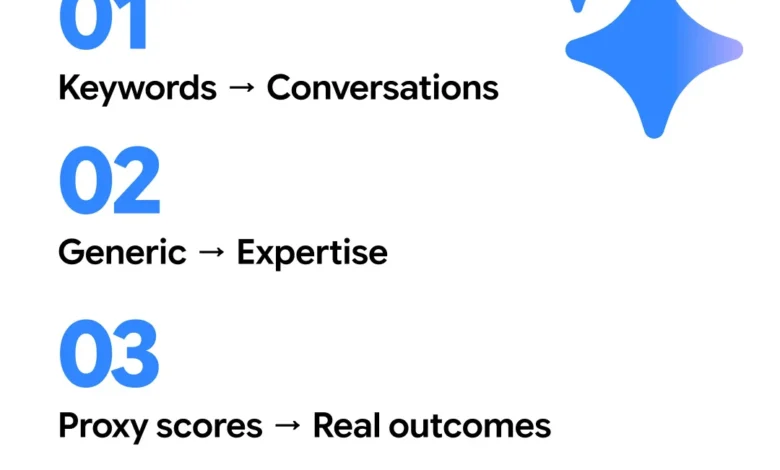
The first priority addresses the super-empowered consumer. Today’s buyers are armed with advanced conversational search tools, multimodal search capabilities, and generative AI agents that can aggregate reviews, compare pricing specs, and summarize product features in seconds. Consequently, traditional top-of-funnel keyword stuffing no longer captures consumer intent effectively. Brands must shift their focus from targeting isolated keywords to engaging in meaningful, context-rich conversations that match the complexity of modern user queries.
The second priority tackles the crisis of brand authority and commodity content. Kraham illustrated this challenge using the hypothetical example of a running specialty store. Instead of publishing a generic, easily replicated "Top 10 Things to Consider When Buying Running Shoes" blog post—content that AI can easily synthesize and reproduce without referencing the original publisher—the store should instead publish high-value, niche media. He suggested creating deep-dive video content analyzing precisely why a specific customer’s running shoes experienced structural wear and tear in a unique way. This approach transforms standard marketing into definitive, real-world expertise that automated systems recognize as authentic and proprietary.
The final pillar focuses on measurement and accountability. Kraham warned marketing executives against relying on unproven proxy metrics, such as visibility scores or theoretical AEO (Answer Engine Optimization) rankings, which often fail to correlate with actual revenue. Instead, he urged CMOs to anchor their marketing strategies and content investments strictly to bottom-line business results, including qualified leads, customer acquisition, and direct sales.
Reactions and Industry Interpretations
The digital marketing community wasted little time dissecting the implications of Google’s statements. SEO experts and agency leaders took to social media platforms to debate whether the tech giant was effectively declaring war on common content formats.
Lily Ray, founder of Algorythmic and a recognized authority on SEO and AI search strategies, amplified the discussion on X by highlighting the friction between Google’s public messaging and the realities of current search engine results pages (SERPs). Ray has long tracked the prevalence of self-promotional "best" listicles—articles where a company evaluates its own industry and ranks itself in the top position. In her previous research and published columns, Ray demonstrated how Google’s AI Overviews frequently cite these self-serving listicles alongside competitor recommendations, creating a complex web of algorithmic reliance that sometimes rewards low-effort promotional content.
Other industry veterans offered nuanced takes on the announcement. Growth advisor Eli Schwartz published an unfiltered interpretation of Google’s three-step cheat sheet, pushing past corporate public relations language to emphasize that theoretical visibility metrics in AI-driven search environments remain transient and difficult to monetize. Meanwhile, Ross Hudgens, founder and CEO of Siege Media, engaged in the public dialogue to clarify the precise nature of the listicle critique, noting that the warning targets generic, low-effort aggregation rather than all structured list formats.
Implications for Corporate Content Strategy
The convergence of Kraham’s article, Google’s generative AI optimization guides, and expert industry analysis underscores a fundamental shift in how brands must approach digital publishing. For over a decade, content marketing strategies were frequently dictated by search volume tools, keyword density targets, and the scaling of high-volume, low-cost informational articles designed primarily to capture top-of-funnel traffic.
The rise of generative AI has fundamentally broken this economic model. Because large language models can instantly summarize common knowledge, FAQs, and surface-level listicles, search engines no longer need to direct users to third-party sites for basic definitions or generic advice. Consequently, pages that merely rehash widely available information are experiencing diminished visibility, not because AI discriminates against human writers, but because the content itself lacks unique value.
To remain visible and authoritative in AI-enhanced search ecosystems, organizations must pivot toward content assets that algorithms cannot replicate. This includes publishing original research, proprietary data, expert-led case studies, and multimedia documentation of real-world problem-solving. By embedding genuine organizational expertise directly into digital assets, brands can satisfy both the stringent quality thresholds demanded by search engine algorithms and the rigorous ROI expectations demanded by corporate boardrooms.
Looking Ahead: Navigating Future Search Updates
As search engine architectures continue to evolve at a rapid pace, marketing leaders must remain vigilant regarding documentation and policy shifts from search providers. Google regularly updates its official search documentation and optimization guidelines, providing transparency for webmasters seeking to align their strategies with platform expectations.
For CMOs and content strategists, the path forward requires moving away from vanity metrics and generic scale, prioritizing depth, authenticity, and verifiable business outcomes instead. By treating content creation as an extension of real-world expertise rather than a mere exercise in keyword accumulation, brands can insulate themselves against algorithmic shifts and secure sustainable visibility in the age of intelligent search.