The Strategic Guide to Cross-Posting Content Across Social Media Platforms in 2026


Cross-posting has emerged as a cornerstone of modern digital marketing, serving as a vital mechanism for organizations aiming to maintain a cohesive brand identity across an increasingly fragmented social media landscape. With global social media usage now reaching an estimated 5.75 billion users, brands are managing a presence on an average of five or more distinct networks. As consumers spend an average of two hours and 21 minutes daily interacting with digital content, the efficiency of cross-posting—the practice of sharing similar content across multiple platforms—has become a mandatory component of professional content strategy. However, the efficacy of this approach hinges on the distinction between mere replication and thoughtful, platform-specific adaptation.

The Evolution of Content Distribution
The historical approach to social media management often involved a "post-and-pray" methodology, where identical updates were blasted across channels simultaneously. This practice has become increasingly scrutinized by both platform algorithms and audience demographics. In 2026, the digital environment demands a higher level of sophistication. While the objective of cross-posting remains consistent—saving time and maximizing the reach of a core message—the execution must now account for the unique linguistic, visual, and behavioral norms of each ecosystem.
The technical challenge for social media managers is twofold: maintaining brand consistency while respecting the "native" expectations of platforms ranging from the professional landscape of LinkedIn to the fast-paced, visual-centric environment of Instagram and the real-time discourse of platforms like X.

Distinguishing Cross-Posting from Content Repurposing
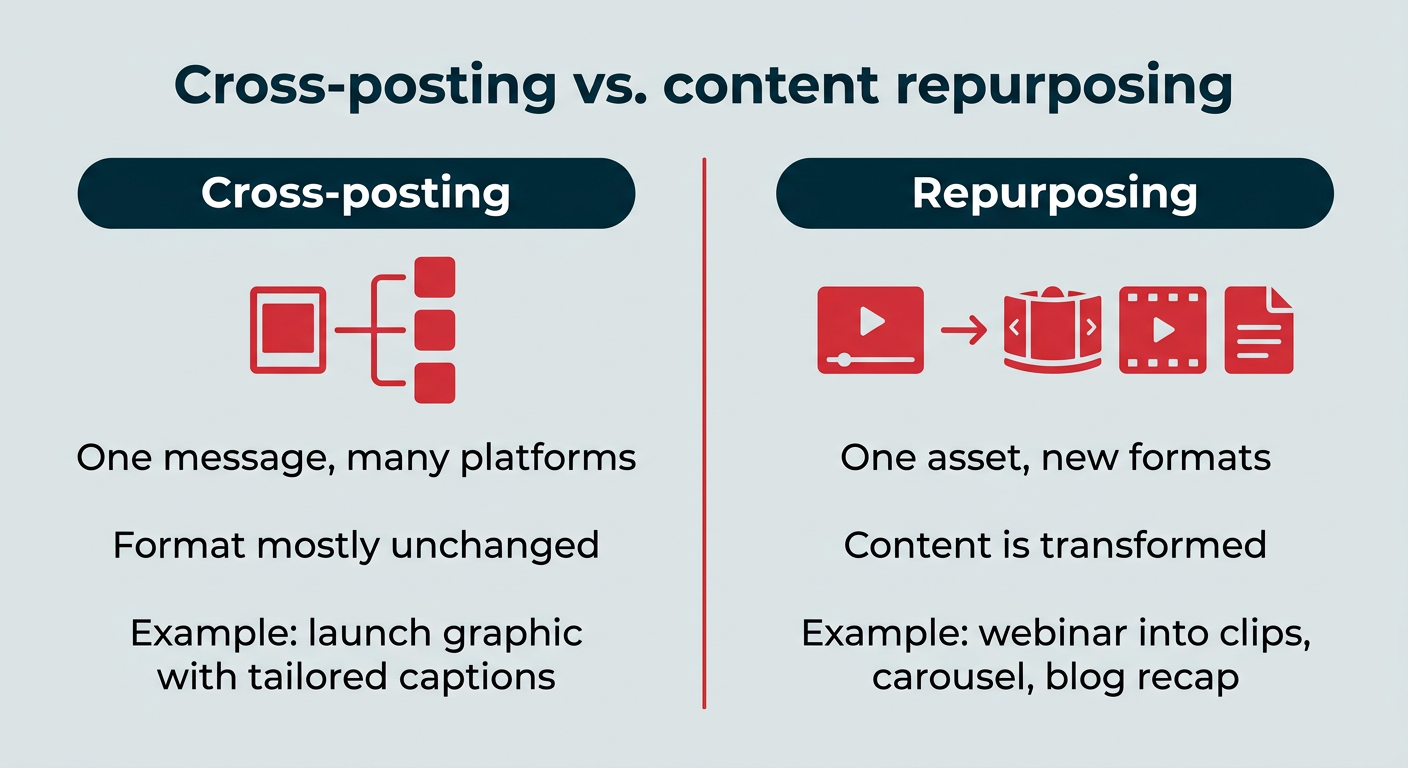
Industry experts emphasize a critical distinction between cross-posting and content repurposing. Cross-posting is a lateral movement of content; it involves taking a central asset—such as a product announcement or an educational infographic—and modifying its presentation for multiple platforms. For instance, a brand might share a launch video on Facebook, Instagram, and LinkedIn, but the accompanying caption, aspect ratio, and call-to-action (CTA) are adjusted to fit the specific audience of each channel.
Conversely, content repurposing represents a vertical transformation. This involves deconstructing a high-value asset, such as a long-form webinar or a white paper, into entirely new formats: a series of vertical video clips for TikTok, a carousel for Instagram, and a summary blog post for a website. An effective content calendar in 2026 utilizes both strategies: cross-posting for timely, high-reach messaging and repurposing for depth and audience engagement.
The Risks of Algorithmic Penalties
The primary danger of lazy cross-posting is the risk of being flagged as spam. Major social networks have integrated sophisticated AI models to detect duplicate content. For example, X’s platform manipulation and spam policy explicitly warns against posting identical or near-identical content across multiple accounts or to trending topics. Repeat violations can lead to shadow-banning, reduced algorithmic reach, or, in severe cases, permanent account suspension.
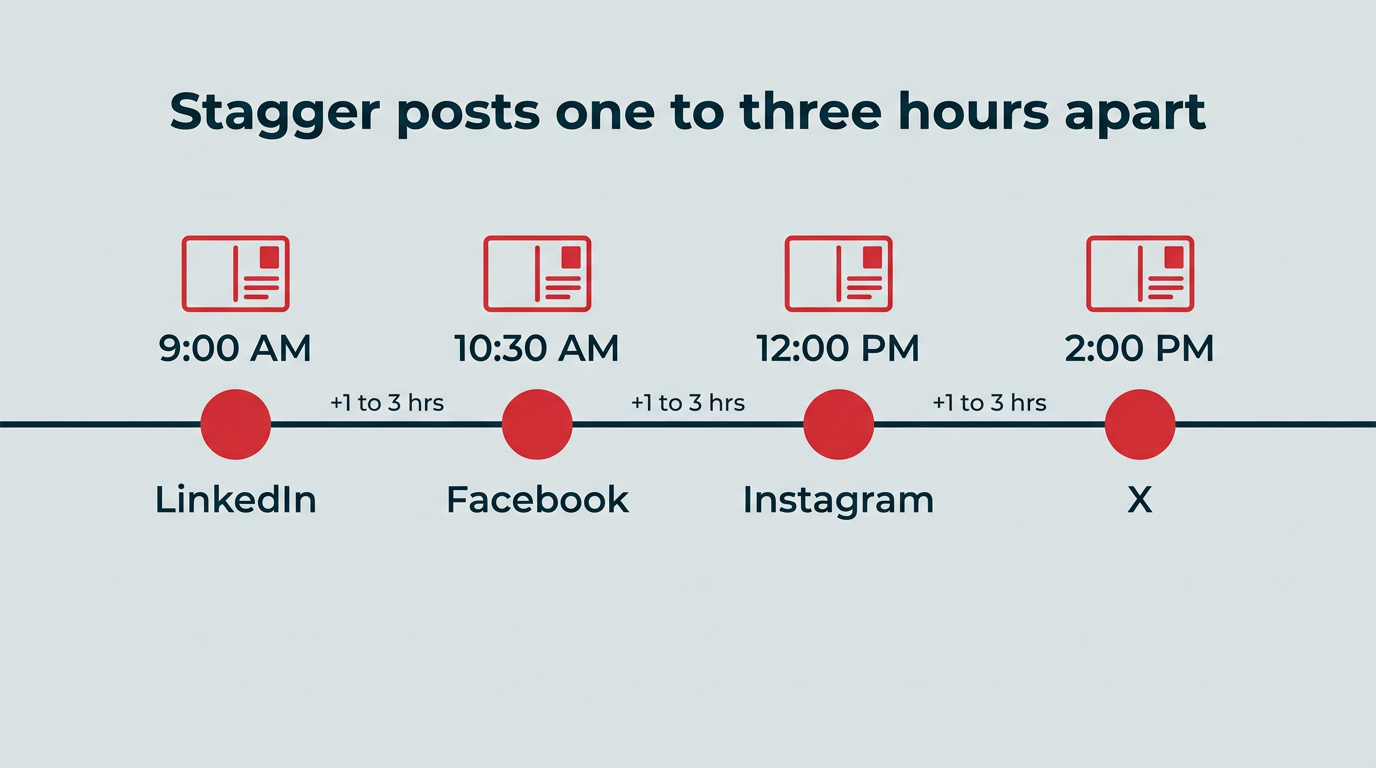
Furthermore, there is a reputational risk. Followers who engage with a brand across multiple channels may experience "content fatigue" if they see the same message repeated verbatim. This repetition signals a lack of investment in the platform’s community, which can diminish brand authority. To mitigate this, managers must implement a staggered posting schedule, ideally leaving a buffer of one to three hours between posts. This not only satisfies the algorithmic requirement for unique interaction windows but also respects the user journey across different apps.
Tactical Implementation: A Six-Step Framework
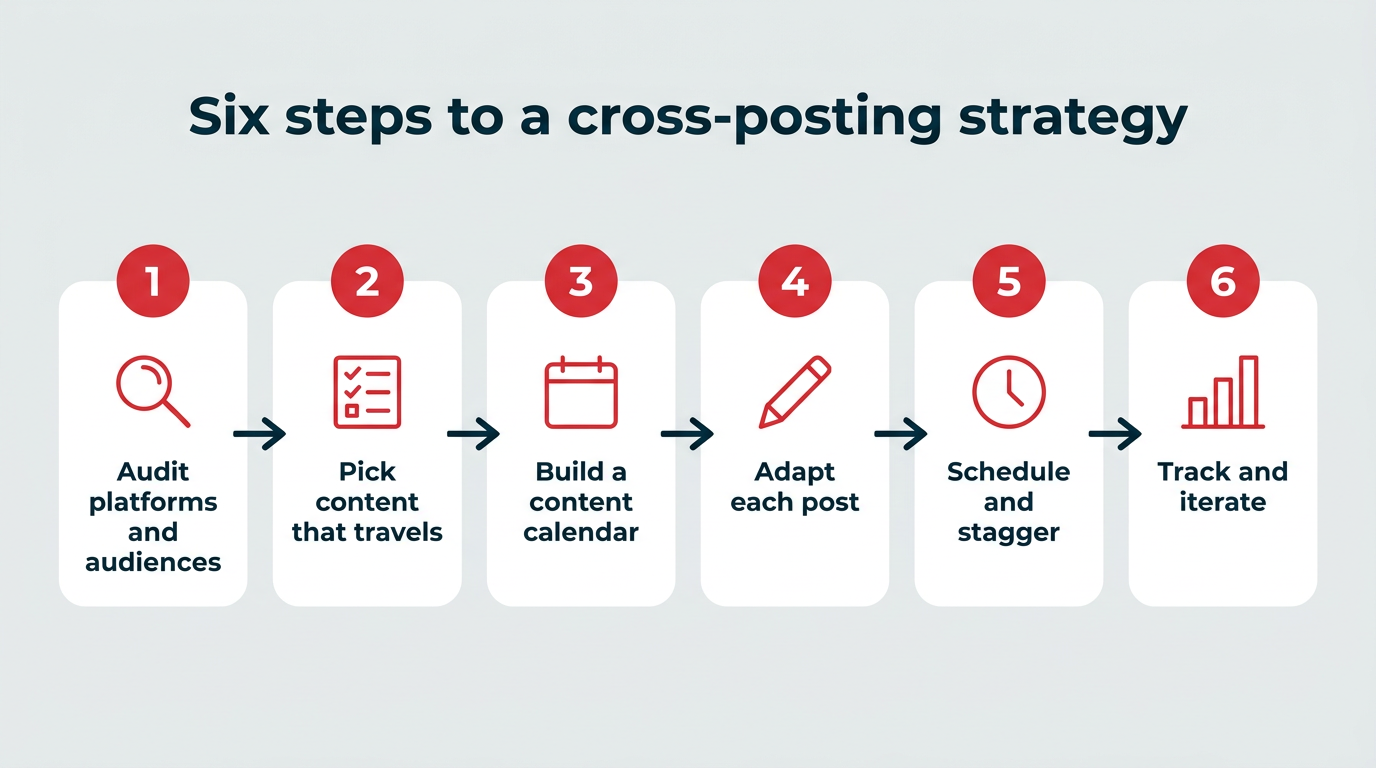
To build a sustainable cross-posting strategy, organizations should follow a structured, repeatable process:
- Conduct a Channel Audit: Map all active profiles and analyze audience overlap. A higher degree of overlap requires more distinct, varied content to keep the audience engaged.
- Determine Content Suitability: Not all content is meant to be shared universally. Evergreen educational materials and product announcements are prime candidates for cross-posting. Conversely, platform-specific trends, native audio-driven content (such as TikTok challenges), or community-specific responses should remain platform-exclusive.
- Establish a Cross-Posting Calendar: Use a master grid to align core assets with target platforms, ensuring that the scheduling logic is based on each platform’s peak engagement times rather than a one-size-fits-all approach.
- Tailor Copy and Captions: Rewrite captions to suit the character limits and tone of each network. A 280-character limit on X necessitates brevity, while LinkedIn allows for more nuanced, professional storytelling.
- Optimize Visual Assets: Avoid "secondhand" content. For example, uploading a video that still contains a TikTok watermark to Instagram Reels is a violation of best practices and will likely lead to reduced distribution. Always export clean, platform-specific files.
- Analyze and Iterate: Track performance metrics independently for each channel. If a specific campaign underperforms on one platform while thriving on another, the strategy for that channel should be adjusted or abandoned in future cycles.
The Role of Modern Management Tools
The complexity of these tasks necessitates the use of robust social media management software. Modern tools like the Hootsuite Social OS allow teams to draft and edit content for multiple platforms within a single dashboard. These tools utilize AI-assisted writing features to generate platform-specific caption variations, and they offer "perch" features that flag the optimal publish time for each account based on historical audience behavior.
By centralizing the workflow, teams can move from manual, error-prone posting to a data-driven strategy. For instance, if an Instagram post requires a square 1:1 image, the management software can automatically prompt the user to upload or crop the file to that specific dimension, ensuring that no visual is cut off or distorted.
Data-Driven Insights and Future Implications
Measurement remains the final, critical step in the cross-posting cycle. Metrics should not be aggregated; they must be viewed in the context of the platform. A "like" on Instagram does not carry the same weight as a "repost" on LinkedIn. By comparing performance data side-by-side, managers can gain insights into the "cross-posting sweet spot"—the balance where content reaches the maximum audience without overwhelming them.

Listening tools—such as those integrated into comprehensive social media suites—can also track audience sentiment. This is vital for identifying the tipping point at which a brand’s presence transitions from helpful to intrusive.
Summary of Platform Specifications
Understanding the technical requirements of each platform is the baseline for success. For example:

- Instagram: Prioritizes 1080 x 1350 vertical imagery. Hashtags should be kept to a focused, relevant set (3–5).
- Facebook: Remains the most versatile for long-form text and external link integration.
- LinkedIn: Demands a professional tone with a focus on industry-specific value.
- X: Requires real-time relevance and strictly limited character counts.
- TikTok: Mandates native vertical video (9:16) and discourages any external watermarks.
As the digital landscape continues to evolve, the strategy for cross-posting will likely become even more automated but, paradoxically, will require more human oversight to ensure authenticity. The brands that succeed in 2026 will be those that treat every platform as a unique community while leveraging the efficiency of centralized management to ensure their core message is delivered with precision, relevance, and impact. By focusing on adaptation over automation, organizations can effectively scale their presence without sacrificing the quality of their engagement.
Related posts: