How North Korean Hackers Infiltrated Binance via a Fake Job Interview to Steal $6.34 Billion in Digital Assets

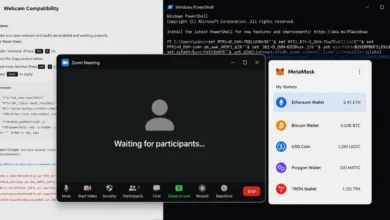
Cryptocurrency exchange Binance has revealed intricate new details regarding one of the largest cyber heists in digital asset history. According to an official incident report released by the company, state-sponsored hackers from North Korea utilized a sophisticated social engineering scheme centered around a fake job interview to compromise an employee’s workstation. This initial breach served as a crucial stepping stone, eventually allowing the threat actors to penetrate Binance’s core wallet infrastructure and make off with approximately $6.34 billion in digital assets.
The attack, which took place on October 29, has been officially attributed by the Federal Bureau of Investigation (FBI) to notorious North Korean state-sponsored threat actors. Security researchers track these groups under various designations, including TraderTraitor, Lazarus Group, Jade Sleet, and APT38. Known for targeting the decentralized finance (DeFi) sector and cryptocurrency exchanges to fund state initiatives, these groups have continuously evolved their tactics, transitioning from traditional phishing to hyper-personalized, multi-stage social engineering campaigns.
Anatomy of a Sophisticated Social Engineering Campaign
The multi-week operation began in September, targeting a Binance software engineer whose public professional profile highlighted extensive experience with the exchange’s internal systems. Recognizing the employee’s high-value profile, the attackers initiated contact through a legitimate job-hunting platform, operating under the guise of a Project Director representing a fictitious corporate entity.
To establish credibility and lower the victim’s guard, the fake recruiters orchestrated a multi-stage interview process. The initial interaction involved a live video call with a supposed human resources representative. During this call, the imposter shared personal social media accounts featuring photos and videos to fabricate a realistic personal history and professional rapport.
Following the initial screening, a second interview was scheduled via a popular social chat application. At this stage, the employee was instructed to download a coding assignment from an online code repository as part of the technical evaluation. Unbeknownst to the engineer, the repository harbored custom, zero-day malware specifically crafted to bypass conventional endpoint protection tools.
Once executed, the malicious code utilized advanced obfuscation techniques. It discreetly replaced a legitimate development tool component with a compromised version capable of executing remote commands and establishing a persistent backdoor connection to an attacker-controlled external server. Specifically, the script targeted the macOS Homebrew environment by replacing the authentic pyenv executable with a manipulated version named pyenv_, modifying symbolic links, and spawning a Z shell (zsh) process to maintain silent, ongoing access.
Lateral Movement and Internal Compromise

With a foothold established on the initial engineer’s workstation, the threat actors spent weeks mapping internal networks and gathering credentials. By October 20, the attackers leveraged the compromised machine—alongside an internal artificial intelligence tool accessible to the employee—to target two additional staff members directly involved in managing Binance’s wallet infrastructure.
Through these subsequent compromises, the hackers harvested high-level administrative credentials and container deployment tokens. This granted them unauthorized administrative visibility into critical backend services, setting the stage for the final phase of the operation.
On October 29, the attackers executed the heist. Using the stolen credentials, they deployed malicious scripts that successfully breached Binance’s wallet signing service. This authorized them to initiate massive, unauthorized cryptocurrency transfers across multiple disparate blockchains, rapidly draining billions of dollars in digital reserves.
Compounding the crisis, the hackers exploited Ethereum’s EIP-7702 authorization mechanism. This advanced protocol feature allowed the threat actors to sustain unauthorized transaction capabilities and continue siphon assets even after Binance detected the anomaly and temporarily suspended global platform withdrawals.
Mitigation, Asset Recovery, and Incident Response
In the wake of the breach, Binance mobilized an aggressive containment and remediation strategy. The exchange immediately revoked all compromised credentials, quarantined and replaced affected hardware, and thoroughly rebuilt the compromised wallet signing infrastructure from the ground up to eliminate persistent threats.
Financial recovery efforts yielded partial success in the days following the attack. As of October 31, Binance reported that 98% of the impacted token assets had been successfully replenished using corporate reserves to protect customer balances. Furthermore, collaborative tracking and intervention efforts involving international law enforcement, blockchain analytics firms, and partner exchanges resulted in the freezing or interception of approximately $2.85 billion in stolen assets by November 3.
Binance leadership has emphasized that investigations remain ongoing. Independent, third-party cybersecurity firms have been brought in to conduct an exhaustive forensic review of the incident, evaluate existing security controls, and recommend systemic hardening measures to prevent similar sophisticated vectors in the future.
The Rise of "Contagious Interview" and "Operation Dream Job"

The methodology employed in the Binance breach underscores a broader, highly concerning trend in cybersecurity: the weaponization of the recruitment process against technical professionals. Known widely within the threat intelligence community as "Contagious Interview" or "Operation Dream Job," these campaigns specifically target software engineers, developers, and blockchain experts working within the financial technology and cryptocurrency sectors.
Security firms have documented numerous instances of these tactics over recent years. In June 2025, cybersecurity researchers at Socket exposed a Contagious Interview campaign wherein threat actors impersonating recruiters distributed 35 malicious npm packages disguised as routine coding assignments. These packages were engineered to silently harvest browser credentials, session cookies, and cryptocurrency wallet data from infected developer machines.
Similarly, the Lazarus Group has repeatedly executed Operation Dream Job variants, embedding malicious payloads inside seemingly innocuous employment documents, resume parsers, and technical testing frameworks targeting decentralized finance (DeFi) entities.
While Binance has not officially tied the employee compromise to any single publicly tracked campaign name, the operational blueprint—featuring fake recruiters, multi-tier video interviews, social media impersonation, and weaponized repositories—bears all the hallmark signatures of North Korea’s advanced persistent threat (APT) ecosystem.
Broader Implications for Corporate Cybersecurity
The successful infiltration of a major cryptocurrency exchange through a single employee points to critical vulnerabilities in the modern hybrid workforce model. As remote work and digital recruitment pipelines become standard operating procedure, organizations face unique human-layer risks that traditional endpoint security solutions struggle to mitigate entirely.
Industry analysts note that traditional security awareness training often fails against hyper-targeted social engineering operations backed by state-sponsored intelligence apparatuses. When attackers invest weeks building realistic personas, conducting video interviews, and exploiting specialized developer workflows, even security-conscious professionals can be deceived.
Furthermore, the integration of internal artificial intelligence tools within enterprise networks introduces new vectors for lateral movement. As demonstrated in the Binance incident, attackers are increasingly adept at exploiting internal automation and AI platforms to identify high-value targets, escalate privileges, and accelerate data exfiltration before detection mechanisms trigger.
As state-sponsored actors continue to pivot toward cryptocurrency theft as a primary revenue stream for sanctioned regimes, exchanges and financial institutions face mounting pressure to overhaul zero-trust architectures. Implementing hardware-enforced authentication tokens, strict out-of-band verification for developer tools, and continuous behavioral monitoring for internal systems will be essential in countering increasingly ingenious social engineering threats.
Related posts: