Critical WordPress Security Vulnerability Leaves Sites Exposed During Patching Process

A significant security vulnerability, tracked as CVE-2026-119977, has created a complex paradox for millions of WordPress administrators: the very process intended to secure a website can, under specific circumstances, provide an opening for malicious actors to execute unauthorized code. Research conducted by Umut Bayram of Picus Security has revealed that the mechanism WordPress uses to apply core updates can inadvertently expose sensitive installation files to the public internet, potentially allowing attackers to take control of a server during the brief window while an update is being applied.
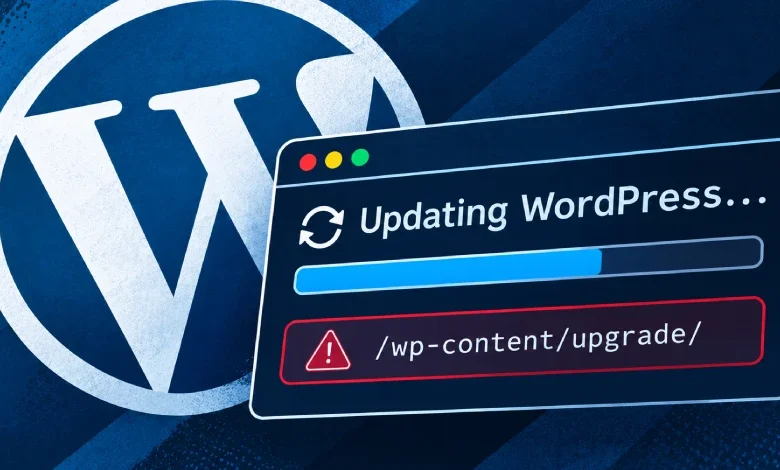
The vulnerability affects a wide range of WordPress versions, specifically spanning from version 4.7 through 7.1.3. The core issue lies in the way the WordPress updater handles "complete package" updates. When a site undergoes a major version update or is forced to use a full package due to checksum mismatches, the CMS unpacks a fresh copy of the WordPress software into a temporary directory located at wp-content/upgrade. Because this directory resides within the web-accessible file structure, an attacker who can successfully guess or discover the directory name—which, in many configurations, remains predictable—can access the WordPress installer before it is deleted by the system. By initiating this installer, an attacker can effectively seize control of the site, write malicious configuration files, or gain remote code execution (RCE) capabilities.
The Chronology of the Discovery and Exploitation
The timeline of this vulnerability reflects the fast-paced nature of modern web exploitation. Following the discovery of the flaw, the WordPress security team moved to address the issue, releasing version 7.1.4 and backported patches for older versions. However, the disclosure process highlighted a critical oversight: the patch itself relies on the existing, vulnerable code to perform the update.
According to technical analysis from security firm Wordfence, exploit attempts were detected merely nine minutes after the public release of the security advisory. This rapid response from threat actors suggests a high level of automated monitoring for WordPress security updates. The attackers specifically targeted the brief, few-second window when the server is mid-update, attempting to intercept the installation process. The U.S. Cybersecurity and Infrastructure Security Agency (CISA) recognized the gravity of this situation by adding the vulnerability to its Known Exploited Vulnerabilities (KEV) catalog, signaling that the threat is not merely theoretical but is actively being leveraged in the wild.
Technical Breakdown: Why the Patch Process Is Risky
The fundamental challenge is that the wp-content/upgrade folder is, by default, accessible to the web server. When the WordPress updater begins, it creates a temporary directory to store the new version files. On systems running versions of WordPress prior to the recent fix, the naming convention for this folder was often predictable, as it was derived from the downloaded file name.

Bayram’s research highlights that even when an administrator initiates an update to version 7.1.4, the "unpatching" happens in two stages. The initial phase of the update still utilizes the old, insecure code to unpack the new, secure files. Because the old code does not implement randomized directory naming, the window of vulnerability persists until the new code takes over. On sites running WordPress 5.9 and later, the old code continues to use the filename as the basis for the temporary directory name, providing a window for attackers to brute-force or guess the directory path.
The danger is compounded by the fact that the WordPress installer can be used to overwrite wp-config.php, the critical file that stores database credentials and security keys. If an attacker reaches the installer during this transition, they can point the site to a malicious database, effectively "hijacking" the installation before the legitimate update process completes.
Broader Impact on the WordPress Ecosystem
The ubiquity of WordPress—which powers over 40% of the world’s websites—makes this discovery particularly concerning. The vulnerability spans nearly two decades of software development, with the underlying flaw reportedly dating back to WordPress 2.7, released in 2008. While sites running versions older than 4.6 are no longer receiving security support, they remain technically vulnerable to this class of attack, highlighting the dangers of maintaining "end-of-life" software.
For enterprise-level organizations and high-traffic blogs, the implications are severe. A successful compromise during the update process grants the attacker the permissions of the web server user. This typically allows for file system access, data exfiltration, and the establishment of persistent backdoors that can remain active even after the update is finished. The CVSS score of 8.1 out of 10, assigned by Wordfence, underscores that while the window of opportunity is small (often only a few seconds), the potential impact is catastrophic.
Recommended Mitigation Strategies
Given the limitations of the standard update process, security experts are urging administrators to adopt more robust methods for maintaining their installations. The primary recommendation from Picus Security is to modify server-level configurations to block external access to the wp-content/upgrade directory. Because the WordPress core updates process files directly from the disk, blocking web access to this specific folder does not interfere with the update’s functionality, effectively neutralizing the ability for an attacker to reach the installer.
For those requiring a higher standard of security, manual updates remain the gold standard. By performing an update outside of the web root—the directory exposed to the internet—administrators can ensure that no temporary installer files are ever accessible to external requests. This process involves:

- Backing up the entire site, including the database and all media files.
- Unpacking the new WordPress version in a directory that is not served by the web server (e.g., a local staging environment or a non-public folder).
- Copying the new core files into the existing installation, explicitly avoiding the
wp-config.phpfile and thewp-contentdirectory to preserve existing settings and media. - Running the WordPress database update script manually.
Notably, the commonly used WP-CLI tool for updating core files does not circumvent this risk, as it invokes the same underlying updater code that creates the vulnerable directory structure. Consequently, administrators relying on automated scripts should prioritize the server-level blocking of the wp-content/upgrade path as their first line of defense.
Future Implications for CMS Security
The CVE-2026-119977 incident serves as a stark reminder of the "bootstrapping" problem in software security: the challenge of updating a system that is currently running. This vulnerability demonstrates that security patches must be treated with the same level of scrutiny as the original software. When the patching mechanism itself introduces a side channel or a temporary state of vulnerability, the entire security posture of the platform is undermined.
Industry observers suggest that this event will likely lead to changes in how WordPress handles the update lifecycle. There is significant pressure on the development community to move toward a more ephemeral or isolated update process, where installation packages are never placed in public-facing directories, regardless of whether they are encrypted or randomized.
As the threat landscape continues to evolve, the burden remains on both developers and site administrators. Developers must ensure that security updates are applied through secure, non-predictable channels, while administrators must remain vigilant about server hardening. The speed at which threat actors identified and began probing for this vulnerability serves as a final warning: in the modern digital age, the interval between a patch’s release and its exploitation is shrinking, making proactive, defense-in-depth strategies more critical than ever.
Security teams are encouraged to monitor server access logs for anomalous requests targeting the /wp-content/upgrade/ path, particularly during scheduled maintenance windows. If such requests are detected, it may indicate that an automated bot is attempting to intercept the update process. Given the persistence of these threats, the industry shift toward automated, managed, and isolated update environments appears not just as a convenience, but as a fundamental requirement for the future of web security.