The Total Economic Impact and Strategic Advantage of Microsoft Azure Databricks in the Modern Enterprise Data Landscape

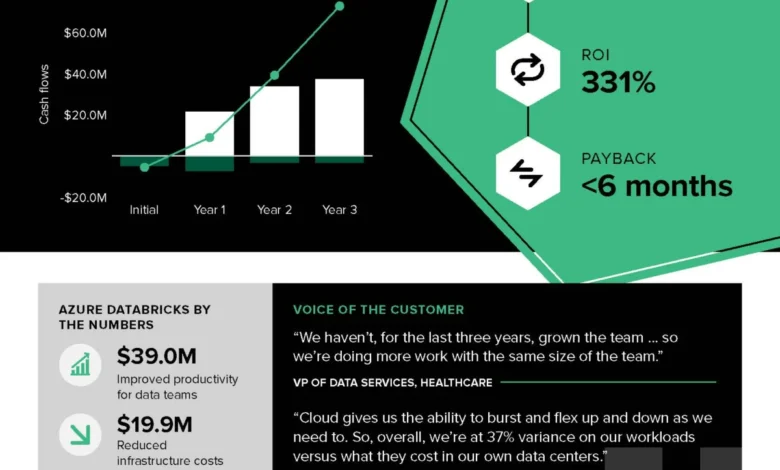
The strategic alliance between Microsoft and Databricks has evolved from a standard technical partnership into a foundational pillar of the modern cloud data ecosystem. As enterprises increasingly transition from traditional data warehousing to more flexible "Lakehouse" architectures, the financial and operational implications of these platform choices have come under intense scrutiny. A recent comprehensive study conducted by Forrester Consulting, commissioned by Microsoft, has quantified these implications, revealing that the first-party integration of Azure Databricks delivers a 331% return on investment (ROI) over a three-year period. This valuation underscores a broader trend in the technology sector: the shift away from "bolted-on" third-party tools toward native, co-engineered cloud services that prioritize seamless interoperability and unified governance.
The Forrester Total Economic Impact (TEI) study, published in mid-2026, utilized a composite organization model to simulate the real-world effects of adopting Azure Databricks. This model represented a $6 billion global enterprise operating within a regulated industry, managing a massive data estate of approximately 10 petabytes. For such organizations, the primary challenge prior to adoption was a fragmented data environment characterized by high maintenance costs, scaling unreliability, and significant governance hurdles. The study found that by unifying their data operations on Azure Databricks, the composite organization realized a net present value (NPV) of $58.1 million, with the initial investment being fully recovered in less than six months.
The Evolution of a First-Party Partnership
To understand the current value proposition of Azure Databricks, it is essential to trace the chronology of the partnership. The collaboration began in earnest around 2017, when Microsoft and Databricks recognized a growing demand for an Apache Spark-based service that could leverage the security and scale of the Azure cloud. Unlike other cloud providers that offer Databricks as a marketplace application, Microsoft chose to co-engineer the service as a native Azure resource. This distinction is critical; it means that Azure Databricks is integrated directly into the Azure portal, utilizes Azure Active Directory (now Microsoft Entra ID) for identity management, and features a unified billing system.
Over the last several years, this integration has deepened. The roadmap for Azure Databricks is not developed in isolation but is aligned with the broader Microsoft Data and AI stack, including Azure Synapse Analytics, Power BI, and Microsoft Fabric. This alignment ensures that as Microsoft evolves its artificial intelligence capabilities, such as the various Copilot iterations, Azure Databricks remains the primary engine for processing the underlying data.
Quantifying the Economic Benefits
The $75.6 million in total benefits identified by Forrester can be categorized into four primary value drivers. While the original source material highlights these areas, a deeper analysis reveals the specific mechanisms of these gains:
- Infrastructure and Legacy System Consolidation: By migrating to a unified Lakehouse architecture, organizations can retire expensive legacy data warehouses and siloed on-premises clusters. The study indicated significant savings in licensing fees and hardware maintenance.
- Enhanced Data Team Productivity: The native integration with Azure tools reduces the time data engineers and scientists spend on "plumbing"—the tedious work of configuring connections, managing permissions, and moving data between environments. This efficiency allows teams to focus on high-value model development and insight generation.
- Accelerated Time-to-Market for AI Initiatives: With the rise of Generative AI, the speed at which a company can move from a data set to a deployed model is a competitive differentiator. Azure Databricks streamlines this pipeline, allowing for faster deployment of machine learning models that drive revenue or optimize costs.
- Risk Mitigation and Governance: In regulated industries, the cost of a data breach or a compliance failure is astronomical. The implementation of the Unity Catalog within Azure Databricks provides a unified governance layer that tracks data lineage and enforces access controls across the entire estate, significantly reducing the organization’s risk profile.
Technical Superiority and Independent Benchmarking
Beyond the economic modeling, technical performance remains a cornerstone of the Azure Databricks value proposition. To validate the platform’s speed and efficiency, Principled Technologies, an independent testing firm, conducted a series of industry-standard benchmarks. Using a 10-terabyte dataset and a TPC-DS-like decision-support workload, the firm compared Azure Databricks against Databricks on Amazon Web Services (AWS).
The results showed that Azure Databricks completed a single query stream up to 21.1% faster than the AWS counterpart when autoscaling was disabled for a controlled comparison. In multi-user scenarios involving four concurrent query streams, Azure Databricks outperformed the competition by more than nine minutes. These performance gains are not merely academic; in a cloud consumption model, faster processing translates directly into lower compute costs and more responsive business intelligence tools.
The Role of Generative AI and Microsoft Copilot
A significant factor in the platform’s recent growth is its integration with Microsoft’s Generative AI ecosystem. The introduction of Azure Databricks Genie and its integration with Microsoft Copilot Cowork represents a paradigm shift in how non-technical users interact with data. Genie allows users to query complex data lakes using natural language. For example, a marketing executive can ask, "Which region had the highest customer churn in the last quarter?" and receive an accurate, data-backed answer without needing to write a single line of SQL.
This capability is grounded in the Genie Ontology, which provides the necessary context to ensure that the AI understands the specific business logic of the organization. Furthermore, because these queries are governed by the Unity Catalog, the AI respects all existing security protocols. A user will only receive answers based on the data they are explicitly permitted to see. This integration extends into Microsoft Teams and Microsoft 365 Copilot, effectively embedding enterprise data intelligence directly into the daily workflow of every employee.
Strategic Implications for Decision-Makers
For Chief Information Officers (CIOs) and Chief Data Officers (CDOs), the choice of a data platform is a long-term strategic commitment. The findings of the Forrester study suggest that the "first-party advantage" of Azure Databricks provides a level of stability and predictability that is difficult to replicate with multi-cloud or third-party configurations.
The unified support path is a frequently overlooked benefit. In a traditional setup, a performance issue might lead to a "finger-pointing" exercise between the cloud provider and the software vendor. With Azure Databricks, Microsoft serves as the single point of contact for support, significantly reducing the mean time to resolution (MTTR) for technical issues. This streamlined support model, combined with a single bill for all services, reduces administrative overhead and simplifies financial planning.
Analysis: The Competitive Landscape
The success of Azure Databricks has forced competitors to rethink their strategies. Snowflake, for instance, has aggressively expanded its "Unistore" and AI capabilities to compete with the Lakehouse model. Similarly, Google Cloud has deepened its integration with BigQuery and Looker. However, the Microsoft-Databricks partnership remains unique due to its co-engineering depth.
The move toward "data democratization"—where data is accessible to all parts of a business rather than just a specialized IT department—is the ultimate goal of these integrations. By lowering the barrier to entry through natural language interfaces and ensuring that performance remains high as data volumes grow, Azure Databricks is positioning itself as the central nervous system of the modern enterprise.
Conclusion and Future Outlook
The 331% ROI identified by Forrester is a testament to the maturity of the Azure Databricks platform. As we look toward the late 2020s, the focus will likely shift even further toward autonomous data management and advanced AI agents. The foundation laid by the first-party integration ensures that as these new technologies emerge, Azure Databricks users will be able to adopt them with minimal friction.
For organizations currently navigating the complexities of data fragmentation and the high costs of legacy systems, the evidence points toward a clear path. The combination of measurable financial returns, superior technical performance, and deep integration with the world’s most widely used productivity tools makes Azure Databricks a compelling choice for the future of enterprise intelligence. The value is no longer a theoretical claim; it is a measured reality for the modern, data-driven organization.