The Strategic Power of Employee Advocacy Programs in Modern Corporate Communication


In an era where digital saturation has rendered traditional corporate advertising increasingly easy for consumers to tune out, the most potent marketing asset a company possesses is often already on the payroll. Employee advocacy programs have transitioned from experimental social media side projects to essential pillars of modern enterprise strategy. By formalizing the process through which staff members share company-sanctioned content on their personal social media channels, organizations are effectively humanizing their brand voice and tapping into networks that corporate accounts simply cannot reach.

At its core, an employee advocacy program is a structured, intentional framework designed to empower team members to act as brand ambassadors. While informal advocacy—where employees share news about their workplace spontaneously—is a byproduct of positive company culture, a structured program provides the infrastructure, guidelines, and content necessary to scale that influence. Data from the 2026 Edelman Trust Barometer highlights the urgency of this approach, noting that 88% of consumers view brand trust as a critical purchase criterion, placing it on par with product quality and value. When individuals, rather than faceless corporate entities, share brand narratives, the perceived authenticity of that message increases significantly.
The Evolution and Chronology of Social Advocacy

The shift toward employee-led marketing began in earnest as social media algorithms started favoring personal profiles over business pages. Industry analysis from 2024 and 2025 indicated that personal profiles consistently achieve engagement rates up to 63% higher than those of corporate handles. Recognizing this, forward-thinking organizations began moving away from relying solely on paid media spend.
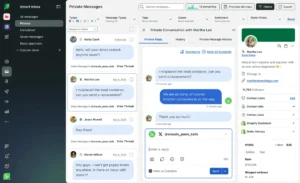
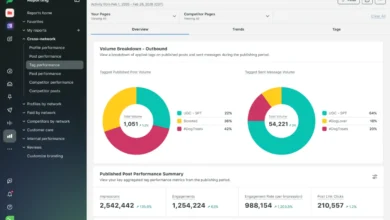
By 2026, the adoption of specialized platforms—such as Parliament, integrated within Hootsuite Social OS—became the standard for mid-to-large enterprises. These platforms allowed for a systematic workflow: marketing departments curate a library of approved assets, employees select and share content with a few taps, and administrators track attribution through UTM parameters. This evolution has turned advocacy into a measurable performance channel rather than a nebulous branding exercise.
Supporting Data and Business Outcomes
The business case for these programs is substantiated by tangible metrics across various sectors. For instance, Major Tom, a marketing agency, successfully utilized advocacy initiatives to generate over $100,000 in sales pipeline value directly attributed to employee shares. Similarly, DaVita, a leader in the healthcare space, reported a 136% increase in LinkedIn job applicants after empowering its staff to share authentic, behind-the-scenes content about their work environment.
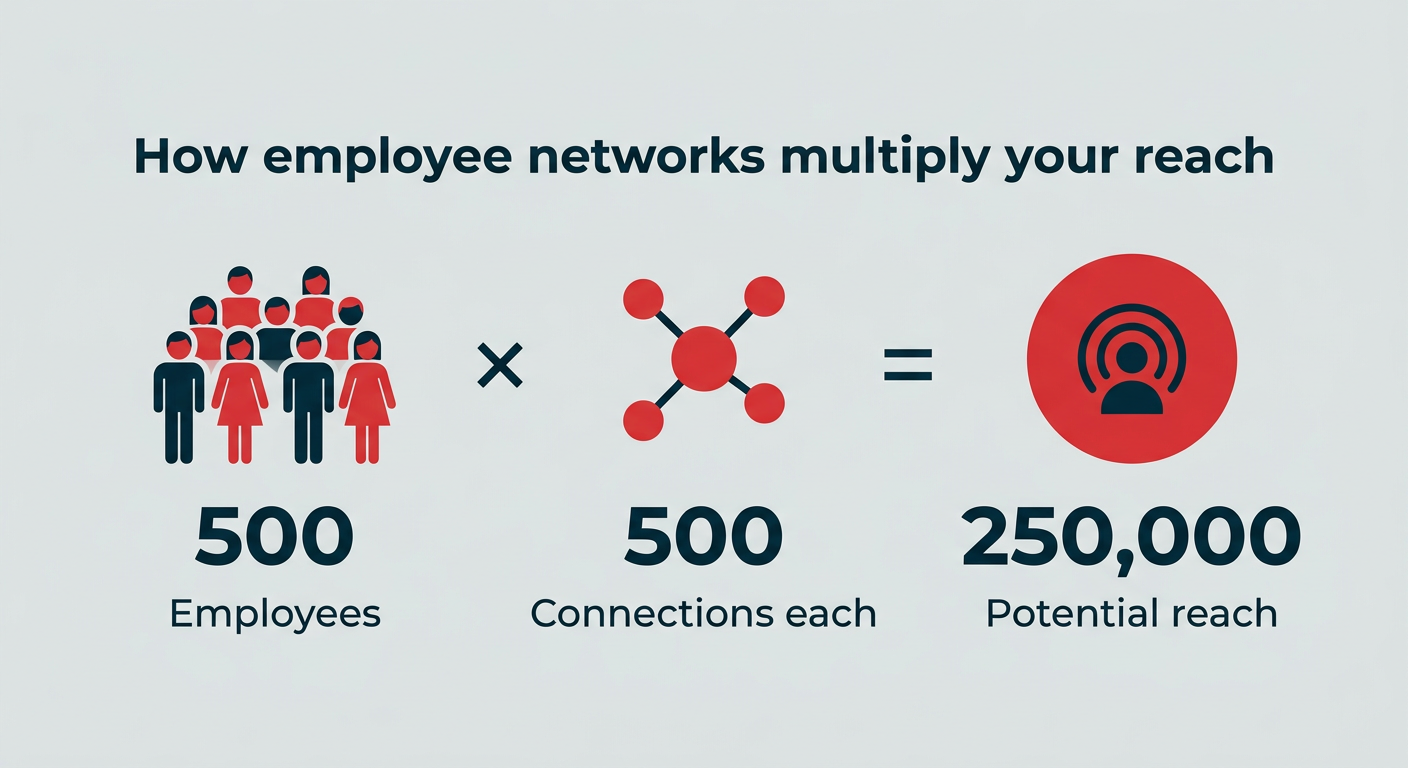
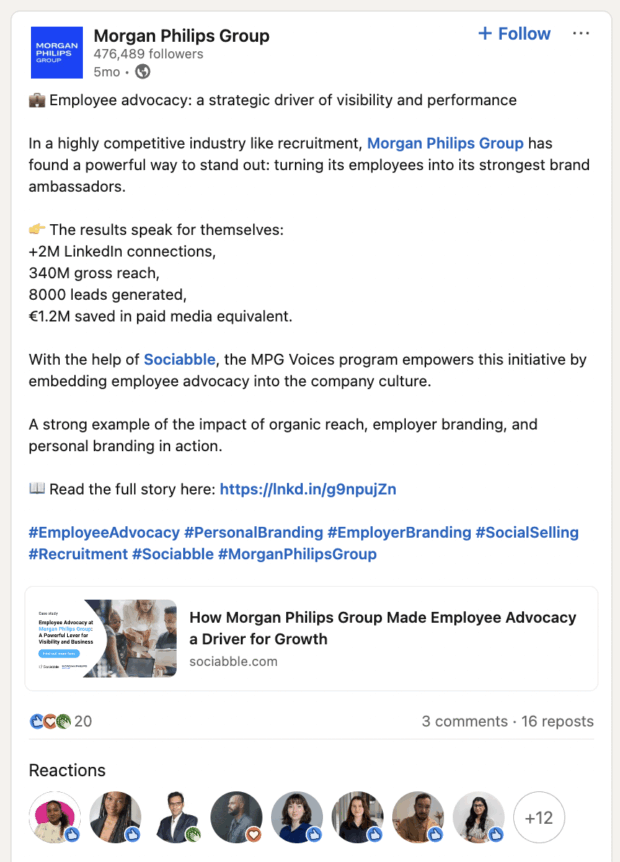
These results are not anomalies. Research from Hinge Marketing suggests that approximately 64% of participants in formal programs credit advocacy for the development of new business, while 45% attribute specific revenue streams to these efforts. When scaled, the impact is immense: a company with 500 employees, each possessing an average of 500 connections, gains access to a potential reach of 250,000 individuals. This reach represents an "earned media value" that would otherwise require significant capital investment in paid social advertising.
Implementation Framework: A Six-Step Methodology
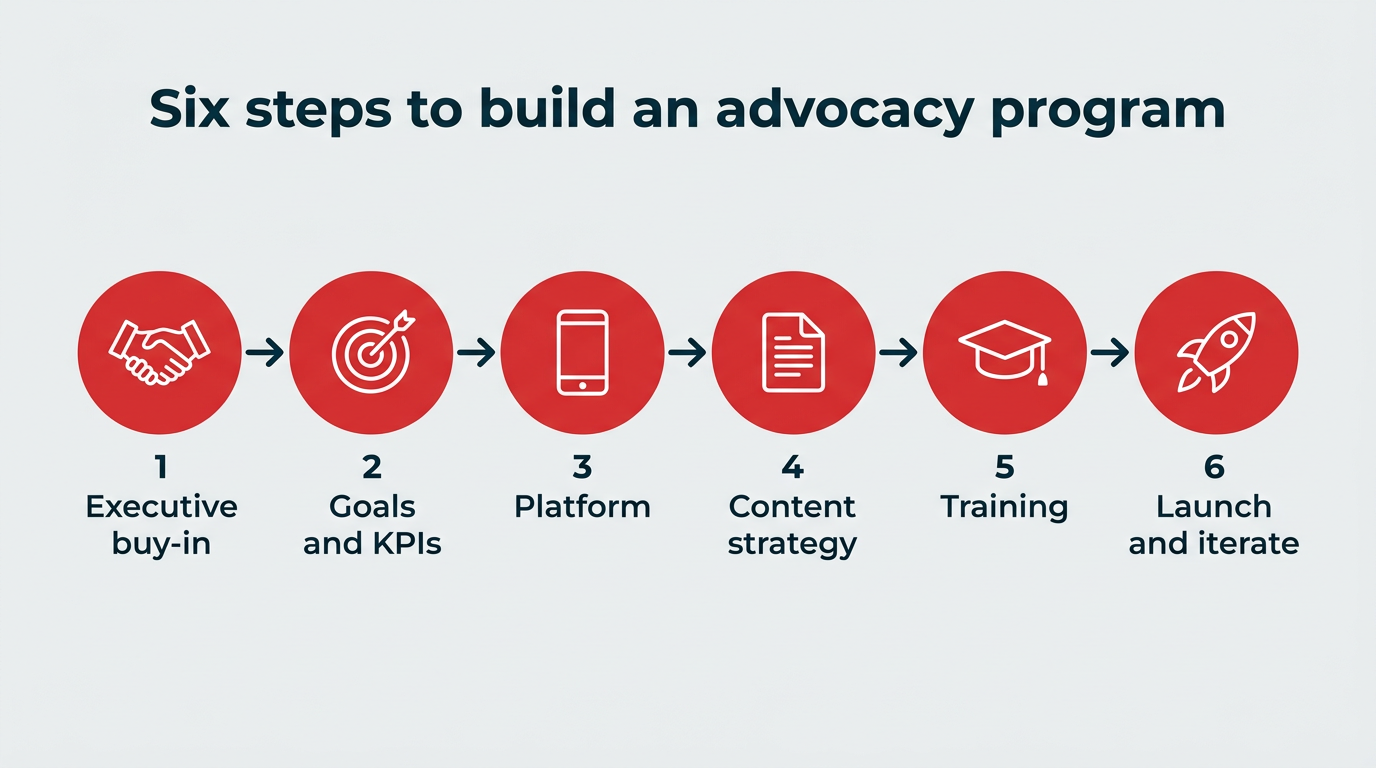
Transitioning from an ad-hoc sharing culture to a strategic program requires a methodical approach to ensure long-term sustainability. The following framework represents the industry-standard path for successful deployment:
- Executive Buy-in: Securing leadership support is the primary hurdle. By framing the program as a business investment—utilizing pilot data to show ROI—program managers can ensure ongoing budget and resource allocation.
- Goal Definition: Programs often fail when they attempt to address too many KPIs simultaneously. Success is more likely when organizations focus on a primary objective, such as recruitment, lead generation, or brand awareness.
- Platform Integration: Utilizing dedicated software ensures compliance, provides analytics, and simplifies the user experience for employees, which is critical for maintaining adoption rates.
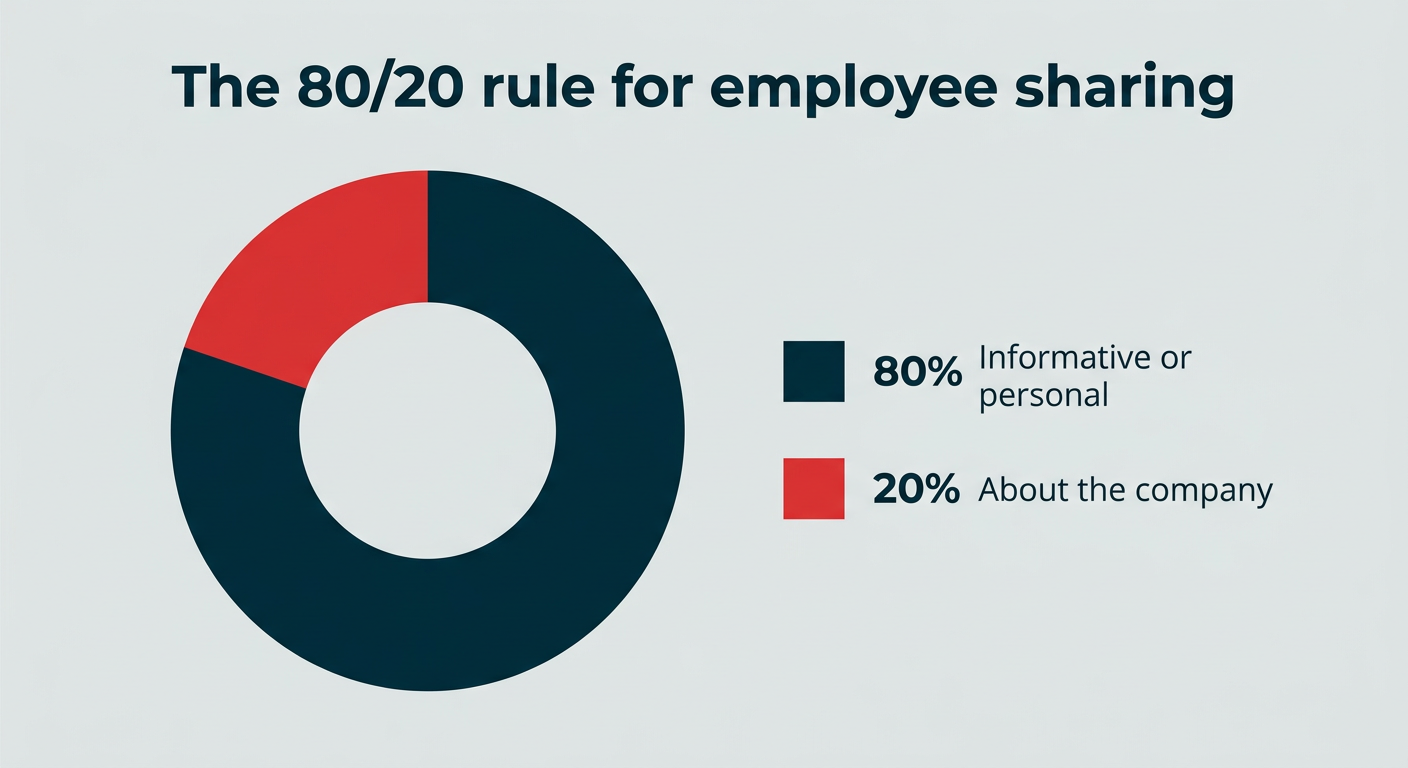
- Content Strategy: The "80/20 Rule" serves as a benchmark for many global tech firms. This principle suggests that 80% of shared content should be industry-relevant or personally interesting to the employee, while only 20% should be directly promotional.
- Training and Onboarding: Risk mitigation is a key component of training. Employees must be educated on brand voice, disclosure requirements, and profile optimization to ensure they feel confident and protected while sharing.
- Iteration and Gamification: Maintaining momentum requires a cadence of fresh content and internal recognition. Leaderboards and incentives are frequently used to turn participation into a constructive, engaging activity.
Official Perspectives and Industry Responses

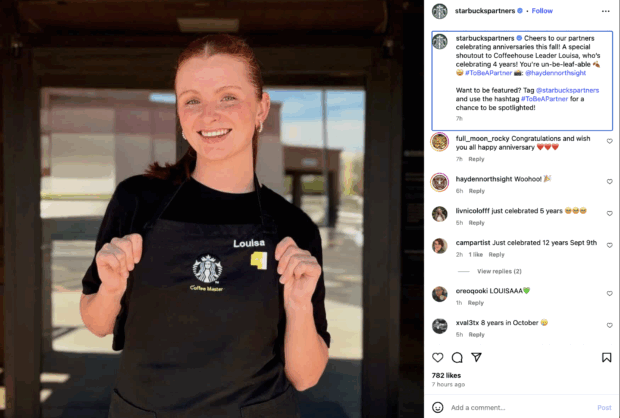
Marketing professionals and brand managers who have spearheaded these initiatives emphasize that the "people aspect" is the ultimate differentiator. Victoria Samways, Marketing & Brand Manager at Major Tom, notes that employees are naturally more inclined to support a colleague’s achievement or a team milestone than a generic corporate announcement. This human-centric approach creates a feedback loop: when employees see their peers being celebrated, they are more likely to participate, thereby deepening the internal company culture.
Furthermore, industry leaders like Dell Technologies have demonstrated that large-scale advocacy does not necessitate a loss of control. By implementing rigorous "Social Media and Communities University" programs, they ensure that employees are well-versed in compliance while still retaining the freedom to share authentic perspectives. This balance between corporate governance and individual expression is the hallmark of the most successful programs observed in 2026.
Broader Implications for Corporate Strategy
The rise of employee advocacy signifies a broader shift in the digital landscape: the decentralization of brand authority. Corporations are increasingly recognizing that the "voice of the brand" is no longer confined to the communications department. Instead, it is distributed across the entire workforce.
This shift has profound implications for recruitment, sales, and public relations. In a competitive talent market, authentic employee testimonials are more persuasive than polished career site copy. In sales, social selling enabled by employees creates a "warm" pipeline, as prospects are more likely to engage with content coming from a trusted peer in their network.
Moreover, the data suggests that these programs have a positive impact on employee retention. When staff members are encouraged to build their own professional brands alongside the company’s, they feel more invested in their professional development. The Hinge Marketing study found that 86% of advocates reported a positive impact on their personal career trajectory due to their involvement in social advocacy.
Conclusion: The Future of Brand Communication
As we look toward the remainder of the decade, the reliance on employee advocacy is expected to grow. The combination of declining organic reach for brand pages and the increasing sophistication of tracking tools means that advocacy is no longer a "nice-to-have" but a strategic necessity. Companies that fail to leverage the networks of their employees risk losing ground to competitors who have successfully turned their workforce into their most credible and cost-effective marketing channel.

Ultimately, the success of these programs rests on a foundation of trust. Organizations that provide their teams with the tools, training, and freedom to act as genuine advocates are finding that the return on investment extends far beyond simple metrics like reach or engagement. They are building a more resilient, transparent, and connected organizational identity that resonates in a digital world that values human connection above all else.