OpenAI Faces Executive Exodus as Ambitious Moonshots are Curtailed Amid Strategic Pivot to Enterprise AI and a Forthcoming "Superapp"

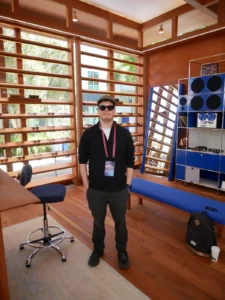
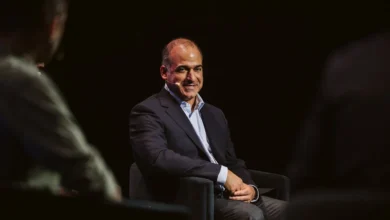
OpenAI, the vanguard of artificial intelligence research and development, is experiencing a significant leadership realignment with the departure of two pivotal figures behind its most ambitious and high-profile "moonshot" initiatives. Kevin Weil, who spearheaded the company’s dedicated science research initiative, OpenAI for Science, and Bill Peebles, the visionary researcher credited with leading the development of the groundbreaking AI video generation tool, Sora, both announced their exits on Friday. These high-profile departures coincide with OpenAI’s pronounced strategic consolidation around enterprise artificial intelligence solutions and its widely anticipated "superapp," signaling a definitive shift away from speculative, resource-intensive exploratory projects towards more commercially viable and integrated offerings.
The recent executive departures underscore a broader strategic reorientation within OpenAI, which has reportedly been scaling back what internal documents referred to as "side quests." These ventures included customer-facing, high-cost bets such as the aforementioned Sora and OpenAI for Science. Sora, which garnered immense attention for its unprecedented ability to generate realistic and complex video sequences from text prompts, was reportedly incurring an estimated $1 million per day in compute costs, a staggering figure that ultimately proved unsustainable for a project not yet commercialized. Consequently, Sora was reportedly shut down last month, a move that sent ripples through the AI community, highlighting the immense financial burden of cutting-edge generative AI research.
OpenAI for Science, the internal research group led by Weil, was responsible for developing initiatives like Prism, an AI-powered platform designed to significantly accelerate scientific discovery across various disciplines. According to Weil’s announcement on social media, the team’s functions are now being absorbed into "other research teams" within the organization, effectively dissolving the standalone science unit. This integration suggests a strategic move to embed AI capabilities into existing research streams rather than maintaining a dedicated, independent exploratory division, potentially to streamline efforts and align them more closely with core product development.
A Look Back at Ambitious Ventures and Their Challenges
Kevin Weil’s tenure at OpenAI, spanning two years, saw him transition from Chief Product Officer to leading the OpenAI for Science initiative. In his farewell post, Weil reflected on the "mind-expanding" journey, emphasizing his conviction that "Accelerating science will be one of the most stunningly positive outcomes of our push to AGI." His team’s journey, however, was not without its public challenges. Notably, the OpenAI for Science team faced scrutiny shortly after its formal announcement in October 2025. Weil had publicly claimed in a now-deleted tweet that GPT-5 had "solved 10 previously unsolved Erdős" mathematical problems. This assertion quickly unraveled when the mathematician overseeing the authoritative erdosproblems.com website publicly refuted the claim, highlighting the precarious balance between ambitious claims and verifiable scientific rigor in the rapidly evolving AI landscape. Despite this setback, Weil’s team continued to push boundaries, releasing GPT-Rosalind just a day before his departure, a new model specifically designed to accelerate life sciences research and drug discovery. The timing of this release, immediately preceding the announcement of the team’s absorption and Weil’s exit, adds a poignant note to the narrative of ambitious research yielding significant, albeit potentially uncommercialized, breakthroughs.
Bill Peebles, in his social media announcement, credited Sora with sparking a "huge amount of investment in video across the industry," underscoring the profound impact the tool had on the competitive landscape of generative AI. His departure statement also articulated a philosophical stance on the nature of foundational research, arguing that the kind of exploratory work that led to Sora necessitates "space away from the company’s mainline roadmap." Peebles famously penned, "Cultivating entropy is the only way for a research lab to thrive long-term," a statement that encapsulates the tension between structured product development and the free-form exploration essential for truly novel scientific breakthroughs. This philosophical divergence between a focus on core products and the pursuit of open-ended research appears to be a central theme in the current strategic shifts at OpenAI.
Further compounding the executive reshuffle, OpenAI is also reportedly losing Srinivas Narayanan, its chief technology officer of enterprise applications. Wired reported Narayanan’s internal announcement of his departure, citing a desire to spend more time with family. While seemingly a personal decision, his exit from a crucial enterprise-focused role further highlights the dynamic and, at times, turbulent environment within OpenAI as it navigates its next phase of growth and commercialization.
OpenAI’s Strategic Evolution: From Non-Profit Research to Commercial Powerhouse
To fully comprehend the significance of these departures and the accompanying strategic shifts, it is essential to contextualize OpenAI’s complex evolution. Founded in 2015 as a non-profit research organization with the noble mission of ensuring artificial general intelligence (AGI) benefits all of humanity, OpenAI transitioned in 2019 to a "capped-profit" model to attract the enormous capital required for large-scale AI research. This structural change, coupled with a multi-billion-dollar investment from Microsoft, irrevocably altered its trajectory, pushing it further into the commercial arena.
The commercial imperative intensified dramatically following the November 2022 public release of ChatGPT, which rapidly became the fastest-growing consumer application in history. The unprecedented success of ChatGPT transformed OpenAI from a respected research lab into a global technology sensation, placing immense pressure on the organization to monetize its innovations, scale its operations, and fend off a burgeoning field of competitors. This pivot towards commercialization was not without internal friction, famously culminating in the dramatic November 2023 leadership crisis where CEO Sam Altman was briefly ousted by the board before being reinstated, largely due to pressure from investors and employees. The crisis itself was widely interpreted as a clash between the company’s foundational safety-first, non-profit ethos and the aggressive, rapid-deployment commercial ambitions of its leadership.
Following the tumultuous events of late 2023, OpenAI embarked on a clearer path towards commercial viability. The company’s valuation has soared, with recent reports placing it well over $80 billion. This meteoric rise, however, necessitates a disciplined approach to resource allocation. Projects like Sora and OpenAI for Science, while undeniably pushing the boundaries of AI capabilities, represented significant drains on capital and compute resources without a clear, immediate path to revenue generation. In an increasingly competitive landscape, where giants like Google, Meta, and Anthropic are pouring billions into AI development, OpenAI’s strategic consolidation becomes a matter of sustained competitiveness and financial prudence.
The Calculus of Compute Costs and the Enterprise Imperative
The estimated $1 million per day compute cost for Sora serves as a stark reminder of the astronomical expenses associated with training and running cutting-edge generative AI models. These costs are primarily driven by the need for vast quantities of specialized hardware, particularly Graphics Processing Units (GPUs), which are in high demand and short supply. As models grow larger and more sophisticated, their computational requirements scale exponentially. While the initial research and development phases of projects like Sora are essential for innovation, sustaining them indefinitely without a revenue model becomes financially untenable for a company under increasing pressure to deliver shareholder value.
OpenAI’s decision to pivot aggressively towards enterprise AI is a logical response to these economic realities. The enterprise market offers stable, recurring revenue streams through custom AI solutions, API access for developers, and integrations into existing business workflows. Companies are increasingly seeking AI tools to automate tasks, enhance customer service, analyze data, and accelerate product development. OpenAI’s flagship products, including advanced versions of GPT and DALL-E, are highly adaptable to these enterprise needs. The "superapp" vision, as hinted by OpenAI, suggests a comprehensive platform that integrates various AI capabilities – from natural language processing to code generation and potentially, more streamlined video or scientific tools – into a single, user-friendly interface for businesses and power users. This approach maximizes the utility of their foundational models and provides a clearer path to profitability than speculative, high-cost research endeavors.
Implications for the AI Landscape and the Future of Research
The departures of Weil and Peebles, coupled with the strategic pivot, carry significant implications for both OpenAI and the broader artificial intelligence ecosystem.
- Impact on OpenAI’s Research Prowess: While OpenAI maintains formidable research capabilities, the disbanding of a dedicated science unit and the curtailment of a project like Sora could be perceived as a de-prioritization of pure, blue-sky research in favor of applied, commercial development. This shift might alter the company’s long-term capacity for generating truly disruptive, foundational breakthroughs that are not immediately tied to product roadmaps.
- Signaling to the Industry: OpenAI’s moves send a clear signal to the wider AI industry: even at the forefront of innovation, the economic realities of large-scale AI development necessitate a strong focus on monetization and strategic resource allocation. It may encourage other companies to scrutinize their own moonshot projects more rigorously, weighing their potential for groundbreaking discovery against their financial sustainability.
- The Future of "Entropy" in Research: Peebles’ call for "cultivating entropy" – allowing for unstructured, exploratory research – highlights a critical debate within the AI community. As AI companies become larger and more commercialized, the challenge of preserving an environment conducive to radical innovation, free from immediate profit pressures, becomes increasingly acute. This could lead to a bifurcation, with academic institutions and smaller, well-funded startups potentially becoming the primary incubators for truly speculative, high-risk, high-reward AI research.
- Talent Mobility and Competition: The AI industry is characterized by intense competition for top talent. Executives and researchers with proven track records in areas like generative video or scientific AI are highly sought after. These departures could fuel talent migration to competitors or new ventures, potentially enriching other players in the AI space.
- Ethical Considerations and AGI Mission: The shift towards commercialization also reignites discussions about OpenAI’s original mission to ensure AGI benefits all humanity. As the company focuses more intently on enterprise solutions and revenue, the ethical considerations, safety protocols, and broad societal impact of increasingly powerful AI systems must remain paramount, lest commercial pressures overshadow foundational principles.
In conclusion, the executive exits of Kevin Weil and Bill Peebles, coupled with the strategic rationalization of ambitious projects like Sora and OpenAI for Science, mark a pivotal moment for OpenAI. These developments underscore the company’s determined march towards commercial dominance in the burgeoning enterprise AI market, symbolized by its pursuit of a "superapp." While this strategic consolidation may optimize for short-to-medium-term profitability and market leadership, it also raises fundamental questions about the future of pure, unconstrained AI research within the company and the broader industry. OpenAI’s journey from a non-profit ideal to a commercial powerhouse continues to unfold, demonstrating the intricate balance between pioneering innovation, financial viability, and the profound responsibilities that come with shaping the future of artificial intelligence.