Amazon Announces ECS Gateway: A New Paradigm for Container Ingress Networking and Platform Engineering

Managing containerized applications at scale on modern cloud infrastructure has long presented platform engineering teams with architectural friction, particularly regarding ingress networking. For years, as organizations accelerated their adoption of microservices architectures on Amazon Elastic Container Service (Amazon ECS), configuring and maintaining ingress connections for every newly deployed service remained an arduous, manual, and repetitive bottleneck.
Under the traditional operational model, platform and application teams were forced to manually provision, wire together, and continuously lifecycle-manage a sprawling constellation of supporting cloud resources. For every individual microservice brought online, administrators had to deploy and configure Application Load Balancers (ALBs), generate and validate AWS Certificate Manager (ACM) security certificates, establish AWS WAF web access control lists (ACLs), and meticulously write and adjust security groups. Furthermore, keeping these disparate networking resources synchronized as services scaled up, scaled down, underwent routine rolling updates, or shifted operational footprints introduced significant administrative overhead. This persistent per-service configuration tax not only slowed down overall organizational deployment velocity but also drastically increased the risk of configuration drift, security misalignments, and human error across complex enterprise environments.
To directly address these operational challenges and streamline the container management lifecycle, Amazon Web Services (AWS) has announced the official launch of Amazon ECS Gateway. This major architectural addition introduces a powerful account-level resource designed to fundamentally abstract and automate ingress networking for containerized workloads. By dynamically provisioning and managing the required infrastructure directly within an enterprise’s AWS account on behalf of the user, ECS Gateway bridges the gap between infrastructure efficiency and developer velocity.

Deconstructing the Architecture of Amazon ECS Gateway
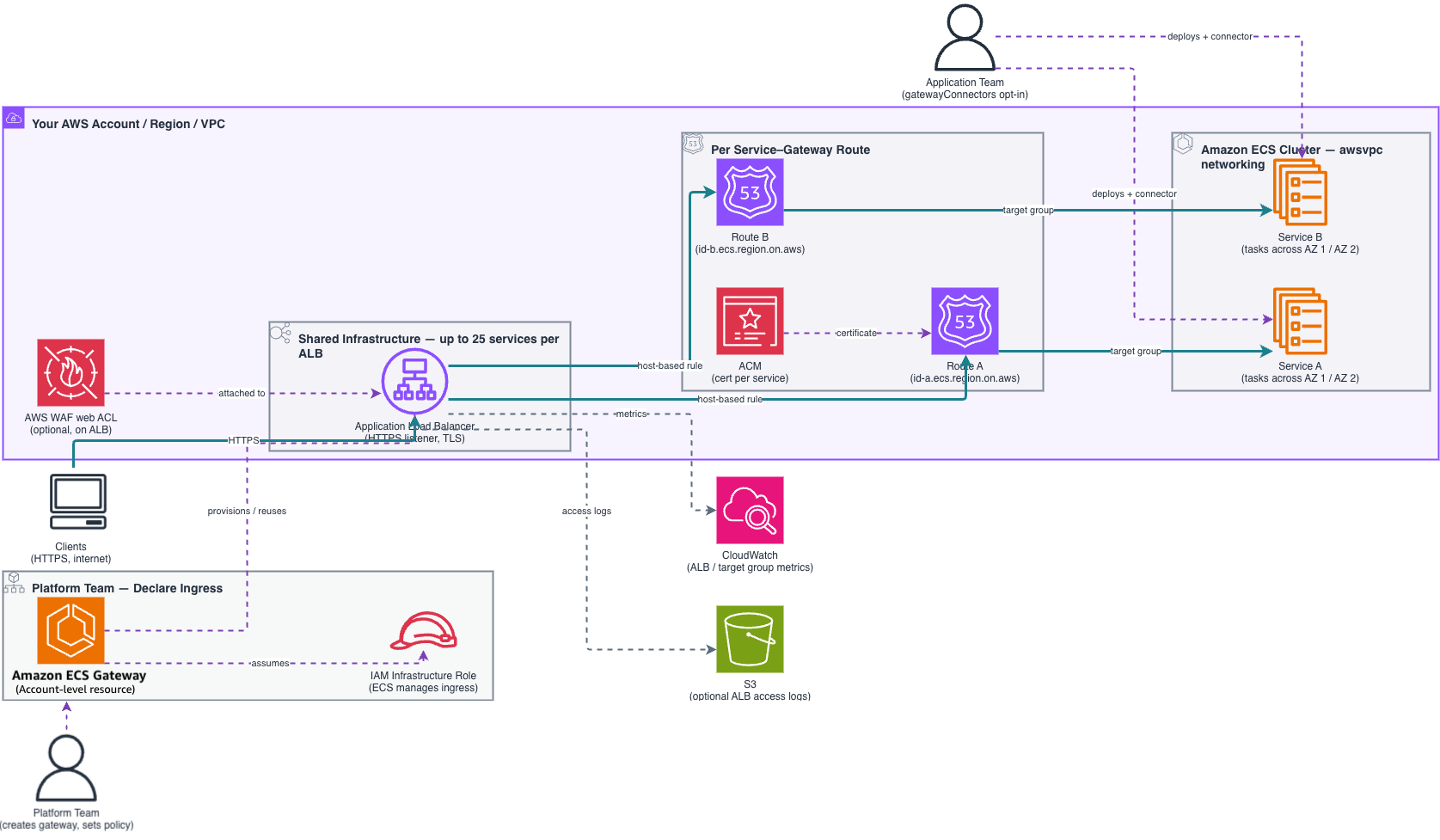
The core innovation of Amazon ECS Gateway lies in its ability to enforce a clean, distinct separation of responsibilities between centralized platform engineering teams and decentralized application developers. Platform teams can now establish overarching networking guardrails, security postures, and resource parameters once at the account or gateway level, while application teams can seamlessly attach their services to these established pathways without needing deep domain expertise in load balancing or certificate management.
At the heart of this capability is host-based routing powered by Application Load Balancers. Unlike legacy architectures where a single service or a small handful of services monopolized an expensive load balancer, Amazon ECS Gateway introduces high-density resource sharing. A single ALB managed by the gateway can efficiently host and route traffic for up to 25 distinct containerized services. This multi-tenant routing strategy drastically optimizes infrastructure costs by reducing the total number of idle or underutilized load balancers running within an AWS account.
Amazon ECS takes complete operational ownership of the underlying infrastructure lifecycle. When an organization connects its very first service to an ECS Gateway, the system automatically provisions the initial Application Load Balancer. As application teams continue to deploy services and that ALB approaches its capacity thresholds, Amazon ECS autonomously provisions additional load balancers to absorb the load. Conversely, when services are decommissioned and capacity requirements recede, the gateway gracefully scales down and removes unneeded infrastructure. The moment provisioning completes for a newly connected service, the platform automatically assigns a unique DNS hostname, delivering a ready-to-use, secure endpoint instantly.
Streamlining Configuration and Deployment Workflows
Setting up an Amazon ECS Gateway has been designed to integrate smoothly into existing AWS workflows, accessible via both the interactive AWS Management Console and the AWS Command Line Interface (AWS CLI).

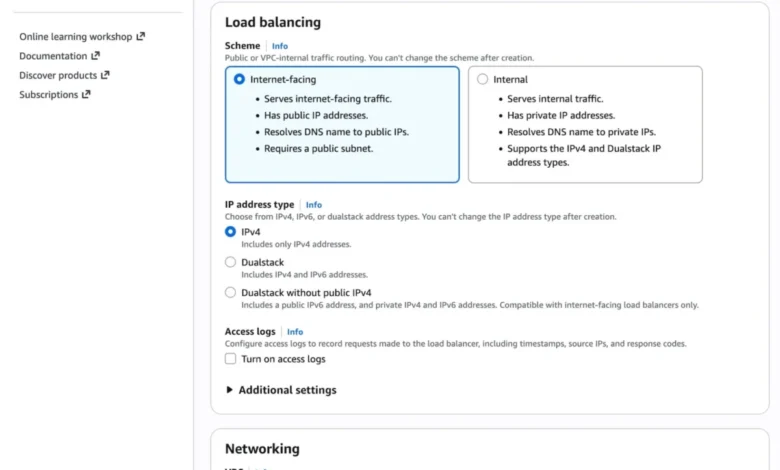
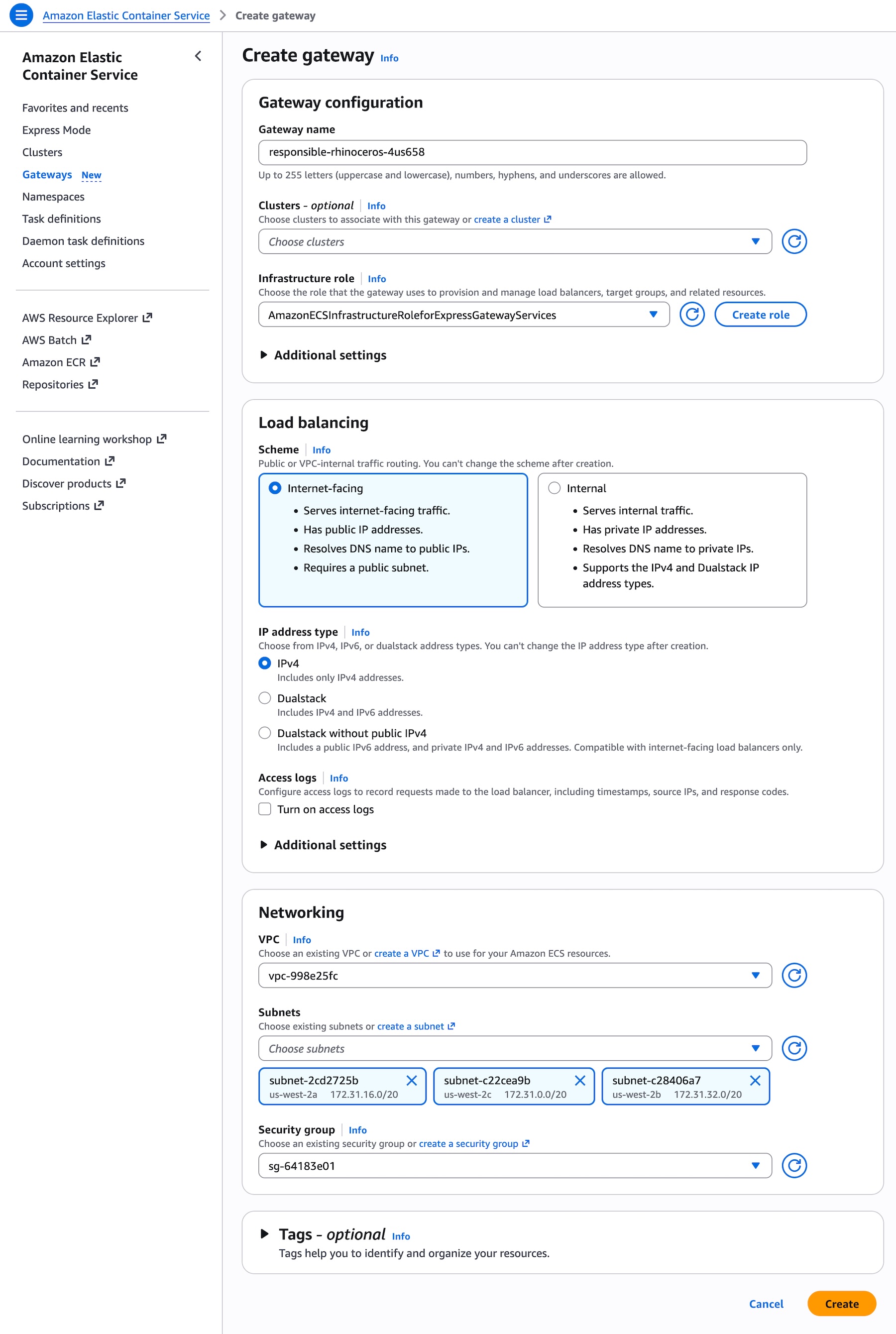
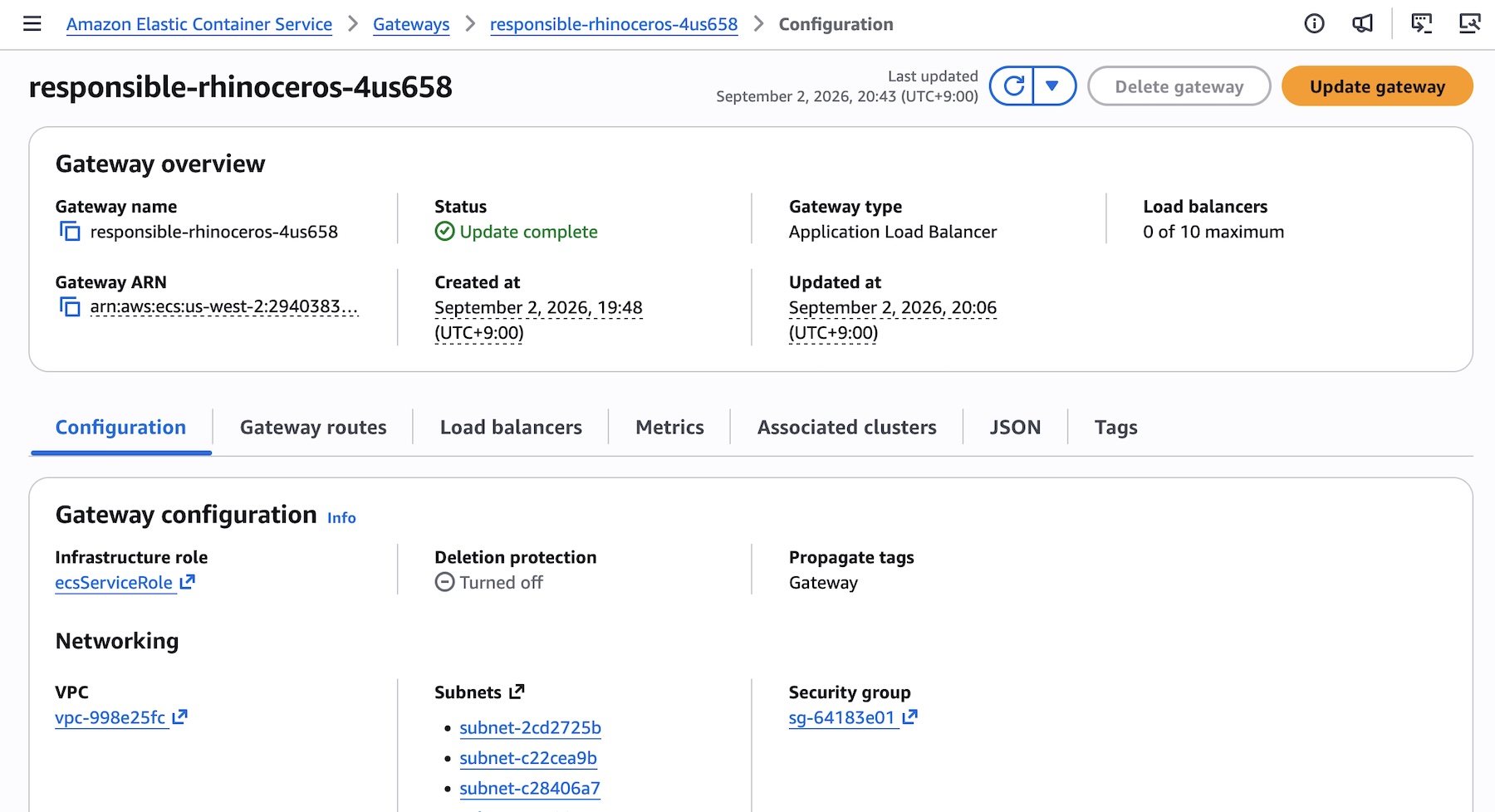
Within the ECS console, platform administrators initiate the creation process by defining a unique gateway name and designating an infrastructure role. This designated AWS Identity and Access Management (IAM) role grants Amazon ECS the precise permissions required to provision and manage supporting networking constructs—such as ALBs, security groups, and ACM certificates—directly within the customer’s account. Administrators must then select an appropriate load balancing scheme, determining whether the gateway will handle public, internet-facing traffic or private, VPC-internal traffic routing.
Advanced configuration settings allow teams to define specific listeners, communication ports, and maximum load balancer scaling caps (maxAlbCount) to govern infrastructure growth. Additionally, administrators can bind AWS WAF web ACLs directly to the gateway configuration, ensuring that all underlying web applications inherit robust, centralized protection against common web exploits and malicious traffic patterns from day one. It is worth noting that certain foundational parameters—such as the gateway name, routing scheme, associated Virtual Private Cloud (VPC), subnet placements, IP address types, and listener protocols—are immutable once the gateway has been instantiated, ensuring long-term architectural stability.
Programmatic provisioning via the AWS CLI follows a similarly streamlined paradigm. Administrators execute the CreateGateway command, specifying a unique name, the infrastructure role Amazon Resource Name (ARN), and a comprehensive configuration object containing subnet IDs and traffic schemes. Notably, AWS designed the resource model so that no underlying infrastructure is actually billed or provisioned until a container service explicitly establishes a connection with a gateway connector.
aws ecs create-gateway
  --name my-team-gateway
  --infrastructure-role-arn arn:aws:iam::123456789012:role/ECSGatewayRole
  --configuration '
    "HostSharedAlb":
      "networkConfiguration":
        "subnets": [
          "subnet-080779f9bd887757a",
          "subnet-03d5b2fead6bc6258",
          "subnet-0861210a397d31252",
          "subnet-06539e194023cb77a"
        ],
        "ipAddressType": "ipv4"
      ,
      "scheme": "internet-facing"

  '
Once the gateway is active, platform teams establish a many-to-many relationship by associating the gateway with one or multiple Amazon ECS clusters. A single gateway can scale to support up to 10,000 distinct clusters, while an individual cluster can bind up to five different gateways simultaneously. This flexibility allows organizations to partition traffic cleanly, maintaining separate public-facing and internal-facing gateways for the exact same underlying cluster of workloads.
Developer Experience and Incremental Adoption
For application teams, integrating with an established gateway requires minimal friction. Developers incorporate a lightweight gateway connector directly into their service definitions during CreateService or UpdateService API calls.
For organizations operating mature, pre-existing container architectures, Amazon ECS Gateway has been architected to support non-disruptive, incremental adoption. If a legacy ECS service is already running with its own dedicated load balancer configuration, platform engineers do not need to execute a risky, all-at-once cutover. By utilizing the UpdateService command to append a gateway connector, both ingress paths can run concurrently in parallel. This dual-path capability allows engineering teams to thoroughly validate DNS routing, security compliance, and target group health through the new gateway before safely deprecating and removing the legacy load balancer infrastructure.
aws ecs create-service
  --cluster my-cluster
  --service my-api-service
  --task-definition my-api-service:1
  --gateway-connectors '[ "portName": "api", "filters": "accessTypes": ["PUBLIC"], "healthCheck": ... ]'
At the exact moment of deployment, Amazon ECS evaluates all gateways associated with the target cluster, identifying compatible pathways where access type filters match, network boundaries reside within the same VPC, and subnet availability zones fully cover the service’s requirements. Behind the scenes, the control plane automates the complete provisioning sequence: generating the ACM certificate, establishing the unique DNS hostname, configuring listener rules to route traffic to the appropriate target group, and automatically locking down service security groups so that inbound traffic is restricted strictly to the corresponding ALB security groups. Once these background orchestration steps complete, the gateway route transitions to an ACTIVE state, and the service endpoint is immediately live.
Furthermore, AWS has extended its tooling ecosystem to support modern artificial intelligence-driven workflows. Engineering organizations leveraging AI-assisted coding tools can utilize the AWS Model Context Protocol (MCP Server) and associated plugins to query documentation, inspect configurations, and manage ECS Gateway resources programmatically through natural language interfaces.
Industry Implications and Strategic Analysis
The introduction of Amazon ECS Gateway arrives at a critical juncture in the evolution of cloud-native computing. As organizations scale their microservices footprints from dozens of containers to thousands, the operational overhead of managing edge networking has steadily increased. Historically, platform engineering teams often found themselves reinventing the wheel, writing custom infrastructure-as-code (IaC) modules, controllers, or wrapper scripts to automate load balancer target group attachments and DNS propagation.
By baking this capability natively into the Amazon ECS control plane, AWS is shifting the industry standard away from bespoke, home-grown ingress automation toward managed, native service primitives. This evolution mirrors broader industry trends where cloud providers absorb undifferentiated heavy lifting, allowing enterprise engineering organizations to refocus their human capital on business logic and application delivery rather than low-level networking glue.
Financially, the pricing model is structured to minimize friction for early adopters. Amazon ECS Gateway is available immediately across all commercial AWS Regions where Amazon ECS is supported at no additional licensing or control-plane charge. Organizations pay strictly for the underlying AWS resources provisioned within their accounts when services actively bind to a gateway—such as standard Application Load Balancer hourly rates and data processing fees, Amazon CloudWatch logs and metrics, ACM certificate charges, and standard inter-availability-zone data transfer costs.
Conclusion and Next Steps
Amazon ECS Gateway represents a significant leap forward for container orchestration and platform engineering on AWS. By eliminating the manual chore of per-service ingress configuration, reducing load balancer sprawl through intelligent multi-tenant host-based routing, and automating the end-to-end security and DNS lifecycle, AWS has delivered a tool that directly addresses the scaling pains of modern microservices architectures.
Platform administrators and engineering leaders looking to modernize their container workflows can begin exploring the feature immediately via the Amazon ECS console. Detailed technical documentation, API references, and architectural best practices are fully accessible through the official Amazon ECS Developer Guide, with community discussions and feedback channels actively monitored by AWS engineering teams via AWS re:Post.
Related posts: