The Electric Friction: Why the Data Center Backlash is a Crisis of Energy Infrastructure

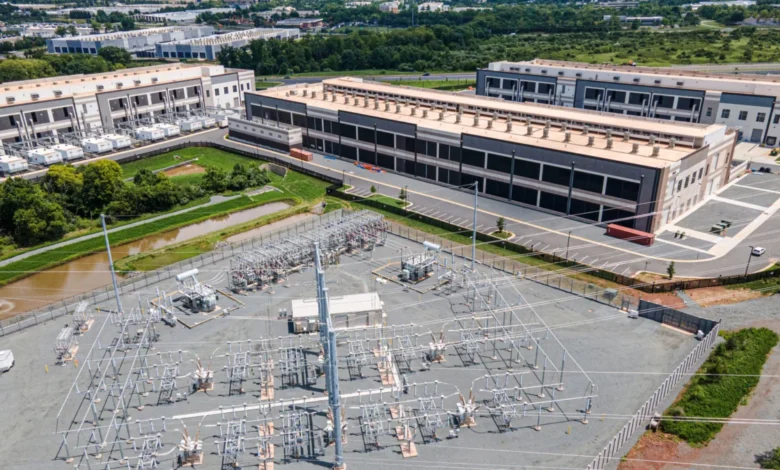
As voters across the United States concluded the recent midterm elections, a different kind of power struggle was unfolding in Ashburn, Virginia. Known globally as "Data Center Alley," this quiet corner of Loudoun County serves as the bedrock of the digital age, hosting the world’s densest concentration of server farms. However, the monolithic, windowless concrete structures that dominate the landscape have become flashpoints for a growing movement of civic unrest. While Big Tech executives frequently characterize this friction as a cultural battle over corporate influence and the rapid pace of artificial intelligence, a deeper analysis reveals a more grounded reality: the country is witnessing a profound collision between the insatiable energy requirements of the AI revolution and the physical limitations of the American power grid.
The Anatomy of the Power Crisis
The fundamental tension between the technology sector and local communities lies in the sheer scale of electricity consumption required to train and run modern large language models (LLMs). An average data center in the Northern Virginia corridor currently draws roughly 54 megawatts of power. To put that into perspective, 54 megawatts is sufficient to supply the peak energy needs of a medium-sized airport or a small city.
The industry’s expansion plans, however, dwarf these existing figures. Engineers and developers are now designing "hyperscale" facilities that aim to pull between 300 and 6,000 megawatts. To reach the upper end of that spectrum—6,000 megawatts—a single facility would require as much electricity as the entire city of Chicago. When these massive power requirements are placed on top of aging grid infrastructure, the result is not just higher utility bills for local residents, but a tangible threat to grid reliability.
A Chronology of Escalation
The friction between developers and the public has been building for several years, following a clear escalation path:
- 2022-2023: As generative AI gained mainstream traction, the demand for high-density computing skyrocketed. Developers began securing land in rural and semi-rural areas, often bypassing traditional municipal planning processes.
- 2024: Local opposition groups, led by community organizers such as Elena Schlossberg, began organizing formal protests. The focus shifted from vague concerns about tech influence to specific, data-backed arguments regarding environmental impact and grid strain.
- January 2026: Environmental regulators, including the EPA, intervened after it was revealed that large-scale, private natural-gas turbine installations—designed to power AI data centers—were operating in violation of air quality standards.
- July 2026: Large-scale protests occurred at the Virginia state capitol, signaling that the "Data Center Alley" issue had become a primary political concern for state legislators.
- August 2026: The Virginia governor’s office introduced new regulatory frameworks, shifting the financial burden of new transmission line construction from utility ratepayers to the data center developers themselves.
The "Behind the Meter" Strategy
Because existing regional grids are often unable to handle the surge in demand, tech companies have pivoted to a model known as "behind the meter" power generation. In this scenario, the data center operator essentially builds its own power plant on-site, typically fueled by natural gas turbines, to avoid the bureaucracy and limitations of the public utility grid.
This approach has sparked a significant backlash. By circumventing the grid, these companies are effectively creating private utility islands. When an entity like Anthropic enters a $3.4 billion agreement to secure massive quantities of natural gas for on-site power generation, they are fundamentally altering the local energy landscape. Residents who were previously accustomed to a steady, regulated utility environment are now finding themselves neighbors to industrial-scale power plants that operate with significantly less public oversight than traditional utility-scale generators.
Official Responses and Industry Defense
In response to the growing public outcry, industry leaders have attempted to reframe the debate. Chris Lehane, chief global affairs officer at OpenAI, recently argued that data centers have become a "proxy for public unease" regarding wider societal shifts—specifically, anxieties surrounding job security, the concentration of corporate wealth, and a general loss of control over the future.
Industry proponents argue that the economic benefits—including increased tax revenues, high-tech job creation, and infrastructure investment—far outweigh the localized inconveniences. Companies like Google have even begun diversifying their geographical footprint, announcing a $15 billion expansion in Malaysia, which many analysts view as an effort to avoid the increasingly difficult permitting and political climate in the United States.
Furthermore, some developers are pointing toward the reuse of abandoned industrial sites, such as shuttered steel mills that already possess high-voltage electrical substations. By repurposing these sites, companies argue they are performing an act of industrial revitalization, though this has done little to assuage the fears of residents concerned about air quality and the long-term impact on local energy prices.
The Environmental and Economic Implications
The environmental costs of this energy race are significant. While proponents claim that AI can help solve climate change through optimized resource management, the current reality is that data centers are driving a resurgence in fossil fuel reliance. To maintain the 99.999% "uptime" required by modern AI training, facilities often install massive diesel-powered backup generators. These generators, while rarely used at full capacity, represent a significant source of potential pollution in the event of grid instability.
From an economic perspective, the risk is a "crowding out" effect. As data centers consume a larger percentage of available power, utility providers may be forced to prioritize these high-revenue clients over residential and small-business customers. This creates a political powder keg, as state regulators are caught between the economic imperative of supporting the AI industry and the moral imperative of keeping energy affordable and accessible for their constituents.
Future Trajectories: Space and Sparsity
Looking ahead, the industry is exploring two distinct paths to mitigate the energy bottleneck. The first is geographic: moving to regions with minimal population density, such as the Permian Basin, where existing natural gas infrastructure is abundant and the potential for public resistance is lower. This "energy-first" migration pattern allows companies to operate without the constraints of urban planning boards or environmental activists.
The second path is technological, though currently speculative. Elon Musk’s recent suggestion that data centers could eventually be placed in space, where solar energy is abundant and the heat dissipation issues associated with server farms are simplified, highlights the extreme measures the industry is considering. While orbital data centers remain in the realm of long-term theory, they underscore the desperation of tech giants to escape the constraints of terrestrial power grids.
Ultimately, the data center crisis is not merely a "culture war" as some executives suggest. It is an infrastructure crisis. The transition to an AI-driven economy requires an unprecedented amount of electricity, and the current strategy of forcing this demand onto existing grids—or building private, polluting energy islands—is proving to be socially and politically unsustainable. As the industry continues to grow, the ability to harmonize high-tech ambition with the reality of local energy constraints will likely be the primary determinant of success for the next decade of AI development. If the industry fails to address the "power" in the power struggle, the backlash witnessed in Virginia will likely be just the beginning of a national trend.