Optimizing Facebook Ad Creatives: A Critical Guide to Meta Ad Sizes and Specifications


In the dynamic and highly competitive landscape of digital marketing, the precise optimization of advertising creatives is paramount for achieving campaign efficacy and maximizing return on investment. Meta Platforms, Inc., through its expansive network encompassing Facebook, Instagram, Messenger, and the Audience Network, provides advertisers with a vast array of placement options, each with distinct technical specifications. Adherence to these precise dimensions, aspect ratios, and file requirements is not merely a technicality but a strategic imperative, directly influencing an ad’s visual quality, user engagement, and ultimate performance. Neglecting these guidelines can lead to distorted images, cropped videos, reduced visibility, and, consequently, wasted advertising spend. This comprehensive guide delves into the critical details of Meta ad sizes, offering a roadmap for marketers to navigate the complexities of creative optimization across Meta’s diverse advertising ecosystem.
The Evolving Landscape of Meta Advertising

Meta’s advertising platform has undergone significant evolution since its inception, mirroring shifts in user behavior and technological advancements. Initially dominated by desktop interfaces and static image ads, the platform rapidly pivoted to a mobile-first strategy following the widespread adoption of smartphones. This transition necessitated the development of flexible ad formats capable of rendering optimally across varying screen sizes and orientations. The acquisition of Instagram in 2012 further integrated a visually-driven, mobile-native platform into Meta’s advertising arsenal, leading to a unified ad management system that serves creatives across multiple properties. More recently, the surge in short-form video content, particularly with the introduction of Reels, has underscored the importance of vertical video formats. This chronology highlights a consistent trend: Meta continually adapts its ad infrastructure to align with emerging consumption patterns, compelling advertisers to stay abreast of evolving creative specifications.
Globally, digital advertising expenditure continues its upward trajectory. In 2023, global digital ad spending reached an estimated $660 billion, with Meta Platforms commanding a significant share. This substantial investment underscores the critical need for advertisers to ensure every dollar spent contributes effectively to campaign goals. Data consistently shows that ads optimized for specific placements achieve higher engagement rates and lower cost-per-acquisition metrics. For instance, a recent study indicated that mobile-optimized video ads can see engagement rates up to 40% higher than their non-optimized counterparts. This evidence reinforces the notion that technical compliance with Meta’s ad specifications is not a suggestion but a cornerstone of a successful digital advertising strategy.
Precision in Placement: A Comprehensive Guide to Meta Ad Dimensions

Understanding the specific requirements for each ad placement is fundamental. While "Facebook ad sizes" and "Meta ad sizes" refer to the same specifications, reflecting Facebook’s position as a core product within the Meta family of applications, the nuances between various ad types are significant. Universal guidelines dictate common file types (PNG, JPG for images; MP4, MOV, GIF for videos) and maximum file sizes (30MB for images, 4GB for videos). However, aspect ratios and recommended resolutions vary dramatically depending on where the ad is displayed.
Facebook Feed Ads: Dominating the Scroll
The Facebook News Feed remains a primary battleground for advertiser attention. It is the endlessly scrollable stream where users consume a mix of content from friends, pages, and sponsored posts. Feed ads come in various styles, including single images, videos, and carousels. The placement of ads is strategic; often, the second item in a user’s feed is an advertisement, with more interspersed as the user continues to scroll.
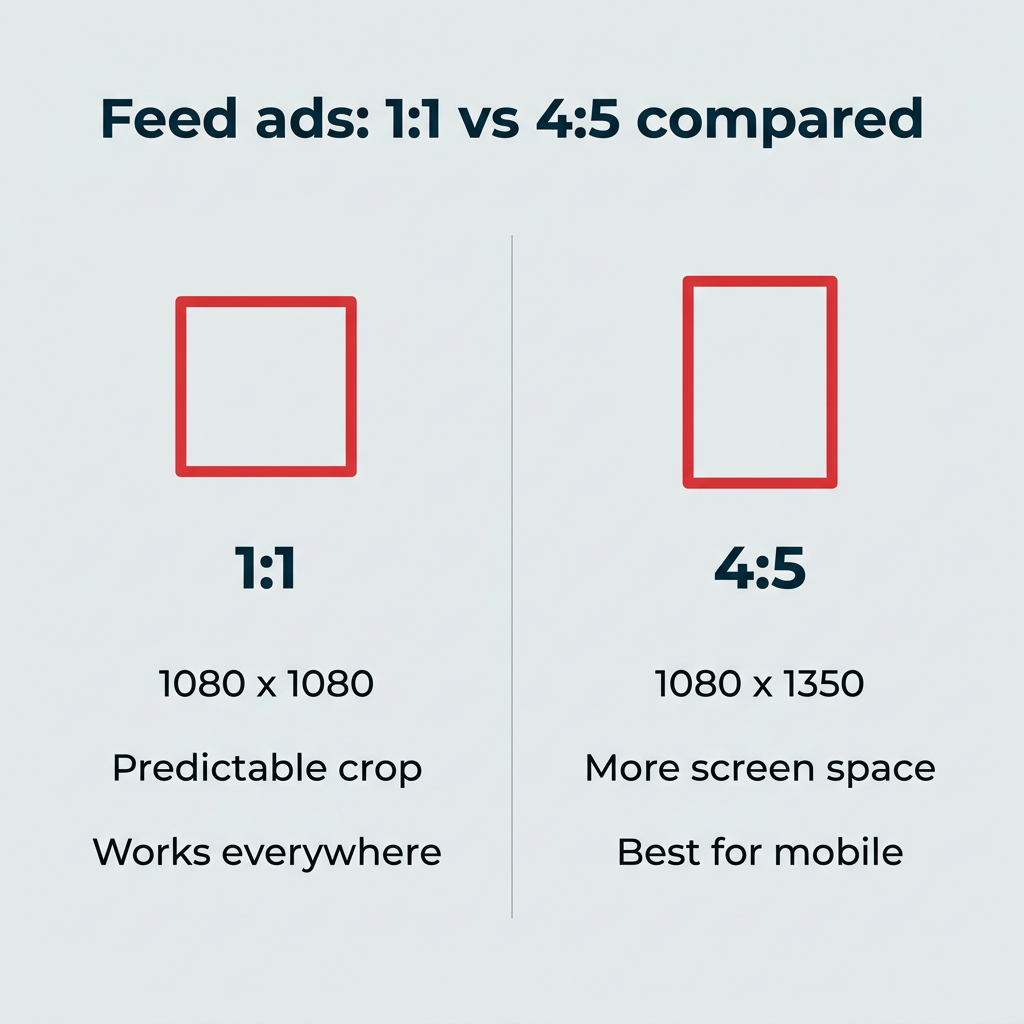
For Feed Image Ads, the recommended dimensions are 1440 x 1440 pixels for a 1:1 (square) aspect ratio, or 1440 x 1800 pixels for a 4:5 (vertical) aspect ratio. While both are supported, the 4:5 ratio is often preferred for mobile feeds. With over 81.8% of Facebook users accessing the platform exclusively via mobile devices, this vertical format commands more screen real estate, pushing competing content out of view and enhancing visibility. This difference can be significantly reflected in paid ad analytics, often showing higher click-through rates (CTRs) for the taller format. Image ads typically support PNG and JPG file types, with a maximum file size of 30MB.
Feed Video Ads share similar dimension recommendations: 1440 x 1440 pixels (1:1) or 1440 x 1800 pixels (4:5). Video files can be MP4, MOV, or GIF formats, with a maximum file size of 4GB. The maximum video length can extend up to 241 minutes, though shorter, more concise videos (under 15-30 seconds) generally perform better in the fast-paced feed environment. These specifications also apply to ads placed within Facebook’s dedicated video feed, where they appear with a "sponsored" label alongside organic clips.
Dynamic Storytelling: Carousel and Collection Ads
Facebook Carousel Ads offer a versatile format, allowing advertisers to showcase between two and ten images, videos, or a combination, with each card linking to a separate URL or landing page. This format is highly popular due to its flexibility and wide placement options across Facebook on both desktop and mobile. Carousel ads are not confined to the feed; they can also appear in Stories, Reels, and in-stream placements, consistently maintaining a 1:1 aspect ratio (1080 x 1080 pixels or larger). For Advantage+ catalog only, a 4:5 aspect ratio is also supported. Image cards are limited to 30MB, while video cards can be up to 4GB.
Collection Ads are a specialized form of carousel ad designed for e-commerce retailers. They automatically generate relevant, conversion-focused ads by pulling images and links directly from a connected product catalog, which can be managed in Commerce Manager. When a user taps on a product within a collection ad on a mobile device, they are presented with an "Instant Experience"—a full-screen, fast-loading mini-storefront within the Facebook app, designed to facilitate seamless product discovery and purchase. On desktop, collection ads function similarly to standard carousel ads, directing users to the product’s page on the advertiser’s website. These ads primarily utilize square (1:1) product images or videos, with other sizes being cropped to fit this ratio. For Facebook Feed Collection Ads, image cards should be 1080 x 1080 pixels or larger, supporting PNG or JPG files up to 30MB. Video cards can be MP4, MOV, or GIF, up to 4GB.
Immersive Vertical Experiences: Stories and Reels

The rise of vertical video and ephemeral content has made Facebook Stories and Reels indispensable placements for advertisers. These formats offer immersive, full-screen experiences that demand specific creative considerations.
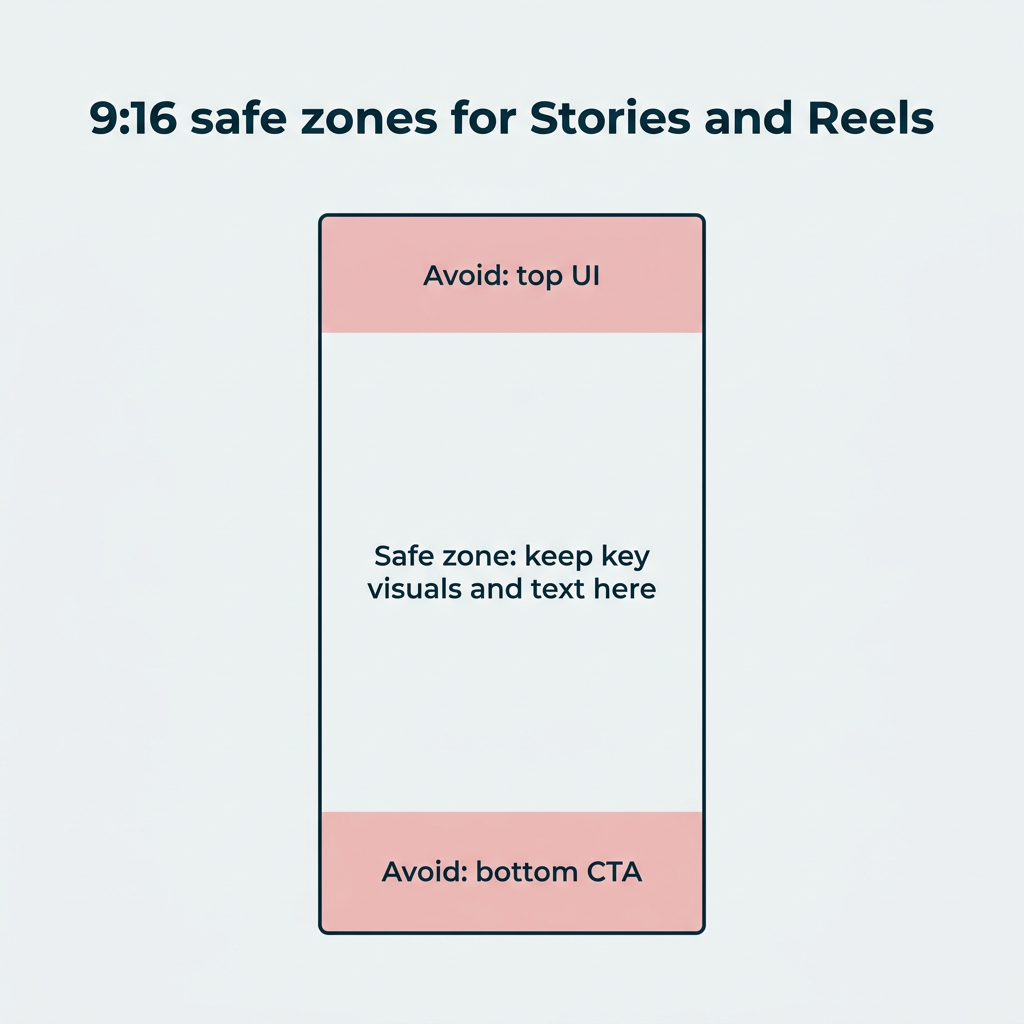
Facebook Stories Ads appear between organic Stories, lasting five seconds for images (unless swiped away) and ten seconds per segment for videos. These same specifications apply to Messenger Stories. For both image and video Stories ads, the recommended dimension is 1440 x 2560 pixels, corresponding to a 9:16 aspect ratio. A crucial consideration for this vertical format is the "safe zone": key visuals, text, and Call-to-Action (CTA) buttons should be kept within the central 1080 x 1420 pixel area to avoid being obscured by UI elements at the top and bottom of the screen. Image files are limited to 30MB, while video files can be up to 4GB, with a maximum video length of 2 minutes.
Facebook Reels Ads are inserted between organic Reels as users scroll through the dedicated Reels section. They allow advertisers to promote existing Reels or create ad-specific content. The primary distinction from organic Reels is the inclusion of a clickable CTA button. Reels video ads also require a 1440 x 2560 pixel resolution with a 9:16 aspect ratio, supporting MP4, MOV, and GIF files up to 4GB. The maximum video length is 90 seconds. Additionally, Reels Image Overlay Ads provide a unique format where a small image and ad copy appear at the bottom of an organic Reel. For these, a 1080 x 1080 pixel or larger image with a 1.91:1 to 1:1 aspect ratio is recommended, emphasizing the need for a highly impactful image to stand out in a small space. The same safe zone considerations apply to Reels as they do to Stories.
Strategic Interruption: In-Stream Video Ads
Facebook In-Stream Video Ads are strategically "popped in" during organic video content, playing before, during, or after another video, including live streams. Advertisers can choose between shorter, non-skippable ads or longer, skippable ones (allowing users to close after five seconds). These ads are designed to capture attention within existing video consumption. Recommended dimensions are 1080 x 1080 pixels or larger, supporting both 16:9 (horizontal) and 1:1 (square) aspect ratios. Video files can be MP4, MOV, or GIF, up to 4GB. Video length can range from 5 seconds to 10 minutes, with shorter ads generally preferred for non-skippable formats.
Transactional Touchpoints: Marketplace and Search Results Ads

Facebook Marketplace Ads are image-only formats designed for commerce, appearing within the Marketplace tab on desktop and mobile. These ads are also often distributed across the broader Facebook network via Meta’s Advantage+ placement algorithm, which intelligently matches ads with users most likely to engage. Their primary goal is product sales and conversion, targeting users already in a buying mindset. Marketplace ads consistently display a "sponsored" label. Recommended image size is 1080 x 1080 pixels or larger, with a 1:1 aspect ratio, supporting PNG and JPG files up to 30MB.
Facebook Search Results Ads appear directly on the search results page, offering highly targeted exposure. When a user searches for a product, service, or event, a relevant ad can significantly increase the chances of engagement. For instance, a search for "planner" yielding an ad from a planner company demonstrates effective targeting. These ads support both images and videos. Image ads require 1080 x 1080 pixels or larger with a 1:1 aspect ratio (PNG, JPG, 30MB). Video ads also use 1080 x 1080 pixels or larger with a 1:1 aspect ratio (MP4, MOV, GIF, 4GB). Video length can be up to 241 minutes, but brevity is key for search contexts.
Niche Reach: Right Column and Business Explore

Facebook Right Column Ads are a desktop-only format, primarily effective for driving traffic and raising brand awareness. These are image-only ads, presented with a headline and a link. Due to their small visual footprint, Meta strongly advises against including any text on the image file itself, relying instead on the accompanying ad copy. The recommended size is 1080 x 1080 pixels or larger, with a 1:1 aspect ratio, supporting PNG and JPG files up to 30MB.
Facebook Business Explore Ads are a mobile-only placement. When a user taps on an organic post from a business and scrolls down, they may encounter an "Explore more" section related to that business’s category. This section mixes organic and paid content from similar businesses. These ads support both images and videos. Image ads require 1080 x 1080 pixels or larger with a 1.91:1 to 1:1 aspect ratio (PNG, JPG, 30MB). Video ads use 1080 x 1080 pixels or larger with a 1.91:1 to 1:1 aspect ratio (MP4, MOV, GIF, 4GB). Video length can be up to 241 minutes.
Expanding Horizons: The Audience Network

Meta’s Audience Network extends the reach of advertisements beyond Facebook and Instagram to a vast array of third-party apps and websites. This network supports distinct formats that require specific creative adaptations. Audience Network Banner Ads are small, typically appearing at the bottom of mobile apps, requiring a resolution of 320 x 50 pixels. Audience Network Interstitial Ads are full-screen takeover ads, requiring 320 x 480 pixels (9:16) or 480 x 320 pixels (16:9) for images and videos. Image files are 30MB, and video files are 4GB.
Universal Guidelines for Optimal Performance
Beyond placement-specific dimensions, several overarching guidelines apply across almost all Meta ad formats:

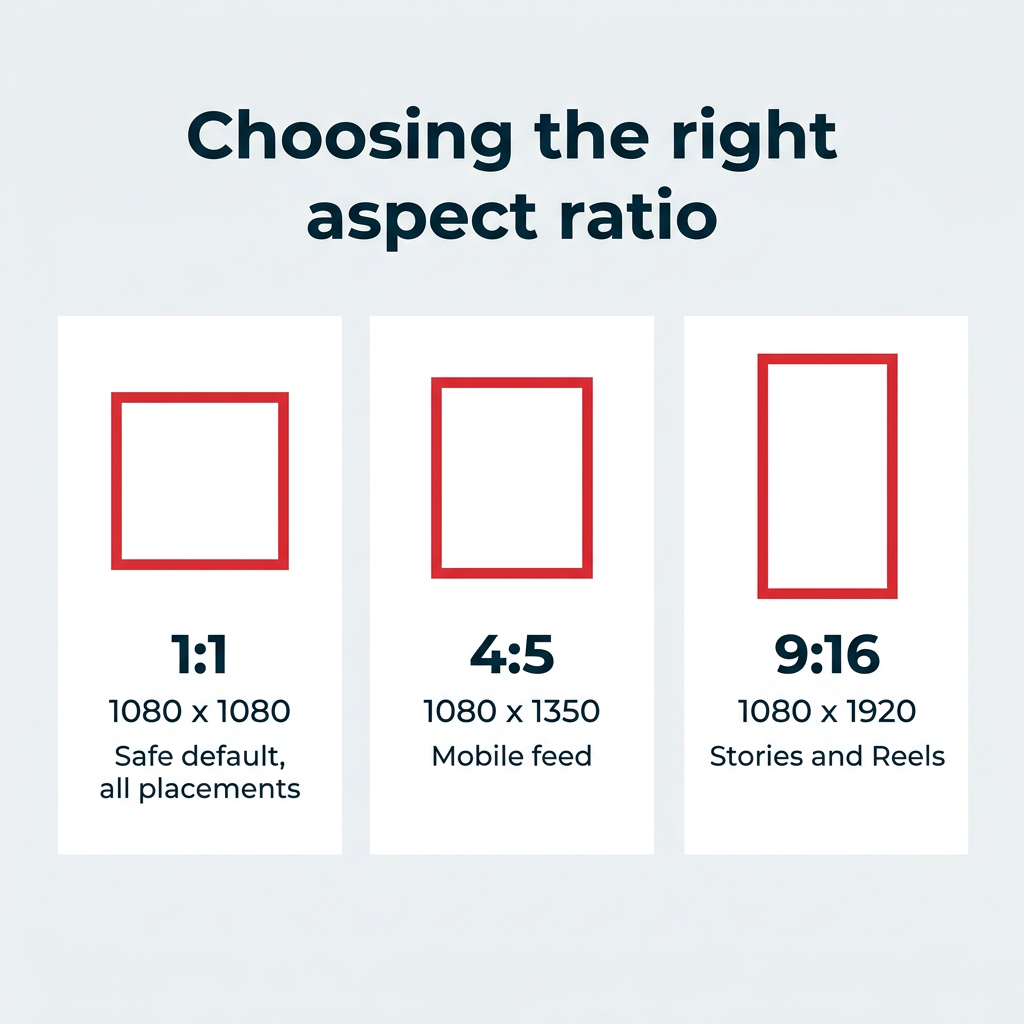
- Aspect Ratio Flexibility: While 1:1 (square) is the safest default for predictable cropping across multiple placements, 4:5 (vertical) is often superior for mobile Feed ads due to increased screen dominance. For full-screen vertical experiences like Stories and Reels, 9:16 is essential.
- File Types: PNG and JPG are standard for images, while MP4, MOV, and GIF are accepted for videos.
- File Size Limits: A consistent 30MB for image ads and 4GB for video ads across placements.
- Text on Image: While Meta no longer strictly enforces the 20% text rule, ads with less text on the image tend to perform better and receive broader delivery from the algorithm. This suggests that while technically allowed, excessive text can still hinder reach.
- Video Length: Though maximum lengths can be extensive (up to 241 minutes for some video formats), shorter, concise videos generally yield higher engagement, especially in feed and story placements where user attention spans are brief.
Implications for Advertisers: Navigating the Complexities
The detailed and varied specifications for Meta ad creatives present both challenges and opportunities for advertisers. The primary implication is the absolute necessity for a multi-faceted creative strategy. Marketers can no longer rely on a single creative asset for all placements. Instead, successful campaigns demand:
- Adaptive Creative Production: Developing different versions of an ad tailored to specific aspect ratios (e.g., 1:1, 4:5, 9:16) for optimal display across feeds, stories, and reels.
- Mobile-First Design Philosophy: Prioritizing how ads appear on mobile devices, given that the vast majority of Meta’s audience accesses the platforms via smartphones. This includes careful consideration of safe zones for vertical formats.
- Strategic A/B Testing: Continuously testing different ad creatives, aspect ratios, and messaging to identify what resonates best with target audiences in each placement. Paid ad analytics tools are crucial for monitoring performance and making data-driven adjustments.
- Leveraging Automation: Utilizing tools like Advantage+ placements to allow Meta’s algorithms to dynamically adjust ad delivery, though this still requires providing a range of well-optimized assets for the system to choose from.
- Understanding User Context: Recognizing that a user’s mindset differs across placements (e.g., browsing the feed vs. actively searching Marketplace vs. passively watching an in-stream video) and tailoring creative content accordingly.
Industry experts consistently emphasize that precise creative optimization leads to tangible benefits, including improved ad relevance scores, reduced cost per click (CPC), and higher conversion rates. Meta’s algorithms reward high-quality, relevant content, and ads that fit seamlessly into their respective placements are inherently perceived as higher quality by both the algorithm and the end-user.

The Future of Meta Advertising
Looking ahead, the trend towards more immersive, interactive, and AI-driven ad experiences is likely to continue. Meta’s ongoing investments in augmented reality (AR) and virtual reality (VR) through its metaverse vision suggest future ad formats could transcend traditional 2D images and videos. However, even as these new frontiers emerge, the foundational principle of optimizing creative assets for specific platforms and user experiences will remain paramount. The underlying technical specifications will simply evolve to accommodate new realities.
In conclusion, the meticulous optimization of ad creatives according to Meta’s prescribed sizes and specifications is not merely a best practice; it is a fundamental requirement for any advertiser seeking to achieve meaningful results in today’s digital advertising ecosystem. By understanding and diligently applying these guidelines, marketers can ensure their messages are delivered with clarity, impact, and maximum potential for engagement across Meta’s diverse and ever-evolving platforms.