The Comprehensive Guide to Facebook Ad Tools for Modern Digital Marketing Campaigns in 2026


As the digital advertising landscape becomes increasingly complex, the reliance on sophisticated software to manage Meta’s advertising ecosystem has moved from a competitive advantage to an operational necessity. In 2026, Meta’s automated AI advertising solutions—specifically its end-to-end AI campaign infrastructure—have reached a staggering $60 billion annual run rate. This shift toward total automation, coupled with increasingly stringent privacy regulations and the necessity of managing cross-network campaigns, has forced marketing teams to re-evaluate their tech stacks. Modern advertising success no longer relies on manual bidding adjustments alone, but rather on the strategic integration of native tools like Meta Ads Manager and third-party solutions that fill critical gaps in analytics, creative production, and cross-platform management.

The Evolution of Facebook Advertising Infrastructure
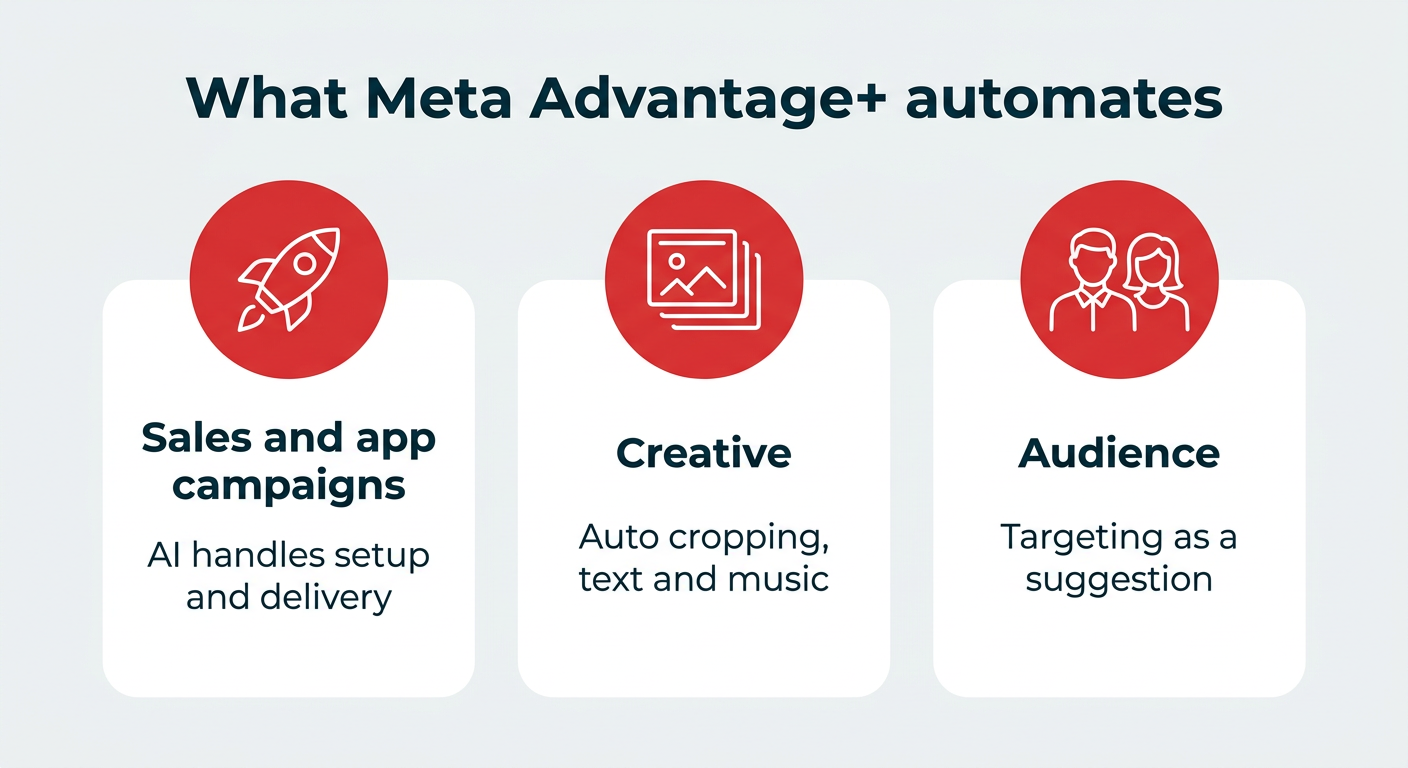
The transition toward automation began in earnest around 2023 and has solidified by 2026. Meta’s "Advantage+" suite represents the current standard for campaign delivery, utilizing machine learning to handle targeting, creative cropping, and budget distribution. However, while Meta’s internal tools have become more powerful, they often operate within a "walled garden." This creates a significant challenge for agencies and internal marketing departments that must reconcile data across disparate platforms like Google, LinkedIn, and X.
The fundamental shift in 2026 is that "ad management" is no longer a single-task role. It is a multi-dimensional function involving:
- Creative Velocity: The ability to produce high-performing visual assets at scale.
- Data Normalization: The capability to aggregate performance data from multiple sources to calculate true Return on Ad Spend (ROAS).
- Operational Efficiency: Reducing the "tab fatigue" that occurs when switching between Meta, Google, and analytical reporting dashboards.
Categorizing the Advertising Tech Stack
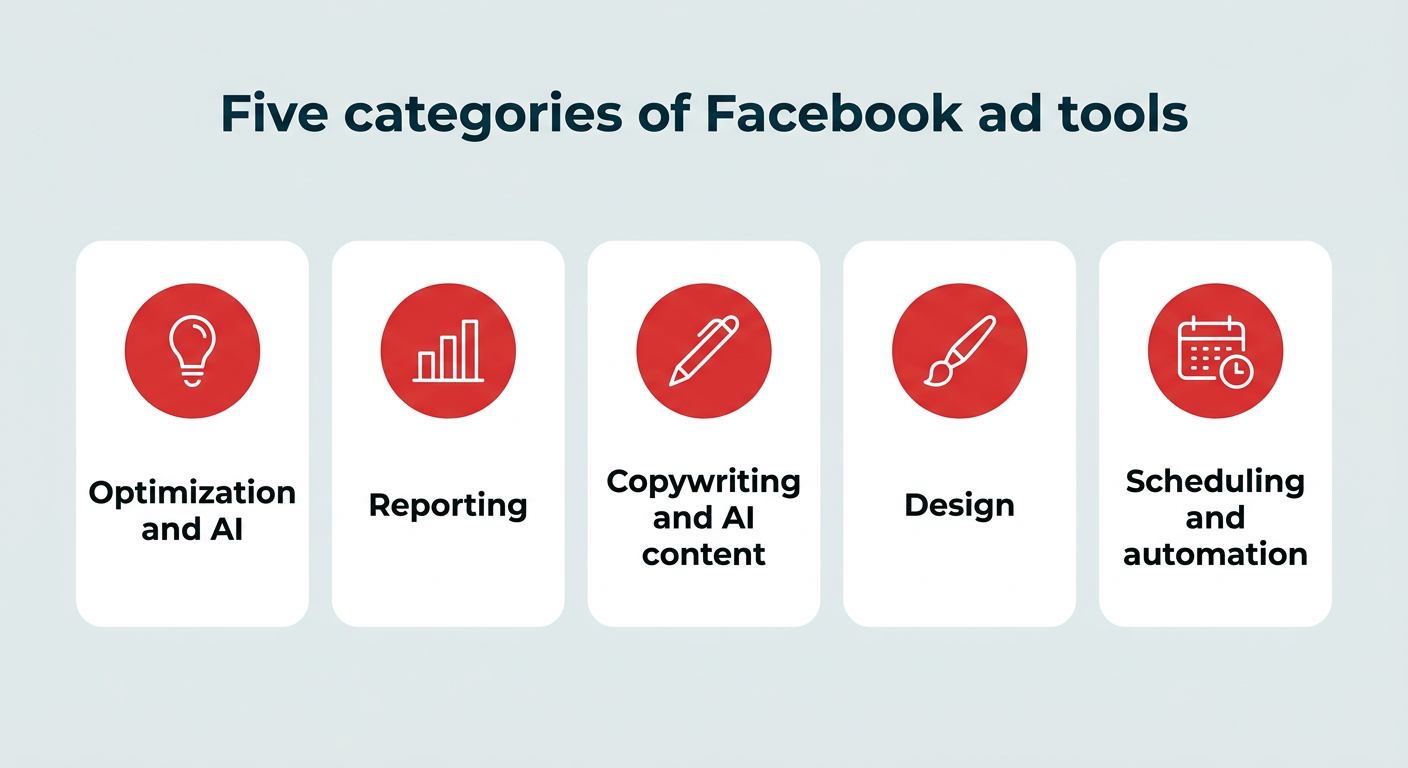
To effectively manage these demands, professionals have categorized their tools into four primary domains: AI-driven optimization, cross-platform reporting, content creation, and workflow automation.
AI-Driven Performance Optimization
Meta’s native Ads Manager remains the bedrock of any campaign. The inclusion of the Advantage+ suite has fundamentally changed how campaigns are set up; rather than selecting granular interests, advertisers now provide "suggestions" that the AI expands upon based on real-time performance signals. Meta reports that campaigns leveraging generative AI features have seen an average 11% increase in click-through rates.

However, tools like Madgicx have gained prominence by providing a layer of "intelligence" on top of the native interface. These tools analyze specific ad accounts to offer proactive recommendations rather than just passive reporting. For example, if a specific audience segment is showing signs of ad fatigue, these platforms can trigger automated budget reallocations or suggest creative refreshes before the campaign’s performance dips.

Cross-Platform Reporting and Data Intelligence
The measurement of advertising effectiveness has been complicated by privacy regulations and the phasing out of third-party cookies. Consequently, tools like TapClicks and Funnel have become essential for enterprise-level reporting. These platforms allow marketers to normalize data—a process where mismatched field names (e.g., "Click-Through Rate" vs "CTR") are mapped into a single, unified data model. This allows for a holistic view of the marketing funnel, enabling teams to compare the efficacy of a Facebook ad against a search campaign in real-time.

Content Generation and Creative Automation
The bottleneck for most high-volume advertising teams is not the platform, but the creative asset. AdCreative.ai and Smartly.io address this by leveraging AI to generate and score ad visuals before they are ever published. In a 2026 marketing environment where "creative testing" is the new "targeting," the ability to deploy hundreds of variations of a single concept is paramount. By using templates, these tools ensure brand consistency while allowing for hyper-localized adjustments that would be impossible to manage manually.

Strategic Selection: How to Choose the Right Tool
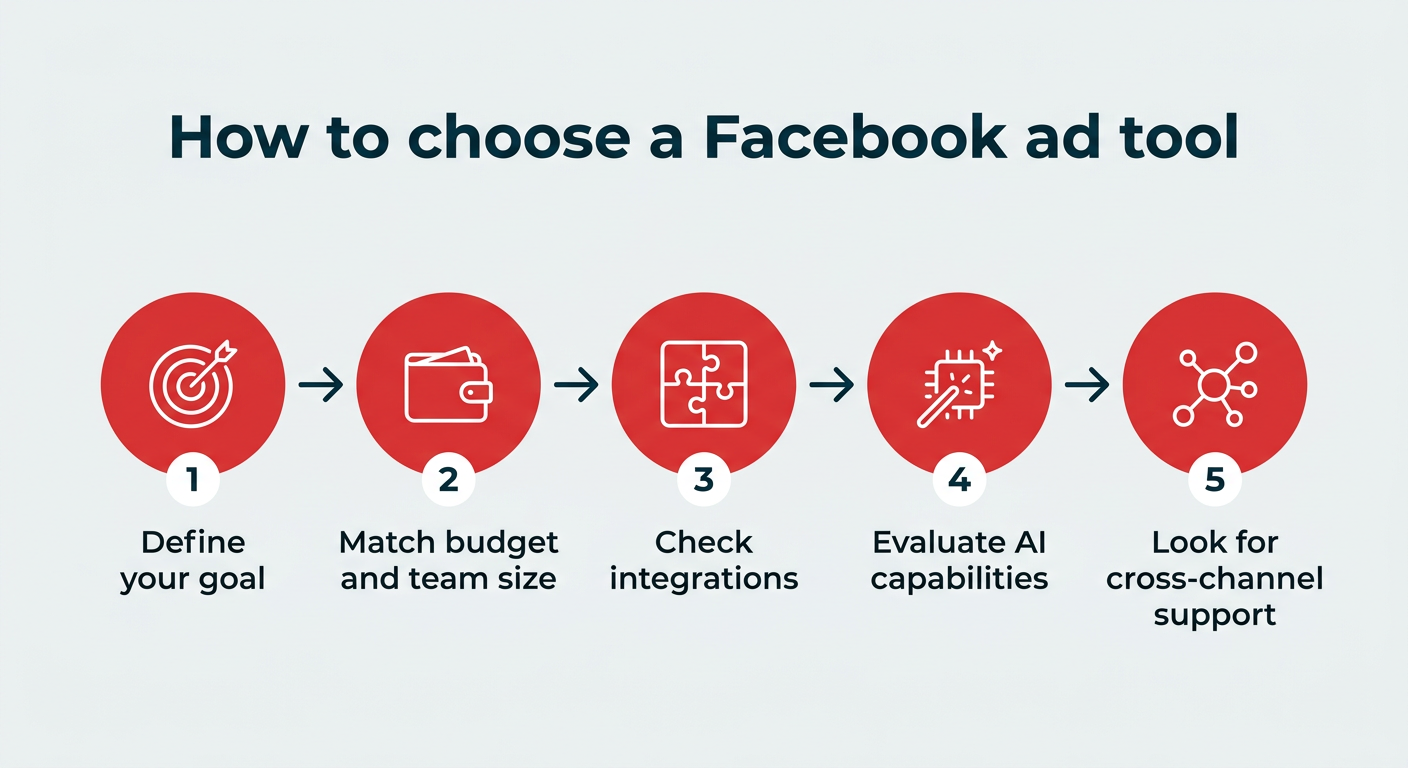
The most common error in selecting marketing technology is purchasing based on a feature list rather than a specific operational gap. Marketing leaders are advised to follow a five-step evaluation process:

- Identify the Pain Point: Is the issue related to slow creative output, messy reporting, or poor budget allocation?
- Evaluate Integration: Does the tool connect directly to the existing CRM and social media management system?
- Assess Consolidation: Will this tool replace an existing platform, or add to the current "tech bloat"?
- Analyze Scalability: Does the pricing model align with current ad spend, or does it penalize growth?
- Review Privacy Compliance: In an era of GDPR and CCPA, does the tool maintain strict data handling protocols?
The Role of Unified Social OS Platforms
As teams grow, the fragmentation of workflows becomes a significant barrier to ROI. Integrated platforms like Hootsuite Social OS represent a shift toward centralizing the entire social media ecosystem. By housing paid advertising, organic content scheduling, and social listening under a single dashboard, these platforms solve the "silo" problem.

The primary implication for 2026 is that social media managers are now expected to be "full-stack" marketers. They must understand the nuances of organic community engagement while simultaneously managing the technical parameters of paid acquisition. Tools that provide a unified view—such as Wisdom by Hootsuite for AI-driven copywriting and repurposing—allow these professionals to leverage high-performing organic content as the foundation for paid ad campaigns, effectively lowering the cost per acquisition (CPA).

Broader Implications for the Industry
The shift toward AI-automated advertising does not signal the end of the human marketer, but rather a transition in their core competencies. The focus has moved from manual bidding and keyword selection to high-level strategy, creative direction, and data interpretation.

Fact-based analysis suggests that organizations that fail to adopt these advanced management tools will likely face two primary risks:

- Diminishing Returns: Manual management cannot compete with the speed and efficiency of AI-driven optimization, leading to higher acquisition costs.
- Inaccurate Attribution: Without robust reporting tools, teams will struggle to justify marketing budgets to stakeholders, as they will be unable to prove the true impact of their ad spend on bottom-line revenue.
In conclusion, the successful Facebook advertiser of 2026 is one who balances the power of Meta’s internal AI with the precision and oversight provided by specialized third-party tools. By consolidating workflows, automating the mundane, and focusing on creative quality, teams can navigate the complexities of modern social advertising while maintaining a clear, actionable view of their performance metrics. As the industry continues to evolve, the ability to synthesize these tools into a cohesive strategy will remain the definitive marker of digital marketing success.