In the high-stakes world of digital marketing, search engine optimization (SEO) often feels like a race against time. When a high-performing product page suddenly slips in the search rankings, or a competitor starts outranking a flagship piece of content, the demand for immediate, actionable answers is constant. Traditionally, diagnosing these issues required lengthy, site-wide crawls that consumed hours of processing time and data analysis. However, a more efficient, agile approach is now available, allowing marketers to transition from initial triage to specific diagnosis in as little as three minutes using browser-based tools.
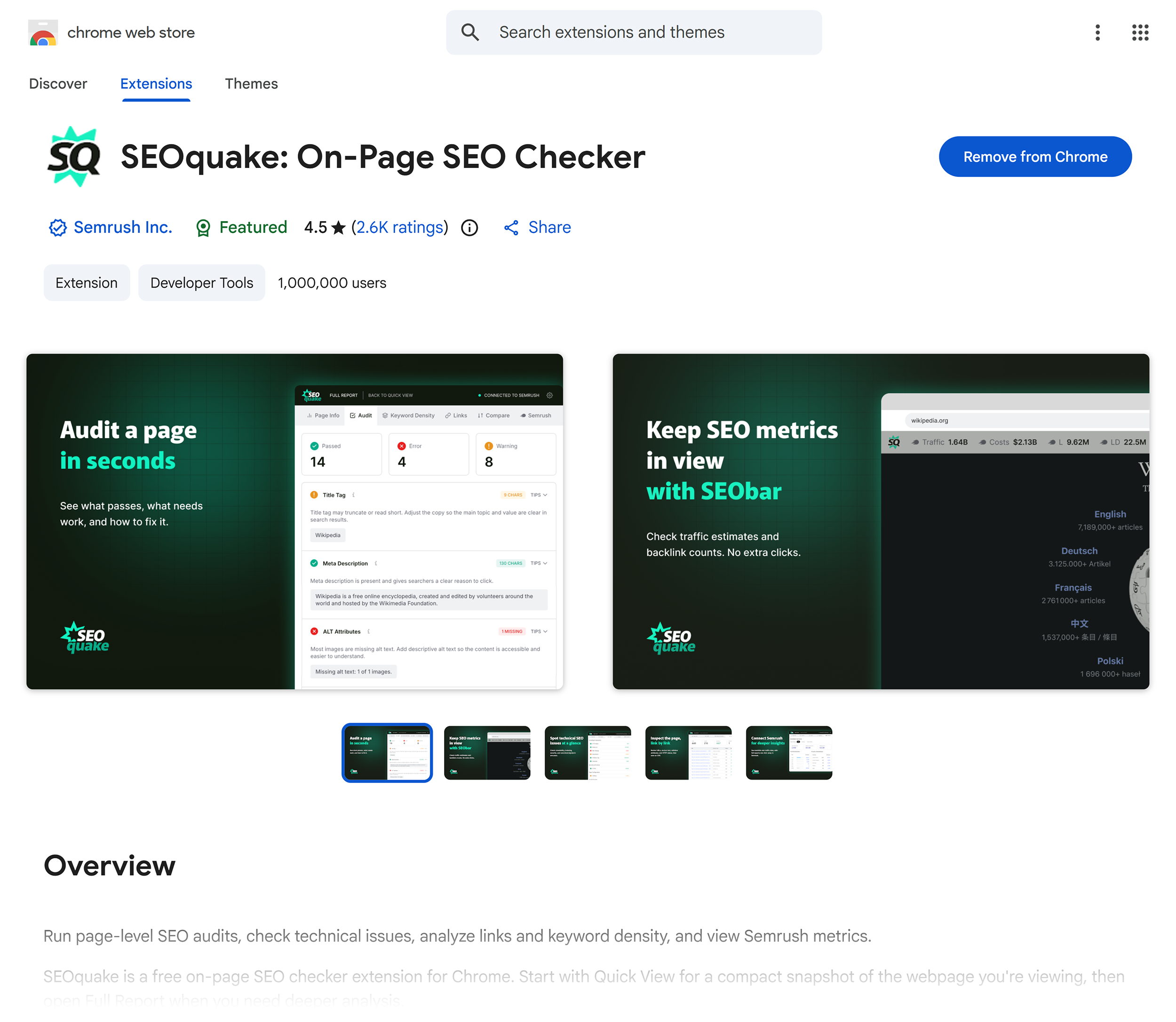
The SEOquake Chrome extension, developed by Semrush, has emerged as a cornerstone tool for this rapid-response workflow. By enabling users to audit technical signals, on-page SEO factors, and linking strategies without ever leaving the webpage being analyzed, it shifts the focus from broad-spectrum site crawling to precision diagnostics. This capability is particularly vital for SEO professionals, agency account managers, and business owners who need to identify why a specific page—such as a non-converting product landing page—is failing to meet its performance benchmarks.
The Anatomy of a Three-Minute Audit
The effectiveness of this workflow relies on a systematic approach that utilizes the extension’s color-coded feedback system. In professional SEO, efficiency is predicated on the ability to prioritize tasks based on impact. SEOquake uses a simple color-coded interface to guide this process: green indicators denote healthy parameters, orange signals warnings that require a judgment call, and red flags identify critical errors that may be actively hindering a page’s ability to rank or convert.
The process is divided into two distinct phases: a one-minute triage and a two-minute deep-dive diagnosis. By strictly adhering to these time allocations, auditors can bypass the noise of non-critical data and focus immediately on the elements most likely to impact search visibility and user experience.
Phase One: Triage via the Quick View Pop-Up
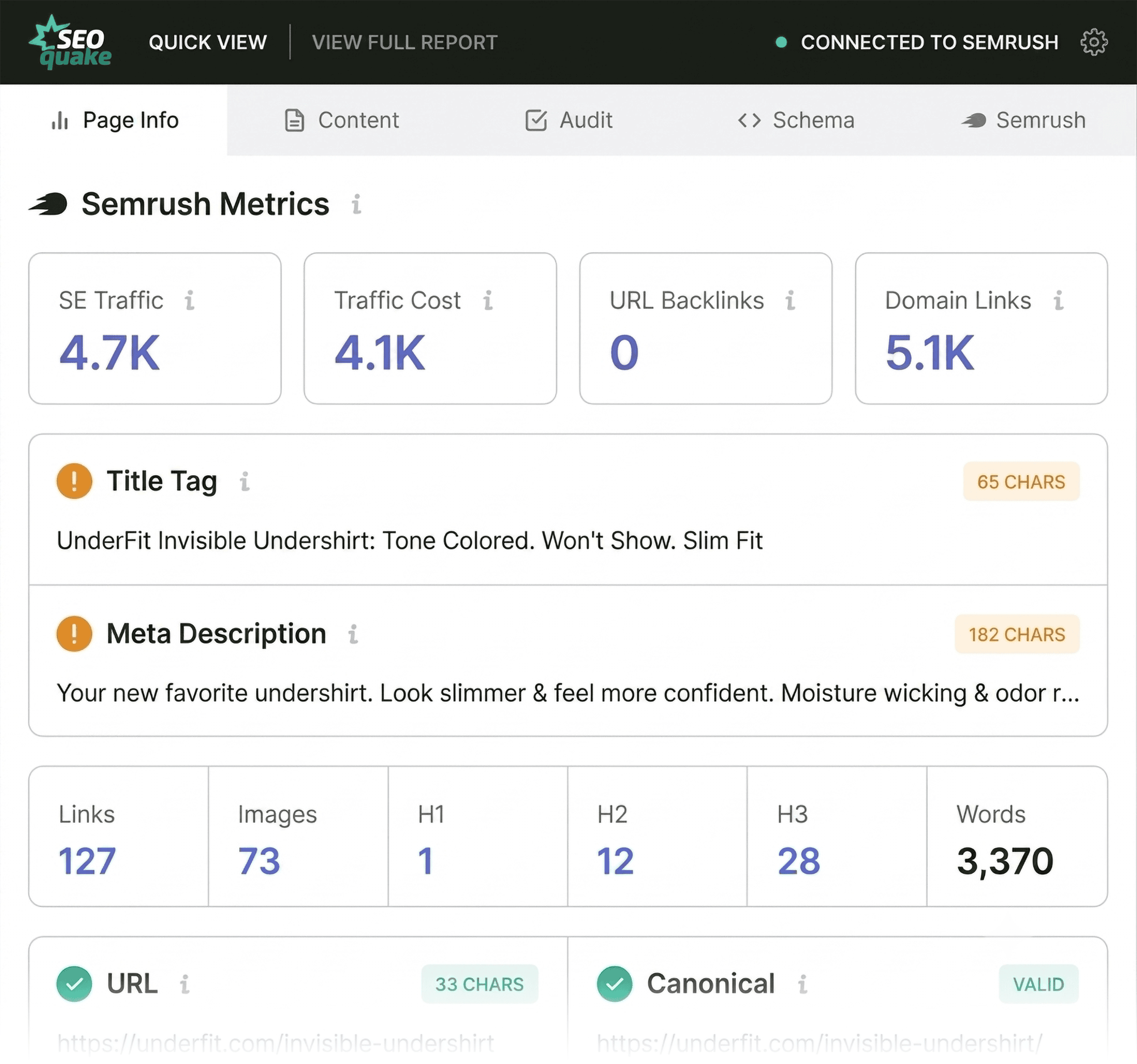
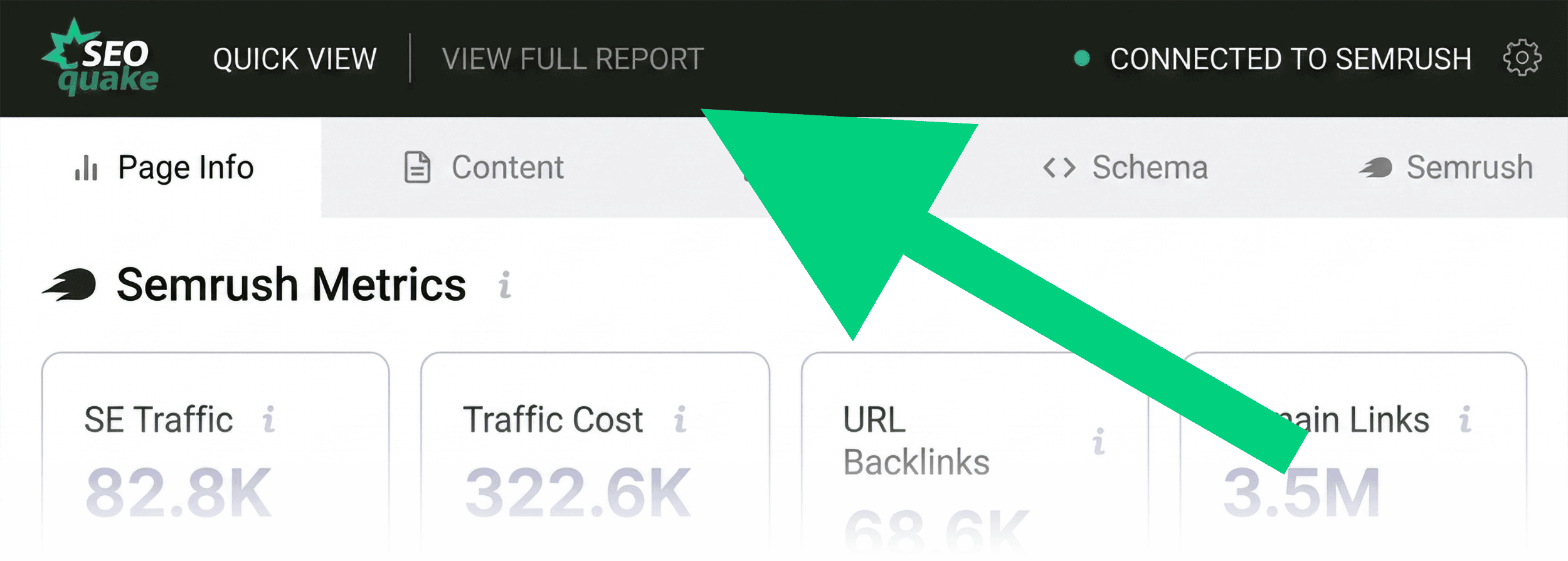
The first 60 seconds of the audit are dedicated to identifying glaring issues. When a user clicks the SEOquake icon, the Quick View pop-up provides immediate visibility into five key tabs: Page Info, Diagnosis, Internal Links, External Links, and Density. For most auditors, the process begins by focusing on three specific tabs: Page Info, Audit, and Content.
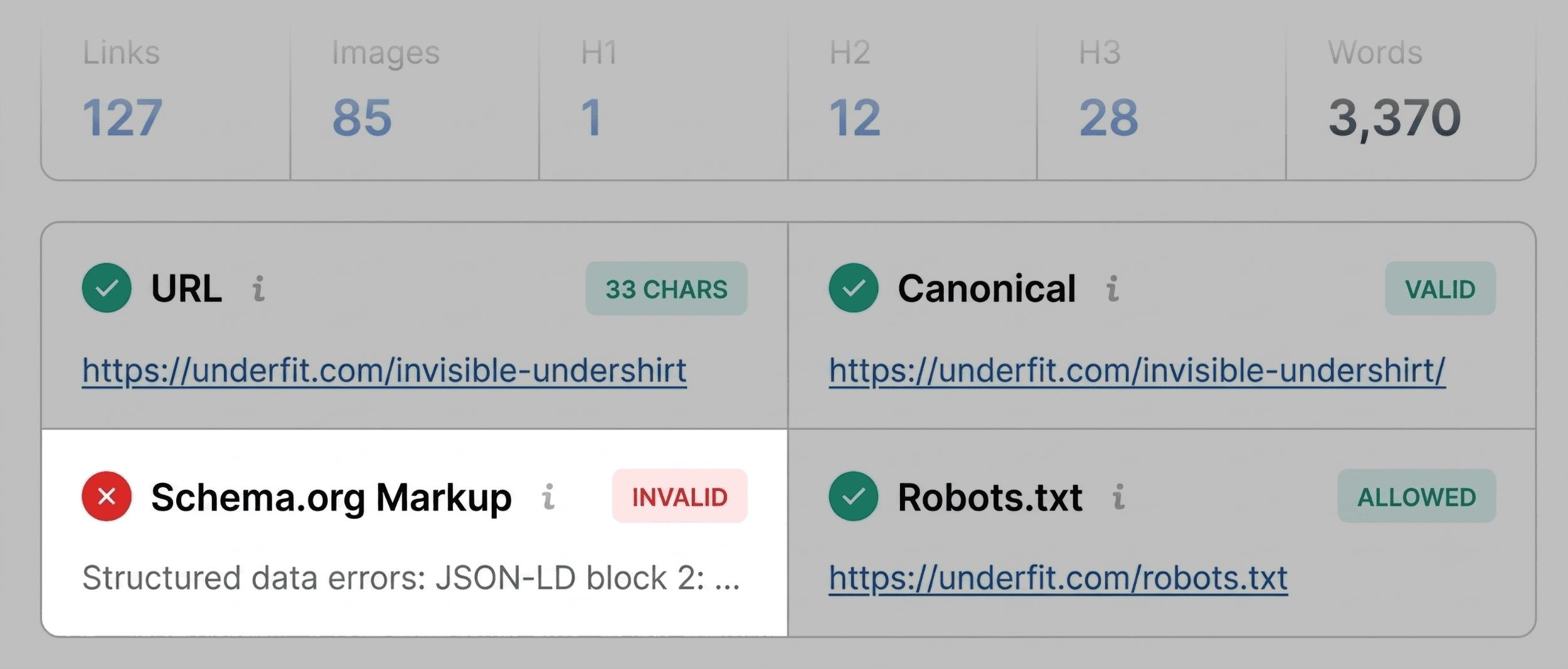
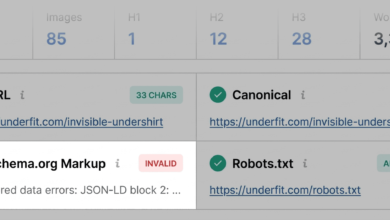
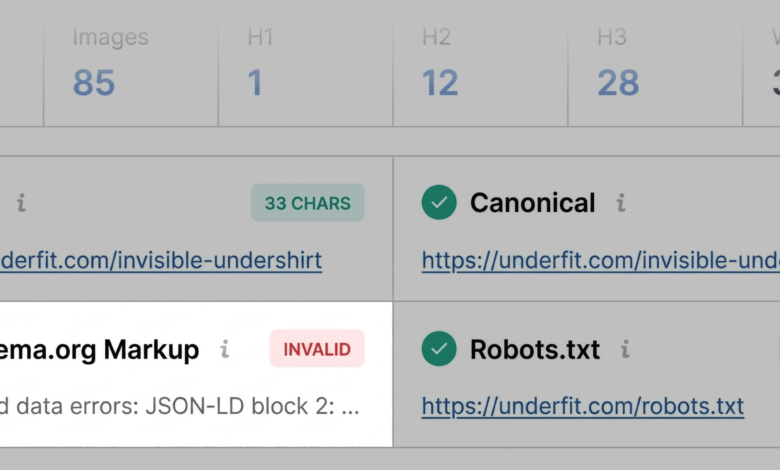
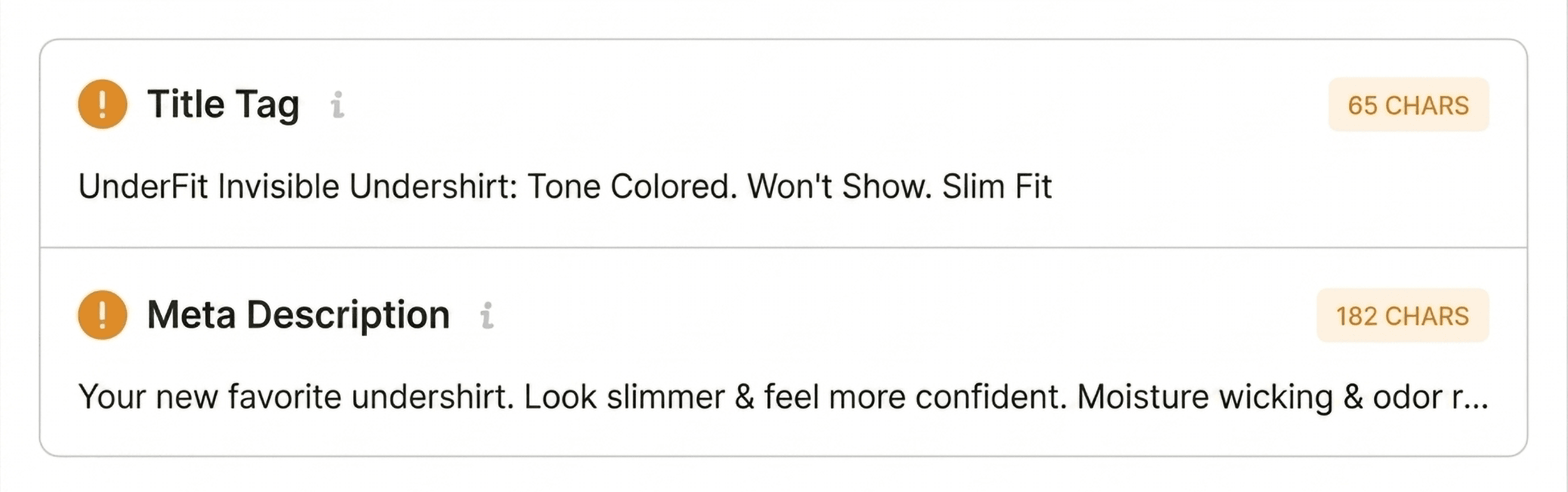
The Page Info tab provides a bird’s-eye view of core SEO elements, including the canonical URL, meta title, description, and the presence of structured data. A common pitfall identified in this stage is the presence of invalid Schema.org markup. For e-commerce product pages, this is a significant issue; if search engines cannot parse the JSON-LD structured data correctly, the page is rendered ineligible for "rich results." These rich results—which display price, availability, and user ratings directly in the search results—are often the primary driver of click-through rates. Detecting these errors in the first minute allows the auditor to flag them immediately for technical remediation.
Phase Two: Technical and Content Diagnosis
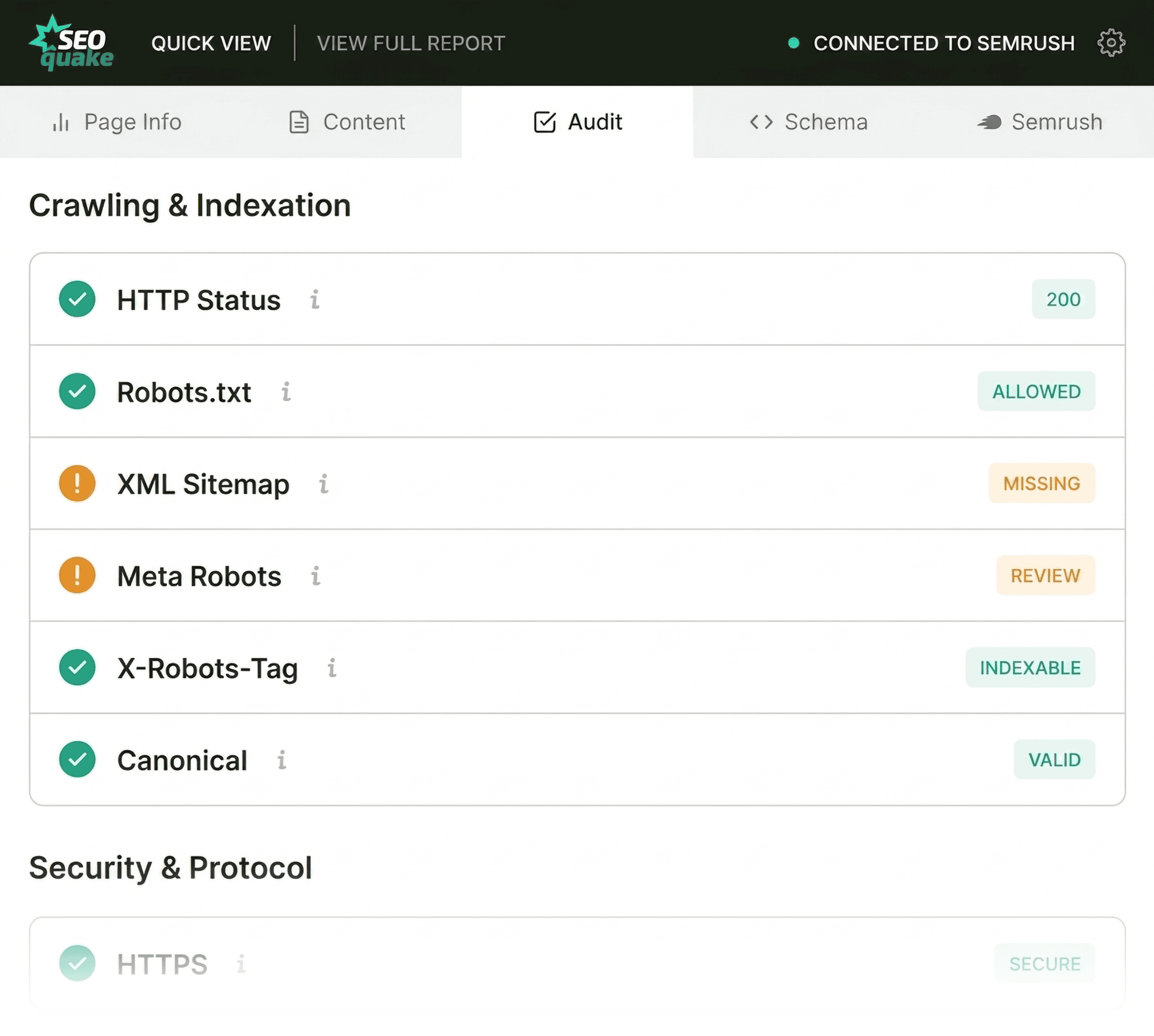
Once the initial triage is complete, the subsequent two minutes are used to investigate the specific flags identified. The "Audit" tab serves as the engine for this phase, scanning for essential technical requirements such as meta robots tags, mobile-friendliness, and sitemap accessibility.
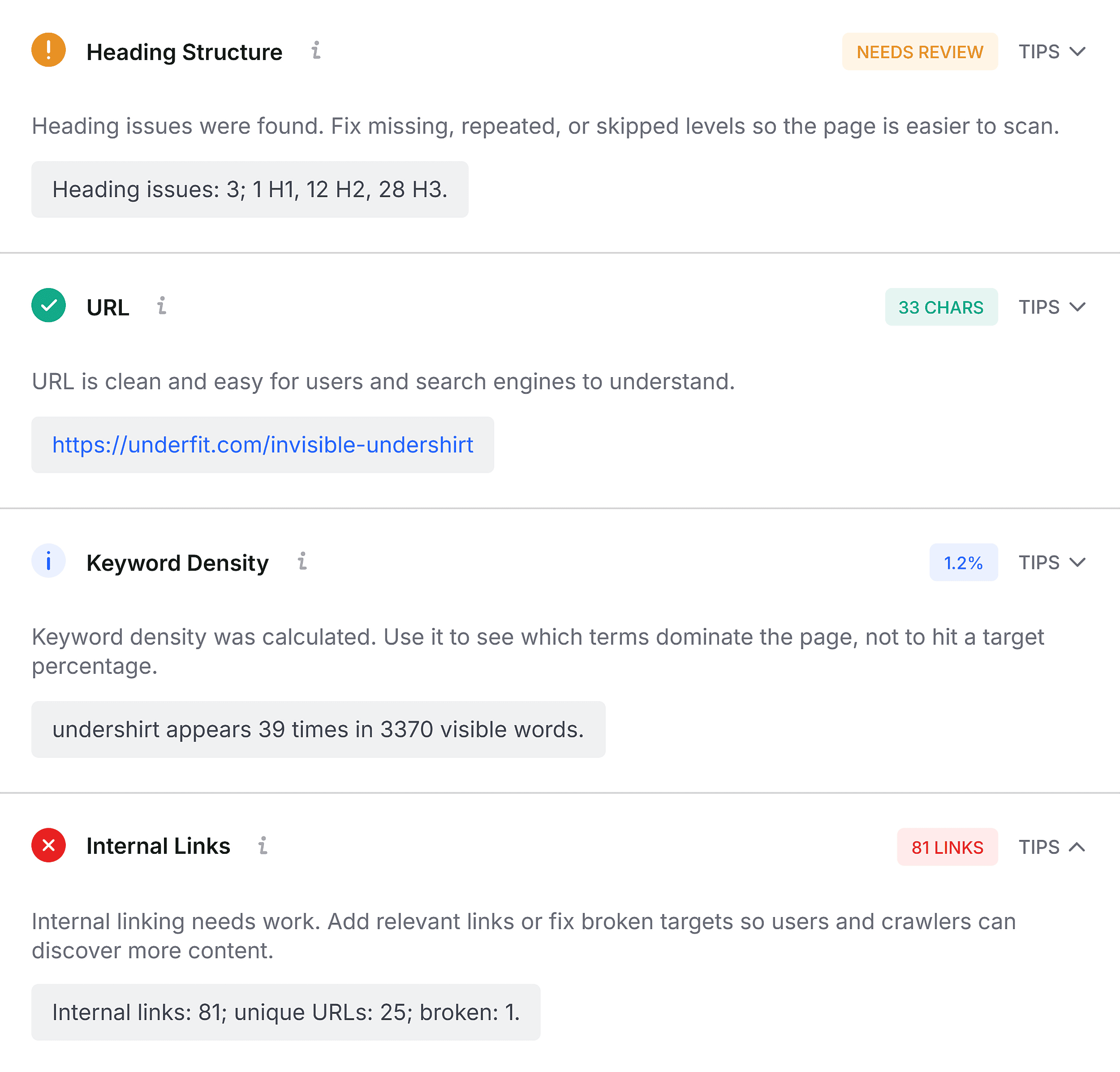
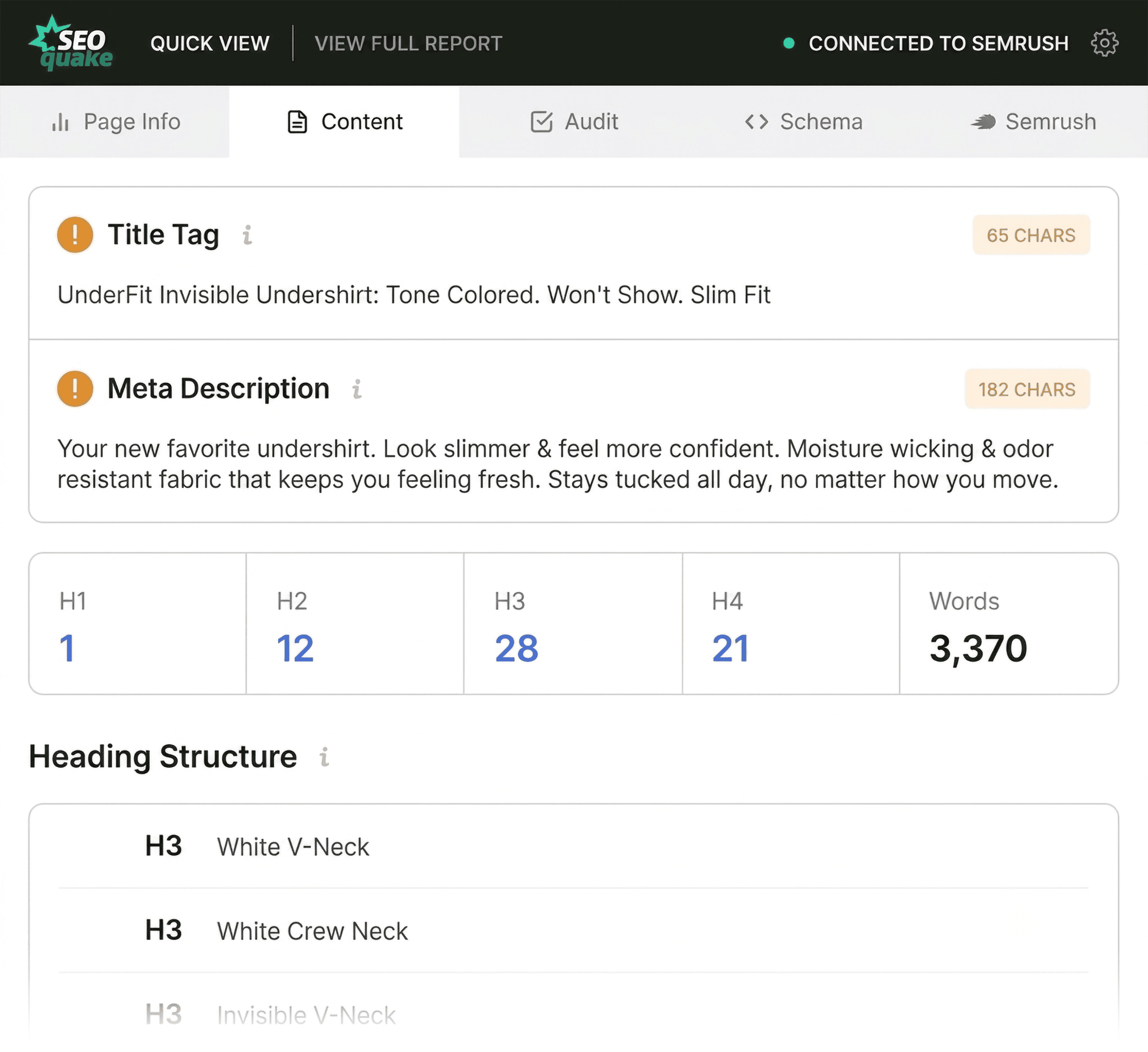
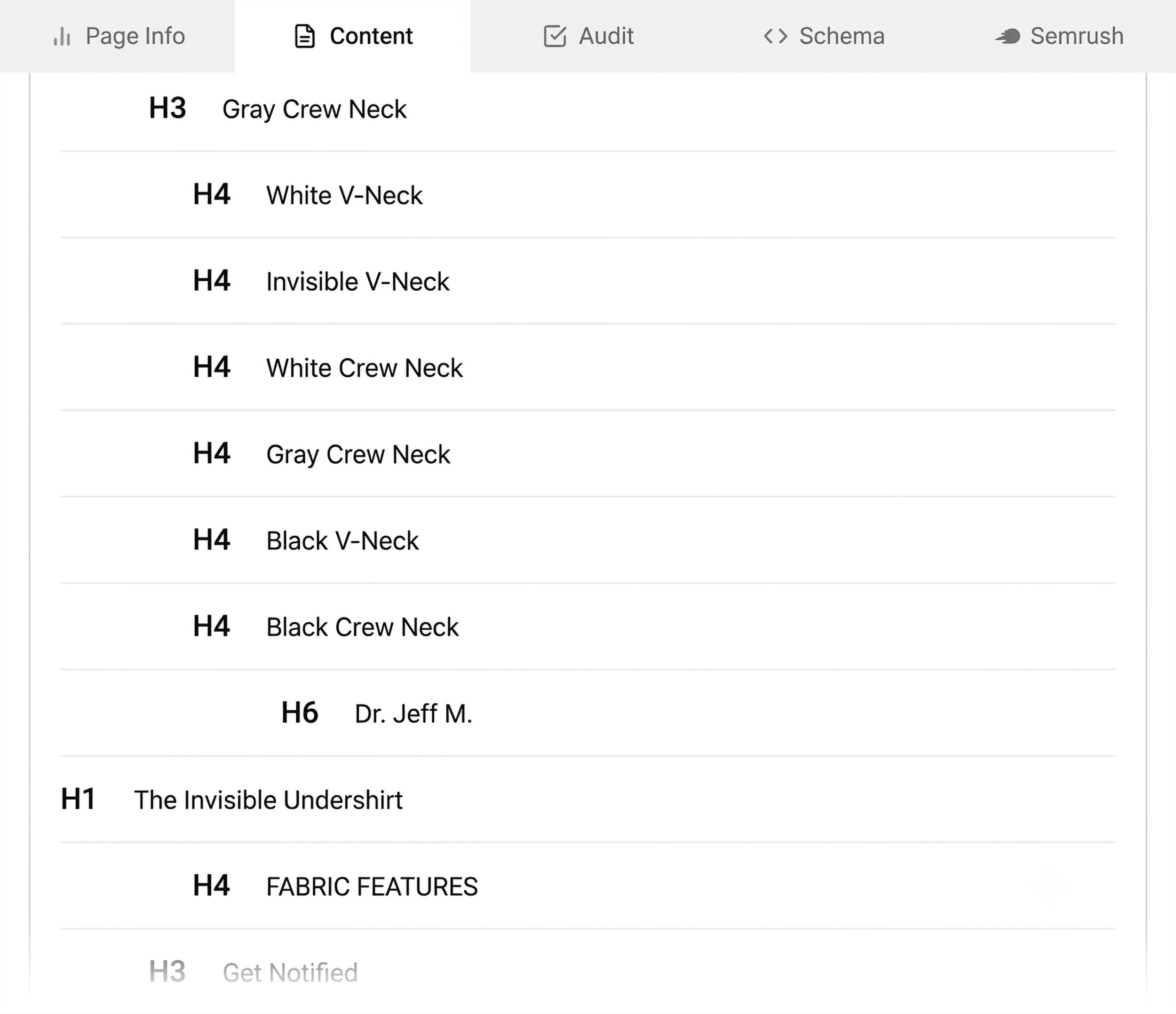
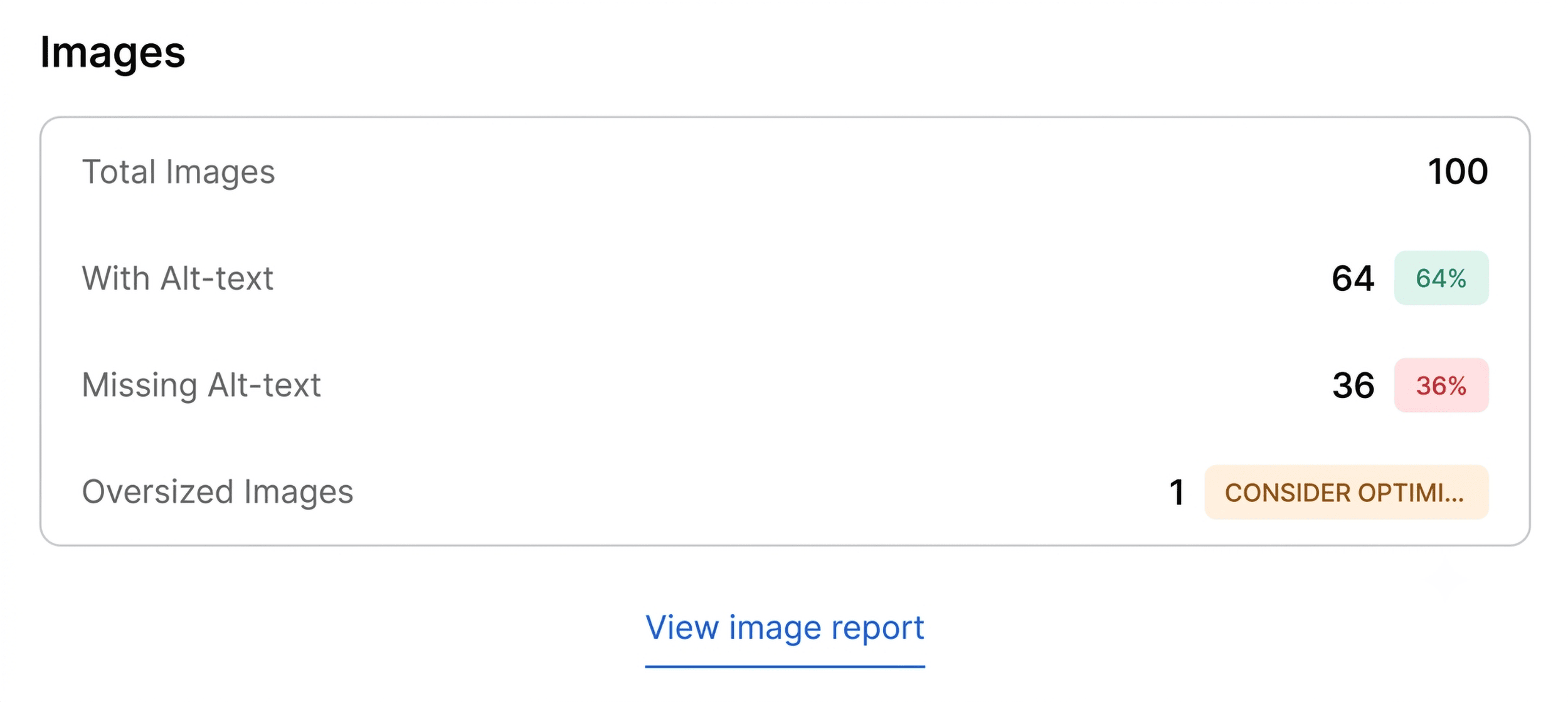
A recurring theme in modern SEO audits is the importance of content architecture. In the Content tab, auditors evaluate heading structures (H1 through H6). A common finding on underperforming pages is a "broken" heading hierarchy, such as an H1 tag placed deep in the page content or a jump from an H1 directly to an H4. While search engines have become more adept at interpreting content, clear semantic structure remains essential for accessibility and helps AI-driven search systems accurately parse the hierarchy of information. Furthermore, this phase often reveals missing image alt text. On product pages where visual assets are the primary sales driver, failing to optimize images for screen readers and search crawlers represents a missed opportunity for both accessibility and image search visibility.

Investigating Link Health and Keyword Relevance
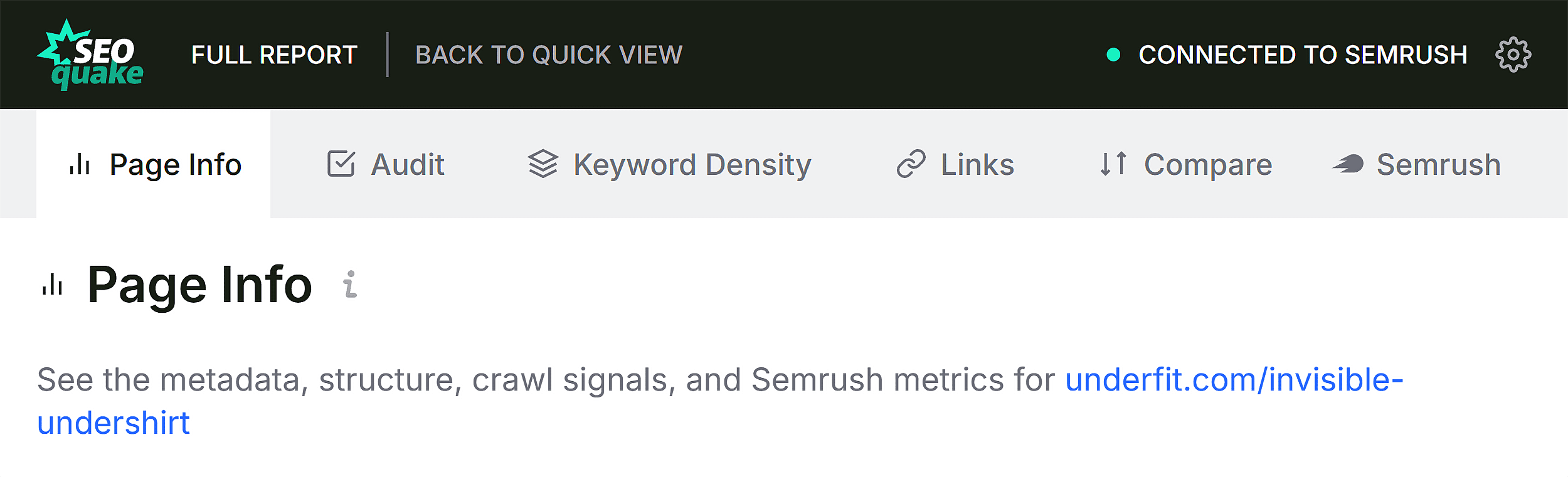
The second phase of the audit also involves an assessment of link health and keyword density. Broken links—both internal and external—serve as a signal of site neglect to search crawlers. By utilizing the Full Report feature, auditors can export these broken links into a CSV file, turning a vague sense of "technical issues" into a concrete, actionable to-do list for developers.
Concurrently, the Keyword Density panel offers insight into the page’s topical relevance. By analyzing the "Keyword Cloud," auditors can ensure the terms most prominent on the page align with the target audience’s search intent. When phrases like "invisible undershirt" or "v-neck cotton" appear as the most frequent terms, it confirms the content is on-topic. However, if the keyword cloud is dominated by terms from site navigation or interactive widgets, it suggests that the page may lack sufficient unique, descriptive text to satisfy search engine algorithms.
Strategic Implications: When to Escalate
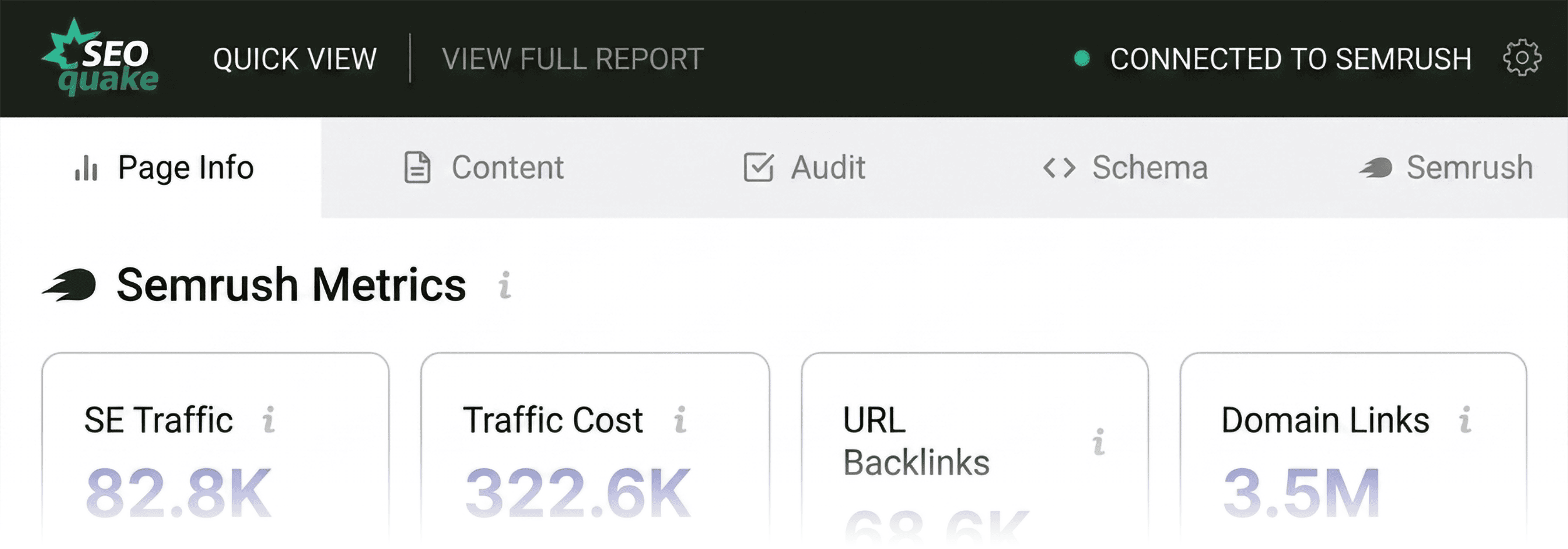
The final step in a three-minute audit is deciding the scope of the fix. SEO is not merely about individual page performance; it is about site-wide health. By utilizing the Semrush panel within the extension, auditors can compare page-level metrics with domain-level data.
If a page is underperforming despite being on a domain with high authority, strong traffic, and a healthy backlink profile, the problem is likely isolated to the content or the page template. In these instances, a manual fix or an A/B test is the appropriate path forward. However, if the issues identified—such as an invalid XML sitemap or pervasive JSON-LD errors across all product templates—are systemic, the audit serves as a trigger for a full site-wide crawl.
This, in turn, often requires the use of more robust tools, such as the full Semrush Site Audit suite. The ability to distinguish between a "fixable on-page issue" and a "systemic site architecture issue" is the hallmark of a high-level SEO strategy. By condensing the initial diagnosis into three minutes, professionals can dedicate more time to implementing strategic solutions rather than spending hours in the discovery phase.
Conclusion: The Value of Rapid Diagnosis
In a landscape where algorithms are updated frequently and competition is intense, the capacity for rapid, data-driven diagnosis is a significant competitive advantage. The SEOquake workflow does not replace the need for comprehensive site auditing, but it does serve as an essential "first-responder" tool. By providing immediate visibility into technical health, content structure, and keyword performance, it allows marketers to maintain a high level of vigilance over their digital assets. For organizations looking to maximize their organic search presence, the ability to identify and rectify issues in real-time is no longer just a luxury—it is a requirement for sustained growth in the digital marketplace.