Amazon Web Services Expands EBS Capabilities with Cross-Account Volume Clones and Re-Encryption Support

Amazon Web Services (AWS), a subsidiary of Amazon.com Inc., has announced a significant expansion of its Amazon Elastic Block Store (Amazon EBS) functionality, introducing cross-account copy capabilities for EBS Volume Clones. This new feature builds upon the rapid point-in-time cloning capabilities originally rolled out the previous year, enabling cloud architects, developers, and system administrators to securely duplicate production storage volumes across distinct AWS accounts. By bridging the gap between segregated organizational environments, the update addresses long-standing challenges associated with maintaining synchronized, up-to-date data for staging, testing, and compliance verification without compromising the security boundaries of production ecosystems.
Background Context and Evolution of Amazon EBS Clones
To understand the operational significance of this new capability, it is essential to examine the lifecycle of Amazon EBS storage management. Historically, duplicating block storage required traditional snapshot-to-volume restoration workflows, which could be time-consuming, resource-intensive, and complex when executed across different security perimeters. Recognizing the friction this caused for engineering teams managing multi-account architectures, AWS introduced Amazon EBS Volume Clones. These clones offered instant, zero-wait, point-in-time copies of storage volumes within the same Availability Zone by leveraging underlying metadata manipulation rather than physically copying every block at creation.
However, modern enterprise cloud strategies heavily rely on multi-account management frameworks, such as AWS Organizations, to enforce security isolation, cost allocation, and operational governance. Under these best practices, production workloads are strictly segregated from development, quality assurance, and staging accounts. While this segregation is vital for security posture and compliance, it historically created bottlenecks when engineering teams attempted to refresh non-production environments with production-grade data. The newly released cross-account copy feature directly resolves this friction by extending the native speed and efficiency of volume clones across administrative boundaries, allowing organizations to maintain strict security isolation while simultaneously accelerating software development life cycles.
Step-by-Step Operational Workflow

Executing a cross-account EBS volume clone involves a structured workflow that integrates Amazon EBS with AWS Resource Access Manager (RAM). This architectural design ensures that data sharing remains secure, auditable, and tightly controlled by the resource owners.
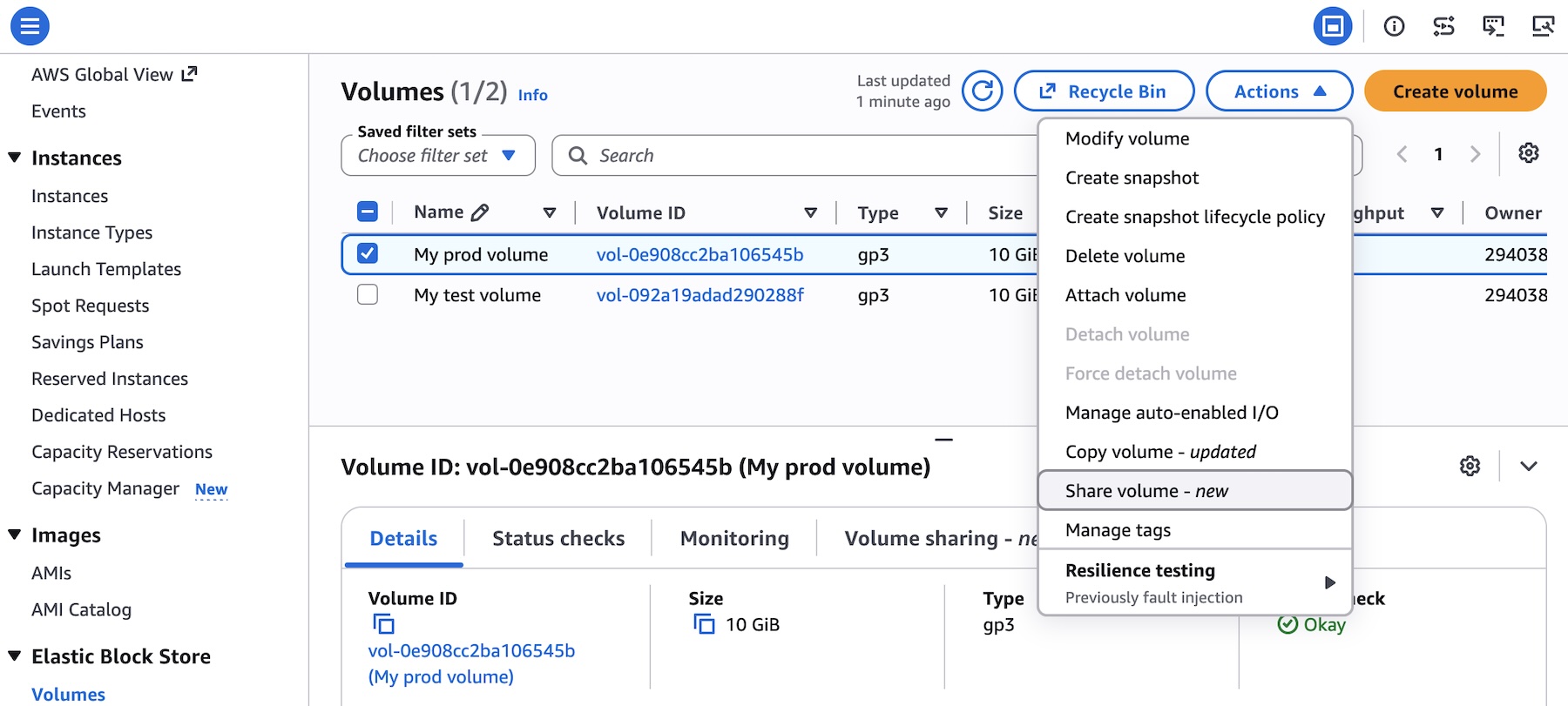
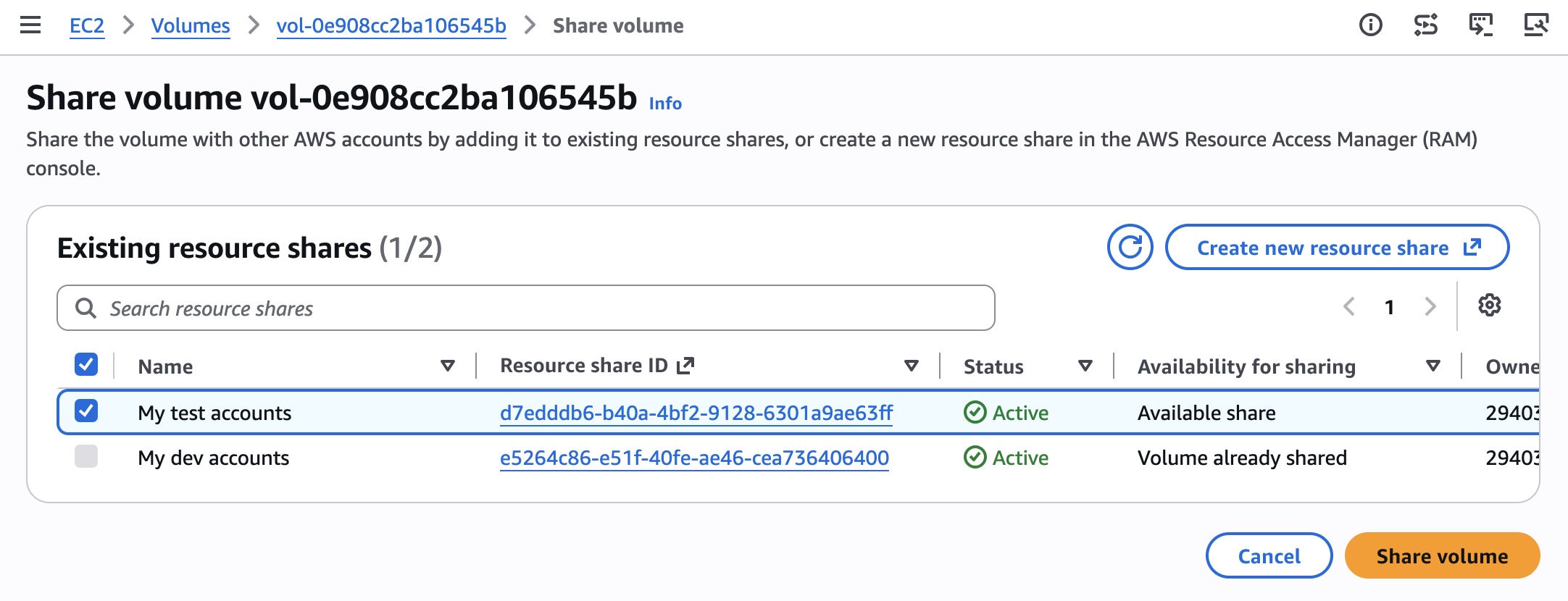
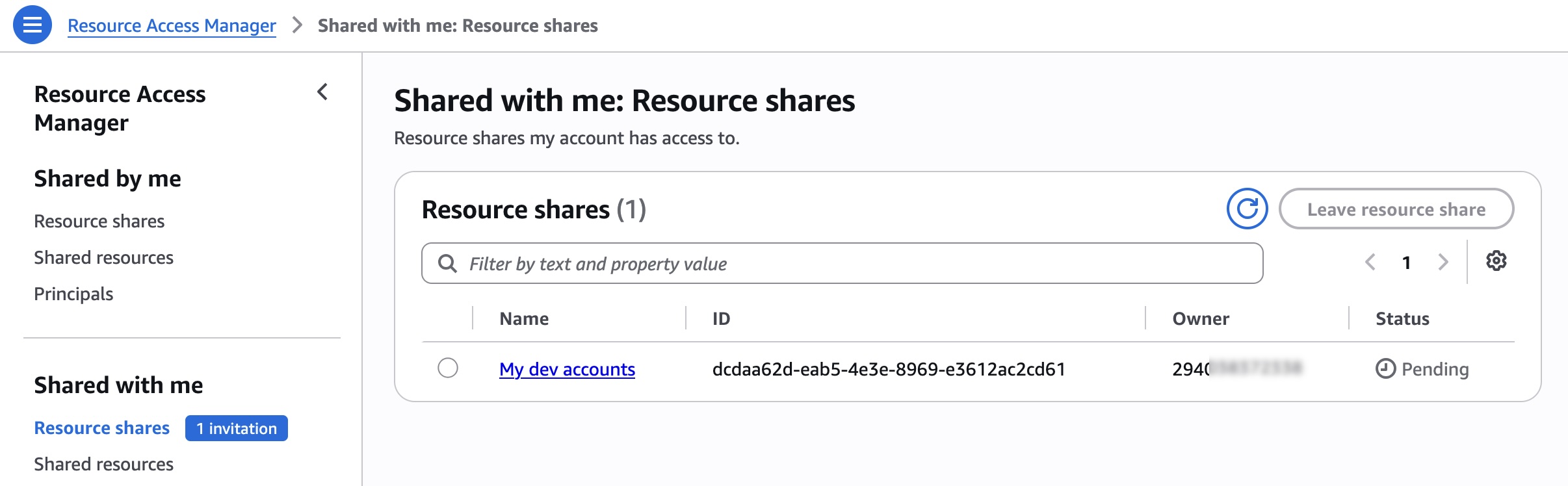
The process initiates within the source account, where the volume owner navigates to the Amazon EBS console, selects the target storage volume, and triggers the sharing protocol. By configuring permissions through AWS RAM—a service built to securely share AWS resources across accounts or within an entire AWS Organization—the owner grants the designated external account explicit access to the volume. Once the resource share is established, the target account administrator must log into their respective RAM console to formally accept the shared resource.
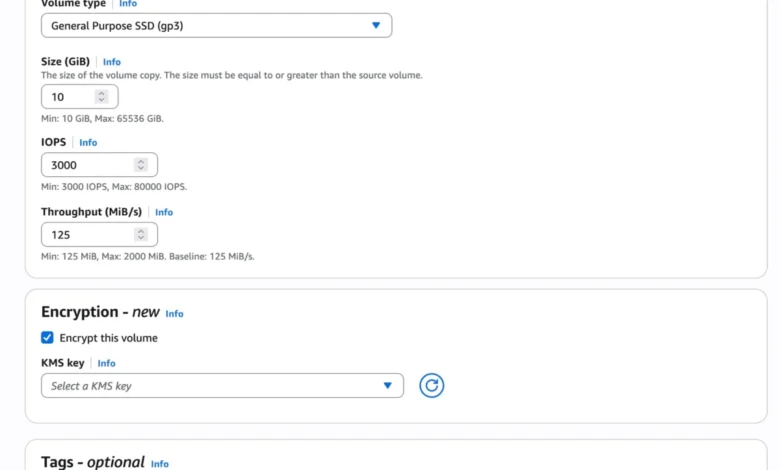
Upon acceptance, the shared volume becomes visible within the EBS volume management interface of the target account. At this juncture, the operator in the target environment can initiate a direct copy operation. Crucially, this copy step allows the target account to apply its own customized security parameters, including re-encrypting the newly minted volume using a unique AWS Key Management Service (AWS KMS) key native to the secondary account. This ensures that data governance, access auditing, and cryptographic controls remain fully aligned with the security policies of the receiving organization. Furthermore, for teams leveraging modern developer tooling, these administrative actions can be orchestrated programmatically using advanced developer integrations such as the AWS MCP Server and associated plugins within preferred AI coding environments.
Implications for Enterprise DevOps and Security
The introduction of cross-account EBS volume clones carries profound implications for enterprise software engineering, data governance, and compliance operations. In contemporary DevOps pipelines, the fidelity of test and development environments is directly correlated with the accuracy of bug detection and performance tuning. When staging environments rely on outdated or artificially generated dummy data, critical defects often slip past testing phases, manifesting only after deployment into live production environments.
By enabling instant, frictionless replication of production data into isolated development accounts, AWS empowers engineering teams to conduct rigorous experimentation, regression testing, and security simulations against authentic datasets. For instance, financial institutions, healthcare providers, and e-commerce enterprises can routinely refresh their staging databases to mirror current transaction loads or user behavior patterns.
Simultaneously, the integration of AWS KMS re-encryption during the cross-account copy process addresses critical regulatory compliance requirements. Regulations such as the Health Insurance Portability and Accountability Act (HIPAA), the Payment Card Industry Data Security Standard (PCI-DSS), and the General Data Protection Regulation (GDPR) mandate strict controls over sensitive data movement and encryption key management. Allowing the target account to enforce its own cryptographic keys ensures that data in transit and at rest complies with internal audit mandates, preventing unauthorized access even within multi-tenant or multi-subsidiary corporate structures.
Market Position and Competitive Landscape
Cloud storage management and data mobility have emerged as key battlegrounds among major hyperscale cloud providers. Enterprises increasingly demand seamless data interoperability across disparate environments, hybrid infrastructures, and organizational siloes without incurring massive egress fees or administrative overhead. By refining its native block storage primitives, AWS continues to fortify its ecosystem against alternative cloud architectures and third-party storage management tools.

Industry analysts note that while external backup and replication software vendors have historically filled this gap with bespoke multi-account synchronization agents, native cloud capabilities significantly reduce total cost of ownership (TCO) and operational complexity. By embedding cross-account cloning directly into the core Amazon EBS and AWS RAM control planes, Amazon eliminates the need for auxiliary infrastructure, maintenance scripts, or third-party licensing overhead. This tight integration reinforces customer stickiness while streamlining administrative duties for cloud platform engineering teams.
Availability and Future Outlook
Cross-account volume clones for Amazon EBS are generally available across all AWS Regions that currently support standard Amazon EBS Volume Clones. Organizations wishing to verify Regional rollout statuses or explore upcoming feature roadmaps can consult the official AWS Capabilities by Region documentation.
As enterprises continue to scale their cloud footprints, the demand for granular, secure, and automated data management utilities will only intensify. The deployment of cross-account EBS volume sharing underscores a broader industry shift toward developer-friendly, security-first cloud primitives. Practitioners and IT administrators can begin experimenting with the feature immediately via the Amazon EC2 and EBS management consoles, with technical feedback channels open through AWS re:Post and established enterprise support channels.
Related posts: