Mastering Meta’s Ad Ecosystem: Essential Specifications for Optimal Campaign Performance


In the dynamic realm of digital advertising, precision is paramount, and nowhere is this more evident than within Meta’s vast ecosystem of platforms, encompassing Facebook, Instagram, Messenger, and the Audience Network. Advertisers seeking to maximize their reach and engagement must meticulously adhere to evolving ad specifications, ensuring their creative assets are perfectly tailored for each unique placement. This guide delves into the critical dimensions, aspect ratios, file types, and sizes required for effective ad deployment across Meta’s diverse offerings, providing a comprehensive overview crucial for successful campaign execution.

The Crucial Role of Ad Specifications in a Mobile-First World
The digital advertising landscape has undergone a significant transformation, with mobile devices now dominating user access. As of the fourth quarter of 2023, Facebook alone boasted 3.07 billion monthly active users, a staggering proportion of whom engage primarily through mobile. This mobile-first paradigm necessitates a strategic approach to ad creative, where visuals and videos must render flawlessly across various screen sizes and orientations. Disregarding these specifications can lead to distorted images, cropped videos, reduced visibility, and ultimately, wasted ad spend and diminished campaign performance. Meta’s continuous platform updates and the introduction of new immersive formats like Stories and Reels further underscore the need for advertisers to stay abreast of the latest guidelines. The transition from "Facebook ad sizes" to "Meta ad sizes" reflects the unified strategy across all the company’s applications, emphasizing consistency and adaptability.

General Guidelines for Meta Advertising
Before delving into placement-specific details, several universal guidelines apply to nearly every ad run across Meta’s family of apps. Adhering to these principles ensures optimal delivery and user experience, which Meta’s algorithms prioritize. High-quality visuals are non-negotiable; blurry or low-resolution images and videos detract from brand perception. While Meta no longer strictly enforces the 20% text-on-image rule, industry best practices and internal Meta data consistently show that ads with minimal text overlay on images tend to perform better and achieve broader distribution. Furthermore, clear and concise calls-to-action (CTAs) are vital, guiding users seamlessly to the desired next step. File types generally include PNG and JPG for images, and MP4, MOV, and GIF for videos. The maximum file size for image ads is 30MB, while video ads can be up to 4GB.
Chronology of Ad Format Evolution
Meta’s ad formats have evolved in tandem with user behavior and technological advancements. Initially, advertising on Facebook was largely confined to desktop news feeds and right-hand columns, favoring landscape or square image formats. With the advent of smartphones, the mobile News Feed became dominant, prompting the optimization for vertical aspect ratios (like 4:5). The introduction of Instagram and subsequently Facebook Stories marked a significant shift towards ephemeral, full-screen vertical content (9:16), demanding entirely new creative approaches. The rise of short-form video, popularized by platforms like TikTok, spurred Meta to launch Reels across both Facebook and Instagram, further cementing the importance of vertical video. Concurrently, e-commerce integration deepened with formats like Collection ads and Advantage+ catalogs, streamlining the path from discovery to purchase. This continuous evolution means advertisers must maintain a flexible and adaptive creative strategy.
Deep Dive into Specific Ad Placements
Facebook Feed Ad Sizes
The Facebook News Feed remains a primary battleground for advertisers. It is the endlessly scrollable stream where users consume content from friends, pages, and brands. Feed ads come in various styles, including single image, single video, and carousel formats.

- Feed Image Ads:
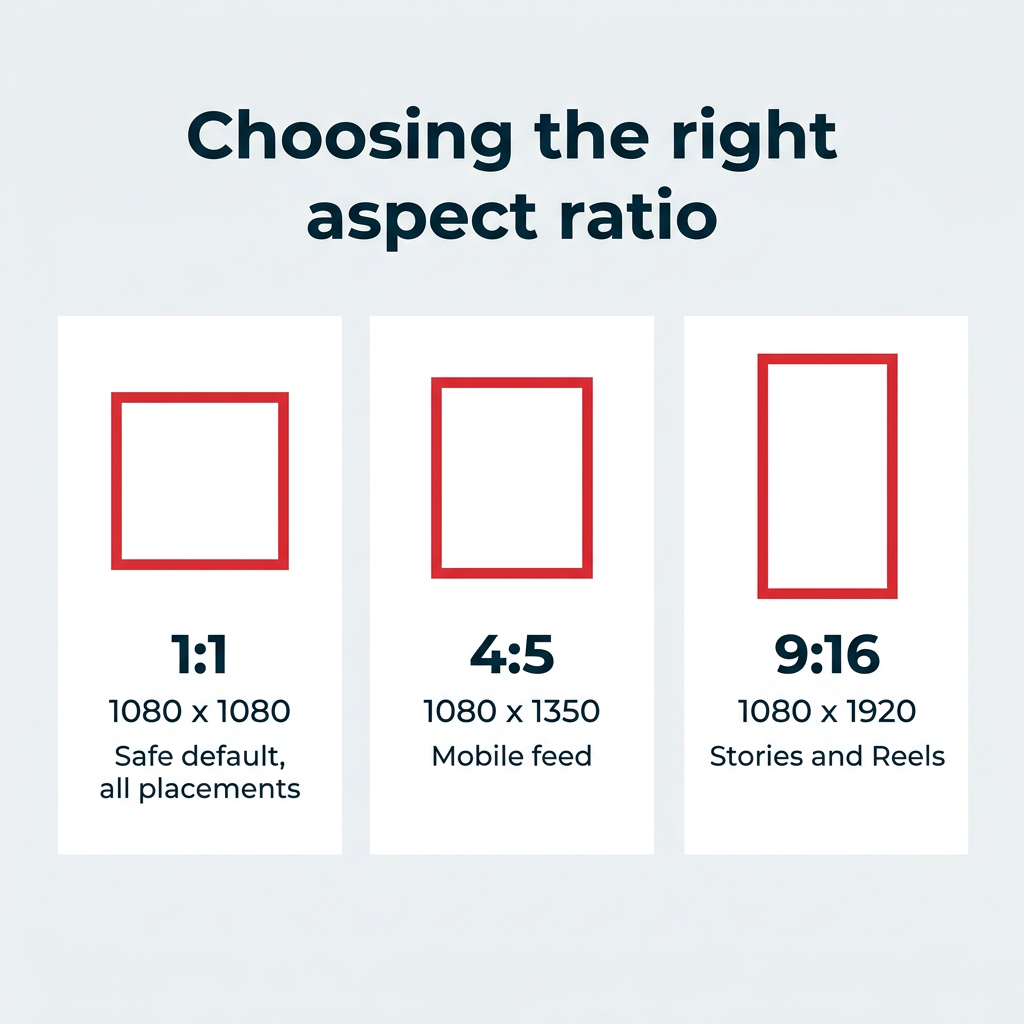
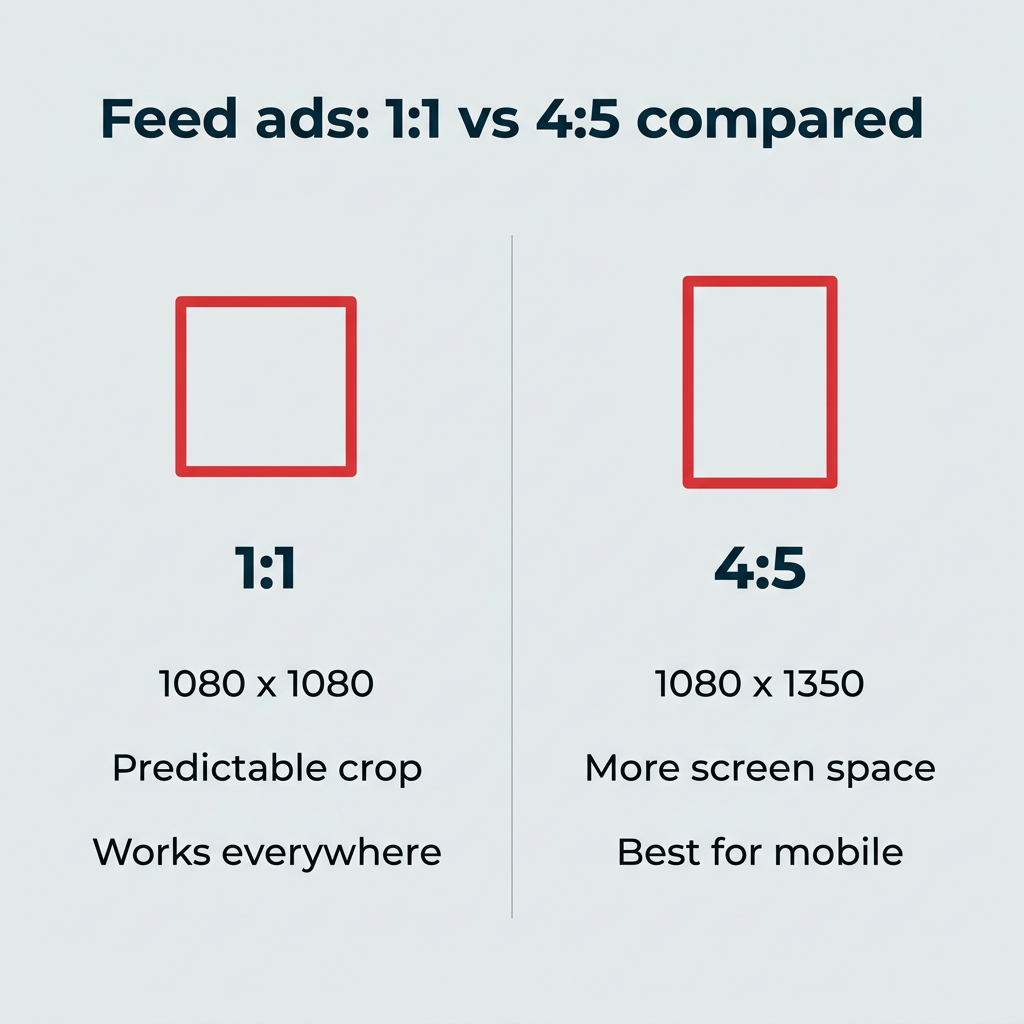
- Recommended size: 1440 x 1440 pixels (1:1 aspect ratio) or 1440 x 1800 pixels (4:5 aspect ratio).
- File types: PNG, JPG.
- Max file size: 30MB.
- Strategic Note: For mobile feeds, the 4:5 aspect ratio is often superior as it occupies more screen real estate, capturing greater user attention and pushing competing content out of immediate view. However, 1:1 is a safer universal default for predictable cropping across multiple placements.
- Feed Video Ads:
- Recommended size: 1440 x 1440 pixels (1:1 aspect ratio) or 1440 x 1800 pixels (4:5 aspect ratio).
- File types: MP4, MOV, GIF.
- Max file size: 4GB.
- Strategic Note: Videos in the feed benefit from auto-play functionality, making compelling opening frames crucial. The same specs apply to ads within the dedicated Facebook video feed.
Facebook Carousel Ad Sizes
Carousel ads are highly versatile, allowing advertisers to showcase between two and ten images, videos, or a combination, with each card linking to a separate URL.
- Carousel Image/Video Ads:
- Recommended size: 1080 x 1080 pixels or larger (1:1 aspect ratio). A 4:5 ratio is also supported specifically for Advantage+ catalog carousels.
- File types: PNG, JPG (images), MP4, MOV, GIF (videos).
- Max file size: 30MB (image), 4GB (video).
- Strategic Note: Carousels are excellent for showcasing multiple products, features, or a narrative sequence. Their interactivity encourages users to swipe, increasing engagement. They are also supported in Stories, Reels, and in-stream placements, often retaining the 1:1 aspect ratio.
Facebook Stories Ad Sizes
Stories ads appear between organic user Stories, offering an immersive, full-screen experience.
- Stories Image/Video Ads:
- Recommended size: 1440 x 2560 pixels (9:16 aspect ratio).
- File types: PNG, JPG (images), MP4, MOV, GIF (videos).
- Max file size: 30MB (image), 4GB (video).
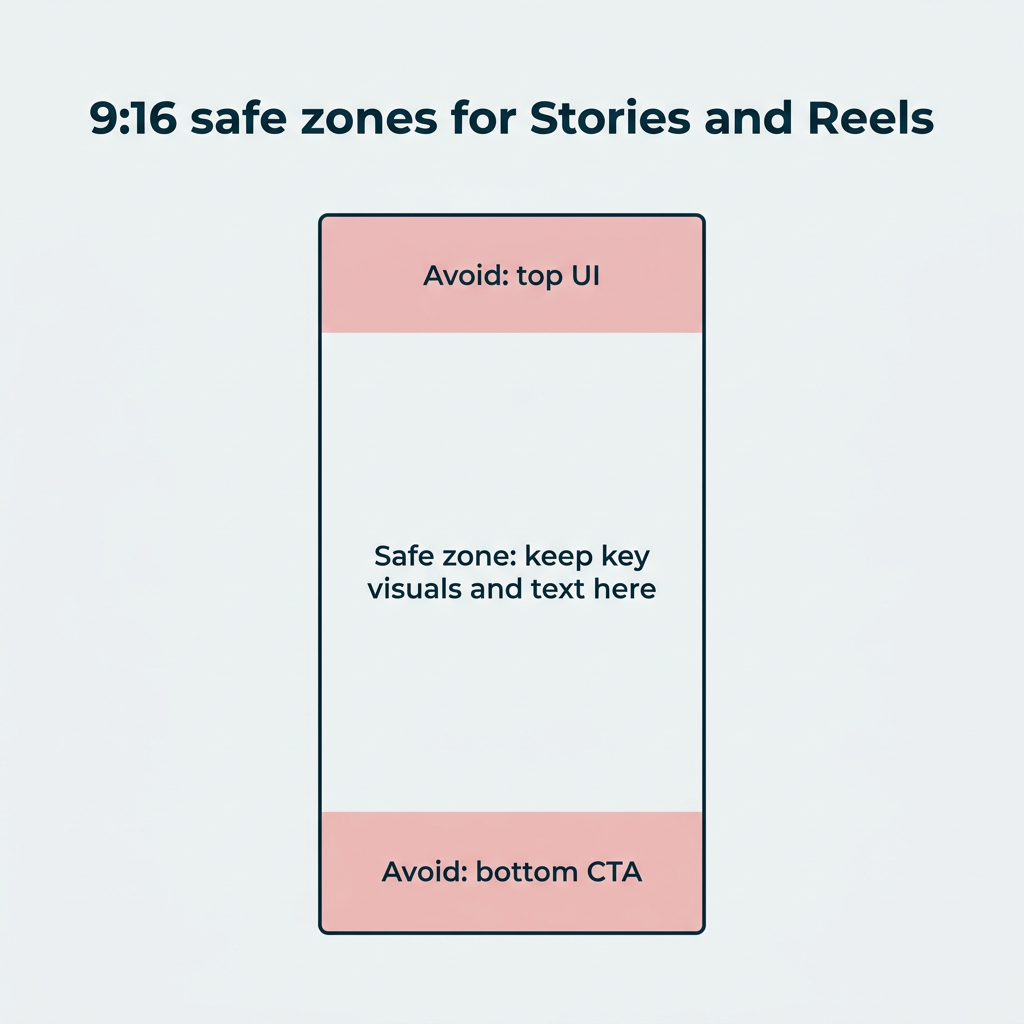
- Strategic Note: The 9:16 vertical format is designed for mobile-first, full-screen engagement. Critical visual elements and CTA buttons should be kept within a "safe zone" of approximately 1080 x 1420 pixels to avoid being obscured by UI elements at the top and bottom of the screen. Image Story ads display for five seconds, while video ads play for 10 seconds per segment. These specs also apply to Messenger Stories.
Facebook Reels Ad Sizes
Reels ads are short-form, vertical videos inserted between organic Reels in the dedicated Reels section. They are designed for quick, engaging content.
- Reels Video Ads:
- Recommended size: 1440 x 2560 pixels (9:16 aspect ratio).
- File types: MP4, MOV, GIF.
- Max file size: 4GB.
- Strategic Note: Like Stories, Reels demand a full-screen vertical approach. The "safe zone" consideration (keeping key elements centered, avoiding top/bottom 250px) is crucial due to UI overlays. The primary difference from organic Reels is the inclusion of a clickable call-to-action button.
- Reels Image Overlay Ads:
- Recommended size: 1080 x 1080 pixels or larger (1.91:1 to 1:1 aspect ratio).
- File types: PNG, JPG.
- Max file size: 30MB.
- Strategic Note: These appear as small, static banners at the bottom of an organic Reel, requiring a highly impactful image and concise ad copy to grab attention.
Facebook In-Stream Video Ad Sizes
In-stream video ads are strategically placed within organic video content, playing before, during, or after a host video, including live streams.

- In-Stream Video Ads:
- Recommended size: 1080 x 1080 pixels or larger (16:9 or 1:1 aspect ratio).
- File types: MP4, MOV, GIF.
- Max file size: 4GB.
- Strategic Note: Advertisers can choose between shorter, non-skippable ads or longer, skippable ones (after the first five seconds). The format’s placement within existing video content requires ads to be highly relevant and engaging to avoid user frustration.
Facebook Collection Ad Sizes
Collection ads are designed for e-commerce, linking directly to an Advantage+ product catalog. They present a hero image or video followed by multiple product images.
- Feed Collection Ads (Mobile/Desktop):
- Hero Image/Video: 1080 x 1080 pixels or larger (1:1 or 9:16 aspect ratio).
- Product Images: 1080 x 1080 pixels (1:1 aspect ratio).
- File types: PNG, JPG (images), MP4, MOV, GIF (videos).
- Max file size: 30MB (image), 4GB (video).
- Strategic Note: On mobile, tapping a product opens an "Instant Experience," a full-screen mini-storefront within Facebook. On desktop, they function more like carousel ads, leading directly to product pages.
- Reels and Video Collection Ads:
- Video: 1440 x 2560 pixels (9:16 aspect ratio).
- Product Images: Automatically pulled from the Advantage+ product catalog, displayed below the video.
- Strategic Note: This format integrates product discovery directly into engaging vertical video content, ideal for showcasing products in action.
Facebook Marketplace Ad Sizes
Marketplace ads are primarily image-based and appear within the Marketplace tab, but also leverage Meta’s Advantage+ placement algorithms to show up in feeds and other areas to users likely to purchase.

- Marketplace Image Ads:
- Recommended size: 1080 x 1080 pixels or larger (1:1 aspect ratio).
- File types: PNG, JPG.
- Max file size: 30MB.
- Strategic Note: These ads are highly conversion-focused, targeting users with purchasing intent. A clear image of the product and concise description are essential.
Additional Facebook Ad Placements
While less prominent, these placements offer additional reach and can be effective for specific objectives.

- Right Column Ad Sizes (Desktop Only):
- Recommended size: 1080 x 1080 pixels or larger (1:1 aspect ratio).
- File types: PNG, JPG.
- Max file size: 30MB.
- Strategic Note: These are smaller, image-only ads best suited for driving traffic or brand awareness. Meta recommends avoiding text on the image due to its small size.
- Search Results Ad Sizes:
- Recommended size: 1080 x 1080 pixels or larger (1:1 aspect ratio).
- File types: PNG, JPG (images), MP4, MOV, GIF (videos).
- Max file size: 30MB (image), 4GB (video).
- Strategic Note: Appearing on the search results page, these ads are highly effective when aligned with user intent, offering a direct path to products or services actively being sought.
- Business Explore Ad Sizes (Mobile Only):
- Recommended size: 1080 x 1080 pixels or larger (1.91:1 to 1:1 aspect ratio).
- File types: PNG, JPG (images), MP4, MOV, GIF (videos).
- Max file size: 30MB (image), 4GB (video).
- Strategic Note: These ads appear when users explore related businesses after engaging with an organic business post, offering discovery opportunities for similar products or services.
- Audience Network Ad Sizes:
Meta’s Audience Network extends ad reach beyond Facebook and Instagram to third-party apps and websites.- Banner Ads: 320 x 50 pixels (Banner aspect ratio). File types: PNG, JPG. Max file size: 30MB.
- Interstitial Ads: 320 x 480 pixels (9:16) or 480 x 320 pixels (16:9). File types: PNG, JPG (images), MP4, MOV (videos). Max file size: 30MB (image), 4GB (video).
- Strategic Note: These formats require simple, impactful creatives designed for quick consumption on various external platforms.
Implications for Advertisers and the Future of Creative Strategy
The detailed and diverse specifications across Meta’s ad placements highlight a critical imperative for advertisers: the need for adaptable creative strategies. Generic, one-size-fits-all creatives are increasingly ineffective in an ecosystem that rewards native, high-quality content. Advertisers must invest in producing multiple variations of their ad creatives, optimized for each specific placement and user interaction model. This approach not only ensures visual integrity but also significantly enhances user experience, leading to higher engagement rates, improved click-through rates, and ultimately, a better return on ad spend (ROAS).

Moreover, Meta’s continued investment in AI-driven tools like Advantage+ creative and Advantage+ placements suggests a future where the platform plays an even greater role in dynamically optimizing ad delivery. However, even with sophisticated AI, the foundational quality and correct sizing of the initial creative assets remain paramount. Poorly formatted assets will simply be poorly optimized, regardless of the underlying technology.
In conclusion, navigating the intricate world of Meta ad specifications is not merely a technical chore but a strategic imperative. By understanding and meticulously applying these guidelines, advertisers can unlock the full potential of their campaigns, ensuring their messages resonate powerfully and effectively with billions of users across Meta’s expansive digital landscape. The commitment to precise, high-quality, and contextually appropriate creative is the bedrock of successful digital advertising in the modern era.