Amazon Bedrock AgentCore Runtime Instances Empower Developers with Persistent Multi-Agent Infrastructure

Enterprise adoption of artificial intelligence has transitioned rapidly from experimental prototyping to robust, production-grade deployments. However, this evolution has exposed critical architectural bottlenecks in underlying infrastructure. As autonomous AI agents scale to execute complex, multi-step workflows spanning hours or even days, they require reliable mechanisms to persist state, coordinate actions with peer agents, share contextual data seamlessly, and access high-performance computing accelerators like graphics processing units (GPUs) for specialized tasks. Addressing these infrastructure demands, Amazon Web Services (AWS) has officially announced the launch of runtime instances within Amazon Bedrock AgentCore Runtime. This newly introduced complementary compute option provides developers with fully managed, persistent infrastructure purpose-built to handle complex, long-running agent workloads at scale.
Background Context and Evolution of Agentic Workflows
Historically, orchestrating advanced autonomous agents presented significant logistical challenges for engineering teams. While serverless architectures and microVMs proved effective for short-lived, stateless invocations, they frequently fell short when applied to sophisticated, stateful agentic loops. Workflows involving continuous code generation, automated debugging, continuous integration testing, or extensive data analysis require underlying operating system access, substantial memory footprints, and multi-day state persistence.

Prior to the introduction of Amazon Bedrock AgentCore Runtime Instances, developers seeking to maintain agent persistence over extended periods were forced to manually provision, configure, and scale native Amazon Elastic Compute Cloud (EC2) instances. This manual overhead included setting up complex networking topologies, implementing custom session managers, configuring auto-scaling policies, and stitching together disparate observability pipelines. The launch of runtime instances shifts this operational burden back to AWS, offering a managed environment that integrates directly with existing AgentCore APIs, identity management controls, and native monitoring systems.
Core Architectural Capabilities and Technical Features
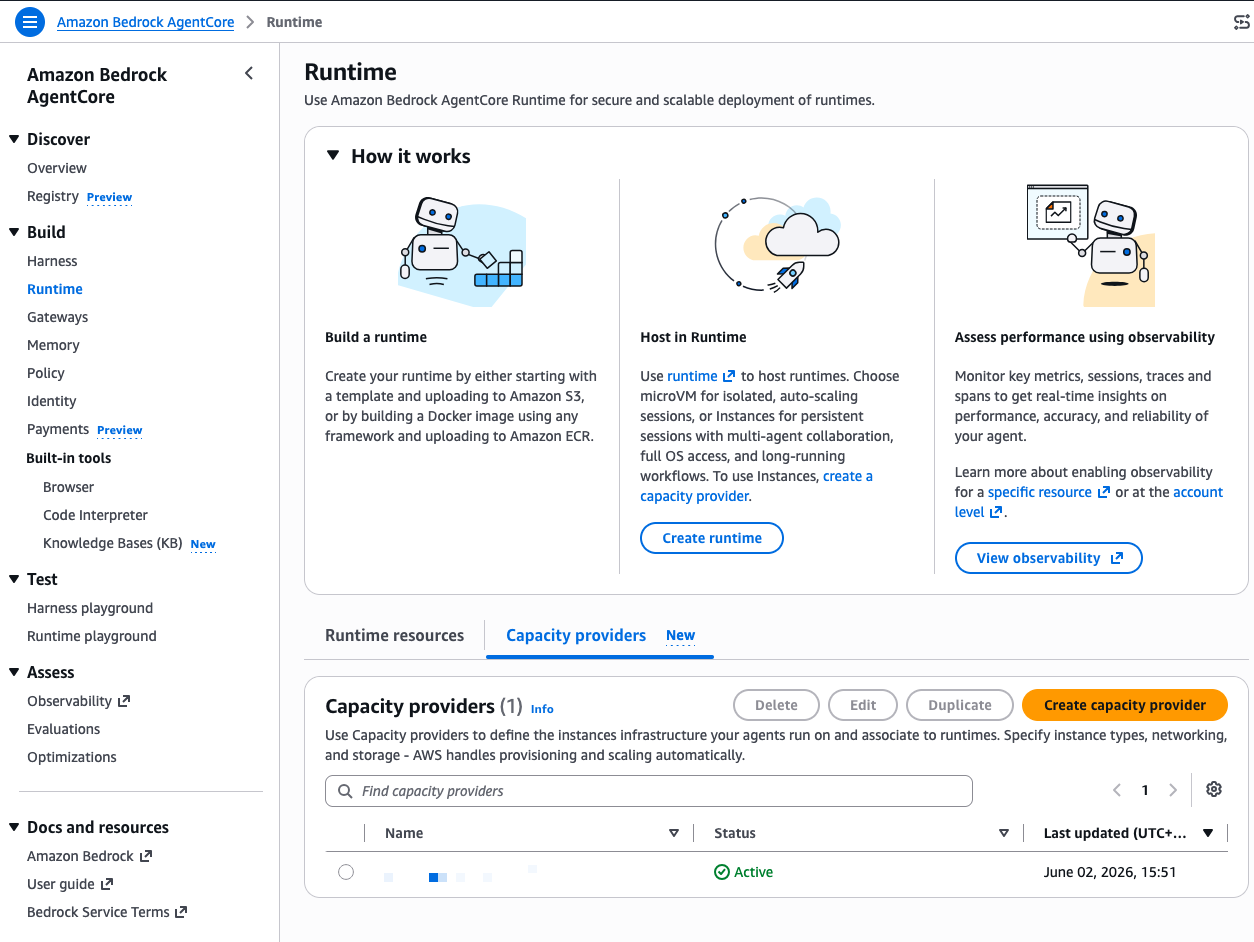
Amazon Bedrock AgentCore Runtime Instances deliver AWS-managed EC2 infrastructure designed to host multiple independent agents within a single runtime environment. Each deployed agent maintains its own distinct dependencies and artifact types while collaborating on a shared host. Crucially, these systems support managed sessions that persist for up to 14 days, accommodating extended enterprise workflows without data loss.
The service introduces several foundational technical enhancements for agent developers:
- GPU Acceleration: Workloads requiring intensive computational resources, such as machine learning model fine-tuning, complex data simulations, or heavy graphics processing, can leverage dedicated GPU-accelerated instances.
- Cost Optimization via Session Management: Developers can temporarily stop and restart sessions during idle periods, significantly reducing compute expenditure during non-active operational phases.
- Flexible Containerized Deployments: Teams retain the autonomy to ship independent container images or package artifacts via standard deployment pipelines.
- Long-Term Data Persistence: Runtime instances pair naturally with Amazon Elastic Block Store (Amazon EBS) and AgentCore Memory, enabling agents to retain contextual recall across disparate sessions and operational environments.
- Multi-Framework Compatibility: The platform remains framework-agnostic, supporting popular developer ecosystems including CrewAI, LangGraph, LlamaIndex, and Strands, alongside any chosen foundational model.
Complementary Compute Architecture: MicroVMs and Runtime Instances
A key design principle of the updated AgentCore architecture is the complementary relationship between runtime microVMs and runtime instances. Organizations are not required to choose a single compute paradigm; rather, both options can operate independently or in tandem through unified AgentCore runtime APIs.
In a typical hybrid deployment pattern, a lightweight orchestrator agent operating on a high-speed runtime microVM manages incoming API requests, dynamically routes tasks, and aggregates results. Simultaneously, specialized worker agents running on dedicated runtime instances execute compute-heavy background tasks such as multi-file code compilation, automated security vulnerability scanning, or complex graphical user interface (GUI) automation. This hybrid approach optimizes both rapid response scaling and heavy-duty, stateful execution.
Step-by-Step Implementation and Demonstration
To illustrate the practical application of runtime instances, AWS architects demonstrated a collaborative multi-agent setup comprising a code writer agent and a code reviewer agent. Both applications were built utilizing the Strands Agents framework, packaged as deployment archives, and deployed to a shared AWS-managed infrastructure.
Phase One: Establishing the Capacity Provider
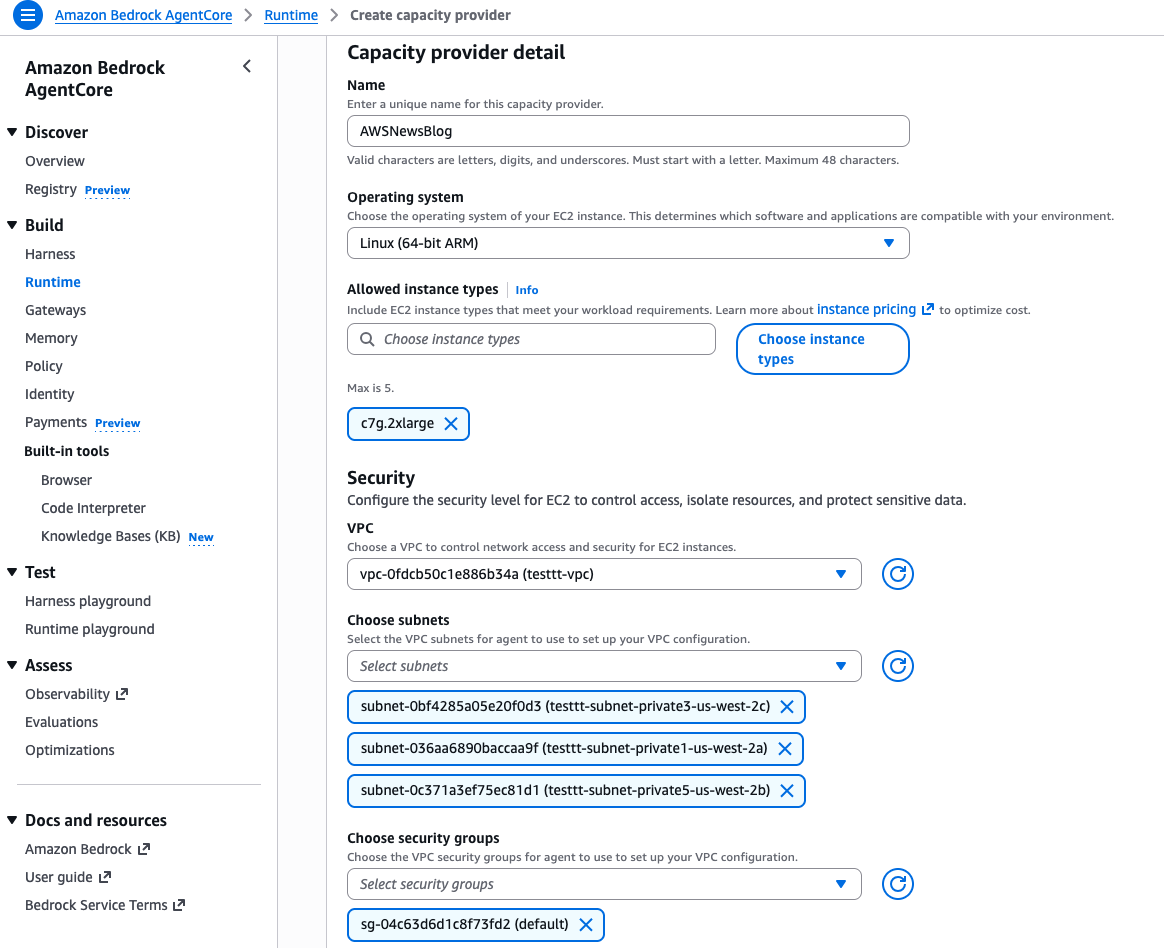
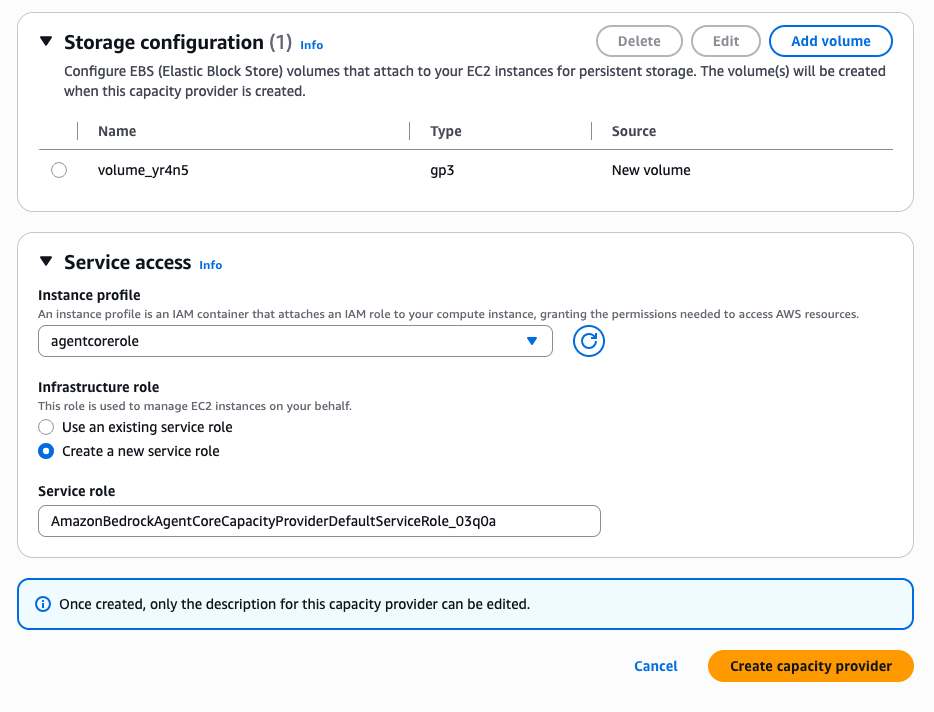
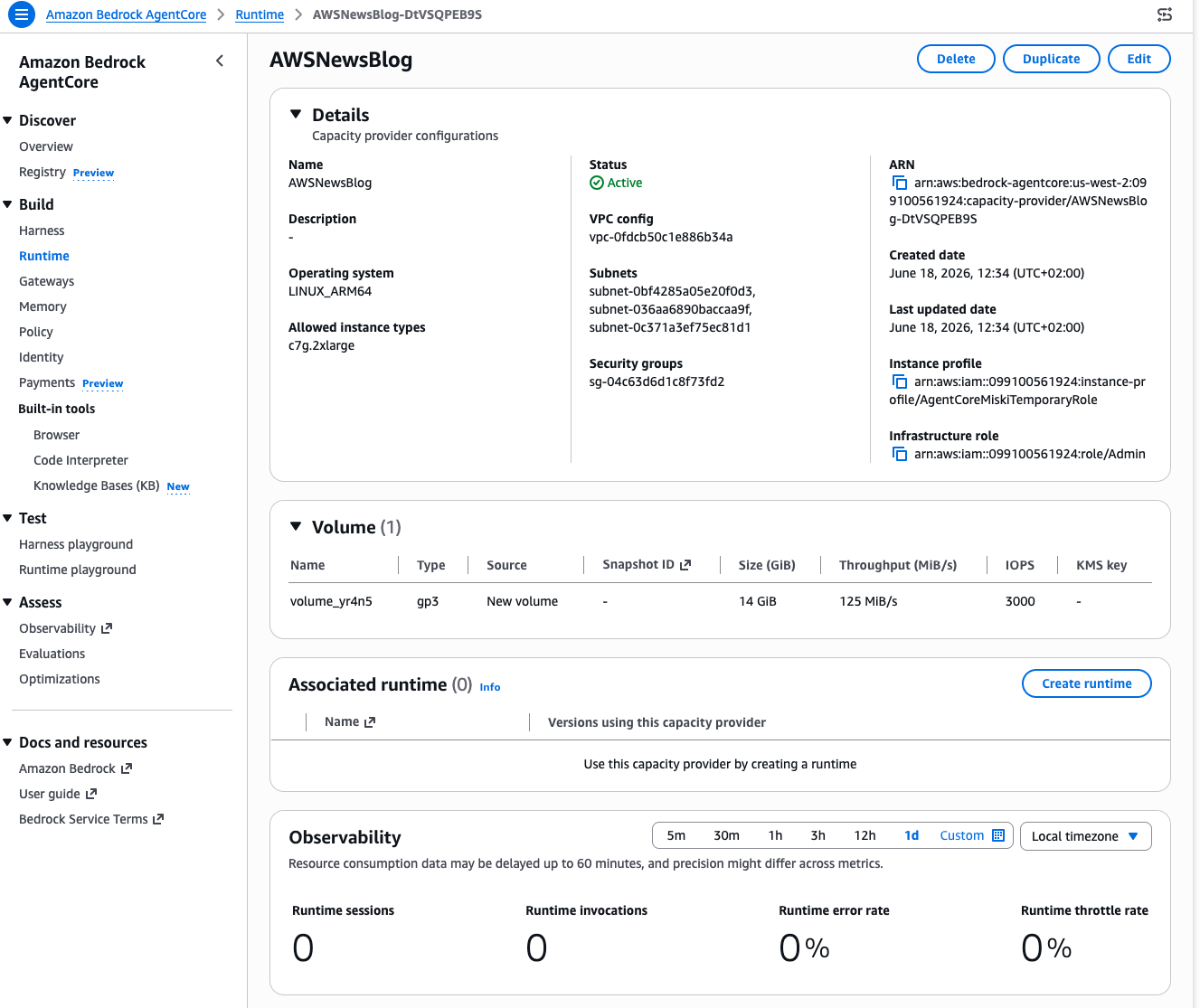
The deployment process begins within the AWS Management Console by establishing a capacity provider, which defines the underlying EC2 hardware configuration. Administrators select an operating system—such as Linux (64-bit ARM)—and specify an appropriate instance type, such as the c7g.2xlarge configuration. This specific instance profile provides 8 virtual CPUs (vCPUs) and 16 GiB of memory, ensuring adequate headroom for concurrent multi-agent operations. Additional configurations encompass Virtual Private Cloud (VPC) subnets, security group rules, default gp3 storage volumes, and automated service role creation for infrastructure management.
Phase Two: Deploying Agent Runtimes
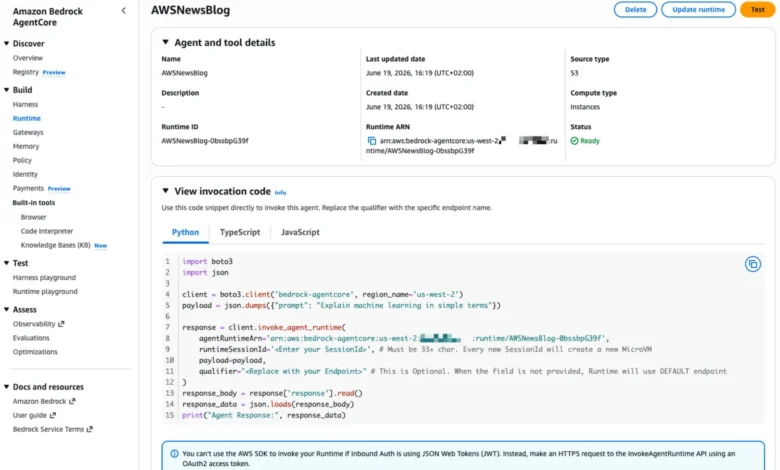
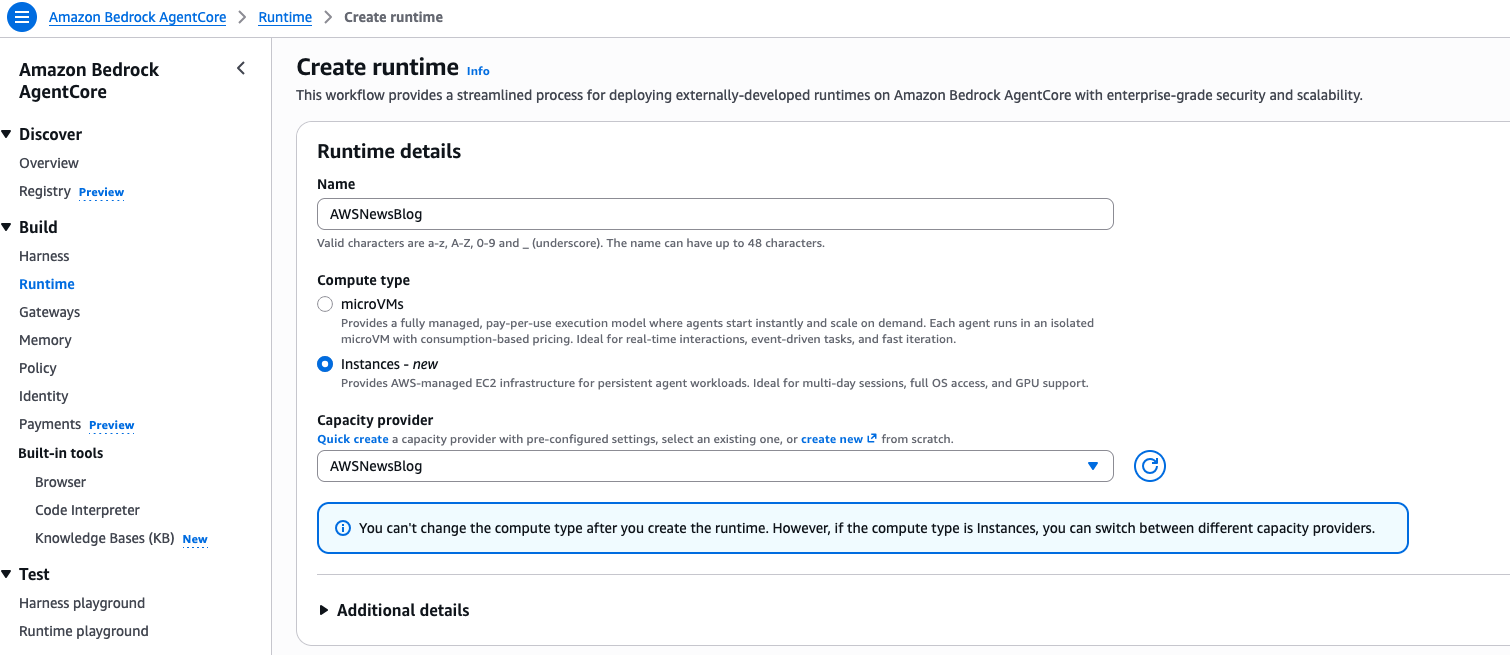
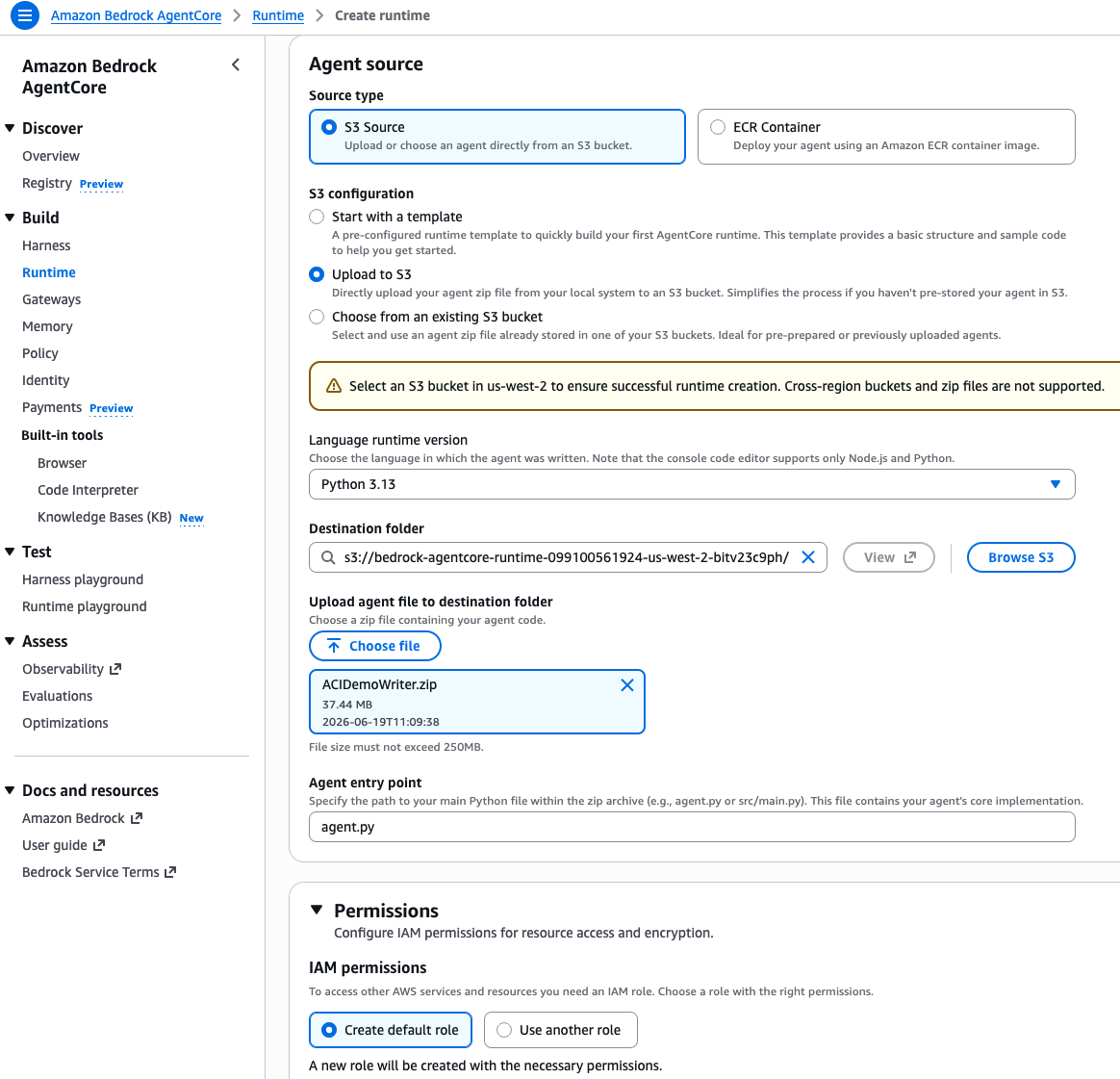
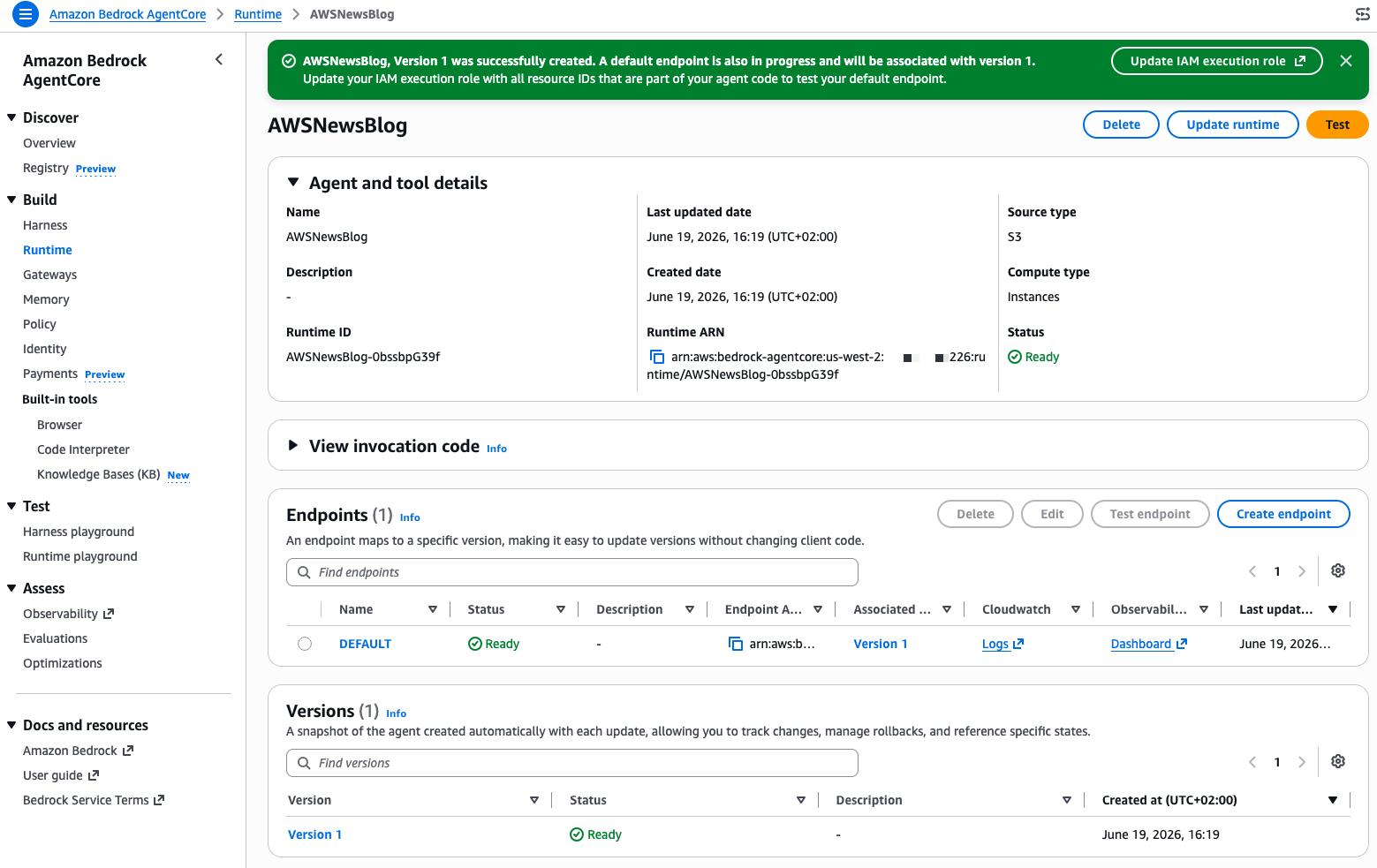
Once the capacity provider achieves an active status, administrators provision distinct runtime environments for each agent. By selecting "Instances" as the compute type and attaching the previously configured capacity provider, developers upload their agent source code via Amazon S3. Specifying the language runtime—such as Python 3.13—and designating the application entry point decorated with the @app.entrypoint syntax completes the deployment provisioning. Repeating this process for both the writer and reviewer agents places them onto the same underlying EC2 host, establishing the prerequisite environment for shared session execution.
Phase Three: Executing Collaborative Workflows
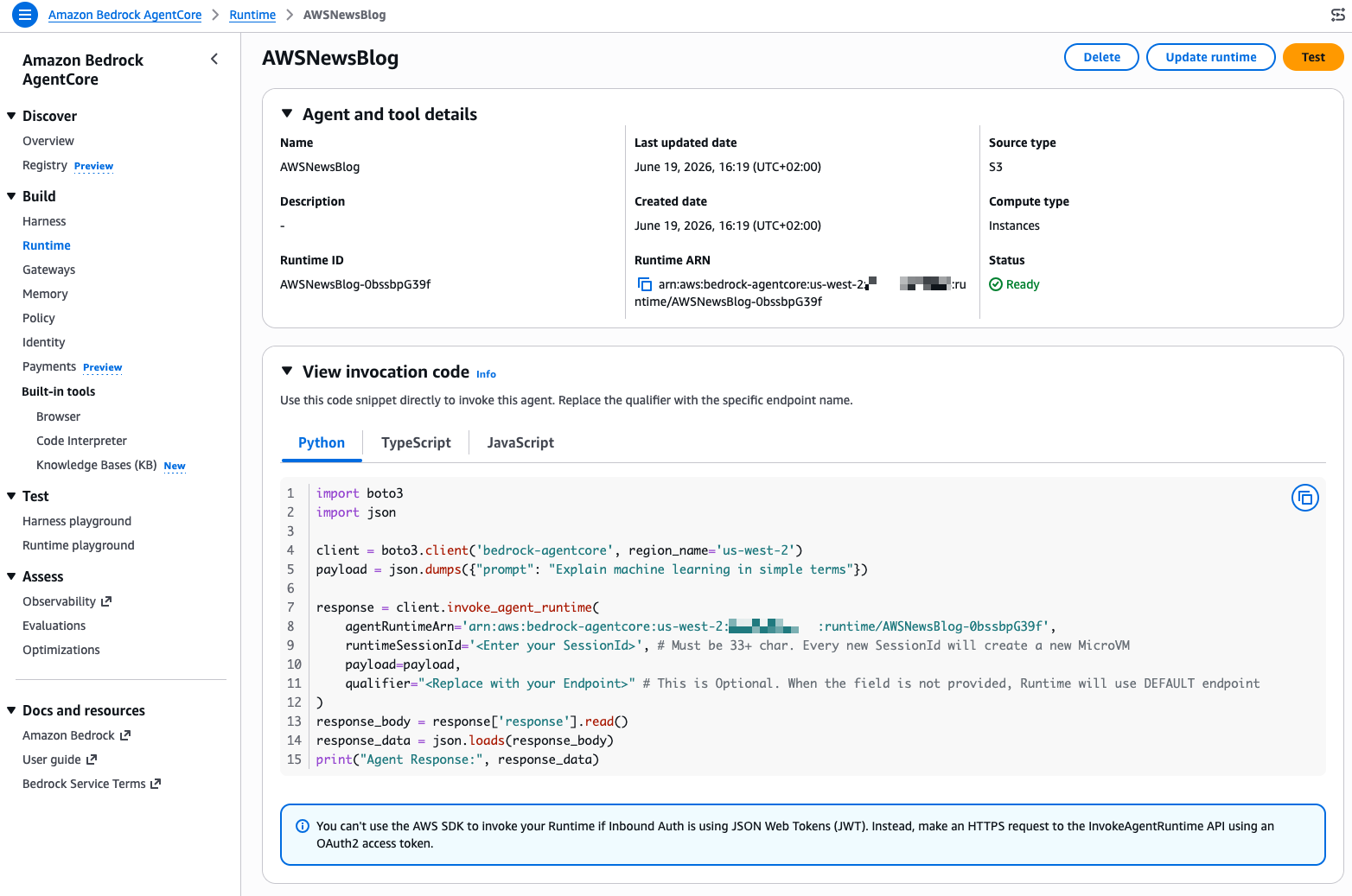
Interaction with the deployed agents occurs via programmatic APIs, software development kits (SDKs), or the built-in Runtime Playground within the AWS console. When a user submits a natural language prompt—such as a request to generate a Fibonacci sequence suite—the code writer agent executes the task and writes the resulting Python module directly to a designated shared session directory on the local file system (/tmp/agentcore-session/session_id/code.py).
Phase Four: Cross-Agent Collaboration Without API Overhead
The defining advantage of runtime instances becomes apparent during the review phase. By switching the active runtime agent to the code reviewer while retaining the identical session identifier, the reviewer agent accesses the exact file path populated by the writer agent. Without transmitting network payloads, making internal API calls, or exchanging intermediary messages, the reviewer reads the generated file directly from the shared file storage. It then evaluates the script for potential bugs, coding style inconsistencies, and architectural improvements. This shared file system paradigm scales efficiently to accommodate additional specialized agents, such as automated testing suites, continuous integration validators, and documentation generators.
Industry Implications and Future Outlook
The introduction of Amazon Bedrock AgentCore Runtime Instances marks a significant milestone in the maturation of generative artificial intelligence operations (GenAIOps). By bridging the gap between ephemeral serverless functions and rigid, manually managed server fleets, AWS has lowered the operational barrier for deploying autonomous agent swarms in production environments.
Industry analysts note that as enterprises demand deeper autonomy and longer execution cycles from artificial intelligence systems, infrastructure resilience and state management will remain paramount. The ability to pause long-running workflows over weekends and resume them seamlessly without losing operational context addresses a major friction point for enterprise developers. Furthermore, supporting heterogeneous multi-agent collaboration via shared local storage models reduces network latency and simplifies architectural complexity.
As organizations continue to scale their reliance on multi-agent systems for software engineering, financial modeling, and automated logistics, managed compute options like Amazon Bedrock AgentCore Runtime Instances are expected to become foundational components of modern enterprise cloud architectures. Developers can begin implementing these features immediately by consulting the official Amazon Bedrock AgentCore documentation and provisioning their initial capacity providers through the AWS Management Console or the AgentCore Command Line Interface.
Related posts: