OpenAI Acquires Smartphone Camera Startup Glass Imaging in Over $300 Million Deal to Advance Proprietary Hardware Ambitions

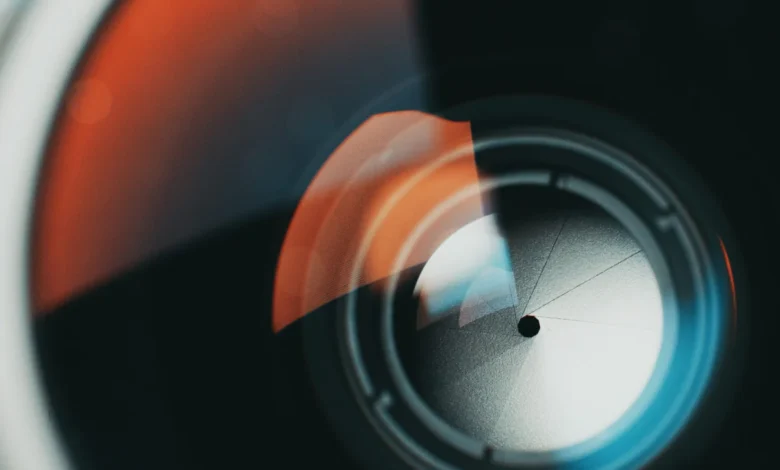
OpenAI has officially acquired Glass Imaging, an innovative Los Altos, California-based smartphone camera software startup, in a high-profile transaction valued at over $300 million. First reported by The Wall Street Journal, the acquisition marks a decisive step forward for the artificial intelligence titan as it steadily builds out its hardware engineering capabilities and deepens its footprint in consumer electronics.
The deal brings a specialized team of computer vision and imaging experts into the OpenAI fold. Glass Imaging, founded in 2019, had previously secured roughly $30 million in funding from venture capital firms, establishing itself as a pioneer in computational photography. By combining advanced neural networks with rigorous optics physics, the startup carved out a unique niche in an industry typically dominated by legacy hardware manufacturers and smartphone conglomerates.
The Origins and Technological Edge of Glass Imaging
Glass Imaging was established by Ziv Attar and Tom Bishop, two seasoned engineers with deep roots in the consumer technology sector. Before launching the startup, both founders spent significant time at Apple, where they led the engineering team responsible for developing Portrait Mode—a feature that fundamentally transformed mobile photography by introducing professional-grade depth-of-field effects to everyday mobile devices.
This pedigree heavily influenced the technological direction of Glass Imaging. Traditional computational photography on smartphones has long relied on post-processing algorithms that edit, enhance, or stitch images together after the shutter has already closed. While effective, these methods frequently introduce artificial-looking artifacts, excessive smoothing, or unwanted processing latency.
Glass Imaging fundamentally rethought this paradigm. Instead of treating the camera sensor and the software as separate entities, the startup developed sophisticated neural networks designed to understand the precise physical constraints, optical imperfections, and hardware idiosyncrasies of specific camera systems. By training machine learning models on the raw physics of individual smartphone lenses and sensors, Glass Imaging’s technology enhances image fidelity at the exact moment the shutter clicks. The result is sharper detail, superior dynamic range, and natural-looking clarity that circumvents the physical limitations inherent in ultra-thin smartphone chassis.
A Strategic Timeline: From Standalone Startup to OpenAI Integration
The acquisition of Glass Imaging does not happen in a vacuum; it represents the latest milestone in a carefully orchestrated hardware strategy that OpenAI has been quietly executing over the past several years:

- 2019: Ziv Attar and Tom Bishop found Glass Imaging in Los Altos, California, focusing on next-generation computational photography and neural-network-driven image enhancement.
- March 2022: Glass Imaging publicly details its mission to rethink the smartphone camera through an approach inspired by old-school cinema lenses, gradually gathering industry momentum.
- May 2025: In a blockbuster $6.5 billion acquisition, OpenAI purchases io, a secretive device startup led by legendary former Apple chief design officer Jony Ive, bringing hardware design expertise directly under the OpenAI umbrella.
- January 2026: Reports emerge indicating that OpenAI is preparing to ship its first dedicated hardware product, with speculation mounting around AI-centric earbuds.
- April 2026: Industry insiders suggest OpenAI is actively developing a proprietary smartphone concept designed to leverage native AI agents in place of traditional application grids.
- July 2026: Rumors circulate regarding OpenAI’s hardware roadmap, highlighting a screenless, mobile AI companion speaker capable of physical movement.
- September 2026: OpenAI acquires Glass Imaging for upwards of $300 million to integrate advanced computational photography into its expanding device ecosystem.
Broader Implications for OpenAI’s Hardware Ecosystem
While OpenAI has yet to issue a comprehensive public statement detailing its precise operational plans for Glass Imaging, the strategic alignment is readily apparent. Over the past twenty-four months, CEO Sam Altman and the OpenAI leadership team have transformed the organization from a pure-play artificial intelligence research lab and software provider into a vertically integrated technology enterprise.
The acquisition of Jony Ive’s firm, io, for $6.5 billion in May 2025 signaled to the market that OpenAI intended to design its own consumer hardware rather than rely solely on software partnerships with existing mobile giants like Apple and Google. Designing custom hardware requires proprietary control over every element of the user experience, from silicon and audio processing to industrial design and optical sensors.
Integrating Glass Imaging provides OpenAI with crucial intellectual property and specialized engineering talent in camera technology. If OpenAI intends to release ambient hardware devices, AI-first smartphones, or wearable companion products equipped with advanced multimodal capabilities, high-performance visual perception will be paramount. Future devices will need to "see" and interpret the physical world with extreme accuracy to serve as effective autonomous assistants. By owning the underlying imaging pipeline, OpenAI can ensure that its upcoming hardware lineup features industry-leading visual capture capabilities tailored specifically for multimodal artificial intelligence models.
Industry Reaction and Competitive Landscape
The acquisition has sent ripples through both the artificial intelligence and consumer electronics sectors. Major smartphone manufacturers—including Apple, Samsung, and Google—have spent years heavily marketing their own proprietary computational photography pipelines, such as Apple’s Photonic Engine and Google’s Pixel Camera technology.
By acquiring Glass Imaging, OpenAI has effectively absorbed an independent competitor that could have otherwise licensed its technology to alternative hardware makers looking to challenge established market leaders. Furthermore, the move underscores the intensifying race to embed frontier artificial intelligence models directly into physical consumer devices. As tech giants transition from screen-bound software interfaces to ambient, hardware-integrated AI assistants, the ability to capture, process, and understand visual data seamlessly will remain a core competitive differentiator.
As the transaction closes and the Glass Imaging team transitions into OpenAI’s burgeoning hardware division, industry observers will be watching closely for official announcements regarding OpenAI’s hardware product roadmap. With top-tier design talent from the io acquisition now paired with elite computational photography experts from Glass Imaging, OpenAI is assembling the foundational architecture necessary to challenge the status quo of modern personal computing.