The definitive guide to social media competitor analysis tools and benchmarking strategies for 2026

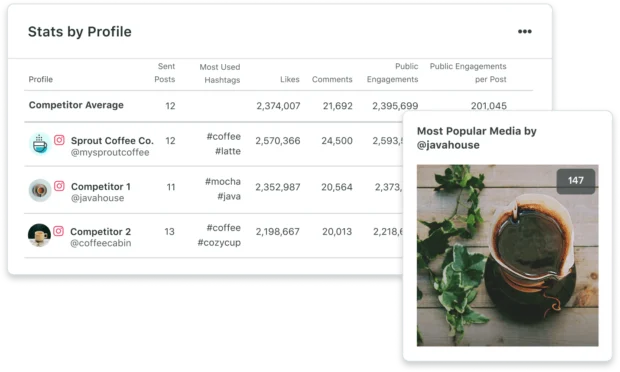
In an increasingly crowded digital marketplace, social media competitor analysis has evolved from a secondary marketing task into a cornerstone of strategic business intelligence. As global social media advertising expenditure approaches a projected $338.75 billion in 2026, the ability to contextualize internal performance against industry benchmarks has become a prerequisite for securing budget, justifying creative pivots, and maintaining market share. This process involves the systematic evaluation of competitor content, audience interaction, and engagement metrics to establish a baseline of industry standards and identify actionable opportunities.

The Strategic Necessity of Benchmarking in 2026
The primary function of competitive analysis is to provide meaning to raw data. A 2% engagement rate, for instance, is an abstract figure until it is measured against an industry average. If the category standard is 0.8%, that 2% reflects a significant success; if the standard is 4%, it indicates a performance deficit. In 2026, where algorithm shifts and the integration of AI-generated content occur with unprecedented frequency, these comparisons serve as an early warning system. By monitoring the shifts in competitor posting cadences and content formats, marketing leaders can determine whether a performance dip is the result of internal tactical failures or a wider, market-wide trend.
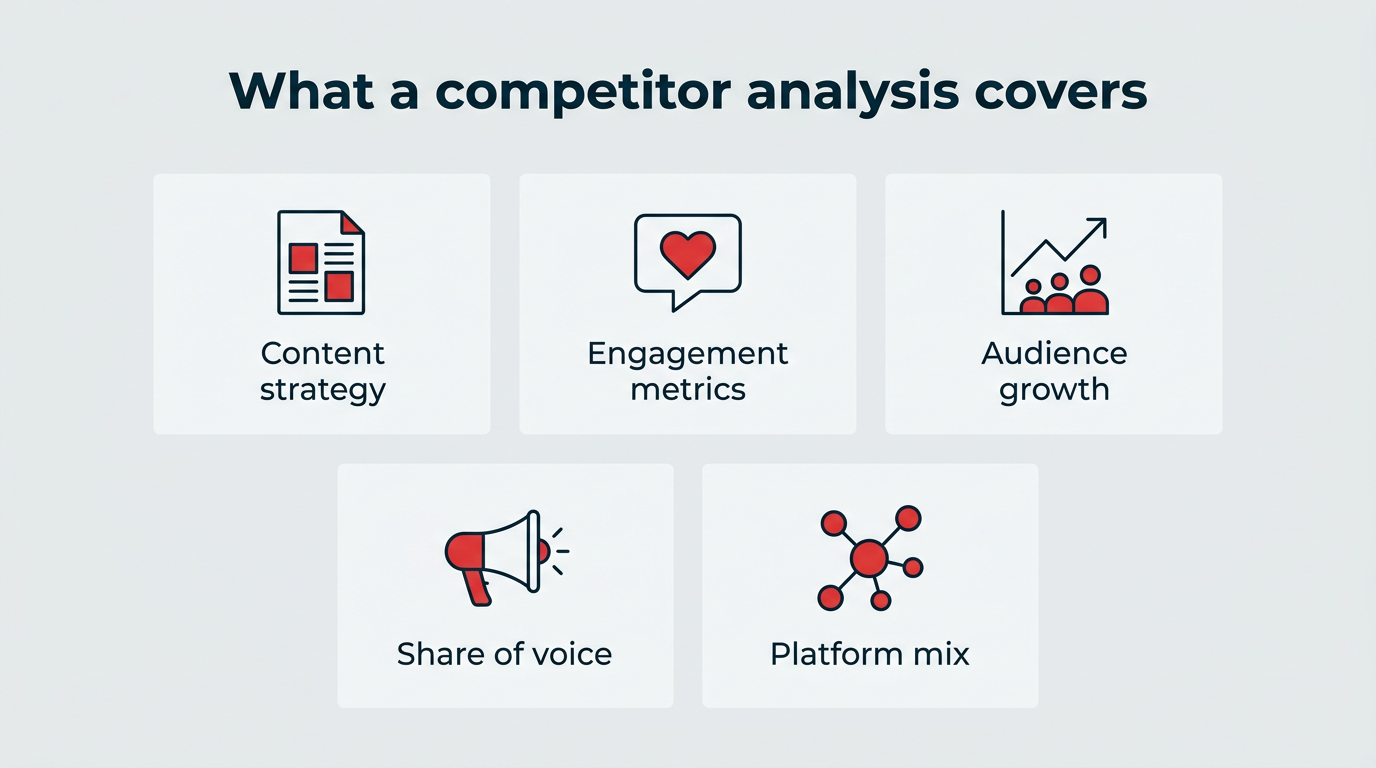
Data from the past year suggests that consumer time spent on social platforms is peaking, heightening the competition for attention. This saturation makes the "noise" of the internet more difficult to cut through. Consequently, brands that utilize data-driven insights to refine their content strategy are significantly more likely to maintain consistent growth.
Navigating the Landscape of Analytical Tools
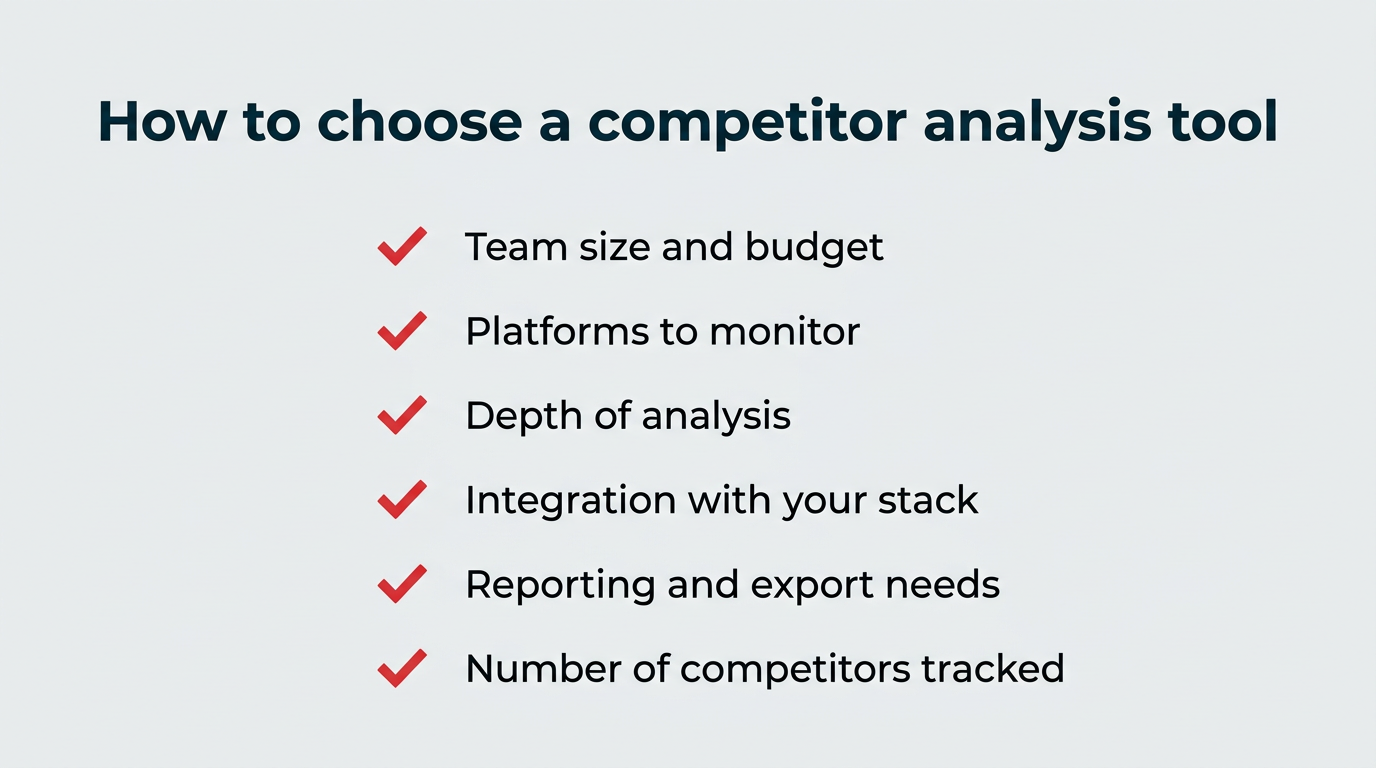
Selecting the appropriate tool requires an assessment of organizational needs rather than a mere tally of features. Tools currently dominating the market range from comprehensive management suites to niche intelligence platforms.
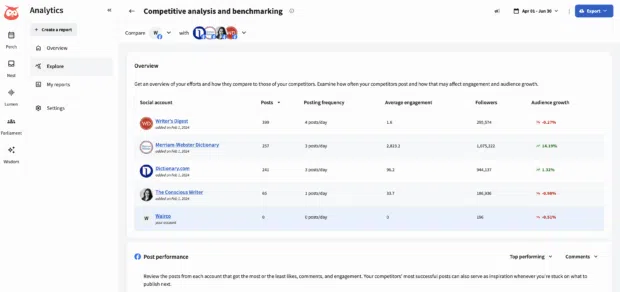
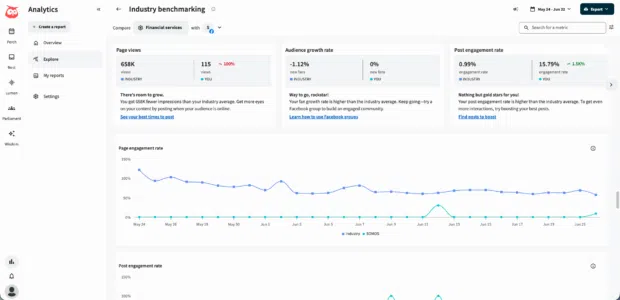
Perch by Hootsuite stands out as a versatile solution for mid-market and enterprise teams. By integrating content scheduling with competitive benchmarking, it allows for a seamless workflow. Its strength lies in its ability to generate comparative reports for Facebook, Instagram, and X, while also providing industry-wide benchmarking for TikTok and LinkedIn. This breadth allows for a holistic view of the social landscape.
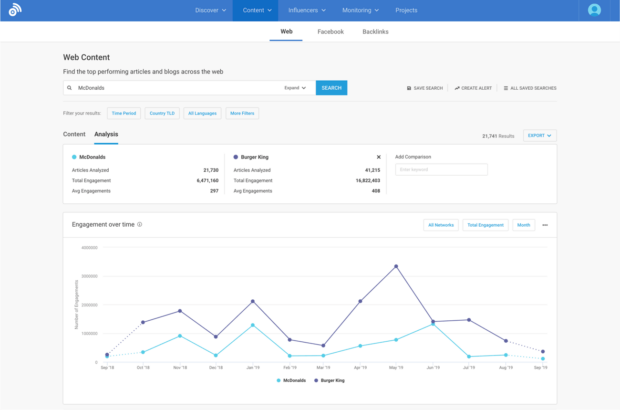
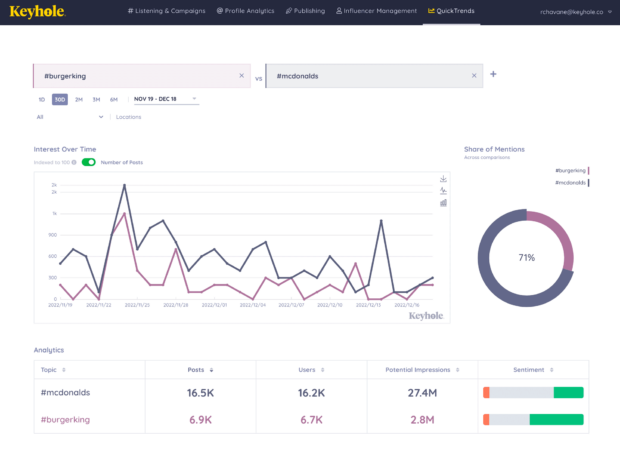
For enterprises requiring deep consumer intelligence, Brandwatch remains a top-tier choice. Its ability to visualize "share of voice"—a metric defining how much a brand dominates the conversation relative to its competitors—is vital for high-level PR and growth teams. While the learning curve is steeper, the granular data provided is often necessary for large-scale corporate decision-making.
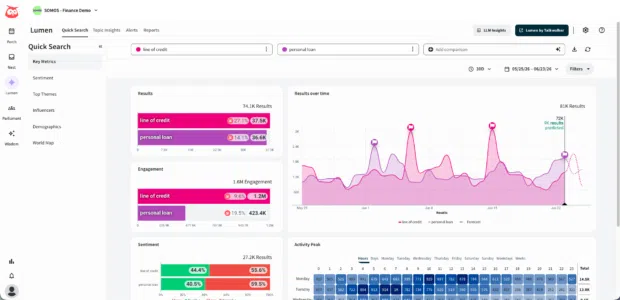
Similarly, Sprinklr offers robust sentiment tracking and cross-platform analysis, though it remains a high-cost, high-investment platform suitable primarily for organizations with specialized research divisions. For those seeking an integrated approach that bridges the gap between SEO and social media, SEMrush provides comprehensive data, allowing teams to view social performance through the lens of overall digital marketing efficacy.

Establishing a Repeatable Analytical Framework
A successful competitive analysis is not a one-time event but a disciplined, recurring process. Most high-performing marketing teams follow a seven-step methodology to ensure consistency:

- Competitor Identification: Define the landscape by categorizing competitors into three tiers: direct rivals, indirect competitors solving similar problems, and aspirational brands that set the industry standard.
- Platform Prioritization: Direct resources only to the platforms where the target audience is most active. Analysis of non-performing platforms is a misuse of limited analytical bandwidth.
- Data Collection: Standardize the reporting period—ideally the last 30 to 90 days—to ensure that comparisons between accounts are mathematically sound.
- Content Evaluation: Look beyond quantitative metrics to analyze qualitative themes. Identify which formats (video, carousel, text) generate the most meaningful engagement.
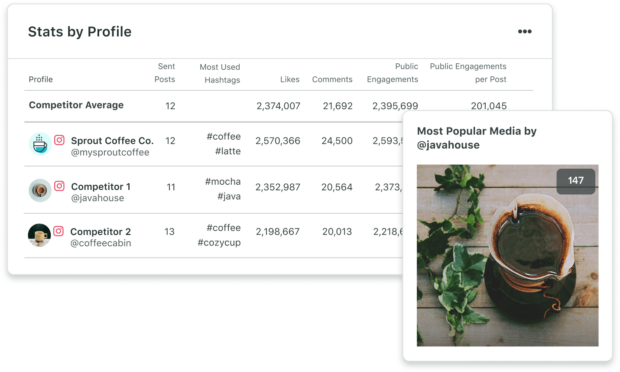
- Benchmarking: Overlay your performance metrics with competitor data. Use a unified dashboard to minimize the friction of manual data consolidation.
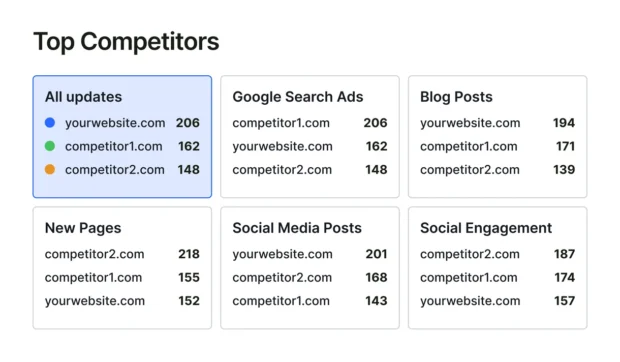
- Gap Analysis: Identify "white space" in the market. Look for audience questions that remain unanswered, underserved niches, or recurring service complaints regarding competitors that your brand can address.
- Strategic Integration: Document findings and update the master marketing strategy. A report that is not acted upon is a wasted asset.
Key Metrics for Objective Assessment
To avoid "analysis paralysis," organizations must focus on a targeted set of metrics that correlate directly with business objectives. Engagement rate remains the most critical measure for assessing content quality, as it normalizes interaction relative to audience size. Follower growth rate acts as a proxy for brand health and market expansion.
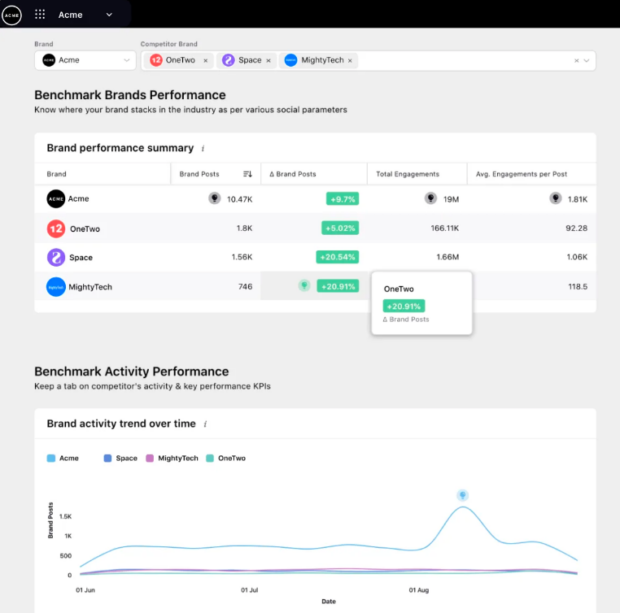
Share of voice is perhaps the most significant metric for brand visibility. It tracks not only how people engage with your content but how often your brand is mentioned in the broader industry conversation, regardless of whether those users follow your official accounts. Furthermore, response time has become a critical indicator of service quality. In an era of instant gratification, brands that respond to comments and messages with greater agility often see higher loyalty and sentiment scores.
The Role of AI and Future Implications
As we move through 2026, the role of artificial intelligence in competitive analysis is becoming more pronounced. AI-powered tools are now capable of distilling thousands of data points into natural language summaries, allowing teams to spot shifts in sentiment or emerging hashtag trends in real-time. This shift reduces the manual burden on social media managers, freeing them to focus on the creative execution of the strategy rather than the laborious task of data entry.
However, the proliferation of AI-generated content also introduces a new threat: the "sameness" of social feeds. Brands that rely solely on automated suggestions risk producing content that looks identical to their competitors. The most effective strategy for the remainder of the year will be to use analytical tools to identify what the audience is interested in, while relying on human creativity to dictate how that content is delivered.
Conclusion: Data as a Strategic Asset
The ultimate goal of social media competitor analysis is to move from reactive posting to proactive strategic positioning. By understanding the competitive environment, brands can set realistic goals, allocate budgets with greater precision, and defend their marketing decisions to stakeholders with empirical evidence.
While the tools available range from free entry-level platforms like Social Blade and Phlanx to enterprise-grade solutions, the core principle remains unchanged: the most successful brands are those that listen more than they speak. By continuously monitoring the digital ecosystem, companies can ensure they are not merely participating in the social media conversation, but leading it. As the industry continues to mature, those who treat competitor intelligence as a fundamental business function—rather than an optional luxury—will be the best positioned to navigate the complexities of the digital future.