Beyond the Textbox: Reimagining Human-Centered AI Interaction in Modern Digital Design

The rapid proliferation of artificial intelligence in the creative sector has triggered a profound shift in how digital tools are conceptualized, developed, and deployed. For many professionals in the design and software industries, the ubiquity of Large Language Models (LLMs) and generative AI image tools has shifted the discourse from mere technological utility to fundamental questions about human agency. As companies like OpenAI, Midjourney, and Leonardo.ai continue to refine generative capabilities, the traditional interface—a static, text-based prompt box—has become the industry standard. However, a new wave of design thinking, spearheaded by firms like MacPaw, is challenging this convention by proposing a shift toward character-driven, proactive AI assistants that prioritize emotional resonance and human-centric workflows.
The Evolution of the AI Interface: From Chatbots to Companions
The history of the digital assistant is marked by a steady progression toward natural language processing. In the early 2010s, assistants like Apple’s Siri or Microsoft’s Cortana relied on command-based interaction. By 2022, the release of ChatGPT signaled a paradigm shift, moving the focus to conversational, text-heavy interfaces. While these systems proved highly effective at data retrieval and summarization, they are fundamentally transactional. The user enters a prompt, the machine processes it, and the output is delivered via a sterile text box.
This uniformity, while providing a consistent user experience, has arguably contributed to a sense of alienation. In creative fields, where the subjective nuances of human intuition are paramount, the current iteration of AI often feels impersonal. Data from recent industry surveys suggest that while 70% of creative professionals utilize some form of AI in their daily workflow, approximately 55% express concern regarding the "homogenization" of creative output and the loss of the "human touch."
The Eney Initiative: A Case Study in Proactive Design
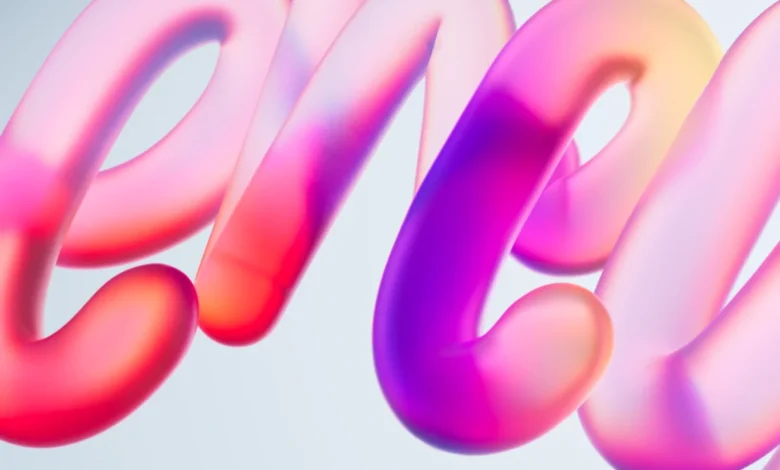
In response to this trend, the software development firm MacPaw launched Eney, a proactive AI assistant designed to function as an extension of the user’s workflow rather than a separate, detached utility. The development process for Eney marks a departure from traditional UI/UX paradigms. Instead of defaulting to the standard chat-window format, the design team at MacPaw focused on creating a "character-first" interface.
The conceptualization of Eney began with the psychological premise that human beings are neurologically predisposed to connect with entities that exhibit recognizable traits—such as warmth, responsiveness, and a sense of "personality." The design team conducted iterative testing to ensure that the assistant remained helpful without veering into the uncanny valley or becoming overly distracting.

The resulting figure—a minimalist, circular character—was chosen for its approachable geometry. By limiting the character’s movements to specific, functional gestures, the designers ensured that the AI’s visual feedback provided useful status updates (such as loading or task completion) without cluttering the screen. The choice of a vibrant, warm pink palette was a deliberate effort to differentiate the tool from the prevailing "tech-blue" aesthetic, which is often associated with traditional enterprise software and corporate intelligence.
Chronology of AI Integration in Design
- 2020–2021: The emergence of advanced text-to-image diffusion models like DALL-E and Midjourney marks the beginning of the "Generative Revolution."
- Late 2022: The public release of ChatGPT triggers a surge in adoption, cementing the "textbox" interface as the industry standard for AI interaction.
- 2023: Growing concern among creative professionals regarding copyright infringement, data scraping, and the potential displacement of human labor reaches a peak.
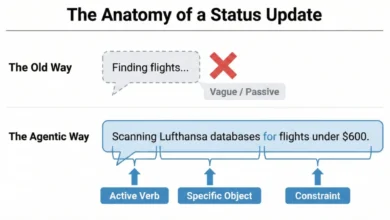
- 2024–2025: A shift in industry focus occurs, moving toward "human-in-the-loop" systems. Design studios begin exploring "Agentic AI"—assistants that can act independently within a user’s environment rather than merely waiting for a prompt.
- 2026: Eney and similar projects signal a maturation of the market, where personality, emotional intelligence, and non-intrusive UI become key competitive differentiators.
The Economic and Ethical Implications of AI-Driven Design
The integration of AI into design is not merely a technical evolution; it carries significant economic weight. According to recent economic forecasts by McKinsey & Company, generative AI could add between $2.6 trillion and $4.4 trillion annually to the global economy. However, this growth is accompanied by significant ethical hurdles, particularly concerning the training of models on proprietary artistic works without explicit consent.
This lack of attribution has led to legal challenges and a collective pushback from the creative community. The implication for developers is clear: to remain viable in a competitive market, AI tools must offer more than just raw processing power. They must demonstrate integrity, transparency, and a commitment to augmenting, rather than replacing, the human creative process.

Industry analysts observe that as AI becomes more capable of performing technical tasks, the value of "human judgment" increases. Design is not solely about the final aesthetic result; it is about the decision-making process—the ability to curate, iterate, and imbue a project with cultural and emotional context. Tools like Eney represent a synthesis of these values, utilizing AI for speed and efficiency while maintaining the "human at the wheel" philosophy.
The Future of Professional Creative Workflows
For the modern designer, the adoption of AI is no longer optional, but the manner in which these tools are integrated is critical. Experts advocate for a "hybrid intelligence" model. In this framework, AI handles the rote, repetitive, or data-intensive aspects of a project, while the human designer serves as the architect, curator, and arbiter of taste.
The success of a tool like Eney hinges on its ability to strike this balance. By minimizing the friction of interaction and providing a sense of companionship, it aims to reduce the "digital fatigue" often reported by users who spend their days toggling between multiple, faceless AI interfaces. This approach also underscores a growing consensus: the most successful AI tools of the future will be those that feel like collaborators rather than machines.

Analyzing the "Human-in-the-Loop" Paradigm
The shift toward human-centric AI design is supported by several key analytical pillars:
- Emotional Connectivity: Research in human-computer interaction (HCI) consistently shows that users exhibit higher levels of engagement and satisfaction when interfaces incorporate elements of anthropomorphism that are grounded in utility.
- Cognitive Load Reduction: By using intuitive visual cues (gestures and expressions) instead of dense text, AI assistants can convey information more efficiently, reducing the cognitive burden on the user.
- Strategic Differentiation: As the market for AI tools becomes increasingly saturated, the "user experience" (UX) becomes the primary differentiator. A character-based AI that feels personal allows companies to build brand loyalty in a way that a generic chatbot cannot.
Final Considerations: The Preservation of Human Artistry
Ultimately, the proliferation of AI technology mandates a re-evaluation of what constitutes creative labor. While AI can simulate the technical aspects of design, it lacks the lived experience, cultural nuance, and ethical framing that define human artistry. The "taste" developed through years of manual practice remains an irreplaceable asset.
Designers are encouraged to remain curious about the latest advancements while maintaining a critical perspective. The goal is to leverage AI for research, prototyping, and ideation, while ensuring that the final creative vision remains firmly rooted in human intention. The emergence of character-driven AI assistants is a significant step toward this goal, signaling a future where technology is designed to complement the human spirit rather than overshadow it. As the industry moves forward, the focus must remain on cultivating the unique sensibilities that distinguish human-led design in an increasingly automated world. The tools will continue to change, but the necessity for human judgment, artistic direction, and emotional sensitivity remains constant.