India’s Open Network for Digital Commerce Poised to Reshape Retail Landscape for Small Businesses and Global Brands Alike

India’s burgeoning e-commerce sector, poised for unprecedented growth, is undergoing a significant transformation with the introduction of the Open Network for Digital Commerce (ONDC). This ambitious government-backed initiative aims to democratize online selling, empowering millions of small, traditional "kirana" merchants while simultaneously offering a new avenue for foreign brands to navigate the complexities of the Indian market. With a young, digitally-savvy population and a rapidly expanding smartphone user base, India presents a colossal e-commerce opportunity, yet its online penetration lags considerably behind global giants like China and the United States. This gap, coupled with a government mandate to foster digital transformation while safeguarding its vast network of small businesses, has paved the way for ONDC, an initiative that is already making waves in the country’s retail ecosystem.
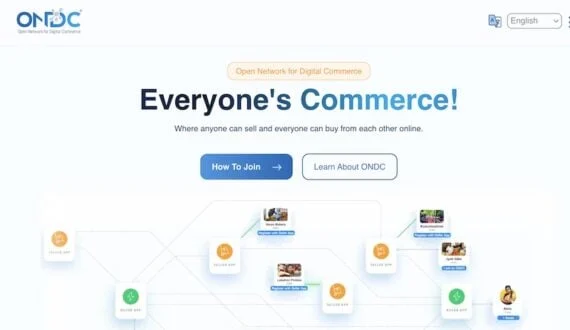
The genesis of ONDC can be traced back to the Indian government’s strategic vision to accelerate digital adoption across the nation. Launched in 2021, ONDC is not a marketplace in the conventional sense, like Amazon India or Flipkart. Instead, it functions as an open protocol, a decentralized network that connects various e-commerce participants—including buyers, sellers, payment gateways, and logistics providers—through standardized, open-source principles. This approach fundamentally differs from the closed, proprietary systems of existing large e-commerce platforms, which often dictate terms and charge substantial commissions.
The Challenge of Balancing Growth and Inclusion
India’s economic landscape is uniquely characterized by the immense contribution of its small, independent retailers, often referred to as "kirana" stores. These businesses form the backbone of the country’s consumer goods sales, accounting for an astonishing 75% of the total. The challenge for policymakers has been to harness the immense potential of digital commerce without displacing or marginalizing these millions of small merchants. Simultaneously, the government has sought to foster an environment conducive to foreign investment and participation in its rapidly growing digital economy.
This dual imperative has led to the implementation of several key digital initiatives. The United Payments Interface (UPI), a government-backed, real-time, peer-to-peer digital payment system, has achieved remarkable success, becoming a ubiquitous payment method across India. On the other hand, regulations have been put in place to govern the operations of foreign sellers in the e-commerce space. ONDC emerges as a critical component of this strategy, designed to bridge the gap between traditional retail and the digital frontier.
ONDC: An Open Framework for Commerce
At its core, ONDC is an interoperable network designed to break down the silos of existing e-commerce marketplaces. It operates on the principle of "democratizing digital commerce," enabling any registered user to participate regardless of their size or technological sophistication. For kirana store owners and independent retailers, this means the ability to establish an online presence and reach a wider customer base without being tethered to a single platform.
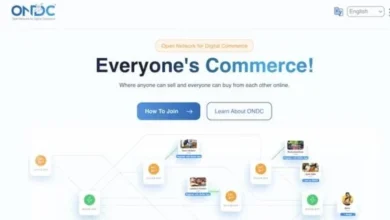
The ONDC framework operates through a network of interconnected applications. Seller applications, such as Mystore, CostBo, and GoFrugal, provide merchants with the tools to list their products, manage inventory, process orders, and coordinate logistics. On the buyer side, popular applications like Paytm, Bajaj Finserv, and Magicpin allow consumers to browse, discover, and purchase goods from a multitude of sellers across the network. This decentralized architecture ensures that merchants retain greater control over their digital storefronts and customer relationships.
One of the most significant advantages offered by ONDC is its competitive fee structure. Selling fees on the network typically range from 3% to 10%, a stark contrast to the 18% to 40% commissions charged by many established marketplaces. This substantial cost reduction can significantly improve the profitability of small businesses. Furthermore, ONDC promotes transparency and fairness through its algorithm, which is designed for non-discriminatory sorting, and allows for the portability of seller ratings, ensuring that positive customer experiences contribute to a merchant’s reputation across the network.
Reaching the Masses: A Phased Rollout and Expanding Reach
Since its launch in 2021, ONDC has seen steady adoption across India, though its reach is still growing and has not yet attained the widespread ubiquity of UPI. The initiative has been particularly effective in enabling small and medium-sized enterprises (SMEs) to transition to online sales. Beyond these businesses, local brands are increasingly leveraging ONDC as a supplementary distribution channel rather than a replacement for their existing marketplace strategies.
Crucially, foreign companies that comply with India’s regulatory framework can also access the ONDC seller app ecosystem. This offers a streamlined pathway for international brands to enter the Indian market, bypassing some of the traditional hurdles associated with setting up shop on established e-commerce giants.
The ONDC network is not confined to a single category of goods. It encompasses a diverse range of sectors, including retailers, logistics service providers, restaurants, and hotels. While grocery, food delivery, and home and kitchen items have demonstrated rapid growth due to their high order frequency, other categories such as fashion, pharmaceuticals, and hospitality are also steadily gaining traction on the platform.
Global Brands Embrace the ONDC Advantage
A growing number of international brands have already integrated with the ONDC network. Prominent names such as Red Bull, Unilever, Nestle, PepsiCo, Procter & Gamble, L’Oréal, and Johnson & Johnson are now accessible through ONDC. This allows global food brands, in particular, to reach Indian consumers with minimal additional cost, especially those already participating in quick commerce platforms like Blinkit, Swiggy Instamart, and Zepto. For these foreign entities, ONDC presents an opportunity to tap into India’s vast consumer base through a more equitable and less capital-intensive model.
Navigating the Regulatory Landscape: A Key Consideration for Foreign Sellers
For foreign brands looking to enter or expand their presence in the Indian e-commerce market, understanding the regulatory landscape is paramount. As previously detailed, the available selling options include traditional marketplaces, working with local distributors, establishing direct-to-consumer (D2C) websites, and engaging in cross-border e-commerce. ONDC adds another significant, and potentially more advantageous, pathway to this ecosystem.
The Indian government’s approach to regulating foreign direct investment in e-commerce has evolved over time. Initially, stricter rules were in place, particularly concerning inventory-based models. However, recent policy shifts have aimed to create a more open environment while still prioritizing the interests of domestic businesses and consumers. ONDC aligns with this broader objective by providing a structured and regulated framework for all participants.
Implications for the Future of Indian E-commerce
The long-term implications of ONDC are profound. By fostering a more competitive and inclusive digital marketplace, the initiative has the potential to:
- Empower Small Businesses: ONDC can significantly boost the revenues and reach of kirana stores and other small retailers, enabling them to compete more effectively with larger players. This could lead to greater economic empowerment and job creation at the grassroots level.
- Lower Consumer Costs: Increased competition and reduced commission fees on ONDC are likely to translate into more competitive pricing for consumers, enhancing affordability and accessibility of goods.
- Drive Innovation: The open-source nature of ONDC encourages innovation among technology providers, payment gateways, and logistics companies, leading to a more dynamic and efficient e-commerce ecosystem.
- Facilitate Global Market Entry: For foreign brands, ONDC offers a more accessible and cost-effective route to the Indian market, potentially accelerating their growth and expanding consumer choice.
- Enhance Digital Literacy: The widespread adoption of ONDC could further accelerate digital literacy and financial inclusion across India, particularly among segments of the population that have historically been underserved by traditional retail and digital platforms.
However, challenges remain. Ensuring widespread awareness and adoption of ONDC among both merchants and consumers will be critical. Technical infrastructure, particularly in rural areas, needs continuous improvement. Furthermore, maintaining the integrity and security of the network, while upholding fair competition, will require ongoing vigilance and adaptation from regulatory bodies and platform operators.
The success of ONDC hinges on its ability to effectively balance the interests of its diverse stakeholders – from the smallest kirana owner to multinational corporations. If it achieves this delicate equilibrium, ONDC has the potential to redefine e-commerce in India, creating a more equitable, efficient, and prosperous digital economy for all. The current trajectory suggests a promising future, with ONDC emerging as a powerful catalyst for India’s next wave of digital growth.
Related posts: