The Shift to Evening Engagement: Buffer Analysis Reveals Best Times to Post on LinkedIn in 2026

The optimal strategy for reaching professional audiences on LinkedIn is undergoing a notable evolution. According to a comprehensive data analysis released by social media management platform Buffer, the traditional window for maximizing professional engagement has shifted decisively away from standard working hours. Analyzing a staggering 4.8 million posts sent through its platform, Buffer’s data science team—led by Julian Winternheimer—has revealed that the peak times for LinkedIn interaction now occur during the late afternoon and evening hours, defying long-held industry assumptions about when professionals consume content.
For years, digital marketers operated under the premise that LinkedIn was strictly a nine-to-five platform. Peak engagement metrics in 2025 were heavily concentrated during core business hours, dropping off sharply after 5:00 p.m. as users presumably closed their laptops and disconnected from professional networks. However, the 2026 data indicates a profound behavioral pivot. The most effective window for publishing content now falls between 3:00 p.m. and 8:00 p.m. on weekdays. Among these, Wednesday at 4:00 p.m. has emerged as the single strongest overall time slot of the week.
This behavioral trend brings LinkedIn into alignment with consumer-facing platforms like Instagram and TikTok, where evening consumption has historically dominated. Industry analysts suggest that while professionals are still actively seeking thought leadership, industry insights, and peer interactions, they are increasingly doing so after their formal workday has concluded—during commutes or while unwinding in the evening. Rather than passive scrolling, this late-day engagement often reflects more intentional reading and networking, resulting in higher-quality interactions for creators and brands alike.
Chronological Breakdown of Weekly Engagement
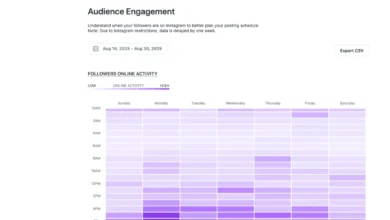
Understanding the temporal nuances of LinkedIn’s algorithm requires looking beyond generic averages and examining how engagement fluctuates across the seven-day cycle. Buffer’s normalized dataset—adjusted to reflect local time zones for users regardless of geographic location—outlines distinct patterns for each day of the week. All timings are calibrated to local clocks, meaning a recommended 4:00 p.m. slot applies equally to New York, London, or Tokyo without requiring complex time-zone conversions.
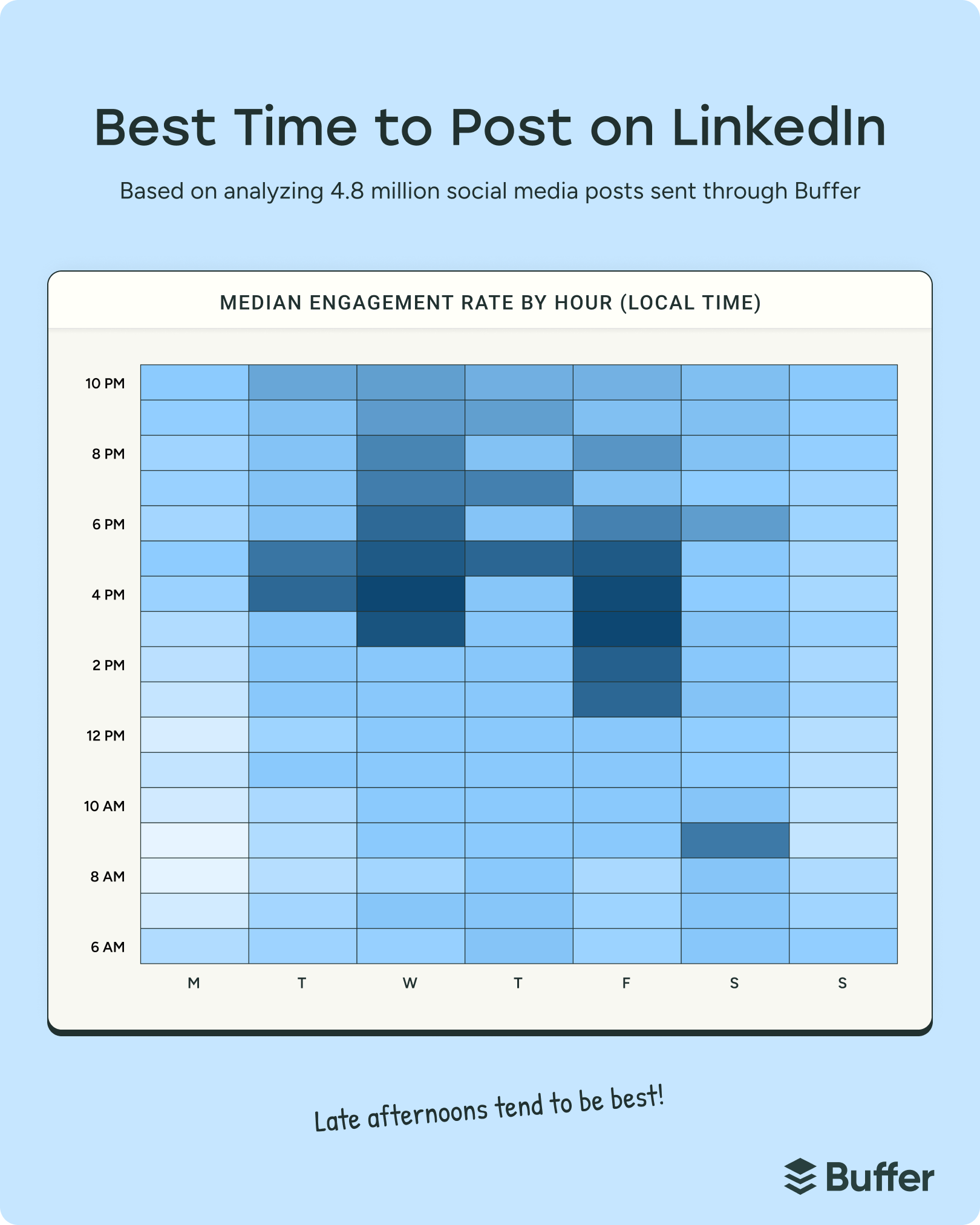
Early-week performance tends to lag behind the rest of the week. Mondays and Tuesdays consistently register lower overall engagement metrics across the platform. On Monday, activity is heavily concentrated late in the day, with 10:00 p.m. standing out as the prime slot as users catch up on missed content, supported by minor peaks at 5:00 p.m. and 9:00 p.m. Tuesdays follow a similar trajectory, peaking at 4:00 p.m., 5:00 p.m., and later at 10:00 p.m. Given this slow start, media strategists recommend reserving high-priority announcements and critical campaigns for the mid-to-late week.
Momentum builds significantly by Wednesday, which stands unchallenged as the highest-performing day of the week for LinkedIn interactions. The 4:00 p.m. slot on Wednesday is statistically the strongest period in the entire dataset, closely bolstered by 3:00 p.m. and 5:00 p.m. By midweek, professionals are fully immersed in their projects, making them more receptive to professional development resources and industry insights.
Thursday and Friday maintain this elevated engagement plateau. Thursday evening performance peaks at 5:00 p.m., with strong residual activity at 7:00 p.m. and 9:00 p.m. Fridays, traditionally written off as unproductive for B2B marketing, actually display robust afternoon numbers. The top slots on Friday occur at 3:00 p.m., 4:00 p.m., and 5:00 p.m., capturing professionals as they wind down their weekly operations.
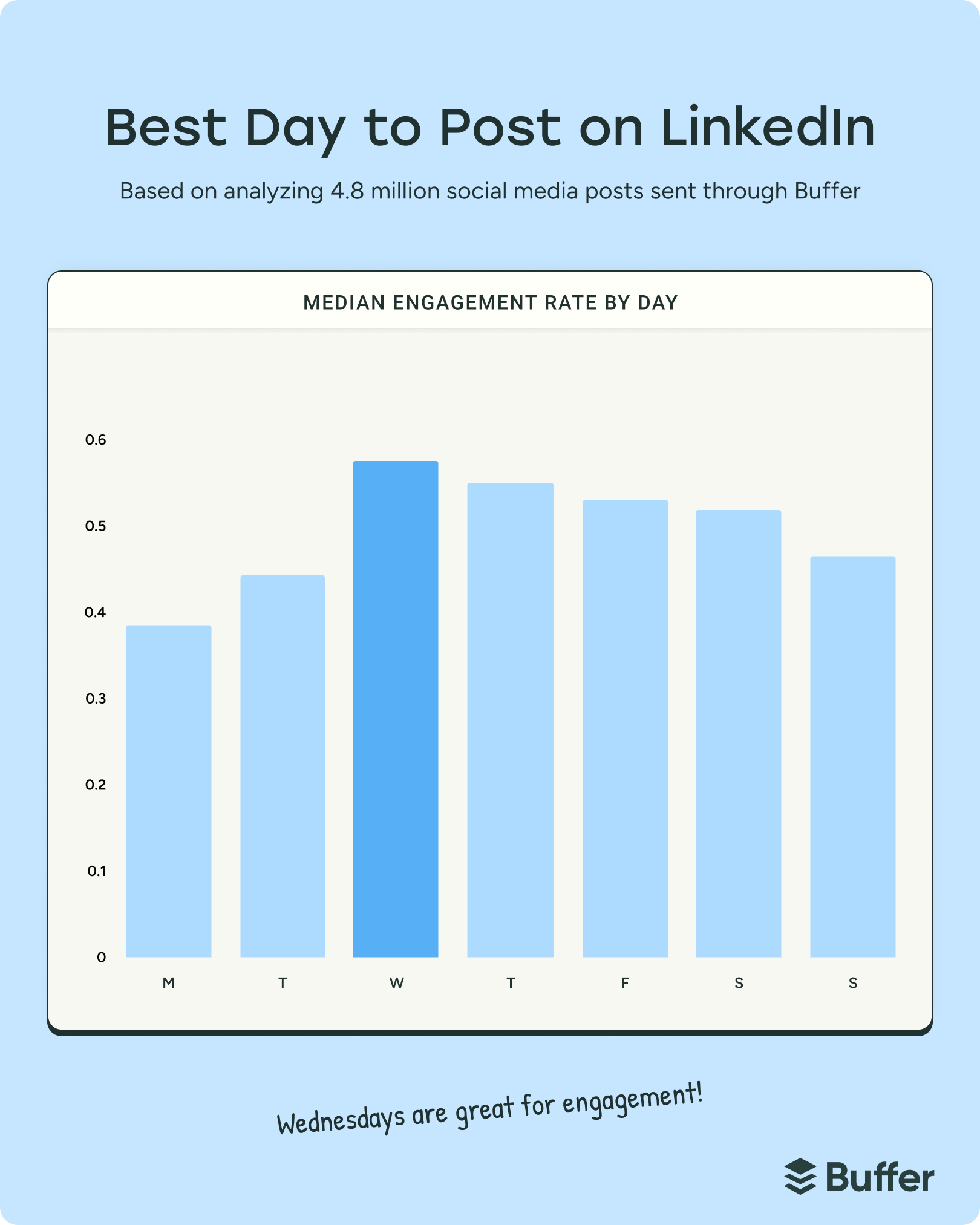
Weekends, conversely, represent low-traffic zones. Saturday engagement drops precipitously compared to weekdays, though a minor window appears at 9:00 a.m., followed by evening checks at 6:00 p.m. and 10:00 p.m. Sunday follows a similar pattern, with late-evening activity peaking at 10:00 p.m. Analysts continue to advise brands to avoid publishing vital content on weekends unless targeting specific niche demographics.
Implications for Marketers and Content Creators
The implications of Buffer’s 2026 findings extend directly to content strategy and algorithmic visibility. LinkedIn’s underlying algorithm heavily weighs early user interactions—such as comments, reposts, and reactions—to determine whether a post merits wider distribution. By publishing during peak evening windows, creators increase the likelihood of capturing an active audience during their initial "golden hour," thereby amplifying organic reach.
However, industry experts caution that timing is merely an amplifier, not a substitute for substance. Empirical data shows that content format plays a massive role in performance; for instance, document or carousel posts currently generate significantly higher engagement rates than plain text updates. Furthermore, while generalized data provides a valuable baseline, individual audience behavior can vary wildly based on industry, geographic distribution, and target demographics.
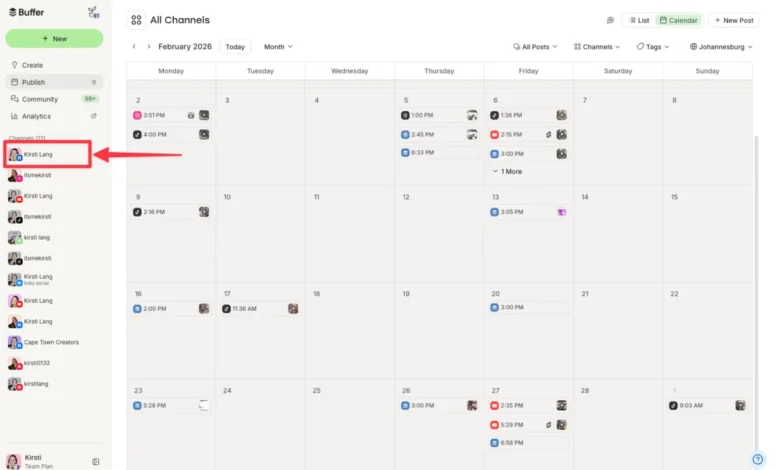
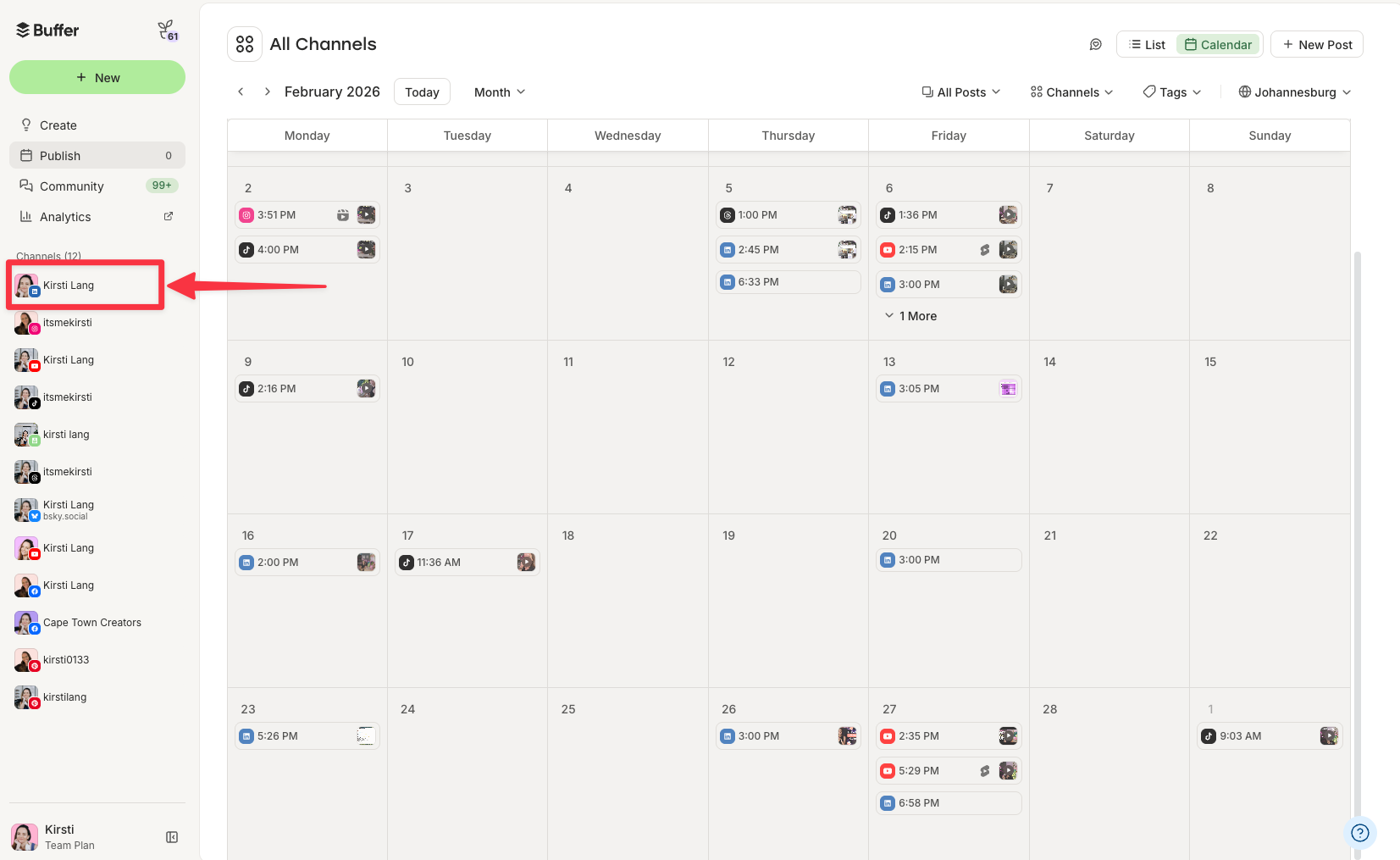
To navigate these variables, social media managers are increasingly relying on automated scheduling tools that integrate timing analytics directly into content calendars. Platforms like Buffer now automatically populate posting queues with high-engagement time slots derived from millions of analyzed data points, reducing the guesswork for digital marketers.
As the professional landscape continues to adapt to flexible working habits and blurred boundaries between personal and professional time, understanding these temporal shifts will remain a critical component of digital communication. For organizations and personal brands alike, updating content calendars to reflect the shift toward late-afternoon and evening publishing could prove to be the decisive factor in cutting through the digital noise.