The Fractured Front: Internal Trump Administration Disputes Emerge Over Chinese AI Competition and Open Source Strategy

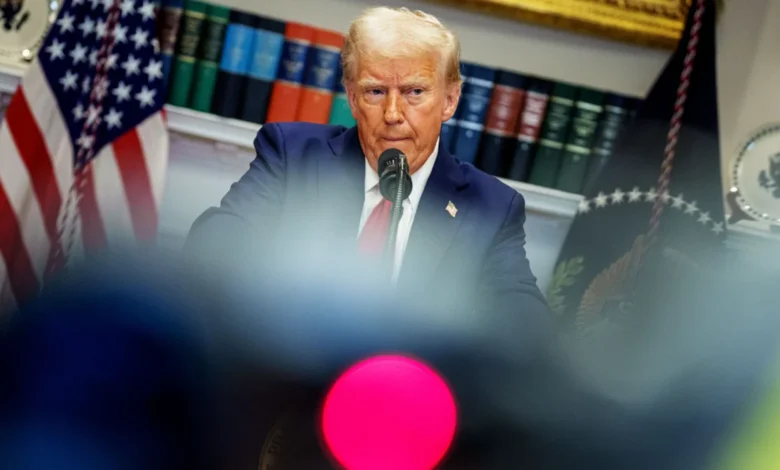
The Trump administration is facing a significant internal rift regarding the future of artificial intelligence policy, as top advisors and former officials engage in public disagreements over the rise of Chinese large language models (LLMs) and the appropriate level of domestic regulation. This ideological friction reached a boiling point over the weekend when several high-profile figures within President Donald Trump’s orbit launched public attacks on the nation’s leading AI firms and one another. The discord highlights a fundamental tension between those advocating for an unregulated, open-source approach to counter China and those who believe the federal government must exert tighter control over "frontier" models to protect national security and economic interests.
The public spat was ignited by the release of Kimi, a high-performance, open-source AI model from the Chinese firm Moonshot. Unlike the flagship models from American companies such as OpenAI and Anthropic, Kimi is free to use and reportedly rivals the intelligence and processing capabilities of its U.S. counterparts. The emergence of a powerful, cost-free alternative from a geopolitical rival has sent shockwaves through the American tech sector, rattling U.S. stocks and forcing a re-evaluation of the administration’s strategy for maintaining AI supremacy.
Escalating Rhetoric Among AI Advisors
The internal divisions became visible when David Sacks, who served as President Trump’s AI and cryptocurrency "czar" until March, took to social media to criticize the current direction of American AI development. Sacks branded models produced by Anthropic as "lobotomized" and "woke," suggesting that corporate and regulatory guardrails have stifled the creative and competitive edge of U.S. technology. Sacks has long been a proponent of an open-source philosophy, arguing that the restrictive safety protocols favored by major labs serve only to hand an advantage to less-restricted Chinese competitors.
The situation escalated further when Emil Michael, a senior official at the Department of Defense, engaged in a heated exchange with Dean Ball, a former Trump AI advisor who recently joined OpenAI. Michael, who serves as a primary liaison between the Pentagon and the AI industry alongside Secretary of Defense Pete Hegseth, reacted sharply to Ball’s criticism of new White House security protocols. After Ball described a proposed federal review process as a "de facto licensing regime" that would stifle innovation, Michael labeled Ball the industry’s "supreme village idiot."
Michael’s response underscored the administration’s growing pivot toward a "securitized" view of AI. He dismissed suggestions that the government was operating through "Deep State" schemes to strong-arm tech companies, insisting instead that the administration is following a legitimate democratic process to ensure that powerful AI systems do not pose a threat to the American public or national security.
The Kimi Factor: A Shift in the Global AI Balance
At the heart of this dispute is Moonshot’s Kimi model. For much of the past two years, American AI labs have maintained a comfortable lead in the global arms race, largely due to their access to massive computing power and proprietary datasets. However, Kimi’s release has demonstrated that Chinese firms are closing the gap rapidly, despite ongoing U.S. efforts to limit their access to high-end semiconductors.
The economic implications of Kimi are profound. Because the model is open-source and free, it provides a viable alternative for developers and enterprises that would otherwise pay significant subscription fees or API costs to OpenAI or Anthropic. For an administration that has tethered much of its economic success to the performance of the tech sector, the devaluation of American AI intellectual property represents a direct political threat. Anton Leicht, a fellow at the Carnegie Endowment, noted that these Chinese models create a "threat for an administration that really doesn’t want more economic bad news."
The volatility was felt immediately on Wall Street, where stocks for major AI-adjacent companies saw fluctuations as investors weighed the possibility of a "race to the bottom" in AI pricing. If Chinese firms can provide near-frontier intelligence for free, the multi-billion-dollar valuations of U.S. AI startups may become difficult to justify.
Timeline of Recent AI Policy Developments
The current crisis follows a series of rapid policy shifts and local regulatory actions that have complicated the domestic AI landscape:
- April 2026: The Trump administration announces a crackdown on "distillation," a process where Chinese firms train their models on the outputs of U.S. models to bypass expensive research and development phases.
- May 2026: In a controversial move, the administration permits Nvidia to sell advanced chips to certain Chinese entities, provided the U.S. government receives a percentage of the transaction revenue.
- June 2026: Anthropic’s latest model is briefly ordered to shut down by federal authorities due to concerns that its capabilities exceeded safety thresholds related to national security and infrastructure.
- July 2026: New York becomes the first state to impose a ban on the construction of new data centers, citing energy grid stability and environmental concerns. This move creates a "bottleneck" for domestic AI scaling.
- Late July 2026: The White House introduces a formal review process to vet the security of frontier AI models before they are released to the public, sparking the current debate over "licensing regimes."
The Open Source vs. Regulation Debate
The conflict between Sacks and Michael represents two distinct schools of thought within the Republican party’s tech wing. The "Sacks faction" views AI as a tool for American soft power and economic vitality that should be as decentralized and unrestricted as possible. From this perspective, the biggest threat is not the AI itself, but the "regulatory capture" by companies like OpenAI and Anthropic, which Sacks claims are using the government to eliminate their open-source competition.
Conversely, the "Michael-Hegseth faction" views AI through the lens of traditional national security. This group argues that as AI models gain the ability to assist in cyberattacks, biological weapon design, or autonomous warfare, they can no longer be treated as mere consumer products. This faction supports the new White House review process, arguing that the government must have a "kill switch" or at least a vetting period for any technology that could destabilize the nation.
The debate is further complicated by public sentiment. Recent polling from Pew Research suggests a growing distrust of AI companies among the American public. This suggests that a significant portion of the electorate may not support government efforts to protect the profit margins of Silicon Valley giants against cheaper foreign competitors, especially if those competitors offer free tools for students and small businesses.
Technological Circumvention and "Distillation"
A lingering question for the administration is how Moonshot achieved such high performance given the existing export controls on AI chips. While the administration’s decision to allow restricted Nvidia sales provided some relief to Chinese firms, the computing power required for a model like Kimi is still immense.
U.S. intelligence officials and industry leaders suspect that "model distillation" has played a key role. By using the outputs of Claude 3 or GPT-4 as training data, Chinese researchers can essentially "reverse-engineer" the logic and reasoning of American models at a fraction of the original cost. Despite the April crackdown on these practices, enforcement remains difficult in a global, digital environment.
Furthermore, allegations of chip smuggling have persisted. The Department of Justice recently announced the arrest of several individuals involved in a sophisticated network designed to divert high-end GPUs from European and Middle Eastern markets into mainland China. These gaps in the "silicon curtain" have allowed Chinese firms to maintain a pace of development that many in Washington thought was impossible under current sanctions.
Economic and Geopolitical Implications
The outcome of this internal policy struggle will have lasting effects on the global economy. If the Trump administration leans into the licensing and regulation model, it may ensure the safety of AI releases but risk driving innovation offshore. If it chooses the open-source path championed by Sacks, it may maintain American dominance in software but potentially release powerful tools into the hands of adversaries without any oversight.
For President Trump, the challenge is balancing his "America First" economic agenda with the reality of a globalized tech market. The success of Kimi proves that the U.S. no longer has a monopoly on high-level intelligence. As the administration continues to review its frontier AI policies, the sparring between advisors suggests that the "consensus" on how to handle China is far from settled.
The "Deep State" accusations leveled by Michael against former advisors highlight a deep-seated paranoia within the administration regarding the influence of big tech. At the same time, the criticism from industry insiders like Ball suggests that the administration’s attempts to control the technology may be viewed as an overreach by the very innovators the U.S. relies on to win the AI race.
As the 2026 midterms approach, the administration’s ability to stabilize the AI sector and present a unified front against Chinese technological encroachment will be a key metric of its success. For now, Kimi remains a potent symbol of the challenges ahead—a free, powerful reminder that in the world of artificial intelligence, the barriers to entry are falling just as the stakes are reaching their peak.