Enterprise Social Media Strategy: Unifying Global Teams, Proving ROI, and Mastering AI Governance in a Complex Digital Landscape

Enterprise social media represents the strategic deployment of social platforms by large organizations to manage brand communications, cultivate customer engagement, and derive actionable business intelligence at an unparalleled scale. In an increasingly interconnected global market, a well-defined enterprise social media strategy is no longer merely advantageous; it is a critical necessity, serving as the comprehensive blueprint that integrates brand presence across diverse platforms, standardizes technological infrastructure, and formalizes operational processes to ensure unwavering consistency and compliance.
The contemporary digital landscape mandates a clear distinction between external-facing enterprise social media and internal enterprise social networks. While the latter, exemplified by platforms such as Yammer or Viva Engage, serves as a collaborative ecosystem for employee communication and knowledge sharing, enterprise social media is externally oriented, focusing on customer acquisition, brand building, and public relations. It leverages platforms like LinkedIn, Instagram, and TikTok to engage prospects, nurture customer relationships, and monitor public sentiment, with key performance indicators (KPIs) centered around engagement, reach, and brand perception. This external focus highlights its pivotal role in the marketing and communications divisions of large corporations.
Scaling Social: The Chasm Between Small Business and Enterprise

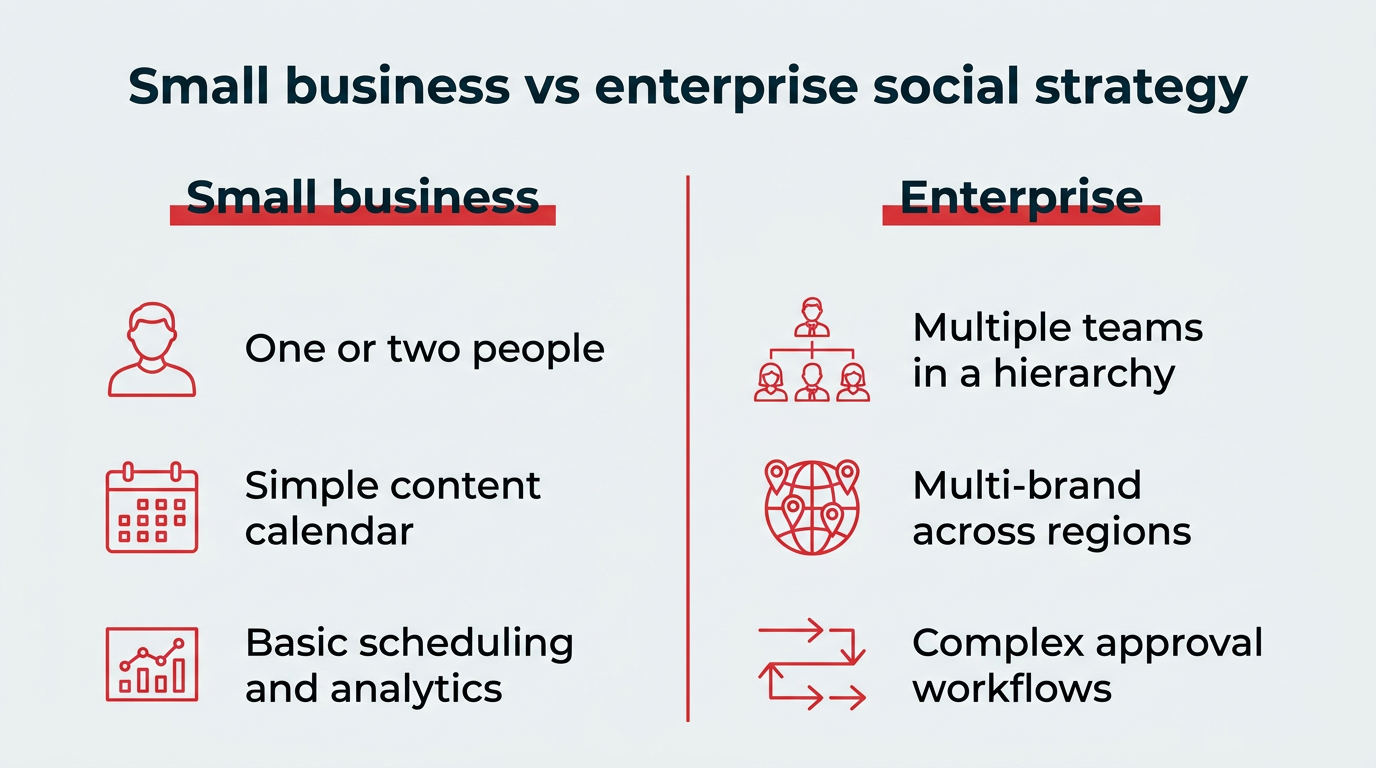
The management of social media at the enterprise level differs profoundly from the approach taken by small businesses. A nascent startup or local business might thrive with a streamlined strategy managed by a single marketing generalist or a small content team, often relying on a basic content calendar and tools for scheduling and rudimentary analytics. This lean approach, while effective for smaller operations, quickly becomes unsustainable for large organizations.
Enterprise-level social media strategies are inherently complex, characterized by numerous moving parts that demand sophisticated coordination. These often include:
- Decentralized Teams: Multiple regional, product-specific, or brand-specific teams managing their own social presences.
- Multi-Platform Presence: Managing dozens, if not hundreds, of social accounts across various platforms.
- Complex Approval Workflows: A hierarchical system for content review involving legal, compliance, marketing, and leadership teams.
- Diverse Audience Segments: Catering to different demographics, languages, and cultural nuances across global markets.
- Rigorous Compliance Requirements: Adherence to industry-specific regulations (e.g., healthcare, finance) and data privacy laws (e.g., GDPR, CCPA).
- Advanced Analytics and Reporting: The need for consolidated data from disparate sources to demonstrate holistic ROI.
- Crisis Management Protocols: Robust systems for identifying and responding to reputational threats rapidly.
- Employee Advocacy Programs: Leveraging internal stakeholders to amplify brand messaging authentically.
For enterprises, the strategic goals extend beyond mere visibility and engagement to encompass governance, scalability, and robust risk management. As Savannah Wiles, Staff Marketing Manager, Social & Influencer at Intuit Mailchimp, underscores, "A strong enterprise social strategy comes down to three things: your audience, your brand, and your goals." She advocates for understanding audiences as "real people, not just job titles" and cultivating a unique, human brand persona. Wiles also stresses the importance of value, stating, "Finally, every post should provide value, hard stop. That could mean driving downloads with new POVs or data, but it may also mean being relatable to drive engagements and shares."
The Imperative for Unification: Why a Cohesive Strategy is Non-Negotiable

The absence of a unified social media strategy can quickly lead to fragmentation and inconsistency within a large organization. Without a cohesive plan, different departments, regions, or product lines may operate in silos, inadvertently presenting a disjointed brand image, duplicating efforts, or even contradicting core messaging. A unified strategy ensures that the entire social presence operates with a singular voice, vision, and set of overarching marketing objectives, transforming social media from a mere visibility tool into a powerful engine for business growth.
Consider a global giant like Nike, which manages hundreds of secondary Instagram accounts, each targeting distinct audiences and regions. While each account likely has its dedicated team of managers, strategists, and content creators with individual goals, these must ultimately align with Nike’s broader business objectives and reinforce the overarching brand identity. When factoring in product-specific campaigns, legal compliance across various jurisdictions, and complex external collaborations, the necessity for a unified, enterprise-level strategy becomes undeniable. This strategic coherence is what prevents a sprawling digital footprint from devolving into an unmanageable labyrinth.
Pillars of an Effective Enterprise Social Strategy
An robust enterprise social media strategy is built upon several critical components:
- Defined Goals and Objectives: Clear, measurable targets aligned with overall business outcomes (e.g., brand awareness, lead generation, customer service efficiency).
- Audience Segmentation and Targeting: Detailed understanding of various customer personas across markets to tailor content effectively.
- Brand Voice and Visual Guidelines: Standardized rules for tone, style, imagery, and messaging to ensure consistency.
- Platform Selection and Optimization: Strategic choice of social channels based on audience demographics and business objectives, with tailored content approaches for each.
- Content Strategy and Calendar: A structured plan for content creation, curation, and distribution, ensuring relevance and timely delivery.
- Governance and Compliance Frameworks: Policies and procedures for legal, regulatory, and brand safety adherence.
- Technology Stack and Integrations: Selection of robust social media management platforms and their integration with existing CRM, BI, and AI tools.
- Roles, Responsibilities, and Workflows: Clear delineation of duties, approval processes, and team collaboration mechanisms.
- Measurement, Analytics, and Reporting: Systems for tracking performance, analyzing data, and reporting ROI to stakeholders.
- Crisis Management Plan: A pre-defined protocol for addressing negative sentiment or brand crises on social media.
Navigating Complexity: Challenges and Opportunities in a Multi-Market World
In 2026, social media stands as a formidable $276 billion global advertising market, cementing its status as a core business channel for enterprise-level corporations. A precisely defined strategy is essential to maintain consistency, ensure compliance, and secure a competitive edge, mitigating the coordination complexities that inevitably arise with every new region, brand, and social account added to the organizational portfolio.
Challenges of Scale: Enterprises operate across multiple brands, diverse regions, and varied audiences, often spanning different time zones and languages. This necessitates coordinating content approvals when teams are geographically dispersed, navigating a labyrinth of regulatory rules that vary significantly by market, and untangling the tool fragmentation that frequently occurs when individual teams independently procure their own software solutions. A centralized strategy serves as the antidote, ensuring consistent messaging, efficient resource allocation, and unified reporting across the entire organization.
Protecting Brand Trust in Complex Environments: The larger an organization, the higher the stakes associated with its social media presence. Every post serves as a direct representation of the brand, and a single misstep can propagate virally across platforms within hours. A poorly phrased reply from a customer service agent or an off-brand post from a regional account can rapidly escalate into a significant reputation issue, often before senior leadership is even aware. This underscores the paramount importance of brand consistency and early detection mechanisms at scale. A robust strategy incorporates centralized brand guidelines, real-time social listening for rapid issue identification, and a clearly defined crisis communication plan.
Leveraging Social as a Growth Engine: Beyond brand protection, social media is an increasingly potent revenue driver. U.S. social commerce alone is projected to exceed $100 billion in 2026, making social platforms an integral component of a brand’s external ecosystem. Social media often serves as the initial touchpoint for potential customers seeking to understand a brand. Enterprises can harness social media to generate leads through targeted campaigns, drive direct sales via social commerce features, enhance customer service by providing responsive support, foster community engagement, and gather invaluable market intelligence.
The AI Revolution: Reshaping Enterprise Social Media Management
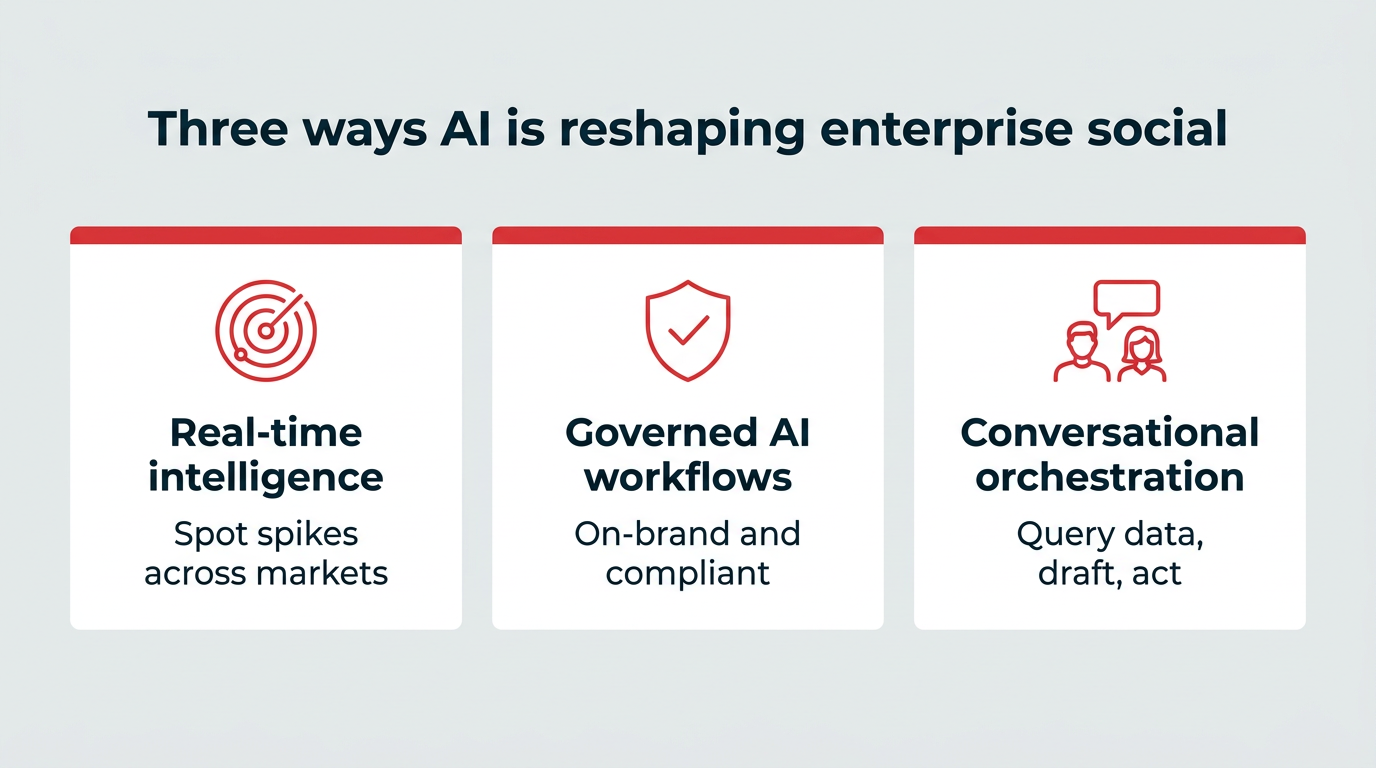
Artificial intelligence has evolved far beyond its initial role as a content-generation novelty; it now functions as an operational intelligence layer seamlessly integrated across enterprise social media workflows. In 2026, AI’s capabilities extend beyond merely drafting captions, encompassing real-time sentiment analysis, intelligent routing of customer inquiries, and the crucial connection of insights to actionable strategies across disparate teams and global regions.
Three significant shifts define AI’s transformative impact on enterprise social media management:
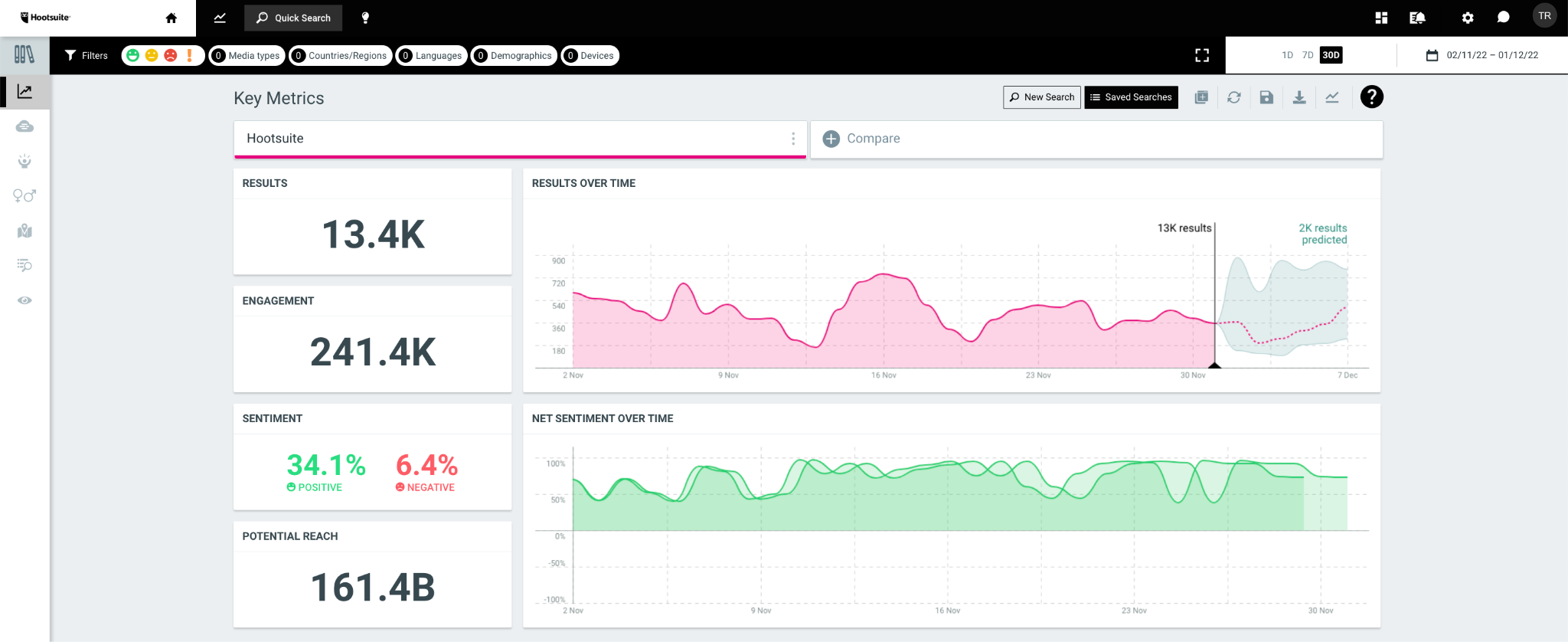
- From Content Generation to Contextual Intelligence: AI now offers predictive analytics, identifying emerging trends and potential content opportunities before they peak. It can analyze vast datasets to inform content strategy, optimizing for specific audience segments and platform algorithms.
- Automated Workflows and Prioritization: AI automates mundane tasks, such as content scheduling and initial response drafting, freeing up human teams for strategic work. More critically, it can prioritize incoming messages based on sentiment and urgency, ensuring critical customer service issues are addressed immediately.
- Data-Driven Decision Making at Scale: AI aggregates and analyzes performance data from all social channels, providing unified dashboards that reveal cross-platform insights. This allows enterprises to make data-backed decisions on content, campaigns, and budget allocation with unprecedented accuracy.
AI also facilitates deeper integration within the broader enterprise technology stack. Through advanced connectors, contextual intelligence can flow between social media platforms and existing CRM, business intelligence, and marketing automation systems, grounding AI outputs in real, verifiable data rather than speculative guesswork.
Why Governance Matters More Than Ever with AI: The integration of AI into enterprise social media elevates the importance of robust governance frameworks. Ungoverned AI presents significant risks at enterprise scale. Without appropriate controls, AI can inadvertently generate off-brand content, propagate unverified claims, or publish material that violates regulatory guidelines. In highly regulated sectors such as healthcare and finance, such missteps are not minor inconveniences; they can result in substantial fines, protracted legal action, and irreparable reputational damage. Governance layers, such as Hootsuite Social OS’s Vigil, ensure that all AI-assisted work adheres to established policies, with every output traceable and every approval documented. This fusion of speed and stringent control is what makes AI truly usable and beneficial for regulated enterprise teams.
Building the Blueprint: An Eight-Step Guide to Your Enterprise Social Strategy
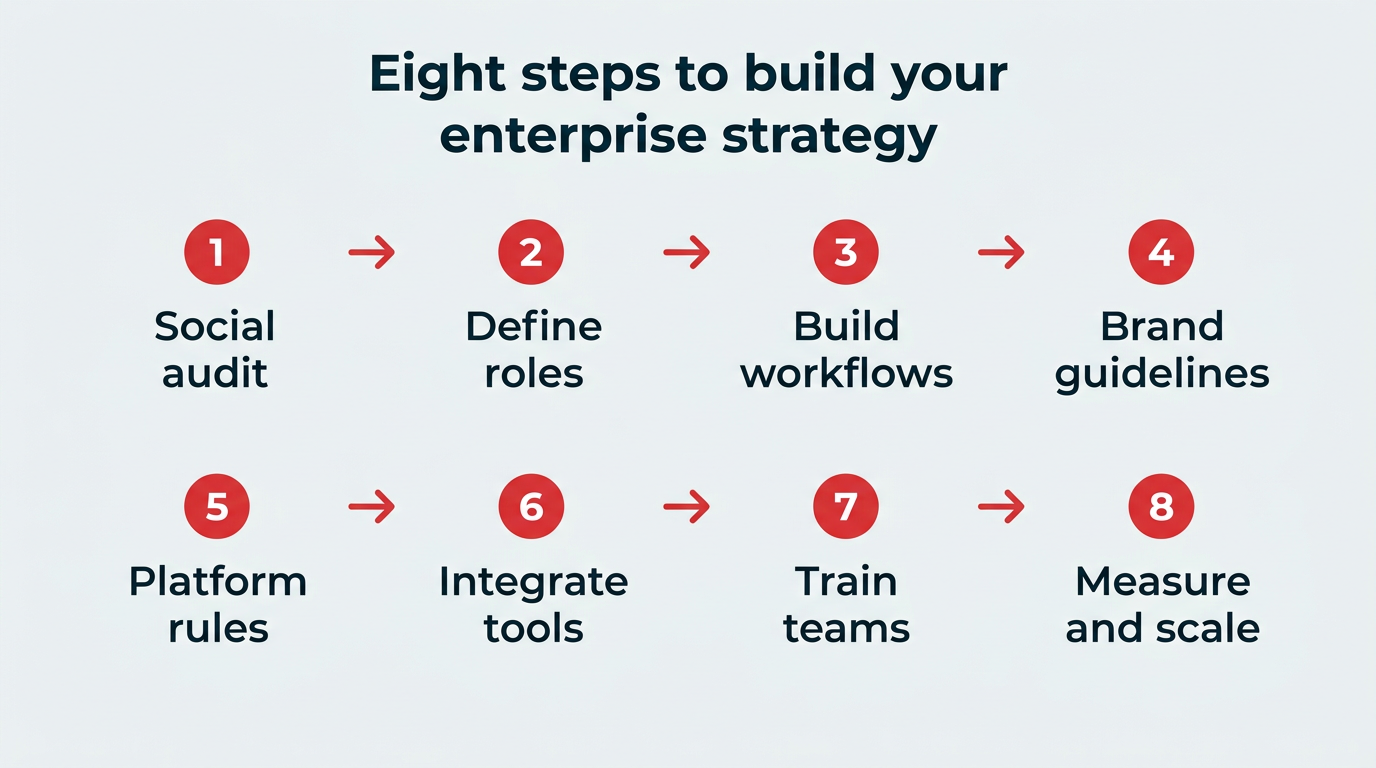
Crafting an enterprise social media strategy is a methodical, eight-step process designed to ensure comprehensive coverage and effective implementation:

Step 1: Conduct a Comprehensive Social Audit Across Teams
Begin by undertaking a thorough inventory of every existing social account, campaign, and the individual or team responsible for its management. This audit should identify any operational gaps, redundant pages, or instances of off-brand activity. The insights gleaned from this exercise will reveal where target audiences are most engaged and where current budget allocations may not be yielding optimal returns.
Step 2: Define Clear Roles and Responsibilities
Establish a detailed organizational chart for your social media operations, clearly delineating who is accountable for what. This typically involves a Center of Excellence (CoE) setting global vision and governance, regional or business unit teams adapting content for local markets, cross-functional partners (e.g., PR, HR, legal) ensuring alignment, and employee advocates amplifying brand messages. For instance, a CoE might oversee global strategy and tool selection, while regional teams manage daily posting and localized campaigns. Savannah Wiles emphasizes the power of cross-functional collaboration, noting that "social media is great, but it can’t do everything. Consider collaborating with other teams, like email and sales. Expand to channels that can support social content variety."
Step 3: Create Streamlined Workflows for Approvals and Publishing
Standardize processes for content creation, internal review, and final sign-off. Utilize a dedicated social media management platform to automate these workflows, enhancing visibility across all teams and ensuring that content adheres to brand and compliance guidelines before publication. This automation significantly reduces bottlenecks and accelerates content delivery.
Step 4: Integrate Brand and Content Guideline Use
Translate the enterprise’s overarching brand voice and visual identity into specific directives for social media. This is particularly crucial for international brands, where global guidelines must be adapted for local relevance. Collaboration with regional representatives is essential to ensure that brand messaging resonates culturally without compromising core identity.
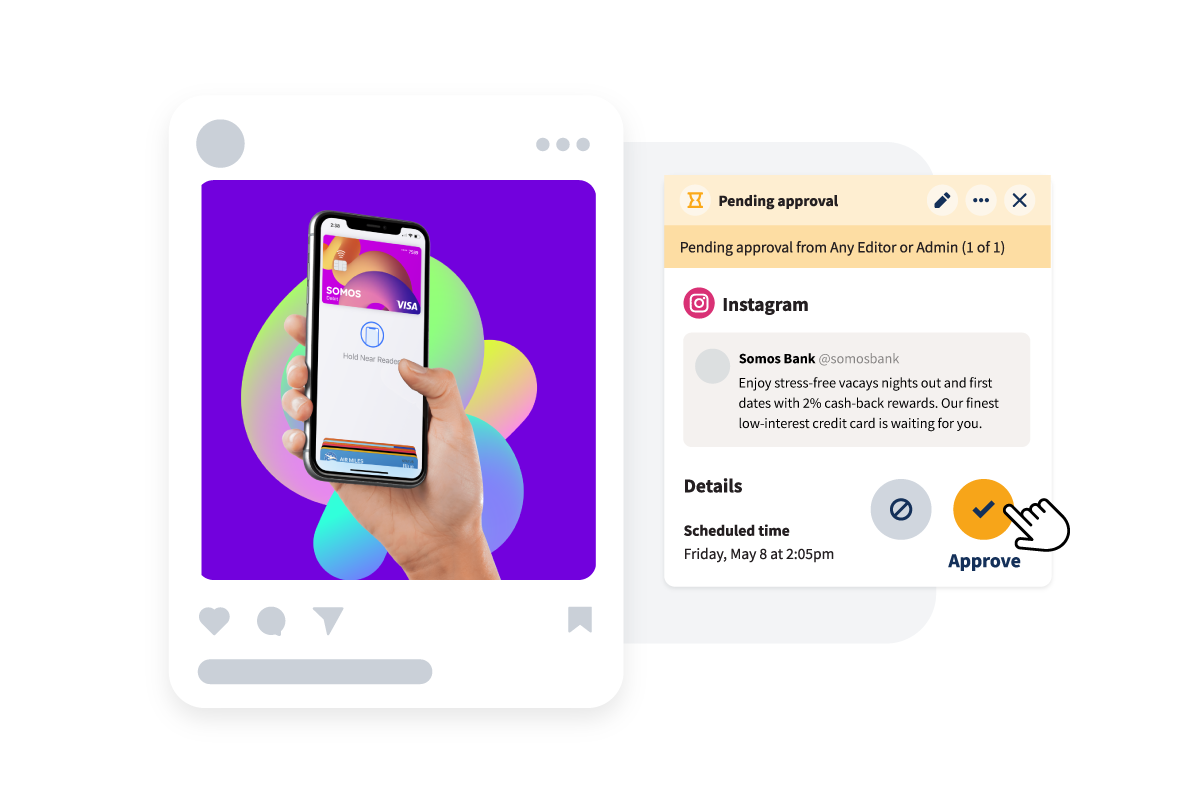
Step 5: Establish Platform-Specific and Publishing Rules
Document explicit rules for content types, posting frequency, and engagement protocols for each social platform. This includes defining acceptable formats, moderation guidelines for comments, and crisis response procedures. Legal teams must be consulted to ensure compliance with regional data privacy laws and industry-specific regulations, which can vary significantly across markets.
Step 6: Integrate the Right Tools and Data Systems
Select and integrate advanced social media management tools and data systems that automate repetitive tasks, provide centralized oversight, and offer granular analytics. Unified dashboards enable leaders to track performance across all channels and regions in real time. Integration with existing CRM, BI, and AI tools through connectors ensures a seamless flow of data and contextual intelligence across the enterprise ecosystem.
Step 7: Implement Comprehensive Team Training
Once the social strategy is finalized, it is imperative to conduct thorough training sessions for all involved teams. This ensures universal understanding and alignment, especially critical for global teams operating across different time zones. Ongoing training on compliance, accessibility standards, and platform best practices empowers employees to contribute effectively and safely, even without constant oversight.
Step 8: Measure, Iterate, and Scale
Establish regular review cycles to analyze performance metrics, share insights, and refine the strategy based on data-driven conclusions. This iterative approach, guided by real-time analytics, ensures that the enterprise social program continuously evolves in alignment with business objectives and market dynamics. A data-driven approach, rather than guesswork, underpins scalable success.
The Technology Backbone: Selecting and Leveraging Enterprise Social Platforms
Choosing the appropriate enterprise social media platform is a strategic decision that hinges on matching the tool’s capabilities to the organization’s scale, governance requirements, and existing technology stack. A fragmented toolset leads to inefficiencies, whereas a well-chosen platform consolidates workflows and provides a unified view. Gartner’s recognition of social media management and listening as a single market underscores the need for integrated solutions.
A four-step framework for evaluating platform options includes:
- Assess Current Needs and Future Scale: Identify immediate requirements and anticipate growth, ensuring the platform can expand with the business.
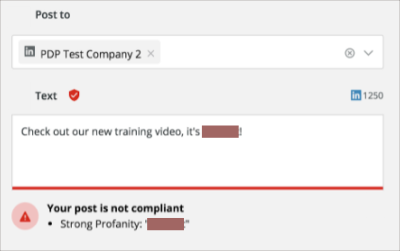
- Evaluate Governance and Compliance Features: Prioritize tools with robust approval workflows, audit trails, and integration with compliance systems.
- Review Integration Capabilities: Confirm compatibility with existing CRM, BI, and other marketing technology tools.
- Consider Analytics and Reporting Depth: Look for comprehensive analytics that can be customized and aggregated across multiple accounts and regions.
Essential Platform Capabilities: An enterprise-ready social media platform must offer robust capabilities, including:
- Centralized Publishing and Scheduling: For efficient content deployment across numerous accounts.
- Advanced Social Listening: To monitor brand mentions, industry trends, and sentiment in real time.
- Integrated Engagement Tools: For managing customer interactions and support at scale.
- Comprehensive Analytics and Reporting: To track KPIs and demonstrate ROI.
- Robust Compliance and Governance Features: Including approval workflows and audit trails.
- AI-Powered Assistance: For content optimization, sentiment analysis, and workflow automation.
- Team Collaboration and Workflow Management: To streamline internal processes.
- Multi-Language and Multi-Region Support: Essential for global brands.
- Integrations with Enterprise Systems: CRM, BI, marketing automation, etc.
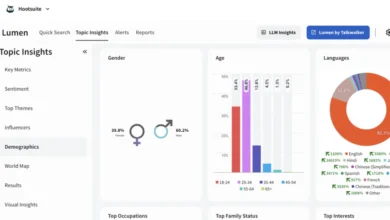
Hootsuite Social OS, for instance, is designed to support complex organizations with global reach, offering structure, standardized formats, and critical visibility to facilitate effective collaboration and brand protection. Its suite of applications, including a centralized content library, automated workflows, social listening tools like Lumen, employee advocacy through Parliament, and the Vigil governance layer, ensures that enterprise teams can manage their social presence with efficiency, security, and strategic insight.
Measuring Success: Proving ROI and Communicating Impact to Stakeholders
At the enterprise level, measuring success necessitates standardization, alignment, and the deployment of sophisticated analytical tools. Key Performance Indicators (KPIs) are crucial for tracking progress and demonstrating the tangible business impact of social media efforts. Common enterprise-level KPIs include:
- Share of Voice: The brand’s proportion of conversation relative to competitors, indicating market position.
- Sentiment Score: The overall positive or negative tone of mentions, flagging brand health and emerging risks.
- Response Time: The speed at which customer inquiries are addressed, driving satisfaction and retention.
- Social-Attributed Leads: Qualified leads directly sourced from social channels, connecting social activity to sales pipeline.
- Employee Advocacy Reach: The expanded organic reach generated by employee-shared content, lowering acquisition costs.
- Content Engagement Rate: Interactions relative to reach or impressions, revealing content resonance by market.
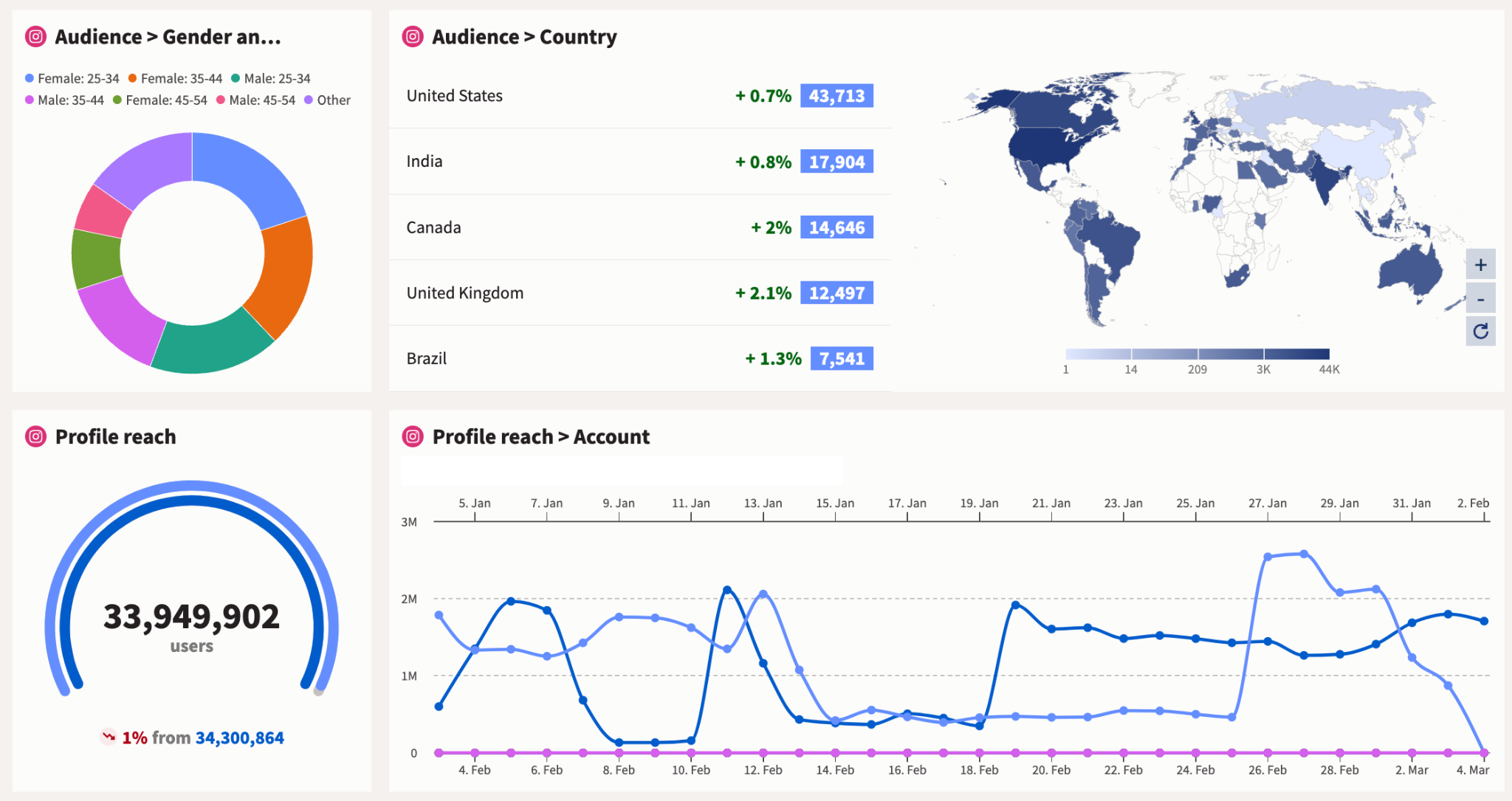
Standardizing KPIs Across Markets: It is vital to establish shared performance metrics that apply consistently across all regions or business units, such as engagement rates, impressions, follower growth, and response times. These global KPIs allow for "apples-to-apples" comparisons. Simultaneously, localized KPIs can be introduced to reflect region-specific objectives, such as regional reach or campaign conversions, ensuring relevance to individual markets.
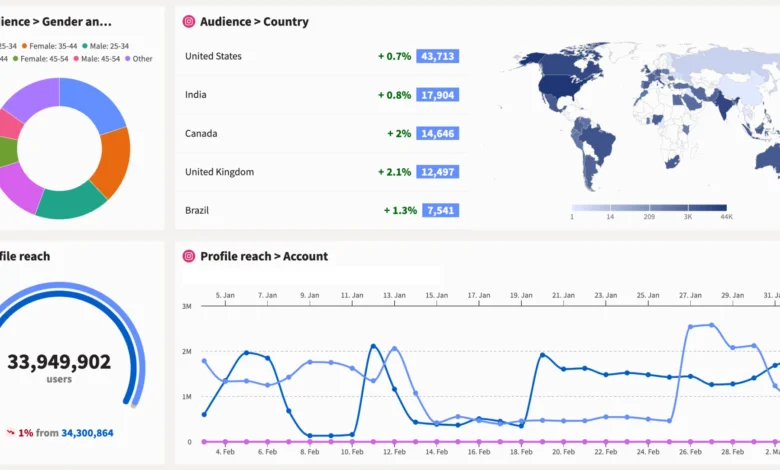
Connecting Social Data to Business Metrics: Moving beyond vanity metrics, enterprises must actively link social data to broader business outcomes. This involves tracking website traffic and conversions originating from social media, analyzing customer lifetime value of social-acquired customers, demonstrating cost savings through social customer service, and correlating social sentiment with brand reputation and market share. Unified dashboards and integrated data systems are instrumental in making these connections transparent.
Communicating Social Media Impact to Stakeholders: Effective communication with stakeholders requires clarity, realism, and a focus on measurable impact. As Savannah Wiles advises, "The first step is to be honest about your capabilities and flexible with your goals depending on the support you have or don’t have." When direct ROI or conversions are challenging to quantify, focus on how social media supports immediate KPIs and offers valuable learnings for future initiatives. This approach demonstrates accountability and strategic value, even in complex scenarios.
In conclusion, a robust enterprise social media strategy is the bedrock upon which large organizations build and maintain a cohesive, compliant, and competitive digital presence. By embracing sophisticated tools, leveraging AI intelligently, and fostering a culture of data-driven adaptation, enterprises can transform social media into a powerful engine for growth, brand resilience, and sustained market leadership.