The Evolution of Biologic Drug Discovery Through Artificial Intelligence and Autonomous Engineering Systems

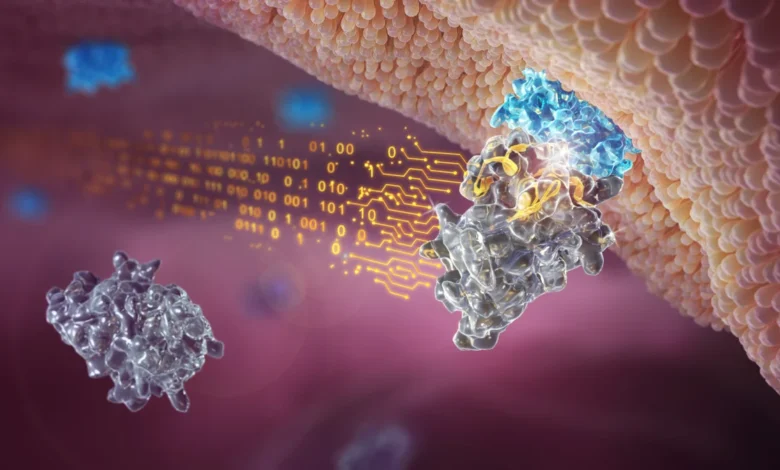
Designing and developing a new medicine is one of the most expensive, failure-prone, and scientifically grueling challenges in the modern industrial world. Historically, bringing a single drug from the laboratory to the patient has taken upwards of a decade, requiring billions of dollars in investment with no guarantee of success. In fact, industry data suggests that approximately 90% of drug candidates that enter clinical trials eventually fail, often due to unforeseen safety issues or a lack of efficacy. When the focus shifts to biologic medicines—therapies derived from engineered proteins rather than synthetic chemistry—the complexity increases exponentially. Unlike traditional small-molecule drugs, which are relatively simple chemical structures, biologics are large, intricate molecules that must be precisely folded and stabilized to function within the human body.
Today, the pharmaceutical industry is undergoing a radical transformation. Leading firms like AstraZeneca are no longer viewing artificial intelligence (AI) as a peripheral tool but as the core infrastructure of their research and development (R&D) departments. By integrating AI into every stage of the "design, make, test, and analyze" cycle, scientists are beginning to overcome the traditional bottlenecks of drug discovery. This shift represents a move toward a computationally enhanced era where productivity increases, innovation flourishes, and the timeline for life-saving treatments is drastically compressed.
The Complexity of Biologic Engineering
To understand the impact of AI, one must first grasp the sheer scale of the biological search space. Scientists searching for a new therapeutic protein are essentially looking for a needle in a haystack the size of a galaxy. They must explore vast quantities of possible molecular combinations to identify the rare few that can bind to a specific disease target, remain stable in the bloodstream, and be manufactured at a commercial scale.
Puja Sapra, Senior Vice President and Head of R&D Biologics Engineering and Oncology Targeted Discovery at AstraZeneca, notes that the integration of AI is fundamentally changing the speed of this exploration. "Everything we do is now computationally enhanced," Sapra explains. "The cycle times are getting shorter while productivity and innovation increase."
AstraZeneca’s methodology relies on a "build-measure-learn" loop. In this framework, AI models do not just assist scientists; they lead the prioritization of candidate molecules. By predicting which designs are most likely to succeed based on historical data and structural simulations, AI allows lab resources to be concentrated only on the most promising candidates. This leads to a tighter feedback cycle with fewer "dead ends," enabling researchers to pursue disease targets that were previously deemed "undruggable."
Navigating the Next Generation of Drug Design
The current frontier of medicine is moving beyond traditional biologics that target a single disease pathway. The next generation of therapies involves multi-specific biologics—molecules capable of hitting multiple targets simultaneously or delivering potent therapeutic payloads directly to specific cancer cells while sparing healthy tissue. Designing these "smart" drugs requires optimizing dozens of variables at once, a task that far exceeds human cognitive capacity.
AI-driven models are becoming indispensable in balancing these competing parameters. A molecule must be potent enough to stop a disease, stable enough to be stored, safe enough for human consumption, and simple enough to be manufactured in large quantities. Puja Sapra suggests that AI will eventually enable the design of medicines against targets once thought impossible to reach. "Drugging the undruggable is becoming a reality," she says, emphasizing that the potential benefits to patients are remarkable.
The Strategic Importance of the Data Moat
While the algorithms used in AI are becoming increasingly sophisticated, the true competitive advantage in the pharmaceutical industry lies in data. McKinsey estimates that the combination of generative AI and advanced computational tools could reduce drug discovery timelines by as much as 50%. However, these models are only as effective as the data used to train them.
In the context of drug discovery, high-quality biological data is the "moat" that protects and distinguishes a company’s research. This includes not just the "wins"—successful drugs—but also the "losses." Every failed experiment provides a critical signal about what does not work, allowing the AI to refine its predictive capabilities.
AstraZeneca has intentionally built a diverse, proprietary, and multimodal portfolio of data. This includes molecular structures, binding measurements, safety profiles, and manufacturing outcomes across various disease areas. By feeding this rich, representative data into frontier AI models, the company can fine-tune its systems to be more accurate than those relying solely on public datasets. Furthermore, investments in deep screening technologies allow for the rapid generation of new data, creating a self-reinforcing cycle of model validation and refinement.

Chronology of Innovation: From Hand-Crafted to Autonomous
The journey toward AI-integrated drug discovery has evolved through several distinct phases over the last few decades:
- The Traditional Era (Pre-2010): Drug discovery relied heavily on high-throughput screening of massive physical libraries and trial-and-error chemistry.
- The Computational Shift (2010–2018): Computer-aided drug design (CADD) became common, using basic simulations to model how molecules might fit into protein pockets.
- The Deep Learning Revolution (2018–2022): The emergence of tools like AlphaFold revolutionized the understanding of protein folding, providing a massive leap in structural biology.
- The Autonomous Era (2023–Present): The industry is now moving toward "closed-loop" systems where AI and robotics operate with minimal human intervention to iterate on molecular designs.
AstraZeneca is currently manifesting this fourth stage through its "lab of the future" in Kendall Square, Cambridge, Massachusetts. This facility is designed as a continuous, closed-loop discovery system. Much like a self-driving car uses sensors to navigate a road, this system uses AI to make predictions, robotic systems to execute physical experiments, and advanced instruments to generate data that feeds back into the model. This automation allows for the evaluation of thousands of molecular interactions on a weekly basis—a scale that traditional manual workflows could never match.
De Novo Design: Generating Medicines from Scratch
The ultimate goal of this technological evolution is "de novo" design. Rather than modifying existing proteins found in nature, de novo design involves using AI to generate entirely new protein sequences that are tailor-made for a specific therapeutic purpose.
"The field is making great progress toward a completely AI-generated biologic, designed from scratch all the way to a clinical candidate," says Sapra. However, reaching this "end-state" requires overcoming significant hurdles, most notably in the realm of safety prediction.
Predicting whether a computationally generated molecule will be safe in a human body is one of the most difficult problems in science. To address this, AstraZeneca is developing "virtual clinical trials." These involve advanced cell systems and micro-scale organ models (often referred to as organ-on-a-chip technology) that serve as physical testbeds. AI learns from the outputs of these micro-systems to predict human reactions long before a drug ever enters a real clinical trial. This move toward "agentic AI"—systems that can simultaneously design a molecule and predict its safety and efficacy—is bridging the gap between disease-level insights and molecular engineering.
The Human Element: Talent in the Age of Autonomy
Despite the rise of autonomous systems, the role of the human scientist is not diminishing; it is evolving. The transformation of biologics is as much about human talent as it is about silicon and code. In the "lab of the future," scientists provide the strategic direction, ethical oversight, and judgment necessary to ensure that AI outputs are explainable and directed toward genuine patient benefit.
AstraZeneca’s engineering teams—composed of data scientists, automation specialists, and AI engineers—are building systems designed to be "thinking partners" rather than "black boxes." For these professionals, the challenges are immense: multimodal data fusion, uncertainty quantification, and ensuring the interpretability of AI decisions at the point of clinical decision-making.
The synergy between world-class AI engineering and deep scientific expertise is the catalyst for this new era. As these technologies mature, the industry moves closer to a world where the most complex diseases can be met with precision-engineered solutions, developed in half the time and with a significantly higher success rate.
Analysis of Implications
The shift toward AI-driven biologics has profound implications for the global healthcare landscape. First, by cutting R&D timelines by 50%, pharmaceutical companies can respond more rapidly to emerging health crises and rare diseases that were previously ignored due to high development costs. Second, the increase in "first-time-right" designs could eventually lower the cost of biologic therapies, which are currently among the most expensive treatments on the market.
However, this transition also creates a divide in the industry. Companies that possess massive, high-quality proprietary datasets will have a significant advantage over smaller players or those who rely on outdated research methods. The "data moat" mentioned by Sapra suggests that the future of pharma will be dominated by those who successfully marry biological expertise with massive computational power.
Ultimately, the goal remains the same: the benefit of the patient. Through the integration of robotic automation, generative AI, and human ingenuity, the "undruggable" is becoming druggable, and the next generation of life-saving medicines is being written in the language of code and proteins.